
The Cycle (2026) Ending Explained – Dissecting the Postmortem Secrets
Welcome to Knockout Horror. Today, we are explaining the ending to The Cycle (2026). Directed by Jordan Downey, this movie is, at least in my opinion, easily one of 2026’s biggest surprises. It’s come completely out of left field and stands as one of the best Shudder Originals in a long time.
I’m going to give you guys fair warning, here. There are spoilers in this article that will completely ruin this film’s twist. Before you scroll down any further, make sure you are happy with that. If you aren’t, check out our The Cycle spoiler free review instead. As always, we kick things off with our ND-friendly Ending in Brief for those looking for quick answers. Let’s get straight into it.
⚠️ Warning: Major spoilers follow below.
The Ending in Brief
The TL;DR: After discovering that the lycanthropic entity doesn’t actually die with its host and is currently residing within the corpse of her father, Peter Stump, Meg and Marks head to Stump’s fortified lakeside cabin where they assume the beast is currently making its way to. There, they discover video logs left by Stump revealing that he took his own life a month prior in a desperate, failed effort to kill the werewolf and prevent it from terrorising the community in the future. The creature attacks the cabin, kills Officer Lenny as he tries to protect them, and traps Meg and Marks in the basement. While attempting to flee, Meg jumps into the cage, prompting the werewolf to attack. Marks bridges the gap in the circuit using his father’s watch and trips the breaker, triggering the electrified cage. The werewolf is temporarily stunned before fleeing to the shoreline. Meg, wanting to put an end to its rein of terror, lures it into an attack right before sunlight and impales it with a boat hook. As the sun rises, the creature reverts back into her father’s dead corpse. A year later, we see that Meg and Marks have kept Stump’s corpse chained in the woods to systematically test herbal cures like Aconitum to prevent the transition. Daniel delivers a final tape to Lou Bishop apologising for what happened to him. We also hear a tape over the credits detailing how Stump first contracted the curse aboard an offshore platform in 1991.
Who Survived? Forensic anthropologist Dr Megan Garland and Lieutenant Marks survive the night, though Marks sustains electrical burns from the cage trap. Officer Ian Marks, coroner Joe, Officer Lenny, and several station deputies are slaughtered across the creature’s rampage. Lou Bishop and his caregiver Daniel Webb escape and remain alive.
Why didn’t Peter Stump’s corpse rot? The werewolf curse functions like a dormant, biologically preservative parasite. Because the entity inside Stump’s cells remained alive even after he hanged himself, his flesh was preserved without insect activity or typical decomposition, allowing the creature to reanimate his corpse every full moon.
Did suicide cure the curse? No. Stump hanged himself believing the entity would die alongside its host. Instead, he discovered from beyond the grave that a dead host merely eliminates the human mind, leaving a ravenous, corpse-driven predator that runs, hides, and hunts completely unchecked. In fact, Stump’s suicide made matters worse because he could no longer cage himself up during full moons to prevent the werewolf escaping.
Table of Contents
The Cycle (2026) Ending Explained
As always, we skip the tedious, boring, linear plot recaps at Knockout Horror. You just sat through the film, so nobody needs a minute-by-minute transcript and I certainly don’t want to waste time writing one. Let’s get right down to business and animalistically tear apart the lore, mechanics, and tragedy behind The Cycle.
How Did Peter Stump Contract Lycanthropy?
Peter Stump (David Myers Gregory) contracted the curse on the 26th of August 1991 whilst working as a senior engineer on offshore oil platform K-218 in Lester Bay. His arm was clawed by a creature in a cage while he investigated an abandoned fishing boat.
I thought this was a really neat touch as far as narrative goes. As the credits began to roll, I was genuinely expecting to never actually find out how Peter Stump was infected with Lycanthropia. Little did I realise that Downey had chosen to give us one more bit of exposition during the credits in the form of another video tape. Kind of reminded me of finding collectibles in a video game.
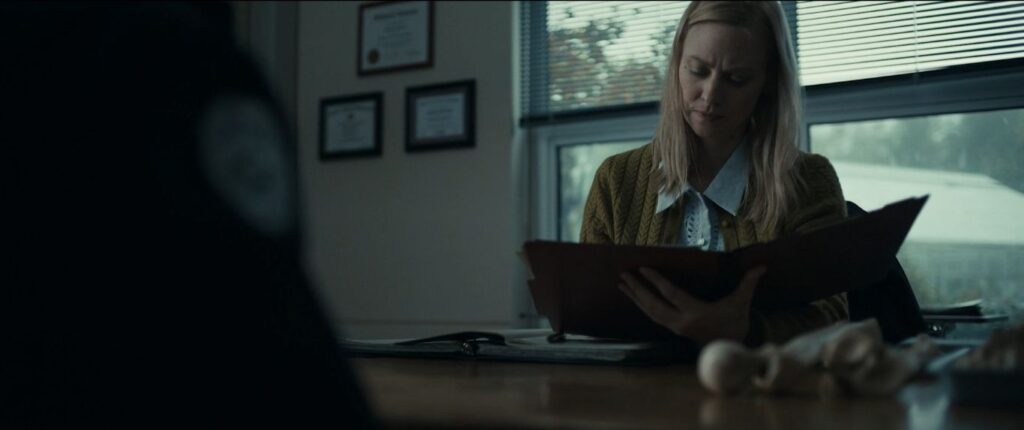
Anyway, as revealed in the VHS tape that plays over the credits, back when Stump worked on an oil rig, an unmarked, damaged fishing vessel crashed into the platform during an end-of-shift celebration. Stump was sent down to inspect the wreckage while he was rather inebriated. The entire crew onboard the ship were lying dead, alongside a secured holding cage. Stump, again due to being pissed as a fart, examined the cage, only for an unseen entity to claw into his arm.
We can obviously infer from the resulting chaos that the cage contained a lycanthrope that was potentially the cause for the death of the crew members. It can be assumed that they pulled it up from the ocean where it had been placed some time in the past to keep it away from humans. Interestingly, it seems to be able to live on even underwater.
Back on shore, Stump suffered sudden, agonising bone pain, a crippling headache, and blacked out. When he regained consciousness naked in the woods behind Holcomb Baptist Church, he was vomiting blood and found church groundskeeper Lou Bishop savagely mauled nearby. Realising he was responsible, he called the police to get assistance for Bishop and then fled into self-imposed exile to protect his wife Joni and young daughter Meg from the monster he had become.
Did You Know? The Meaning of Glendon Mathers
When Stump placed the panicked 911 call after mauling Lou Bishop in 1991, he gave the operator the fake name “Glendon Mathers”. That audio recording serves as Meg’s earliest, buried memory. In fact, it still haunts her to this day, causing her to suffer flashbacks and panic attacks, as seen earlier in the film.
As a four-year-old child hearing her father on the telephone in the middle of the night, she mistook “Glendon” for a person in the room rather than an alias. Stump maintained that exact false identity for thirty-four years to keep private post office boxes and off-grid utilities running without alerting the authorities or leading the curse back to his family.


Why Was Stump’s Corpse So Well Preserved?
Stump’s corpse showed virtually zero decay or insect activity because the lycanthropic entity was actually still alive, circulating within his dead body. The insects sensed this so wouldn’t inhabit the body.
When forensic anthropologist Dr Megan Garland (Deborah Ann Woll) examined her father’s body, she was baffled by the complete absence of insect activity. She revealed that he had been dead for about 30 days, but the evidence didn’t make sense. There were no blowfly larvae, no maggots, and no putrefaction, as you would typically expect. Naturally, this is impossible; his body should be essentially rotting by now unless it was preserved.
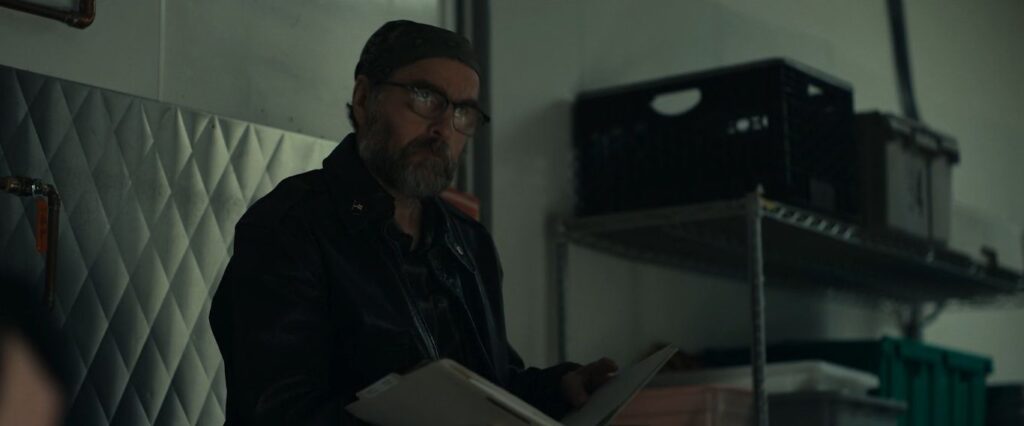
While the local coroner Joe Ratterman assumed coastal rain washed away the evidence, Meg wasn’t so sure and noted that insects naturally avoid living or biologically volatile host tissue. She initially assumed it may have been electrical activity near where the body was found but this was proven wrong when the body reappeared in a different location.
The actual simple explanation is that there were no maggots or insects on the body because they sensed that the body wasn’t actually dead. The lycanthropic entity was still alive and well inside of the host body and that was enough to deter them and keep the rotting to a minimum.
Why Did Stump’s Suicide Fail to Kill the Beast?
Peter Stump hanged himself under the, frankly, logical assumption that destroying his own consciousness would eliminate the beast. He was wrong. The lycanthropic entity doesn’t actually need a living host to transform. It simply needs a human body, alive or dead.
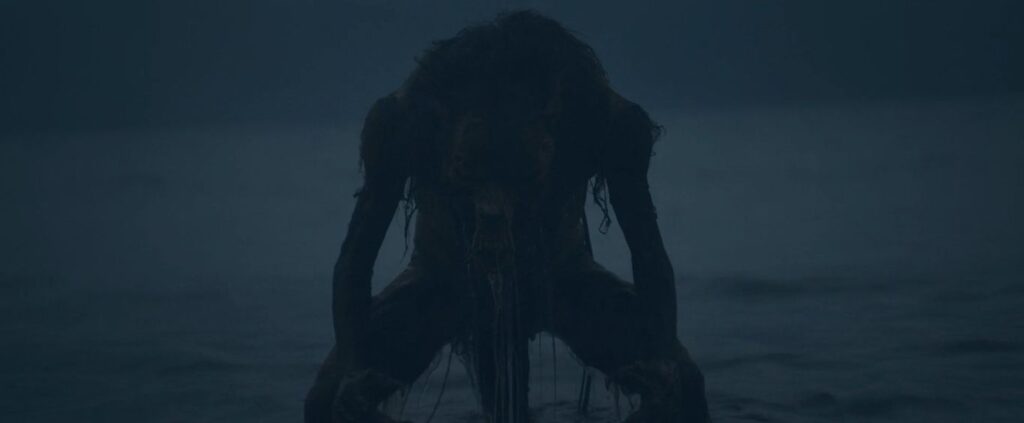
In this world, a werewolf does not require a conscious or living host to reanimate itself. When the full moon rises, the dormant curse completely takes over the dead organic matter, forcing the shattered, mummified corpse to reshape into a big hairy werewolf bastard.
While living, Stump could barricade himself or lock himself in his own electrified cage to prevent the werewolf from killing random people. In death, he could no longer do that, creating an unrestrained monster that could kill pretty much at will.
Unpacking the Logic: The Failed Cures in the Cabin
So we know that Stump spent over three decades attempting to cure his ailment using traditional folklore as he meticulously logged every failure on VHS tapes. But what exactly were they? Well, some of the noted examples were as follows:
Silver Nitrate: Stump refined silver into a baking flour consistency and rubbed it directly onto his gums for rapid absorption into his bloodstream. It yielded no results.
Silver Bullets: He shot himself in the leg and shoulder with silver rounds, leaving one lodged in his flesh for weeks. Rather than reversing lycanthropy, it simply gave him sepsis… Oops.
Researching Blood Transfusions: After tracking down Lou Bishop’s medical records, he theorised that Lou’s transformation was arrested because of an immediate full blood transfusion, looking into blood replacement as an intervention. It seems as though he was too far gone for this to work, however.
Shaving and Hair Growth: Stump noticed aggressive, foot-long hair spurts immediately after transformation cycles and repeatedly shaved himself clean, hoping physical deprivation might disrupt the metamorphic process.
Electrocution: He wired a custom steel enclosure to massive generators to physically paralyse the werewolf each cycle. The heavy current continually blew breakers and fuses, leaving him searching for a permanent fix until suicide seemed like the only exit.
Suicide: Stump genuinely believed that the only way to cure the problem was to take his own life. He thought that his death would lead to the death of the werewolf. Obviously, he was wrong, the werewolf does not need the host to be living.
How Did The Werewolf Escape The Basement After Stump’s Suicide?
The werewolf escaped the basement after Stump’s suicide because it retained at least some of Peter Stump’s human psyche and knowledge and was aware of how to use the retina scanner to unlock the door. This is the exact reason why Stump built the electrified cage to stop the creature escaping.
After Peter Sump took his own life, which he appears to have done immediately after a full moon cycle, the werewolf would obviously have been trapped in the basement. Stump didn’t see this as a huge problem because he thought the werewolf would die with him.
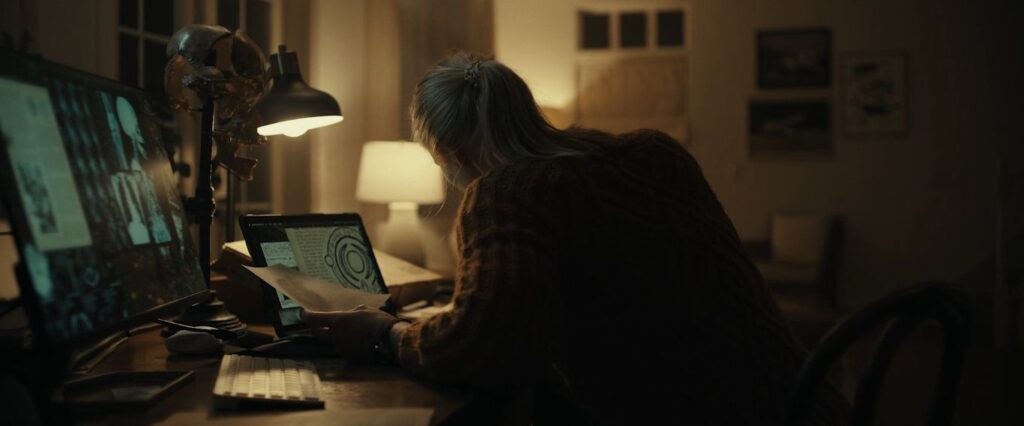
When the next full moon came, 30 days after Stump’s suicide, the werewolf emerged despite the host being dead. Naturally, it typically would have been trapped in the electrified cage when Stump was still alive. Now that he was dead, however, it was loose in the basement.
The fact that the werewolf actually uses the retina scanner to unlock the basement door when Meg is hiding down there implies that it retains some of Peter Stump’s psyche.
When the post-suicide transformation took place, the werewolf would have unlocked the door using the retina scanner and simply left to go on a rampage. Naturally, after the killings, when sunrise came it reverted back into Stump’s corpse which was found next to the victims.
Stump was apparently aware that the werewolf had this ability because he chose to lock it in an electrified cage to prevent it escaping after transformation. He just didn’t assume that the creature would survive after he took his own life.
Thematic Spotlight: Stump’s Hopeless Search for a Cure
There’s a little bit of extra tragedy buried in the story here that is only briefly examined. Aside from how Stump was completely unable to find a cure for his ailment, if he ever managed to, he still would not have been able to go back to his family.
Meg’s mother, upset by the betrayal and unwilling to look into Peter’s disappearance, registered his disappearance, changed their names, and moved away from the family home. Even if Stump managed to find a cure, he never would have been able to return to his family because they were already far away and living new lives.
He spent decades locked away in a basement trying to cure himself so that he could return to his family but they would have never been there when he got back. Meg seemingly begins to resent her mother for keeping some of the details hidden from her but it doesn’t really hit until she watches the tapes in the cabin and learns the truth.
Why Did Lou Bishop Have a Psychic Connection to the Werewolf?
Lou Bishop shared a psychic link with the werewolf due to what was termed as an “incomplete transfer” during the 1991 attack. Due to massive blood transfusions given to Bishop in an attempt to save his life, the lycanthropia wasn’t able to completely infect him.
Bishop was mauled to the brink of death, losing limbs, most of his face, and a lot of his motor function. Because he received an enormous, immediate blood transfusion to save his life whilst in a prolonged medical coma, much of the viral thread was actually flushed out of his body. He never completed the metamorphosis into a werewolf, but the dormant biological connection remained rooted in his nervous system.
During every full moon, Bishop suffers from nightmares where he witnesses events from the entity’s viewpoint. For decades, he saw only the bars of Stump’s basement cage because that is where Stump had been trapping himself. Once Stump died and the monster escaped out into the wild, Bishop’s vision shifted to seeing the wolf actively hunting and killing people.
Why Were Lou Bishop And Daniel At The Crime Scenes?
Lou Bishop and Daniel were at the crime scenes because Bishop was witnessing the werewolf killing people through their shared psychic link. Bishop was looking for closure.
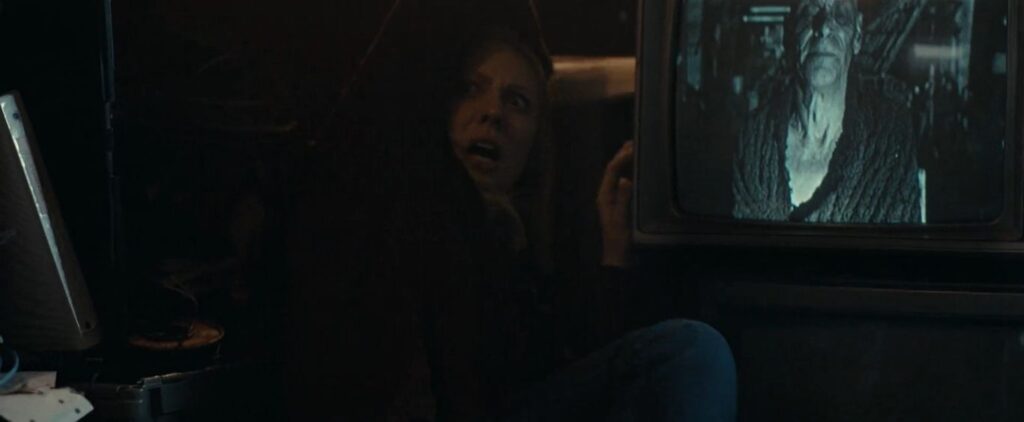
Due to Bishop’s nightmares shifting from simply the bars of a cage to active killings, he wanted to visit the places he was seeing in his dreams. Daniel took him to those places by using police scanners to see where the crime scenes were that the police were investigating.
Bishop wanted to kill the creature and find closure for the decades of pain he had suffered, hence why he went to the locations.
Did You Know: Officer Lenny’s Fate
Something that I think could potentially get lost in some of the cabin based excitement during the final act of the film is Officer Lenny’s fate. I mean, we know that the werewolf tears him apart, but there’s a reason why he essentially sacrifices himself to save Meg and Marks.
Officer Lenny was bitten on the arm during the police station assault. By the time he reaches the cabin and heads outside to look for a generator, he has realised that his fate is pretty much sealed. He is suffering from a headache and tremendous pain and knows that he will transform into a werewolf if he lives. With this in mind, he realises that he would rather die than suffer that fate. Before he can fully turn, he sacrifices himself offering Meg and Marks a chance to escape into the basement.
Now, I can imagine you asking “Well, won’t he turn into a werewolf after death in exactly the same way Stump did?”. The answer to that question is actually no, he won’t. The transformation didn’t have a chance to complete before he died. Anyone who is outright killed by the werewolf simply dies. It’s only those who survive with wounds that actually become werewolves.
How Was the Werewolf Defeated at the Cabin?
The werewolf wasn’t so much killed as simply neutralised. Meg achieved this through a combination of heavy electrical voltage, outlasting the full moon, and impaling the creature just before sunrise.
After Officer Lenny sacrificed himself to give Meg and Marks a chance to escape, the creature followed Meg and Lieutenant Marks to the cabin basement. It used Stump’s actual eyes to open the retina scanner to bypass the locked door and enter. Again, indicating that the creature does retain some of his psyche, even after death.
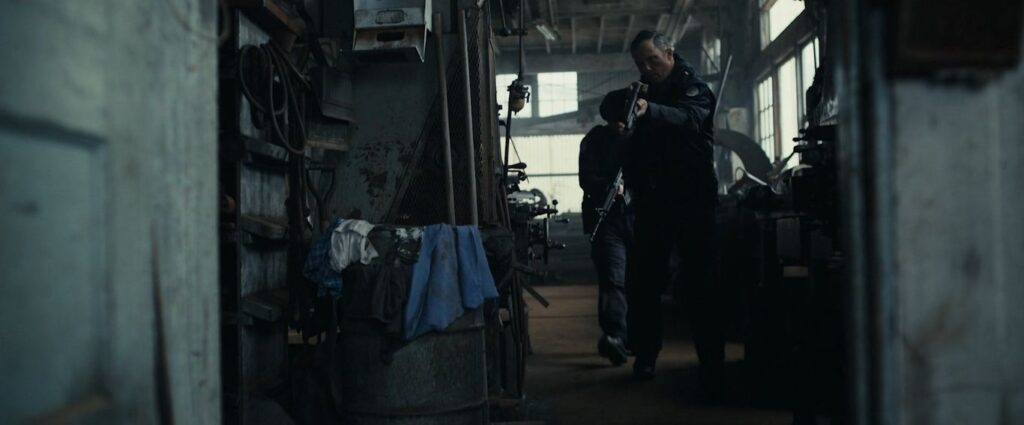
After a brief cat and mouse chase (or wolf and mouse chase, as the case may be), Meg is forced to jump into the cage for safety. Remembering Stump’s notes regarding the electrified cage, Marks uses his father’s watch (the one his son wanted to fix) to bridge the gap where the fuse is missing, throws the high-voltage breaker, and shocks both himself and the wolf.
This buys Meg time to escape. In her unconscious state, she briefly dreams of her late father instructing her to finish off the wolf so that it can’t hunt down and kill others. Just to clarify, he’s not actually there in this scene, it’s simply a hallucination.
Meanwhile, the creature had regained consciousness and headed to the beach where Megan pursues it.
Following her father’s advice that the monster had to be lured and held until dawn, Meg first tried to trap the creature in the water. Realising that this was hopeless, she made her way to an old boat hook washed up on the rocks.
Waiting beside it and noticing the sun rising, she baits the werewolf into a direct charge. She impales the beast through the chest using the heavy steel hook, just in time for the morning sun to break over the horizon. With the daylight ending the lunar cycle, the werewolf collapses and reverts back into Peter Stump’s inanimate, scarred corpse.
Thematic Spotlight: Tangible Rot vs Emotional Absence
Throughout the entire narrative, Meg’s dedication to forensic science acts as something of a coping mechanism for maternal erasure and paternal absence. Joni chose to erase Peter completely, changing family names and framing his disappearance as criminal abandonment.
Meg reflects earlier on seeing their family dog decompose by the roadside after her dad left and how it inspired her choice to do what she does. She chose to study tangible physical remains because bones and decomposition do not disappear into thin air. This hints that her father leaving did impact her more than she allowed herself to believe. She would rather deal with rotting flesh than something that simply vanishes.
Examining Stump’s corpse forces her to confront the ugly, physical truth of her father’s sacrifice. He never ran away out of selfish indifference; he ruined his own life, severed his family ties, and ultimately took his own life purely to keep his daughter safe.
What Does the Final Scene Mean?
The ending shows Meg and Lieutenant Marks out in the woods conducting medical experiments on Peter Stump’s chained corpse in an attempt to cure the lycanthropia, while Lou Bishop finally receives the answers he sought for thirty-four years.
Rather than burning Stump’s remains and risking the unknown dispersal of what could be an immortal pathogen, Meg uses her forensic background to carry on her father’s attempts to cure the affliction.
Using a dictaphone on 1 May 2026, she records a 50 percent dosage increase of Aconitum (monkshood or wolfsbane) directly into the corpse. They have chained the body in an outdoor enclosure so that it can’t escape after transformation, determined to methodically find a real cure. If this one fails, which it apparently does as we hear the werewolf howling at the end, they will keep trying month after month.
Simultaneously, Daniel plays Stump’s confessional tape for Lou Bishop. By watching Stump express genuine remorse over the mauling, Bishop receives at least some degree of closure: he was not attacked by a malicious sadist, but by an everyday worker infected by a supernatural nightmare beyond human control.
Werewolf Lore & Easter Eggs You Might Have Missed
While The Cycle plays out as a pretty gritty and grounded procedural crime thriller, writer-director Jordan Downey buried a massive collection of fun nods to classic werewolf cinema and historical folklore throughout the script.
- The Peter Stump / Werewolf of Bedburg Connection: The name Peter Stump is a direct reference to Peter Stumpp (often anglicised as Peter Stump), the 16th-century German farmer executed near Cologne in 1589. Famously dubbed the “Werewolf of Bedburg”, Stumpp was accused of using a magic girdle to transform into a ravenous wolf to commit horrific murders across rural Germany. Giving the father in The Cycle this exact name serves as an immediate tip-off for genre historians and one of the big tells I talk about in my review. If you know this name, you are going to clock the twist immediately.
- The “Mariphasa” Tape (Werewolf of London): In the background of Peter’s cabin amongst his stacks of cure trials, one of the labelled VHS tapes reads Mariphasa Lupino Lumino. This is a very nice tribute to Universal’s foundational 1935 classic Werewolf of London, where Dr Glendon travels to Tibet to locate the fictional, nocturnal phosphor-flower that temporarily suppresses the beast.
- The Name “Glendon Mathers”: Speaking of Werewolf of London, Peter’s recurring pseudony, the name he gives to the 911 dispatcher in 1991 and on his private mail contracts, is “Glendon”. This serves as a sly double nod to Wilfred Glendon, the tragic botanist protagonist from the 1935 film.
- Aconitum / Wolfsbane: In the final scene, Meg increases the dosage of Aconitum by 50 percent. Aconitum is the botanical name for monkshood, better known throughout folklore and the 1941 classic The Wolf Man as wolfsbane, the primary medicinal herb historically linked to combating or curing lycanthropic infection.
- The “Silver Lady” Jukebox Track: I might be reaching a bit here, but early in the film, while Meg works through case files in the diner, the song playing in the background is “Silver Lady” by David Soul. Beyond its delightfully late-’70s melancholy vibe, the lyric “Come on, Silver Lady, take my word / I won’t run out on you again” subtly foreshadows both the silver cure trials and Peter’s abandonment of his family.
- Deconstruction of Traditional Silver Myths: Rather than treating silver as a magical silver-bullet weakness, the film actually deconstructs it. Peter’s audio and video diaries show that ingesting refined silver nitrate and shooting himself with silver rounds did nothing to kill the parasite, instead yielding standard, real-world consequences like blood toxicity and severe physical infection.
There’s probably a bunch more in there that I missed. I’m going to look a lot more closely on a rewatch when this makes its way to 4k Blu-ray.
Final Thoughts: A Grounded, Unflinching Monster Feature
The Cycle does a fantastic job of helping to refresh the tired werewolf subgenre. By treating lycanthropy as an infectious, biologically immortal condition that persists through death, the film injects genuine forensic procedural weight into a classic monster formula. It gives Peter Stump’s tragedy real emotional resonance and closes on an well-earned, bittersweet note of scientific duty.
Thanks for reading! If you enjoy deep dives into horror lore without the padding, stick around and check out our other Ending Explained breakdowns, read through our horror reviews, or browse our curated horror movie lists.
Frequently Asked Questions
Does Peter Stump survive at the end of The Cycle?
No. Peter Stump died by suicide approximately one month prior to the main events of the film. His dead body was merely being reanimated and transformed during full moon cycles by the immortal lycanthropic entity within his cells.
Why did Peter Stump leave his family?
Peter Stump left his family to protect them. He wanted to cure the lycanthropia and then return to them when he was no longer cursed.
Why did Stump’s corpse have so many healed injuries?
Stump’s corpse had so many healed injuries (broken ribs, hands, etc) due to the many times he had transformed into a werewolf. Every time Stump transformed, his bones would be snapped, stretched, and broken to accommodate the werewolf’s form. These injuries would then heal after turning back. Stump mentioned how painful this is and how much worse it has become as he got older.
Would Meg have been allowed to work on this case?
Absolutely not! Meg would not have been allowed anywhere near this case as it would have presented a massive conflict of interests. The narrative does try to get around this by having the officers pulling strings to push things forward but the truth is this would never be allowed in real life.
Can forensic science really 3D print an entire skull from a tiny bone fragment?
In reality, absolutely not. While forensic anthropologists routinely use 3D surface scanners and CT data to print replicas of existing cranial remains or mirror symmetrical bones (such as mirroring an intact left cheekbone to replace a smashed right one), you cannot extrapolate an entire unique skull from a fingernail-sized piece of an eye socket. The film ramps this up into pure “CSI tech-magic” to quickly establish Meg’s elite credentials and set up the later plot point where her lab team attempts an age-progression render on Peter Stump’s remains and realises that he is a werewolf.
Why did the werewolf attack the police station?
Stump’s corpse had been transported into the station basement morgue for forensic examination. As night fell and the moon peaked, the corpse underwent its lunar transformation, slaughtering the coroner and desk officers before escaping into the night.
What was Meg and Marks testing in the woods at the end?
In the final scene, Meg is administering high-potency Aconitum (commonly known as wolfsbane) into Stump’s chained-up remains, continuing her father’s research to find a scientific or herbal neutraliser for the curse.
What was the entity aboard the sunken ship in 1991?
The film deliberately leaves the exact origin of the caged maritime beastie ambiguous, establishing only that an unmarked vessel crashed into rig K-218 carrying dead crew members and a caged creature that clawed Stump before sinking. We can infer that it was a werewolf, however, likely dragged up from the ocean by the fishing crew after being placed there to prevent it harming people.
A Note on Ending Explanations
While we aim to provide comprehensive explanations based on the events on screen, film analysis is inherently subjective. The theories and conclusions presented in this "Ending Explained" feature are personal interpretations of the material and may differ from the director's original intent or your own understanding. That's the beauty of horror, right? Sometimes the scariest version is the one you build in your own head.
You might also like:
- Unseen (2023) Review – A Stylish and Spirited Cat-and-Mouse Thriller
- Undertone (2025) Review – A Personal, Sound-Heavy Horror with Mixed Results
- Relic (2020) Review – A Melancholic and Metaphorical Study of Decay
- 20 recent zombie comedy horror movies that prove the apocalypse can be hilarious
- Nocebo (2022) Ending Explained – The Sweatshop Fire & The Ongo Curse
Disclaimer: Images, posters, and video stills used in this horror ending explained article are the property of their respective copyright holders. They are included here for the purposes of commentary, criticism, and review under fair use. Knockout Horror makes no claim of ownership and encourages readers to support the official release of all films discussed.