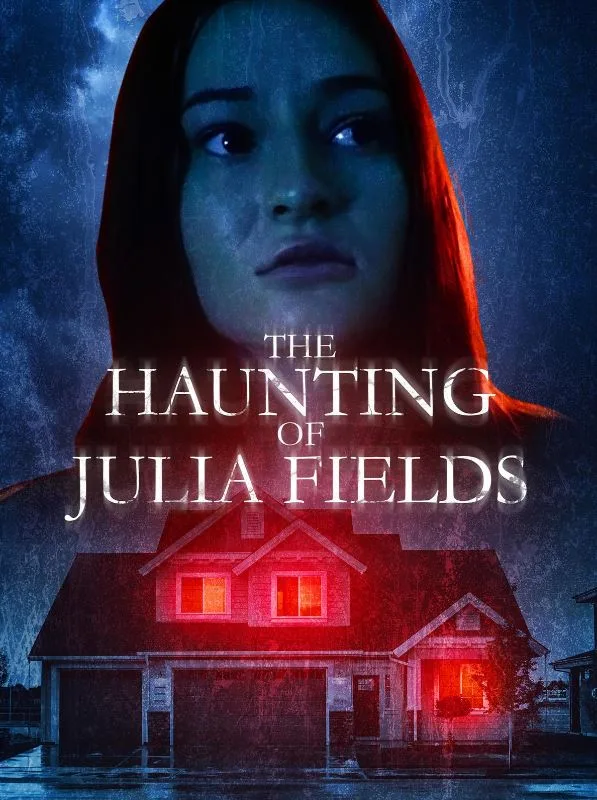
The Haunting of Julia Fields (2023) Ending Explained – Is It True?
Movie Details: Director: Joseph Mazzaferro | Runtime: 1h 22m | Release Date: 2023 | Star Rating: 1.5/5 Stars
Welcome to Knockout Horror. Today we are digging into the “true story” claims of the Tubi original The Haunting of Julia Fields. This movie tries very hard to convince you that you are watching a real-life tragedy, but as is often the case with low-budget horror, the truth is a bit more complicated.
If you have just finished the movie and are wondering if Sam Wells was real, why Julia shot her friend, or if the Florida “Stand Your Ground” law applies here, you are in the right place. We are breaking down the ghost landlord, the legal aftermath, and the dubious true story claims.
⚠️ Warning: Major spoilers follow below.
The Ending in Brief
The TL;DR: Julia was being haunted by the ghost of Sam Wells, a man who murdered his family in the house before killing himself. The haunting triggered a relapse of Julia’s pre-existing mental illness, causing her to become dangerously paranoid. Mistaking her arriving friend for a stalker, Julia shoots and kills her. She is eventually found “legally incompetent” and sent to a psychiatric hospital.
Who was Sam Wells? Sam was the former owner of the house. He kept his wife and son captive and neglected them before murdering them. He committed suicide, and his spirit remained in the house as the “landlord” Julia interacted with.
Why did she shoot her friend? In a state of paranoid psychosis, Julia mistook her friend (who walked in carrying a birthday balloon) for a stalker she had seen earlier at the beach. Her “shoot first” response was fueled by a lack of medication and the trauma of the haunting.
The Resolution: Julia is arrested for the murder of her friend. The film ends with text claiming she was found legally incompetent to stand trial and was committed to a psychiatric facility for life.
Good to Know: Despite the “True Story” claims, the case of Julia Fields is entirely fictional. It draws loose inspiration from Florida’s Anthony Todt family murders and urban legends about ghost landlords.
Table of Contents
The Haunting of Julia Fields Ending Explained
No plot recap here, I know you want one thing so let’s do some explaining and debunk that whole true story thing. To understand the ending, we have to look at the intersection of a genuine haunting and Julia’s fragile mental health. The film plays with the “is she crazy?” trope, but ultimately reveals that the supernatural and the psychological were working in tandem to destroy her.
Sam Wells: The Ghost Landlord
The “Sam” Julia interacts with throughout the film is the ghost of Sam Wells. Julia discovers a mugshot and news report revealing that Sam murdered his wife and child in the very house she is living in. The “weirdness” she experienced, falling lamps, scratching in the attic, were echoes of Sam’s crimes.

His wife was kept locked in the bedroom with a single lamp, and his son was neglected by being left in the attic. Sam was never a landlord; he was a restless spirit reliving his control-freak tendencies. By the time Julia realises she is renting from a dead man, her grip on reality has already started to slip.
Running from the Past: Mental Illness and Xavier
To understand Julia’s decline, we have to look at the baggage she brought with her to Florida. Julia isn’t just moving for the sunshine; she is actively fleeing a toxic and abusive relationship with her ex-boyfriend, Xavier.
Even though Xavier only appears as a presence on her phone screen, his impact on her mental state is profound. That’s not all, though… Julia is already a “high-risk” tenant for a ghost landlord because she has a history of severe mental illness, including documented struggles with psychosis.

The move was supposed to be a fresh start; a way to reclaim her autonomy. However, the isolation of living alone in a new state, combined with the stress of Xavier’s constant, boundary-crossing messages, and a ghost-landlord that’s actually a bit more competent than your average living landlord creates a perfect storm.


A Series of Bad Decisions
By the time the haunting begins, Julia is already emotionally exhausted. She eventually stops taking her medication, believing she is strong enough to handle her new life on her own. This decision is the turning point of the movie.
Without her medication to anchor her, the real supernatural events (Sam’s ghost) and her internal paranoia (the fear of Xavier and the “balloon man”) merge into one new and altogether more frightening reality. She wasn’t just running from a bad boyfriend; she was running from a version of herself she wasn’t ready to face… And a ghost landlord, we can’t forget that.
The Psychology of Paranoia and Fatal Error
The tragedy of Julia Fields highlights a terrifying psychological reality: hyper-vigilance. When a person is in a state of paranoid psychosis, their brain’s “threat detection” system, the amygdala, becomes overactive. They aren’t just “scared”; they are experiencing a sensory distortion where the brain misinterprets mundane stimuli as lethal threats.
In this state, a shadow becomes a stalker, and a celebratory balloon becomes a weapon. This “shoot first, ask questions later” mentality is a desperate attempt by the brain to regain control over an environment it perceives as hostile. Sadly, this leads to mistaken identity shootings, a phenomenon that occurs with alarming frequency in the real world.
When you combine a history of trauma (like Julia’s relationship with Xavier) with a lack of medication and a genuine external stressor (the ghost), the brain effectively loses its ability to distinguish between friend and foe. The result isn’t “self-defence” as such, it’s a tragic accident born from a mind that has completely disconnected from reality. Julia was simply a mess.
The Mistaken Identity Shooting
Compounding the haunting and mental decline was a creepy encounter with a man at the beach with balloons. In her state of hyper-vigilance and psychosis, Julia becomes convinced this man is stalking her. When her friend arrives unannounced (using the key Julia left for her) and carrying a birthday balloon, Julia doesn’t see her friend; she sees her stalker.
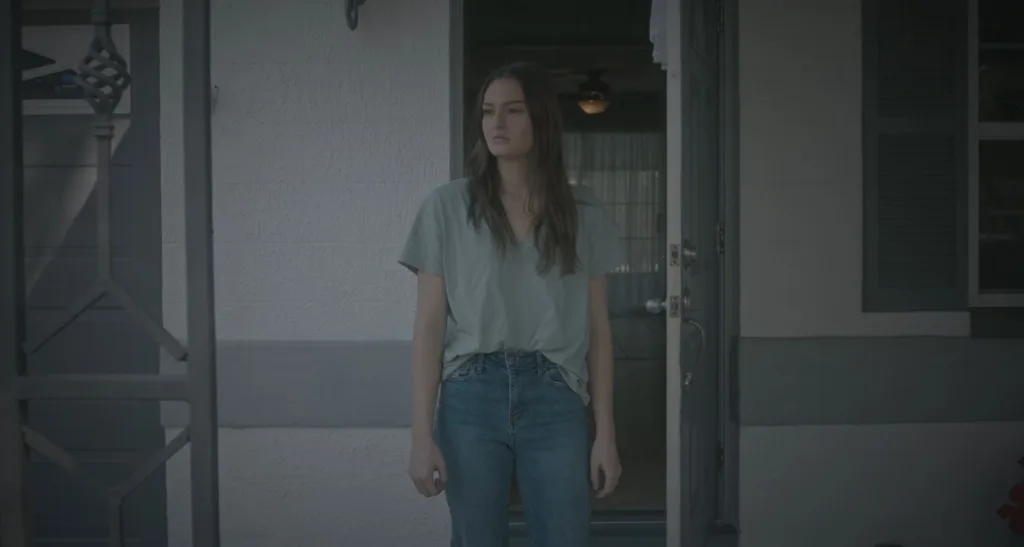
Julia fires her .45 Magnum, killing her friend instantly (and anyone who was behind her within 100 yards). The tragedy isn’t just the death, but the fact that Julia’s attempt to protect herself from a ghost and a “weirdo” led her to kill the only person trying to help her.
Legal Reality: Standing Your Ground?
The film states Julia was “convicted” but “incompetent to stand trial.” Legally, this is a mess. If you are incompetent to stand trial, there is no trial, and therefore no conviction.
Furthermore, Florida is a “Stand Your Ground” state. If Julia reasonably believed an intruder was entering her home, she had the legal right to use deadly force. However, because her fear was rooted in psychosis and delusions, the “reasonableness” of her fear is void.
In the real world, Julia would likely be held in a state psychiatric hospital indefinitely until she was deemed “fit” to stand trial, or found Not Guilty by Reason of Insanity.
Debunking the “True Story” Claim
Is there a real Julia Fields? No. The film is not based on a specific true story. It is a work of fiction that uses common tropes from real Florida crimes to add an air of authenticity.
The Sam Wells case bears some resemblance to the Anthony Todt family murders in Florida, where bodies were found in a home following an eviction notice. However, the haunting and the friend-shooting are entirely fabricated for the movie.
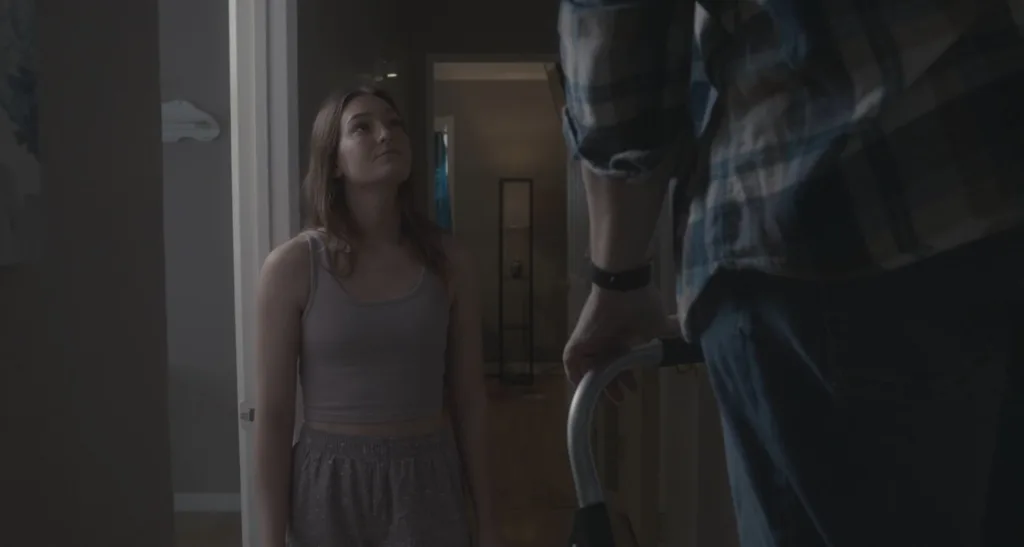
Directors of Tubi-style horror often use “Based on True Events” as a marketing tool to get people talking on Reddit. It worked! Hell, even I am talking about it and this ending explained has had tens of thousands of views.
The True Story: Anthony Todt
While The Haunting of Julia Fields is fictional, it draws heavy inspiration from the 2020 Anthony Todt case in Celebration, Florida. Much like the film, the bodies were only discovered after mail piled up and an eviction notice was taped to the door. When federal agents arrived to arrest Todt for healthcare fraud, they found him living in the house with the decomposing bodies of his wife, three children, and the family dog.
The real-world details are as grim as any horror script: the victims had been drugged with Benadryl and stabbed. Todt initially confessed, claiming he and his wife had a “murder-suicide pact” to pass over together before a coming apocalypse. He later tried to blame his wife for the killings, a story the jury flatly rejected.
In 2022, Anthony Todt was convicted on four counts of first-degree murder and sentenced to life in prison without parole. At his sentencing, the judge famously labelled him a “destroyer of worlds,” a fitting title for a man who dismantled his entire family under the guise of “saving” them.
Frequently Asked Questions
Was it all in Julia’s mind?
The film suggests it was a mixture. While Julia had a history of mental illness, the ghost of Sam Wells was real within the world of the movie (as evidenced by her ex-boyfriend seeing a figure in her video). The haunting caused her to stop taking her medication, leading to a total psychotic break.
Did Sam Wells really murder his family?
Yes. In the movie’s lore, Sam Wells murdered his wife and child and lived with their corpses for a month before killing himself. Julia found this out via a bank phone call and subsequent research.
Why did she shoot her friend?
It was a case of mistaken identity fueled by paranoia. Julia thought the “balloon man” from the beach was breaking into her house. When her friend walked in with a balloon, Julia fired before confirming who it was.
Final Thoughts – Not a True Story
The Haunting of Julia Fields is a cautionary tale about the dangers of mixing ghosts with pre-existing trauma. It’s also a true story about approaching that true story claim with a degree of trepidation. While the production quality and legal accuracy of what happens leaves a lot to be desired, the final tragedy hits home, I suppose. It reminds us that the most dangerous ghosts are often the ones we carry in our own minds. Thanks for reading!
Looking for more? If you enjoyed this breakdown, check out our review of The Haunting of Julia Fields or browse our latest Horror Reviews.
A Note on Ending Explanations
While we aim to provide comprehensive explanations based on the events on screen, film analysis is inherently subjective. The theories and conclusions presented in this "Ending Explained" feature are personal interpretations of the material and may differ from the director's original intent or your own understanding. That's the beauty of horror, right? Sometimes the scariest version is the one you build in your own head.
You might also like:
Disclaimer: Images, posters, and video stills used in this horror ending explained article are the property of their respective copyright holders. They are included here for the purposes of commentary, criticism, and review under fair use. Knockout Horror makes no claim of ownership and encourages readers to support the official release of all films discussed.