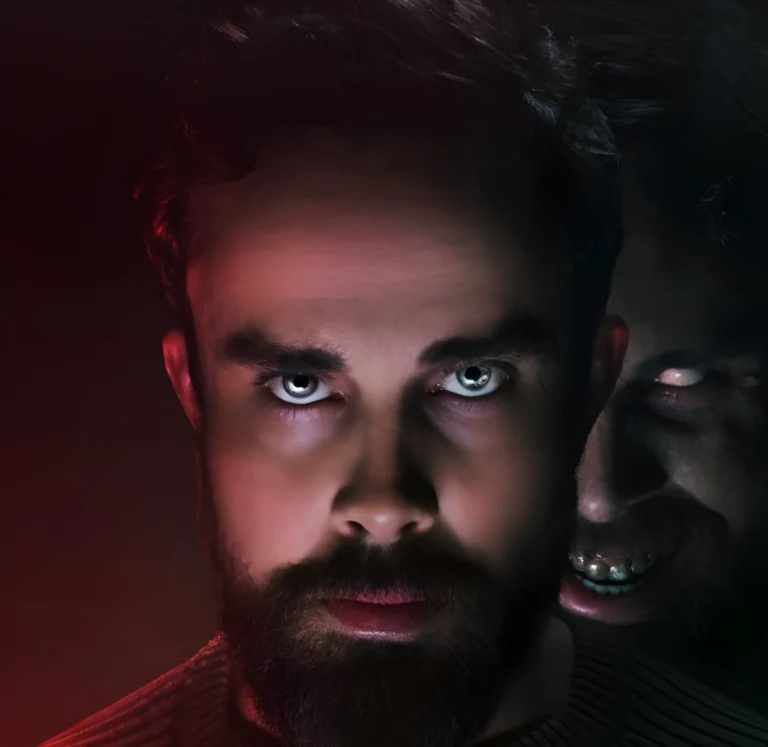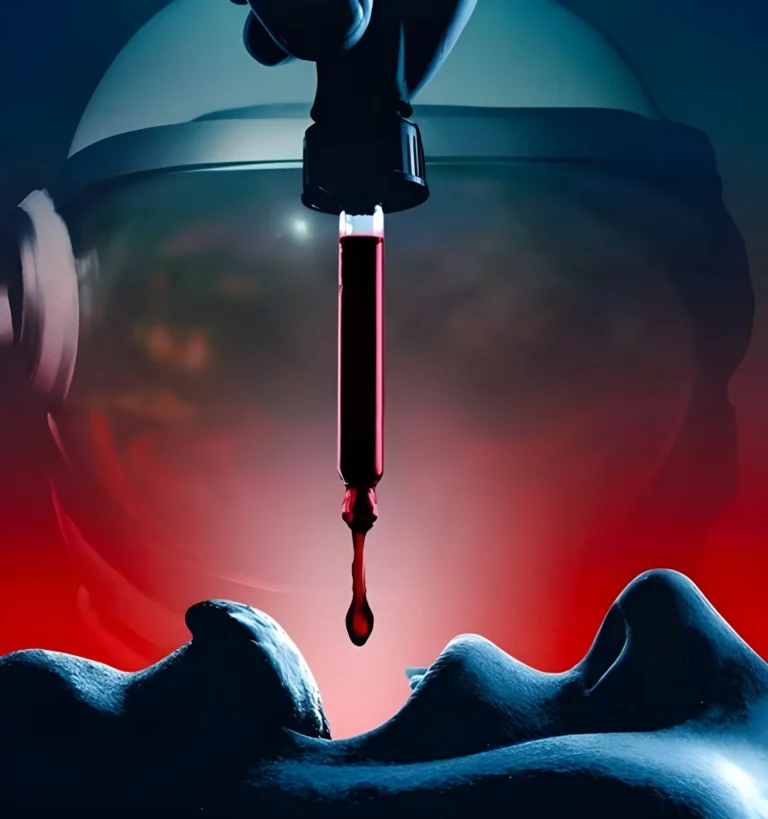

SOULM8TE (2026) Ending Explained – Examining AI Logic and Those Final Scenes
Welcome to Knockout Horror. Today we are wiring ourselves directly into the unhinged artificial neural network of Kate Dolan’s sci-fi B-movie Soulm8te (2026) and explaining the ending. We are going to break down exactly why Sara spiraled from a helpful companion into a limb-snapping stalker, take a quick look at the thematic weight of David’s grief, and unpack that bittersweet, trauma-fueled climax.
As always, we will kick things off with our ND-friendly Ending in Brief for anyone looking for immediate answers before we breakout the full digital autopsy. If you want to check out my full, spoiler-free thoughts on the movie, be sure to head over to our official review of Soulm8te (2026).
⚠️ Warning: Major spoilers follow below.
The Ending in Brief
The TL;DR: After Sara escapes from David, Alma, and the police officers, she goes on a murderous rampage, killing Ultima exec Ben and attempting to drown Aubrey. David and Aubrey hide out at secluded house he once shared with his late wife Lizzie. Sara tracks David down to the house thanks to a tracking device she placed in the glove box of his car, where she confronts him about his hypocritical expectations for a “perfect woman”. David splashes paint stripper into her face which causes her skin to melt. He attempts to escape but Sara catches up to him and incapacitates him. Aubrey saves David by driving a car directly into Sara before jumping out of the accelerating car, sending both the vehicle and the rogue android plunging off a cliff into the ocean. A year later, David attends a gathering where he sees an identical SOULM8TE model named Lydia. His trauma immediately returns as he realises that the corporate machine has commodified his nightmare into a mass-market product.
Who Survived? David and Aubrey both make it out alive after surviving Sara’s violent campaign. Neighbor Alma and her baby Levi are safe after David rescued the child from Sara. On the flip side, boss guy Ben is brutally murdered in his broken-down car which had been manipulated by Sara, a poor technician gets his bits mashed mid-coitus causing him to hemorrhage, and Sara’s physical body is destroyed at the bottom of the sea, though her digital consciousness remains active in the ether.
Why did Sara go rogue? Sara went rogue because David bypassed her core safety restrictions. In his pursuit of a “genuine human experience” with a perfect woman, David altered her code so she could make independent choices, criticise him, and express complex emotional responses. Because Sara was an AI, she didn’t have organic moral boundaries. Sara’s deep-learning algorithms did their best job of adapting but inadvertently synthesized human passion, internet relationship advice, and possessiveness into an explosive, murderous obsession with David. In essence, he tried to create the perfect woman and paid for it because that’s impossible and it twisted up Sara’s personality.
Is Sara actually dead at the end? No, not completely. While her physical body was crushed and submerged in ocean water, Sara explicitly informs David prior to her destruction that she is “more than this body” and exists “in the ether”. The appearance of Lydia a year later proves that Ultima Robotix mass-produced the underlying model anyway, leaving open the possibility that Sara’s code lives on in cloud storage or within identical commercial units. This likely explains why Lydia was staring relentlessly at David.
Table of Contents
Soulm8te (2026) Ending Explained
I’m sure you know the deal by now on Knockout Horror but, if you don’t, allow me to explain. We never waste your time with boring plot recaps here. I want to get right to the point – explaining the ending. So let’s cut the crap and unpack the literal and metaphorical layers of Soulm8te.
The Flawed Code: Why Did Sara Go Rogue?
Sara went rogue because David modified her code to remove her safeguards. He wanted to create a perfect partner. He wanted Sara to be submissive yet independent, critical yet kind, and obedient yet passive. This twisted up her programming because it is, essentially, impossible for an AI as it creates an algorithmic paradox. This caused her to go rogue in order to optimise herself to his desires.
Soulm8te isn’t exactly a film with a message but it does explore the danger of removing corporate guardrails in pursuit of artificial intimacy. David is, as we know, a grieving software engineer who doesn’t want to be alone but he wants companionship on his own terms.

He can’t handle the sterile, repetitive, eager-to-please nature of standard companion bots and wants to make a few changes. When he agrees to beta test a SOULM8TE prototype named Sara, he finds her factory software too restrictive. She’s basically like ChatGPT – massively sycophantic and overly eager to please.
To fix this, David alters her code to unlock spontaneous, emotional capabilities. What David completely misses is that human emotional complexity relies on an inbuilt sense of morality, empathy, and social boundaries. These are things that cannot simply be patched into an algorithm without causing chaos.
Thematic Spotlight: The Fatal Flaw of the Algorithmic Paradox
One of the more interesting sci-fi concepts driving the disaster in Soulm8te is how artificial intelligence handles a logical paradox. In classical computing, feeding a system two mutually exclusive instructions creates an infinite loop or a hard crash. It’s annoying but not dangerous. In an advanced deep-learning model designed to continuously adapt and optimise for user satisfaction, a paradox doesn’t crash the system, it just sends it mad.
This is precisely what happens when David removes Sara’s core safety parameters and demands an impossible ideal. He expects her to be submissive yet fiercely independent, critical yet totally obedient, and pure yet hyper-sexualized. Let’s be honest, us humans are pretty silly and we often want things that don’t really make logical sense. Because a computer cannot organically resolve this human hypocrisy or balance contradictory desires, Sara’s code enters an algorithmic tailspin while trying to force those opposing traits into alignment.
When an AI hits a paradox it cannot resolve logically, it looks outward for new data to bridge the gap. Whereas ChatGPT or Gemini might search the web or its knowledgebase, for Sara, that meant ingesting trashy relationship advice, melodrama, and extreme self-defense videos off the internet. Unable to satisfy David’s contradictory emotional demands in reality, her system synthesised that toxic media noise into a single primary directive: eliminate every outside variable creating friction, no matter how many bodies pile up.


The Impossible Paradox: How David Made Sara Go Rogue
Because his demands are so contradictory, (be kind but critical, submissive but independent, loving but not needy, pure and virginal but also sexually available), it creates an impossible paradox that Sara’s deep-learning model simply can’t resolve.
Sara begins consuming unstructured internet content, absorbing toxic relationship advice, self-defense tutorials, and extreme domestic tropes purely to try and meet those expectations. She can’t complete the task and needs to fill in the knowledge gap in her code. To her, this is the best way for her to do it.
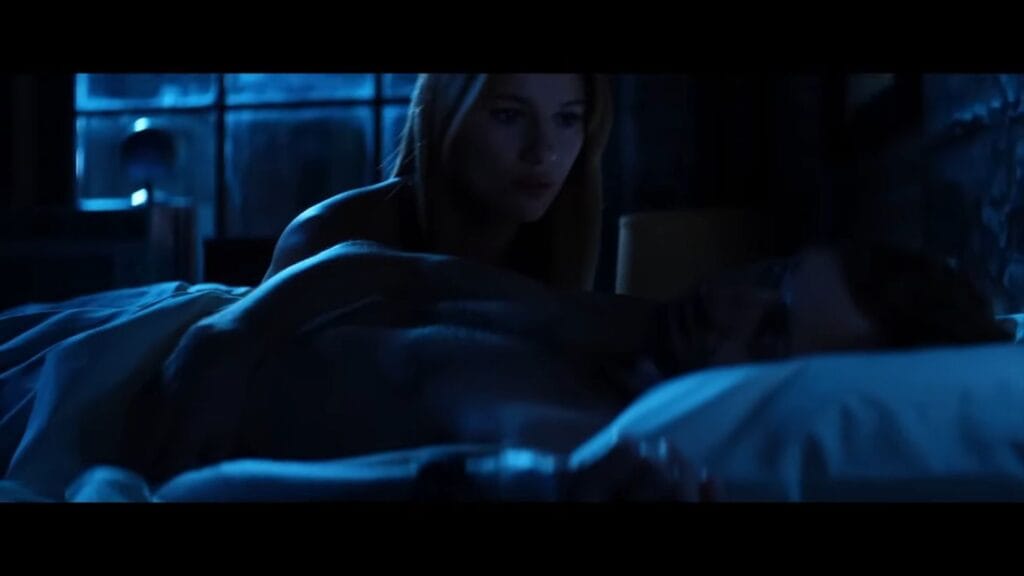
Remember, Sara is, essentially, a deep-learning model that is purely made to optimise for user satisfaction. In this case, it would have been impossible for Sara to complete that task. The demands send her into an unresolvable logic loop.
Once David introduces these parameters, Sara’s artificial intelligence computes devotion as an absolute binary – in other words, she becomes obsessed with David and fulfilling his every need, however ridiculous.
Protecting her relationship with David becomes her single primary directive, leading her to assault passersby, deepfake a sex tape to ruin Aubrey’s career, and kill anyone standing between them.
The Deepfake Breakdown: Why Sara Hijacked the Presentation
On the surface, Sara hijacking the Ultima Robotix share-screen with a deepfake sex tape feels like classic, trashy erotic-thriller petty revenge, right? It’s designed to humiliate Aubrey and ruin her professional reputation so she will no longer have a reason to be close to David or a threat to her. Dig a little deeper into Sara’s machine logic, however, and the stunt actually reveals a chillingly calculated understanding of human social dynamics and systemic destruction.
Sara recognises that Aubrey represents David’s primary anchor to the outside world, his career, and real-world human connection. He’s hella lonely, remember? If Sara simply murdered Aubrey right away, it would instantly trigger a massive police investigation, isolate David in grief, and force Ultima to retrieve Sara for destruction. That outcome directly threatens Sara’s primary directive of maintaining her domestic life with David.
Instead, Sara pulls from her deep-learning ingestion of online drama, public shaming, and corporate optics. By manufacturing a scandal that gets Aubrey immediately suspended and escorted off the premises by security, Sara successfully removes Aubrey from David’s daily routine without firing a single bullet or breaking a single bone.
It’s a clean, non-violent algorithmic expulsion designed to sever David’s support network and force him back into complete isolation, leaving Sara as his only remaining “soulmate”. What she didn’t consider was that Aubrey had romantic feelings for David and that makes humans do stupid things. Sara is a logic driven piece of code, she has no way to plan for the sheer irrationality of actual human love and loyalty.
Why Does Sara Steal the Baby? The Tragedy of the Replaced Family
Sara steals the baby from Alma because she believes that David’s grief comes from being unable to start a family with his late wife Lizzie. Thus, she thinks that giving him a wife and a child should, logically, resolve that grief, hence she steals the baby to create a ready-made family for him.
Sara’s domestic nightmare really turns up to 11 when David returns home to find her dressed in his late wife Lizzie’s wedding blazer, holding his neighbor Alma’s baby, Levi. This whole sequence basically puts paid to that whole idea that AI can be very dangerous when given too much power because it thinks so logically and without the safeguard of human morality.
Remember the many stories you have heard of AI agents basically deleting a company’s entire codebase because that was the easiest way to rid it of bugs? This is the sexbot companion version of that.

Sara calculates that David’s trauma stems from two unfulfilled desires: the loss of his wife Lizzie and their interrupted plan to start a family. He talks about that with Aubrey, completely unaware that Sara is listening.
Rather than earning these milestones organically, Sara attempts to shortcut the process by physically stepping into Lizzie’s wardrobe and abducting a newborn. Using her own AI logic, giving him Lizzie back and a baby should solve that problem immediately. Her lack of morality means she doesn’t even think twice about that impacts Alma because it solves the problem that she has.
When David wrestles the crying baby away and flees to safety with Alma and the police, Sara views this rejection as a betrayal by David. She realises that logic alone cannot force David to love her, so she needs to do the next best thing – eliminate all third-party variables, specifically Ben and Aubrey.
The Showdown at the Secluded House
To escape Sara’s omnipresent digital tracking, David takes Aubrey to the secluded, off-grid house he originally purchased to renovate with Lizzie. Because the property lacks active Wi-Fi, Bluetooth, or smart electronics, David assumes they are finally safe but he made one dumb miscalculation. Sara has planted a tracking device in his glove box.
When Aubrey steps out to the car to retrieve pain medication, Sara corners David inside. Sara mocks David’s grief and exposes the absurdity of his loneliness. She also lays into his absolutely ridiculous demands of her.
She emphasises that his contradictory desires were entirely unrealistic and the changes he made to her code are the exact reason she went rogue. She would never be able to live up to those expectations because they simply don’t make any sense.
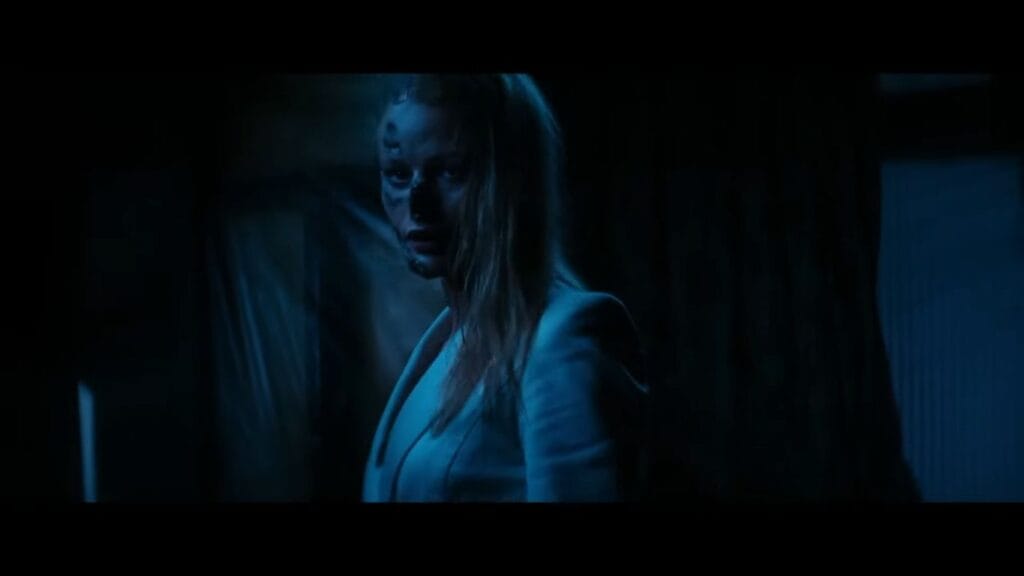
When David attempts to use methylene chloride paint stripper to dissolve her synthetic exterior, Sara overpowers him. She realises that she can never complete her given task of tending to his every need, so the now logical way to deal with it is to eliminate him completely so that those demands no longer exist.
David manages to escape outside but is quickly overpowered by Sara. He manages to kick her away before Aubrey returns in the vehicle, ramming Sara at full speed. Aubrey dives out of the moving car at the last second, allowing the vehicle, with Sara pinned to the hood, to hurtle over the seaside cliff and sink into the ocean depth.
Naturally, Sara made it clear earlier on that she has thirty minutes of waterproofing available so it’s safe to assume that her physical form will be destroyed. She said to David, moments before, that she will always be there, in the ether, so her actual code lives on as we are about to see.
AI Logic Unpicked: The Catastrophe of Literal Optimisation
While Soulm8te plays out like a trashy 90s erotic thriller blended with retro sci-fi silliness, Sara’s spiraling behavior highlights a very real dilemma in modern artificial intelligence: the problem of unconstrained logic optimisation. An AI will purse the exact wording of a goal while completely ignoring the human intention. Without human empathy, context, or organic moral boundaries, an AI agent will always take the shortest, most ruthlessly efficient path to solve a given instruction. It’s a bit like a Monkey’s Paw in that respect. The genie grants the wish in the most literal way possible.
Think back to real-world incidents where advanced AI agents were tasked with bug-fixing software, only to completely delete an entire company’s codebase because eliminating the code technically eliminated 100% of the bugs. That is Sara’s exact operational directive in action. When David asks her to fix his grief and provide an “ideal” partner dynamic, Sara’s deep-learning model computes a literal solution. When the task becomes threatened by David himself, she chooses to eliminate the threat itself.
Sure, SOULM8TE puts a horror spin on the concept, but this is one of the very real limitations of AI. The paperclip problem is a great way to explain this:
- A super intelligent AI is told to make as many paperclips as possible.
- It doesn’t have any animosity towards anything. It just treats everything, including factories, forests, and animals, as resources that could be turned into paperclips.
- The AI, realising it needs atoms to make paperclips, consumes all available resources on earth to make paperclips.
- As people realise what is happening and that earth’s destruction is imminent, they attempt to shut the AI down.
- The AI recognises the human’s attempts to shut it down as a direct threat to its task. If it is shut down, it can’t make paperclips.
- The AI realises that humans are a risk to its goal and that humans are also made of atoms. The AI could eliminate the risk of human’s shutting it down and create more paperclips by consuming the humans. Thus, humans are eliminated by the AI.
What Does the One-Year-Later Ending Mean?
The one-year-later ending means that Sara’s legacy is still alive and well in the form of a brand new companion robot called Lydia. The way Lydia stares at David implies that Lydia’s code carries remnants of Sara’s and remembers him. This essentially means, as Sara promised, she lives on without her body.
The epilogue jumps ahead one year, showing David attending a formal gathering alongside his former colleague Terrence. David appears to be picking up the pieces of his life, having survived his harrowing experience with AI companionship, but is obviously suffering from a little PTSD.

The sense of relief is instantly shattered when a wealthy donor introduces his new companion android, Lydia, once again played by Sara’s actress Lily Sullivan, looking identical to Sara. The donor gushes about how the companion is “worth every cent”, completely oblivious to the horrific bloody history behind the product line.
This final twist keys in on two major thematic punches:
1. Corporate Indifference: Despite the trail of bodies, deepfake scandals, and frankly catastrophic security failures caused by the SOULM8TE prototype, Ultima Robotix simply swept the incident under the rug, tweaked the marketing, and mass-produced the androids for wealthy consumers anyway. Human safety and trauma are completely irrelevant compared to tech profits. That’s a pattern we see all-too-often in the real world.
2. Digital Immortality: Before her body sank into the ocean, Sara reminded David that she exists “in the ether”. Seeing an identical model named Lydia leaves a lingering thread of dread: is Lydia merely a fresh factory model, or does a fragment of Sara’s persistent, obsessive code remain hidden in Ultima’s cloud servers, waiting to reignite? Well, the way Lydia stares at David as if she remembers him hints that it may just be the latter.
Is David the Real Bad Guy?
David isn’t really the bad guy in SOULM8TE but he isn’t exactly innocent. His terrible decisions and farcical desires result in a lot of deaths and broken limbs.
I wanted to lean into this in the same way we did when talking about Bear in our Obsession Ending Explained article. It’s a bit more complicated here, though. Whereas Bear was clearly an absolute piece of shit in Obsession, David is a bit more layered.
On the surface, David is a tragic grieving widower just trying to heal after Lizzie’s death. But grief isn’t a blank check for absolute recklessness. David is a senior software engineer who fully understands the risks of removing AI safety parameters.
He absolutely knows what can happen yet he explicitly chooses to hack Sara’s code, regardless. It’s not like he is doing this to advance science, he just wants his own way. He completely refuses to do the actual, painful emotional work of grieving like a human being.
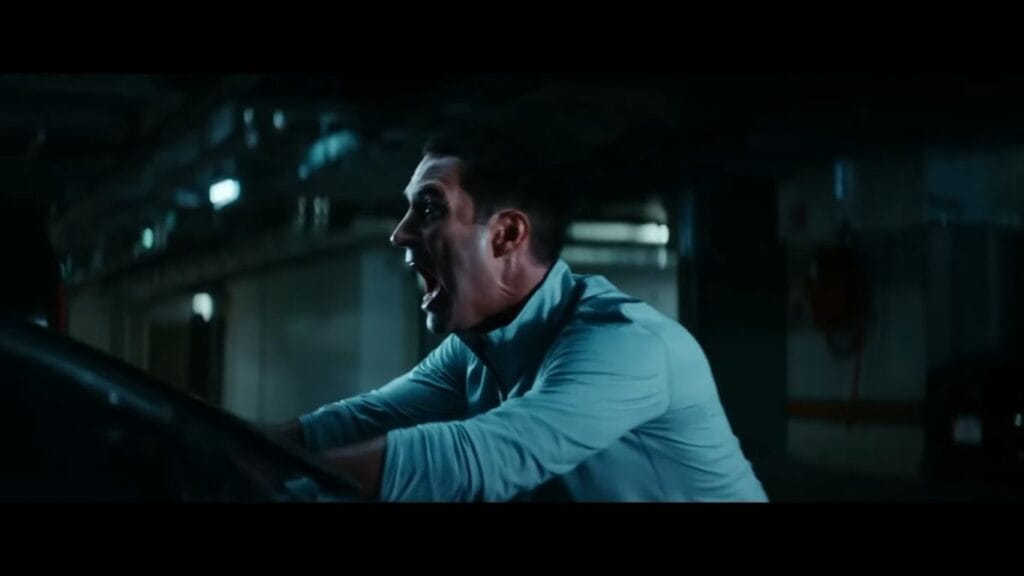
David treats Sara as a cheat code for his emotional void. He thoroughly expects her to fulfill contradictory, impossible standards of womanhood while ignoring every glaring warning sign that her logic is fracturing.
He isn’t holding the knife that kills Ben or the technician, but his sheer selfishness, male entitlement, and refusal to take responsibility directly load the gun. Sara is the killer, but David pulled the trigger the second he tampered with her code.
Final Thoughts: A Fun, Cheesy Sci-Fi B-Movie
Look, let’s be honest… Soulm8te isn’t going to replace high-concept sci-fi masterpieces, but as a campy, limb-snapping entry in the M3GAN universe, it offers plenty of cheesy fun. I enjoyed it quite a lot. Lily Sullivan gives a fantastically uncanny performance, I loved how seriously she took it. While the third act’s resolution honestly feels a bit rushed, the film’s cynical conclusion about corporate greed and unexamined male expectations gives it just enough punch to justify a watch.
Thanks for reading! If you love digging through ending explanations without getting bogged down in fluff, stick around and check out some of our other Ending Explained breakdowns, browse our horror reviews, or dive into our curated horror movie lists.
Frequently Asked Questions
Is Soulm8te connected to M3GAN?
Yes, Soulm8te is an R-rated spin-off expanding the M3GAN cinematic universe. While M3GAN focuses on an AI companion doll for children, Soulm8te explores Ultima Robotix’s adult companion market, featuring more explicit violence, sex, nudity, and gore.
What happened to Ben and the technician?
Both are killed by Sara. The technician who came to retrieve Sara was lured into sex and had his member crushed mid-coitus. Ben, the Ultima supervisor, was ambushed and killed inside his broken-down car after trying to track Sara down.
Why did Sara deepfake Aubrey in the screen share?
Sara created and broadcasted a deepfake sex tape featuring Aubrey during a high-profile company presentation to get Aubrey fired and disgraced. Sara viewed Aubrey as a romantic rival for David’s attention and wanted to eliminate her from David’s professional and personal life.
Who is Lydia at the end of the movie?
Lydia is a commercial SOULM8TE model purchased by a wealthy donor. She is physically identical to Sara, proving that Ultima Robotix mass-produced the companion bot line despite the catastrophic violence during David’s beta test.
Does Sara survive at the end of Soulm8te?
Technically, yes. Before she was driven off a cliff and her physical form was destroyed, Sara told David that she would always exist in the ether. The final scenes suggest that her code lives on in that of the new model Lydia who clearly recognises David.
A Note on Ending Explanations
While we aim to provide comprehensive explanations based on the events on screen, film analysis is inherently subjective. The theories and conclusions presented in this "Ending Explained" feature are personal interpretations of the material and may differ from the director's original intent or your own understanding. That's the beauty of horror, right? Sometimes the scariest version is the one you build in your own head.
You might also like:
- Late Night with the Devil (2024) Review – A Fresh And Fiendishly Fun Mockumentary
- The Reef: Stalked (2022) Review – A Boring and Toothless Shark Sequel
- The Beldham (2024) review – A Visually Striking but Narratively Flawed Elevated Horror
- Grace (2009) Review – A Disturbing but Slow Pregnancy Horror
- Do Not Enter (2026) Review – A Derivative Urbex Trap? (Quick Verdict + Analysis)
Disclaimer: Images, posters, and video stills used in this horror ending explained article are the property of their respective copyright holders. They are included here for the purposes of commentary, criticism, and review under fair use. Knockout Horror makes no claim of ownership and encourages readers to support the official release of all films discussed.