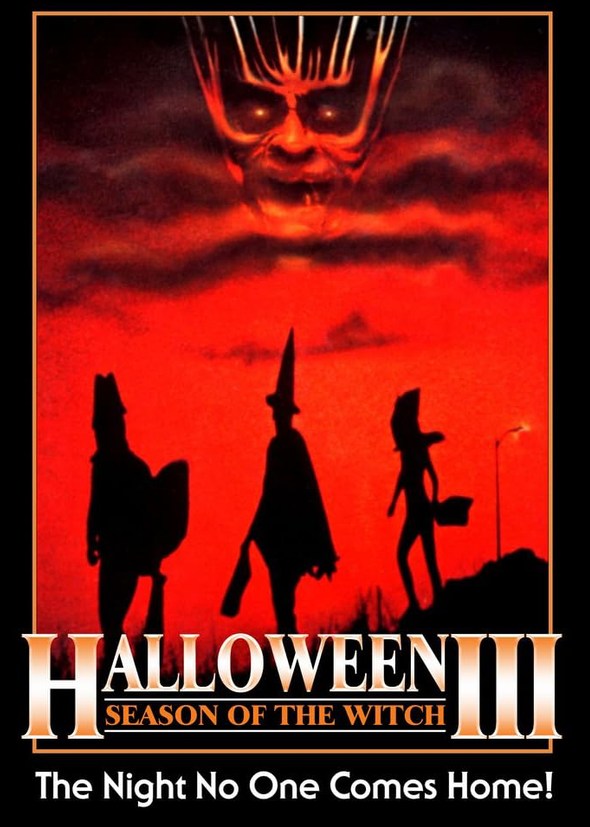
Halloween III: Season of the Witch (1982) Review – Underrated?
Halloween III: Season of the Witch (1982): Quick Verdict
The TL;DR: Halloween III: Season of the Witch (1982) is writer-director Tommy Lee Wallace’s notorious series outlier that famously ditched Michael Myers, Laurie Strode, and Haddonfield in an ambitious bid to pivot the franchise into an annual, Twilight Zone-style horror anthology. Centred on moustache-toting physician Dr. Dan Challis (Tom Atkins) and grief-stricken Ellie Grimbridge (Stacey Nelkin), the plot unravels a conspiracy orchestrated by Conal Cochran (Dan O’Herlihy), an eccentric novelty tycoon with a sinister Halloween mask empire. While celebrated today as an unfairly maligned cult classic, that reputation is something of an over-correction; crippled by lethargic pacing, gaping plot holes, paper-thin characters, and cheesy 80s tropes, it remains a flawed yet fascinating sci-fi folk-horror curio with a killer synth score and a delightfully bleak ending.
Details: Director: Tommy Lee Wallace | Writer: Tommy Lee Wallace | Cast: Tom Atkins, Stacey Nelkin, Dan O’Herlihy, Michael Currie, Ralph Strait | Runtime: Approx. 98 Minutes | Release Date: October 1982 | Where to Watch: Digital VOD / Physical Media
Best For: 80s cult cinema devotees, John Carpenter/Alan Howarth synth music enthusiasts, folk-horror fans, and franchise completists curious about the anthology roadmap that never was.
Worth Noting: Revisit our retrospective coverage of Haddonfield’s iconic origins in Halloween (1978) and Halloween II (1981).
Did You Know: Day 27 of our 31 Days of Halloween 2026 feature! Explore every daily spooky season review directly on our central 31 Days of Halloween 2026 category.
Is It Scary: Rarely frightening, but delightfully unsettling in its concept. The scares come almost entirely from Cochran’s unapologetic, apocalyptic plan to melt children’s heads into piles of snakes and insects via their television sets.
Rating: 2.8/5 Stars
(A high-concept corporate folk-horror blend that has aged gracefully in theme, even if the lethargic pacing and narrative leaps hold it back from greatness.)
Welcome to Knockout Horror. It’s day 27 of our 31 Days of Halloween 2026 review marathon and it’s time for a real cult classic. We have been covering the Halloween films in October for the past few years (Halloween review, Halloween II review). Today, it is time to check out the red-headed stepchild of the franchise – Halloween III: Season of the Witch (1982).
Table of Contents
Halloween Without Michael Myers?
With the original Halloween (1978), writing team John Carpenter (also the movie’s director) and Debra Hill brought the world one of horror’s most iconic villains.
“The third movie in the series, Halloween III: Season of the Witch, chose to omit Myers entirely.”
The Shape, otherwise known as Michael Myers is still, to this day, one of the most recognisable movie antagonists of all time. His omnipresent, lumbering form obscured by the shadows, relentlessly pursuing Laurie Strode effectively set the benchmark for every slasher villain that followed.
Practically every genre film released in subsequent years was searching for its own version of Myers, most with limited success. Whether it was Jason Voorhees from the Friday the 13th series, the titular character from The Prowler, or the miner in My Bloody Valentine (1981), masked killers were en vogue and Myers was the blueprint.
It goes without saying that the majority of cinemagoers were rushing to watch the Halloween movies purely to see the carnage caused by The Shape. That fact makes it somewhat baffling that the third movie in the series, Halloween III: Season of the Witch, chose to omit Myers entirely.
The truth of the matter is that the series’ original creator, John Carpenter, earnestly felt as though Myers’ story was done and didn’t need to be expanded on. Not only that, but he felt legitimately frustrated that Halloween had come to revolve so heavily around that one character.


A huge departure
Halloween III: Season of the Witch came about as a result of Carpenter’s desire to transform the Halloween series into something of a yearly horror anthology. Each annual entry would feature a new story, a new set of characters, and a new antagonist.
All of the films would be set around the October holiday, but they were never intended to follow any set theme. For all intents and purposes, the Halloween movies would be almost a Twilight Zone-style series with the only connecting thread being the holiday itself.
This movie was the first entry into that series and boy was it a departure from the previous two films.
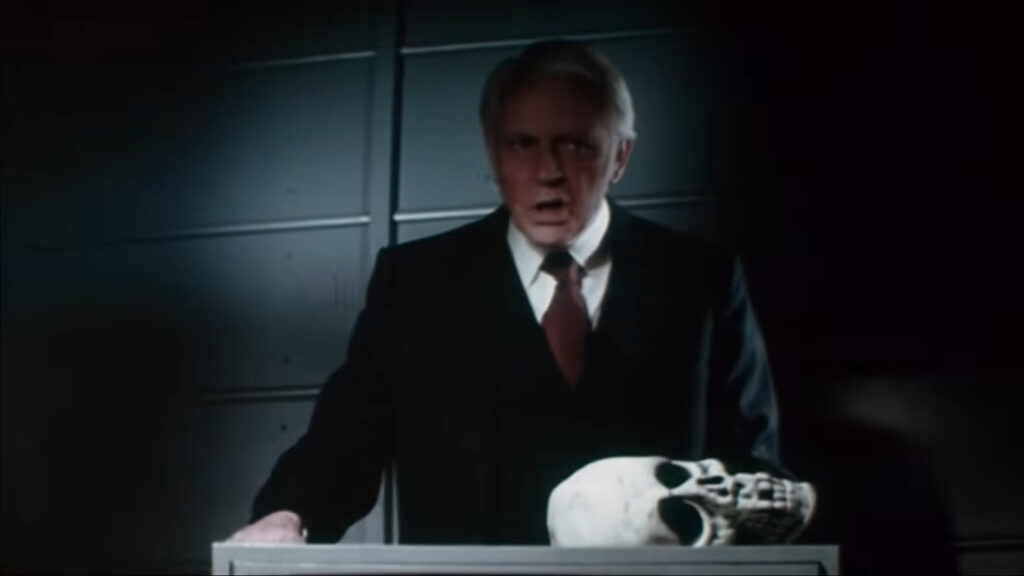
The story follows doctor Dan Challis (Tom Atkins) as he teams up with Ellie Grimbridge (Stacey Nelkin), a young woman whose father recently passed in suspicious circumstances. Together, the pair attempt to uncover the insidious mystery surrounding a popular collection of Halloween masks made by the Silver Shamrock company.
There was no Michael Myers here, no Laurie Strode, and no Haddonfield, Illinois. Hell, there wasn’t even a typical slasher villain. We are in sunny California and this is, ostensibly, a movie about modern witchcraft set against a backdrop of cyber thriller shenanigans.
A box office flop but future cult classic
Can you imagine how viewers felt watching a trailer for this movie? What the hell happened to Halloween? Where’s Michael Myers? What’s the deal with these masks?
“The plot meanders mercilessly early on and takes an age to actually get going.”
People who were formerly loyal to the series and had been waiting for the next installment avoided the movie en masse. Season of the Witch was a box office flop and critics hated it. The annual anthology format would never happen as the movie’s lack of success would put the entire series on hold for four years before Michael returned in Halloween 4.
Years later, it has developed a decent cult following and I regularly hear people claim that it is massively underrated. Rewatching it for this review, I think that point is enormously overblown. This is a watchable movie if you enjoy 80s horror and know what you are getting into, but it is far from essential viewing.
You are going to see all of the usual problems of the era, here. Camera work is decent but scripting is a problem. Tired tropes like pointless sex scenes that don’t advance the plot are abundant, along with silly story progression that makes little sense, and a lethargic pace that leaves a ton of dead air.
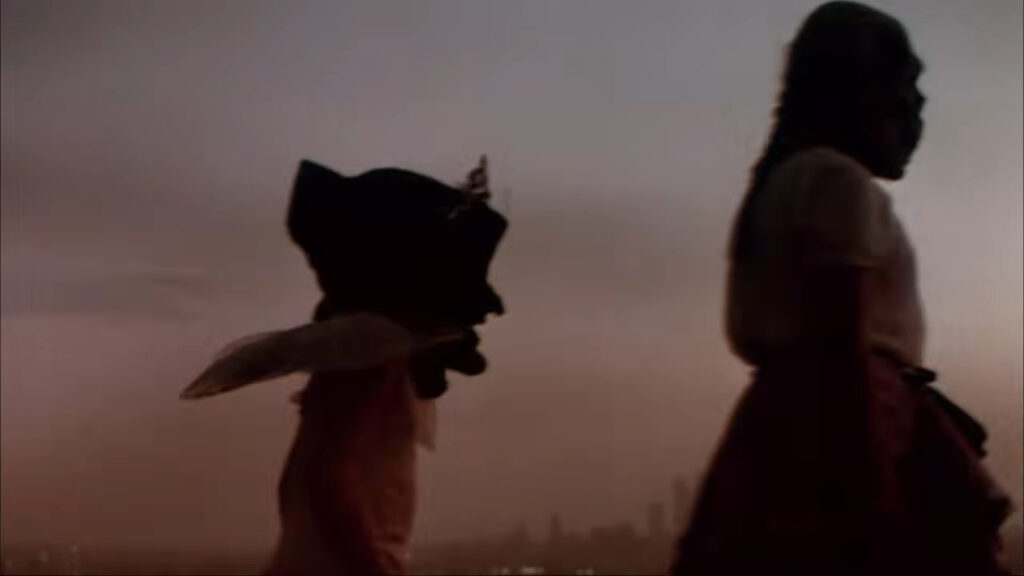
Characters are ruthlessly two-dimensional and afforded absolutely no room to grow, despite extensive screen time. For example, Doctor Challis’s involvement is explained away by “Oh, he’s just a good guy who cares” and we are supposed to accept him risking his life for that reason.
The plot meanders mercilessly early on and takes an age to actually get going. There are logic leaps and plot holes that you could drive a truck through and numerous moments where you will be facepalming at the silliness.
There’s also a bunch of important story-beats that are explained with a shrug and a “you figure it out” mentality which makes the entire thing a bit of an exercise in frustration.
Where it does succeed…
The thing that stands out about Halloween III: Season of the Witch, at least for me, is its high-concept premise. It sounds pretty rote, on paper. Kids are obsessed with Halloween masks, something strange is going on, characters investigate and try to get to the bottom of it.
“There’s a good reason people have gone into tremendous depth exploring the themes of this movie.”
The truth is, however, writer and director Tommy Lee Wallace has mashed together traditional themes of witchcraft with modern technology and science fiction to create a story that’s ostensibly a criticism of commercialism and over-consumption. It’s quite a deft feat and, for the most part, it works really well.
Season of the Witch is quite compelling and feels a lot deeper than you might expect. The way the central antagonist, Mr Cochran (Dan O’Herlihy), exploits a catchy advertising jingle to rope in children whose parents are desperate to pacify them feels like an extremely poignant horror plotline that has aged remarkably well. There’s a good reason people have gone into tremendous depth exploring the themes of this movie.
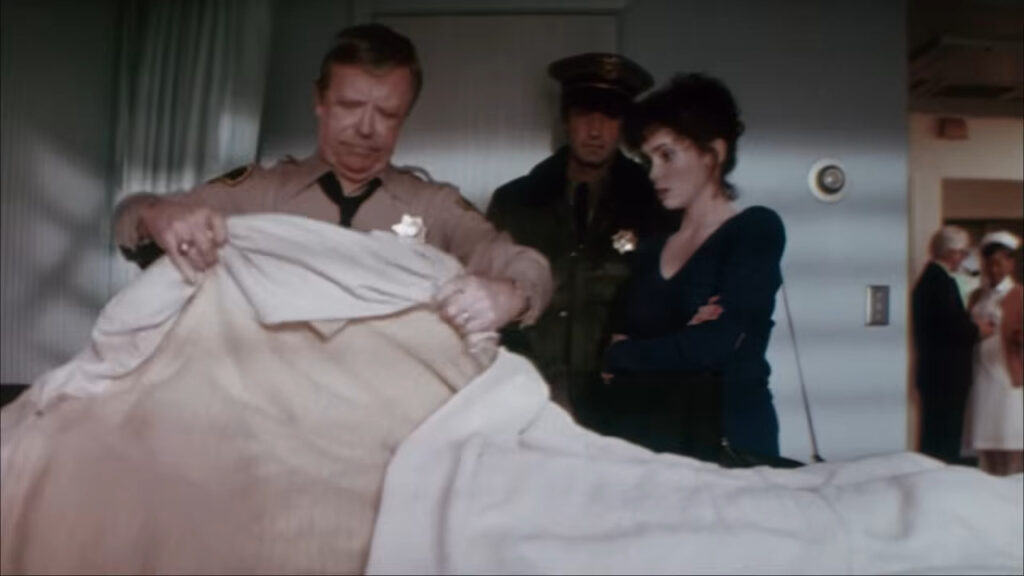
The central mystery is interesting enough to keep you watching through some of the rockier moments. The investigation into the town where the masks are produce is quite enjoyable in a Scooby Doo kind of way. I did enjoy some of the science fiction elements, as well. There’s a lot that happens here that is tremendously atypical of the Halloween series which is fun to see in retrospect.
Dan O’Herlihy is an absolute joy, here. He chews the scenery in the best way possible and crafts an ultra-sinister character out of an archetype that should actually be quite forgettable and bland.
That synth score, though
It would be remiss of me to not mention John Carpenter and Alan Howarth’s fantastic synth score. It’s just sublime and fans of 80s horror will be in heaven throughout. This is actually the only thing about the movie that makes it feel like a true part of the Halloween series.
It’s hard to understate just how effective some of the tracks are at setting the pace and upping the tension. As the intensity climbs, it’s hard not to feel the same sense of urgency that the characters are feeling. You’ll never be able to get that stupid Halloween mask jingle out of your head, either.
I really enjoyed the ending, as well. It’s mercilessly abrupt and has absolutely no concern for the viewer’s need for closure. It’s bleak in the best way possible.
Acting is generally mixed but Stacey Nelkin is fantastic. Just the sheer fact that she can convince the viewer that an aged Tom Atkins is sexually irresistible deserves significant praise. The kills are mostly pretty dull but a few standout as being fairly inventive.
Halloween III: Season of The Witch has really benefited from a recent sharp pivot in viewer opinions. To be perfectly honest, claims of it actually being great are an enormous over-correction. It’s a watchable movie with some great ideas and a lot of problems. Not the worst Halloween movie but certainly not the must-watch some claim it to be.
The Good
- Fascinating High-Concept Hook: Blending ancient pagan witchcraft with microchip technology, mass consumerism, and sinister television broadcasts feels uniquely ahead of its time.
- Dan O’Herlihy’s Villainy: Brings immense theatrical charm and chilling corporate nonchalance to the megalomaniacal Conal Cochran.
- Iconic Audio Design: Features an infectious synth-laden score from John Carpenter and Alan Howarth alongside the earworm “Silver Shamrock” theme song.
- Delightfully Grim Climax: Concludes on an unapologetically bleak, frantic cliffhanger that pulls zero punches.
The Bad
- Sluggish Pacing & Meandering Plot: The early investigation takes far too long to gain momentum, bogged down by excessive dead air and padding.
- Glaring Logic Leaps: Relies on gaping narrative plot holes, unearned investigative shortcuts, and arbitrary story resolutions.
- Thinly Drawn Leads: Dr. Challis and Ellie have little actual character motivation outside of formulaic romance and standard 80s genre tropes.
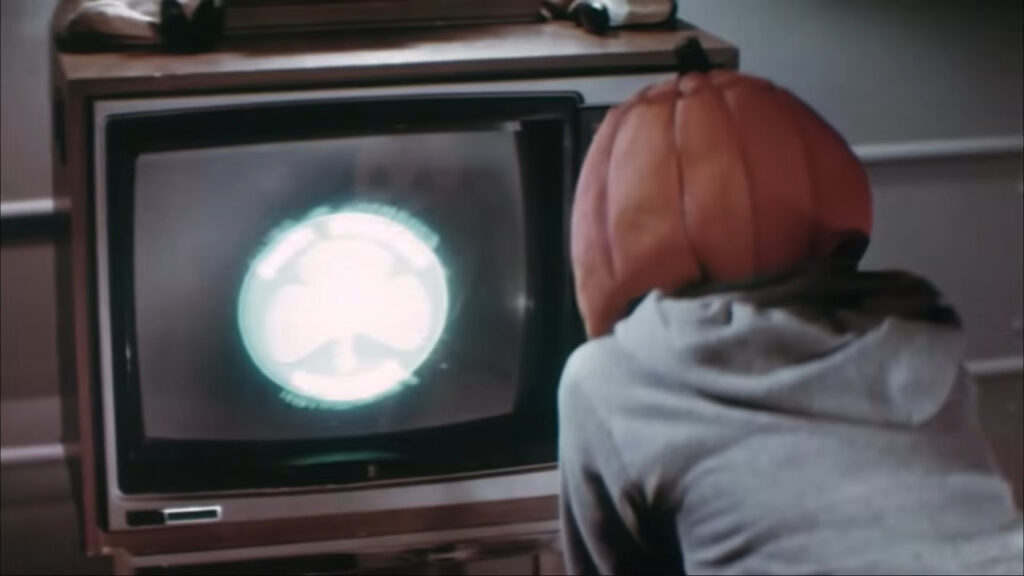
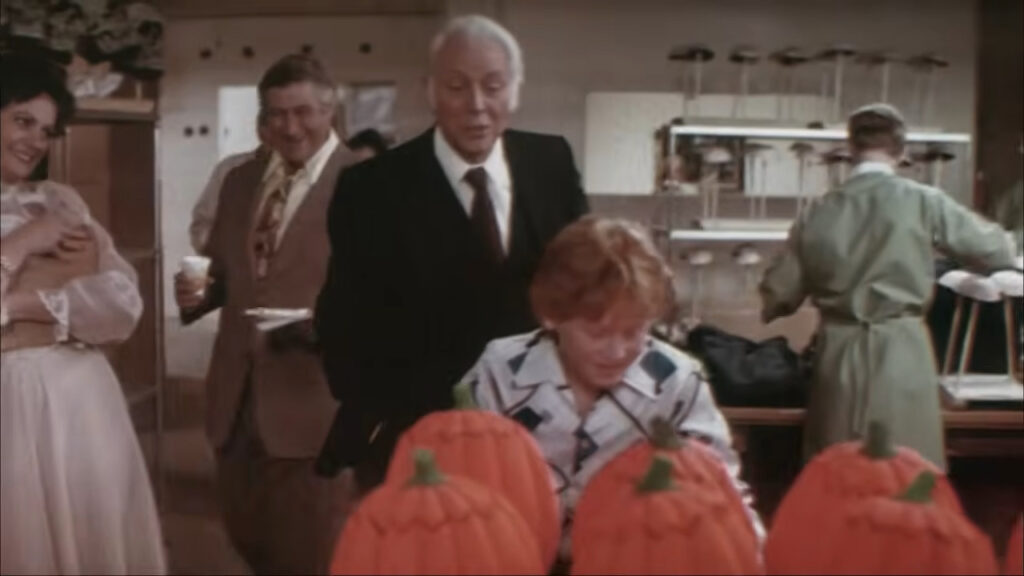
The Ugly: The test-room mask demonstration. A young boy’s pumpkin mask melts onto his skull while live rattlesnakes and insects erupt from the smoking cavity, delivering the film’s most shocking set piece.
Should You Watch Halloween III: Season of the Witch?
Divorced from the monumental commercial expectations of Michael Myers in 1982, Halloween III: Season of the Witch stands on its own merits as a quirky, ambitious, and slightly weird hybrid of folk horror and corporate techno-paranoia. Tommy Lee Wallace crafts a wonderfully memorable antagonist in Conal Cochran and nails the eerie, autumn aesthetics of commercialised Samhain. However, recent critical re-evaluations hailing it as an overlooked masterpiece stretch the truth big time; its disjointed script, sluggish midsection, and paper-thin protagonist keep it squarely in mid-tier cult territory rather than franchise royalty.
You might also like:
- Gaia (2021) Review – A Visually Stunning but Derivative Eco-Horror
- Violent Night (2022) review – R-rated festive fun with a weirdly sentimental side
- Christmas Bloody Christmas (2022) review – A loud and obnoxious festive fail
- Slanted (2026) Review – Disappointing “Body-Horror” Wastes Potential
- Without Name (2016) Review – A Visually Arresting but Narratively Muddled Trip
Our Scoring Philosophy: A Fair Fight
Horror is a genre that thrives thanks to indie film makers and low budget creators. At Knockout Horror, we firmly believe that every movie that we review deserves a fair fight. That's why we grade on a curve. Our star ratings are all about context, judging a film on what it achieves with the resources it has.
A 4-star rating for a scrappy indie horror made for $10,000 is a testament to its ingenuity and raw power. A 4-star rating for a $100 million blockbuster means it delivered on its epic promises. We don't compare them side-by-side; we celebrate success in every weight class, from the back-alley brawler to the heavyweight champion. Please keep this in mind when considering star ratings.


