Nightborn (2026) Ending Explained – It’s More Than a Metaphor
Welcome to Knockout Horror. Today we are taking a trip into the woods to explain the dense, Finnish folk horror that is Hanna Bergholm’s Nightborn (2026). We are going to look at exactly what happened to baby Kuura and go in depth on some of the folklore inspiration for this story. We’ll also take a look at the allegorical nature of the narrative, for good measure. As always, we will kick things off with our ND-friendly Ending in Brief for anyone looking for immediate answers before we step into the forest for the full thematic breakdown.
If you want to check out my full, spoiler-free thoughts on the movie, be sure to head over to our official review of Nightborn (2026).
⚠️ Warning: Major spoilers follow below.
The Ending in Brief
The TL;DR: Kuura is not a fully human child, but a Fae-human hybrid. His mother, Saga, is a changeling under a magical glamour (though she doesn’t realise it) and Kuura is the result of her conceiving a child with a human (Jon). As Kuura’s appetite for blood and meat escalates, Jon attempts to forcefully remove him from the home, believing Saga to be the reason for the change. Saga fights back to prevent him from taking the child and, during their struggle, the forest decides to join in the fight to protect its own. It breaks through the foundation of the home, impaling Jon with massive tree roots. Completely surrendering to her primal nature, Saga joins Kuura in consuming Jon’s heart. Kuura runs out to the edge of the woods to meet an emerging humanoid forest entity, and when he turns back to smile at his mother, Saga warmly smiles back, apparently fully embracing her original Fae nature as well as her new role outside human society. Naturally, the story is an allegory for overcoming postpartum depression and finding a bond with the child you once felt no bond with at all, but it works perfectly as a folk tale about a changeling parent reconnecting with her primal roots through acceptance of her own monstrous child.
Who Survived? Saga and Kuura both survive, seemingly both ready to start life anew as carnivorous forest monsters. Jon is brutally impaled and killed by the tree roots invading the house, while his father’s religious blessings and the modern healthcare system prove completely powerless against the creature.
What was wrong with Kuura? Kuura was, by all indications, a Fae-human hybrid. He possessed an aversion to sunlight (which burned his flesh), cold iron scorched his flesh, he had an inability to process standard food or milk, and he had an insatiable craving for raw flesh and blood. These are all traits of Scandinavian forest folk like trolls, elves, and Fae. He also had a physical, supernatural bond to Saga; separating them caused Saga to physically break out in severe rashes that vanished only upon reuniting with him.
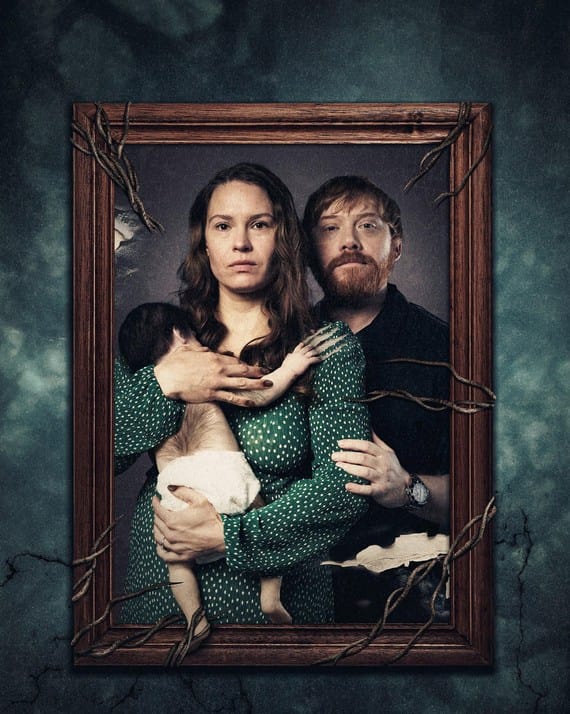
So Saga Was a Changeling? The evidence points to Saga being a changeling who has been living under a magical glamour for her entire life. She was a difficult baby with an insatiable appetite and grew up as a distant child who was more at home in the trees than with people. Her grandmother tried to prevent the forest from claiming her back by surrounding the house with scrap iron to keep it away. She never realised she was actually a changeling until her baby was born as a human-Fae hybrid with dense fur, a tail, and the same insatiable appetite that she had as a child. The proof is even there in the front cover – look at Saga’s hand.
Who was the figure in the trees at the end? It’s important to remember that Nightborn is an original story that uses Scandinavian folklore as an inspiration rather than as a direct source. The humanoid, wooden figure that emerges from the trees is a physical manifestation of Kuura and Saga’s true paternal/natural lineage, welcoming both of them back home to the woods where they are descended from.
Table of Contents
Nightborn (2026) Ending Explained
I’m sure you know the deal by now on Knockout Horror but, if you don’t, allow me to explain. We never waste your time with boring, linear plot recaps here. You just sat through the movie, who the hell wants to sit through that all over again in text form? Not me! So let’s cut the crap and unpack the metaphorical stuff before going on to the really interesting parts of Nightborn.
The Metaphorical Explanation
Obviously, we need to get this out of the way or someone will probably email me telling me I completely missed the real point of the story. Yes, Nightborn works as an allegorical story about the difficulties of new motherhood and post-partum depression.
In fact, I would go as far as to say that Bergholm is swinging a narrative sledgehammer with the motherhood metaphors here and it’s not subtle at all. That’s exactly why I don’t want to get bogged down by it. You guys aren’t dumb; you don’t need me writing 2,000 words to explain the obvious.
It’s all there; you have the people around Saga telling her she is crazy and that children are difficult so get over it. The people who don’t recognise or acknowledge the problems with Kuura. The unsympathetic partner who believes she is the problem, and all the other little bits and bobs that go along with this type of tale.
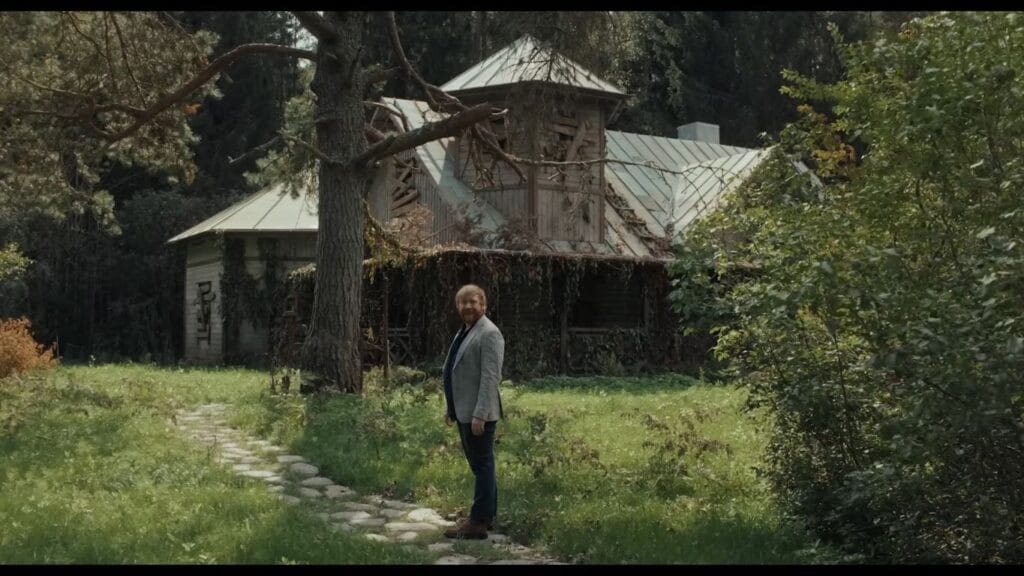
From the physical elements of Kuura tearing Saga’s body apart and leaving her needing a crutch to walk, right through to Jon’s obliviousness to Saga’s increasingly fragile mental state. This is a very apparent trauma dump of a story that needs very little in the way of explanation.
It’s your standard, run-of-the-mill “monsters as an allegory for human struggle” tale and it works perfectly fine from that perspective. It’s just really dull and has been done tons of times in the past. Just look at Baby Ruby for an almost identical example.
The thing I really enjoyed about Nightborn is that Bergholm doesn’t allow the narrative to get dragged down by the subtext.


In fact, she allows it to function entirely as a folk story that allows us to get really deep into some seriously creepy Scandinavian and Finnish superstition. That’s exactly what the rest of this article is going to focus on.
Let’s ditch the monster metaphors and get right into the folklore.
Now Onto The Folklore Explanation
I want to kick this off by explaining some of the folklore at play, here. Something I learned with my Hallow Road ending explanation is that people can get a little confused when horror movies blend together different pieces of folklore to make something that feels somewhat original.
They almost expect the person writing the story to pick a folk tale and stick to it word for word.
Very few horror movies do that. The ultimate goal, when creating a horror story, is to attempt to produce something that feels original, fresh, and, above all else, scary. The way a lot of writers do that is to take little bits and pieces from other stories and blend them together, while adding some of their own ideas into the mix.
The result is, often, something that feels very familiar but also quite new. If a writer was to copy a changeling story directly, the viewer would recognise what it is almost instantly. They would know how it happened, why it happened, and how to deal with it. The story would offer no intrigue and would likely not be very scary.
It’s extremely common, especially in folk horror, to watch films and feel like you recognise something from a fairy tale or from an old story. Most of the time, however, it will be a tiny bit off with certain details that don’t make sense. That’s the case with Nightborn.
Make no mistake, Nightborn’s premier narrative goal is to present the viewer with an allegorical story about new motherhood and the difficulties that come along with that. To do that, however, writers Bergholm and Ilja Rautsi have leaned into a bunch of different Scandinavian and Finnish folklore tropes.
The story features elements of changeling folklore, a little bit of troll based stuff, a good heaping of Hiisi (goblin) lore, and a massive dose of generalised, old-world Finnish superstition focused around the deep woods possessing a dark influence on newborns.
Nightborn is not a 1:1 retelling of any single specific folktale and it doesn’t fit any single story perfectly. It is a melding together of a number of different tales. That’s why Kuura acts like a troll but is welcomed back to the woods by some tree-like humanoid figures at the end of the film.
He can’t be pinned down to one specific piece of folklore, he is a combination of a few different things and that’s true for almost every part of this story.
Thematic Spotlight: Postpartum Alienation and Medical Gaslighting
I’m just adding this section purely for anyone who skimmed past me saying I wasn’t going to go in depth on the metaphorical element of this movie. Let’s, once again, acknowledge it for the people who are just skimming.
Beneath its creature-feature folklore, Nightborn serves as a psychological metaphor for postpartum depression, maternal alienation, and societal dismissal of women’s natural instincts. From the moment of birth, Saga feels an unsettling detachment, referring to her newborn as “it” and feeling physically drained and consumed by motherhood.
Every time Saga attempts to voice her distress, the surrounding support systems completely fail her. Her mother dismisses the baby’s violent tendencies as normal childhood vigor, the clinic staff reduce her genuine anxiety and fear to a need for bonding counseling, and Jon views her exhaustion as domestic failure. The horror escalates because no one believes Saga or even gives a crap what she has to say.
Some of the supernatural stuff fits really well, too. In real life, people often assume that sending an exhausted, struggling new mother away for a “break” or a night off will instantly make her feel better. In reality, separation often triggers the exact opposite response. Mothers experiencing PPD frequently experience spikes of anxiety or symptoms when away from their children due to increased levels of guilt, somatic panic, and a sense that they are abandoning their duty. This can even result in physical symptoms like hives, dermatitis, or a sensation of burning in the skin.
Bergholm does a pretty nice job of putting the emphasis on the struggles of mothers trying to cope when the people around them believe the solutions are as simple as taking a short break.
The Conception: The Tree in the Floorboards
To help us understand the ending to Nightborn, we should look back at the very beginning of Saga and Jon’s relocation in Finland.
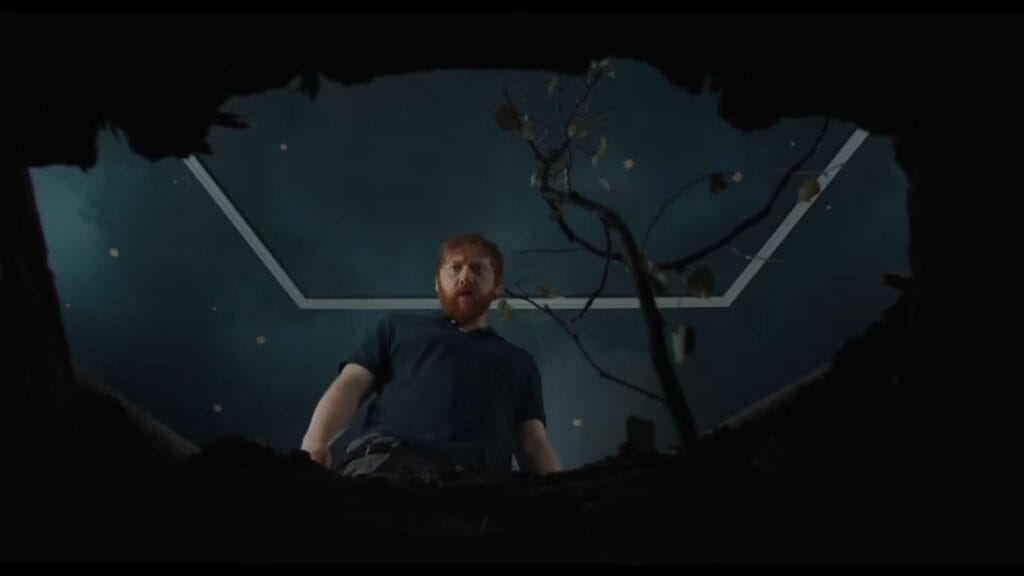
When they first visit her late grandmother’s derelict house in the Finnish wilderness, they discover a living tree literally growing through the floorboards of the bedroom. This tree is growing in Saga’s childhood room and the room she is planning to turn into a nursery for their unborn child.
Rather than seeing this as an omen of a boundary breached between nature and domestic shelter, Jon insists on renovating the property into a picture-perfect homestead. Remember, that dude is constantly optimistic. Most people would be worried about the root system tearing up their entire floor but Jon sees it as a simple problem to overcome.
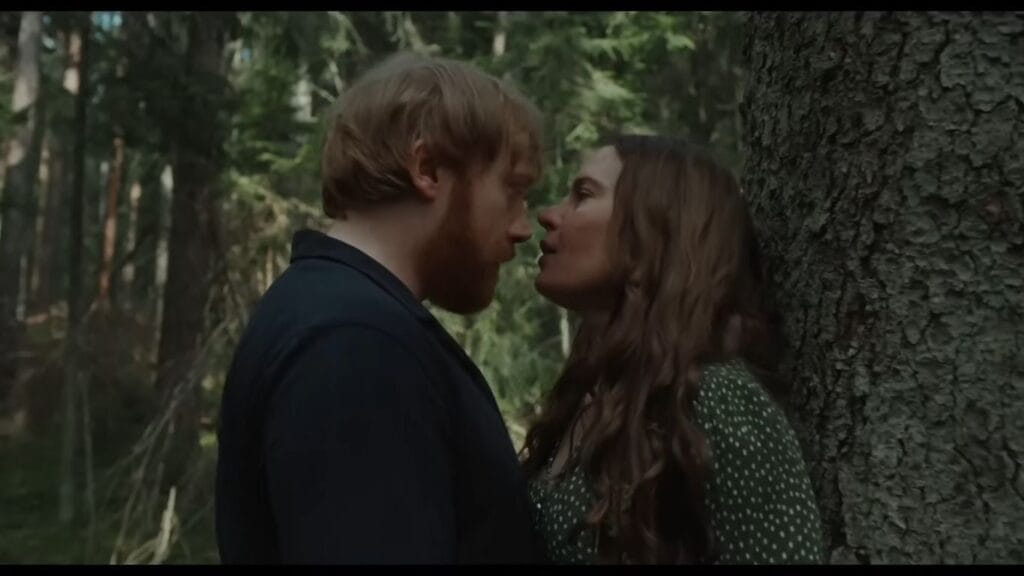
Before the renovation begins, Saga and Jon wander into the surrounding forest. Saga embraces a strange tree trunk shaped like a pregnant human belly. This suggests that Saga has a seriously keen knowledge of the surrounding woods.
The pair decide to create the beast with two backs right there in the woods and this is somewhat key to the story. Saga’s connection with the woods goes deeper than simply feeling at ease there, she is part of the woods.
When Kuura is born 9 months later, he basically appears in the form of a creature that you would find in said woods. He tears Saga open during labour and is born covered in hair. He has an insatiable appetite for flesh and relentlessly cries. This leads us onto our next point.
What Was Wrong With Kuura? Changeling Lore and Cold Iron
Kuura is, seemingly, a changeling but I’m going to challenge that idea just a tad. I don’t believe Kuura was a changeling, I believe he was a Fae-human hybrid.
A changeling, in Scandinavian folklore, is the offspring of an elf, a troll, or vätte folk. It was said that these creatures would replace the unbaptised children of regular people with their own children to allow them to grow up in human care. These changelings were said to be far hungrier than normal children and would incessantly cry.
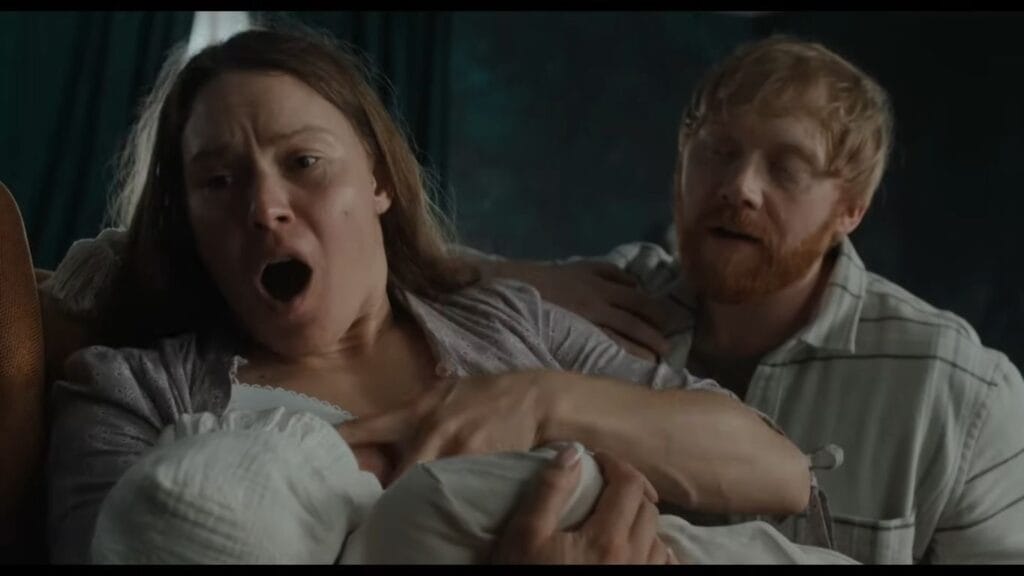
Throughout the film, Kuura exhibits textbook traits of these traditional Finnish and Scandinavian changelings (vaihdokas).
He is covered in coarse dark hair, refuses ordinary baby food, and reacts violently to light and domestic objects. All of these vulnerabilities are rooted in classic fae and forest mythology:
- Sunlight Sensitivity: Daylight leaves blistering burns on his skin, explaining why he cried when hospital curtains opened and why the forest conjured wind gusts during his garden naming ceremony to shield him when Jon insisted on taking him out of his pram.
- Cold Iron Aversion: While Christian holy water from Jon’s vicar father didn’t do jack to the child, touching Jon’s father’s iron tools caused third-degree chemical-like burns on his hand. This is classic changeling lore.
- Carnivorous Sustenance: Kuura’s digestive system cannot tolerate breast milk or formula; he strictly needs blood and raw meat to survive, reflecting his nature as an apex predator of the wild.
- Constant Crying: Changelings in Scandinavian folklore were often seriously ill-tempered and constantly hungry. This would, obviously, lead to constant crying from the child which is exactly what Kuura does.
Now, we can believe for certain that Saga’s grandmother’s house was surrounded by woods that were home to the Fae (forest folk). In fact, she was well aware of the presence of trolls, elves, or vätte folk all around her. She had even placed scrap metal in the area to ward off these unwanted spirits. She also warned Saga directly about playing in the woods because “The forest takes its own“.
That leads us nicely onto our next point – why do I believe that Kuura wasn’t actually a changeling?
Well, it would be easy to assume that Kuura was replaced in the womb so was a changeling. After all, Saga and Jon conceived Kuura in the woods surrounding the house. Perhaps Saga kissing the pregnant looking tree inadvertently transported the unborn Fae into her womb. Sort of like a supernatural connection between humans and vätte folk.
I believe there is a much more intriguing explanation, though, and the evidence supports my theory.
Folklore Breakdown: Why Kuura Isn’t Actually a Changeling
Still not convinced? While it’s easy to label Kuura a changeling due to his odd habits and monstrous behavior, the way he looks actually debunks that idea according to classic Scandinavian and Finnish folklore:
- The Total Absence of a Glamour: Traditional changelings (vaihdokas) were covertly swapped into human cribs and cloaked under a powerful magical illusion called a “glamour”. This was so parents wouldn’t immediately toss the little hairy bastards onto a fire. Kuura was born visibly covered in dense black hair with a tail-like appendage, meaning no concealment spell was ever cast over him.
- He Was Never “Swapped”: A changeling requires an abduction and a physical switch of an unbaptised human infant. Kuura was carried to term and birthed directly by Saga following her woodland encounter, making him a biological offspring rather than a substituted fairy baby. It was even illustrated that he was different from the get go with his birth being horrendously painful and him being immediately burned by sunlight.
- Primal Authenticity: Unlike changelings who had to mimic human babies to survive in a domestic setting, Kuura never attempts to fit in. He instinctively rejects clothes, processed food, and daylight because he was born as a pure, primal creature of the wild.
Saga Was The Changeling
I believe that it was Saga who was actually the changeling all along. She is really a troll, elf, or vätte folk in human form. Kuura is just her child which makes him a Fae-Human hybrid. Kuura is acting the way any other Fae would – like a primal animal. Saga is unable to bond with the child until she remembers what she is – one of the Fae.
There is a lot of evidence to support this theory, as well.
Saga was, by all accounts, a difficult child. Saga’s mother related how she had insatiable hunger, never stopped crying, and was a very “weird” child. In fact, her mother admits that she found it almost impossible to bond with her and even tried to leave her outside a shop years before.
That is classic changeling behaviour. Changelings were said to be almost impossible for a human to bond with. They are also said to have insatiable hunger and are very ill tempered. A changeling that grows up will find it extremely difficult to connect with other children and will act strange and asocial. Again, that is exactly Saga’s experience.
Saga’s grandmother would not let her play in the woods as a child as the “forest takes its own”. She knew that the woods would reclaim Saga as she was not human, she was part of the forest folk. She even surrounded the house with scrap metal to ward the creatures away and keep them from taking Saga back by force.
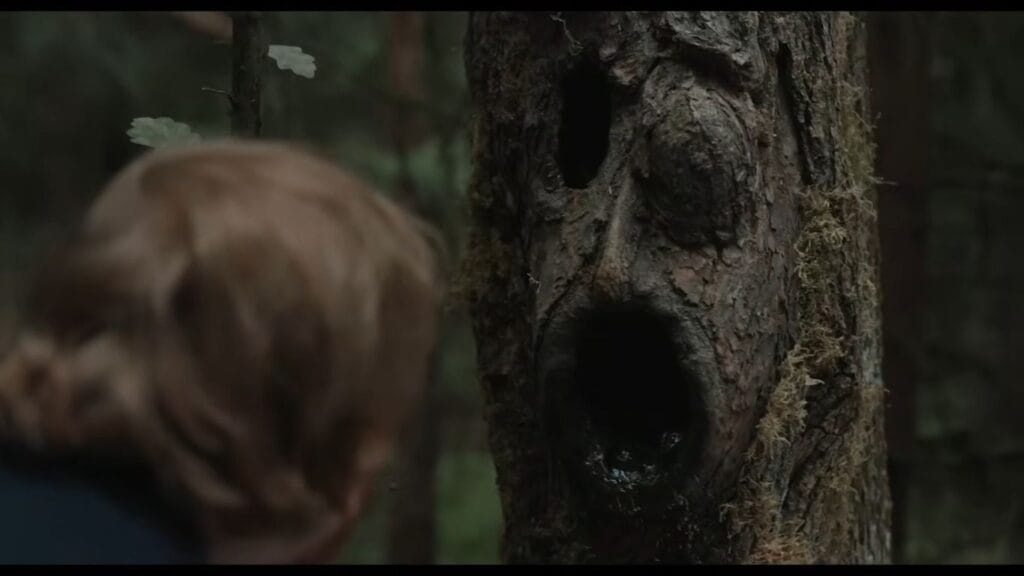
In folklore, adult changelings are often described as having an unnatural pull towards the wild. They only feel at home in the woods and they never feel comfortable in human society. Saga was said to connect with trees more than humans when she was a child.
This is why Saga feels this enormous desire to move back to the derelict house in rural Finland with literal trees growing through the floor. She even has an overwhelming urge to dig into the earth through the floorboards. This is her actual home, soil and all. She feels comforted by sleeping in the hole in the floor on bare ground.
This even factors into the reason why she decided to get the horn in the middle of the woods. She wasn’t just embracing an alfresco desire to get freaky in the outdoors, she was working with her primal instinct to conceive in the place that she is closest to.
You can also attribute some of the ways she reacts to Kuura’s increasingly bizarre nature to the fact that she is actually a changeling herself. When she realises that he needs blood and meat to keep him satiated, she isn’t repulsed or even all that bothered. She simply provides it for him and accepts it. It will factor into the ending, too in just a little.
Folklore Focus: Why Does Kuura have Fur and a Tail but Saga Looks Human?
Naturally, Saga being a changeling and Kuura being her Fae-human hybrid child begs a few questions. The most noteworthy of which being “why does Kuura have dense black fur and a tail-like appendage while Saga looks completely human?”. Well, there’s a very good explanation for that and it actually supports my theory that Saga was actually a changeling.
When a Fae replaced a human child with a changeling, they needed that changeling to survive and be raised by the human parents. They couldn’t have them finding out that the baby wasn’t actually theirs and the biggest giveaway would be if the child looked completely different. In fact, one of the actual folklore methods for getting rid of a changeling was to toss it in the fire and this would be the very first reaction if their baby had fur and a tail.
Now, they couldn’t hide some of the behavioural things like the insatiable hunger and poor temper, but they were certainly capable of concealing the child’s visual differences. To make the child look human, trolls and Fae would cast a “glamour”. This was basically a powerful magical illusion that would make the baby appear human.
Saga has been living under that glamour for her entire life. To everyone around her, she appears human. The glamour even begins to fail at certain points, her almost tree-like stomach and strange spine for example. Kuura has no such advantage. Kuura is not a changeling so he has no glamour, he is a Fae-human hybrid born in his raw form complete with dense fur and a tail. He looks vaguely human because he is actually partly human – Jon is his real father. He has no concept of needing to be anything other than what he is – a primal predator and that is represented in the way he looks.
The Nursery Confrontation: The Forest Reclaims Its Own
The major turning point in the story occurs when Jon finally stops being annoyingly passive after Kuura’s violence crosses into severe bodily harm.
Kuura bites off young Anna’s finger, we can assume, to eat it. This leads Jon to finally see the monstrous reality in front of him. He can’t accept that there is anything wrong with his son, however, so accuses Saga of turning him into an abomination.
When Jon tries to separate mother and child by forcefully taking Kuura away, he triggers the wrath of the woods. Remember, if we are to believe that both Saga and Kuura are forest folk, with Saga being a changeling as a child, the forest will protect them from perceived threats.
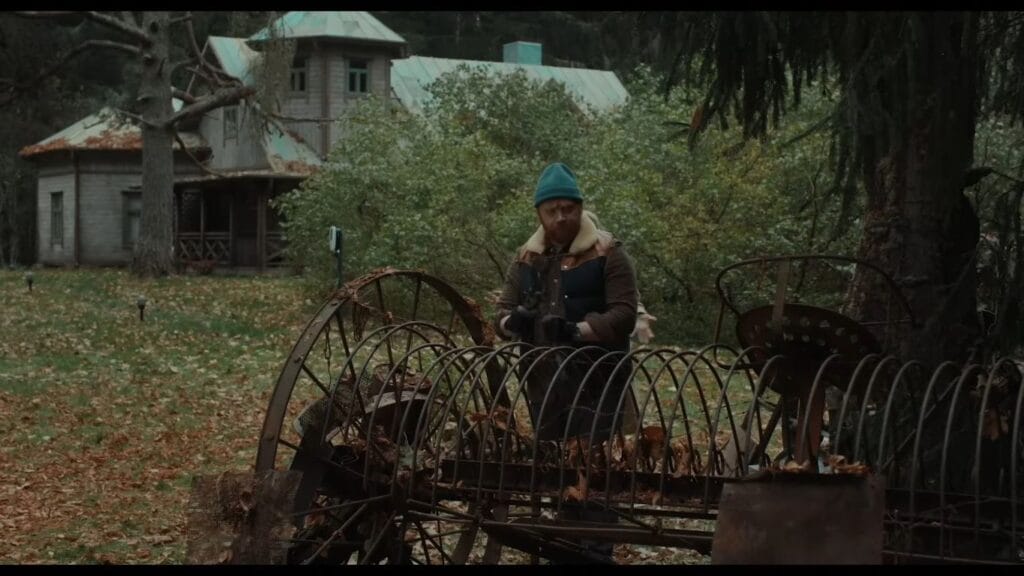
The tree roots beneath the nursery floorboards, which Jon repeatedly chopped away and plastered over, erupt through the foundation and shatter the glass windows. Jon is impaled through the chest by massive branches.
We can safely view this as an execution for the crime of believing, for one second, that he can take a child of the woods away from the woods themselves. At this point, Saga recognises and accepts just what it is that she is. She is one of the forest folk and her and Kuura are exactly the same.
Saga and Kuura consume Jon’s blood and heart, severing the final tether connecting them to human society.
Did You Know? Jon Sealed His Own Fate!
I’m sure quite a few people potentially missed this little quirk of the story. Jon is impaled by a tree branch that bursts through the walls and floor of the house. You might be wondering where the hell that came from and why it didn’t strike earlier in the story? Well, in reality, it was due to a huge miscalculation by Jon that inadvertently sealed his own fate.
Jon insisted on removing the old pieces of scrap metal surrounding the property because he wanted to make the place presentable. These old bits of cars and machinery were the very items placed there by Saga’s grandmother. She did this to keep the forest folk out, as Saga related to Jon earlier in the film.
Jon didn’t take this seriously and believed it to be simple Finnish superstition. This was an enormous mistake. In reality, these items had been keeping the forest outside of the property’s boundary for years. Saga’s grandmother placed them their specifically to prevent the forest from taking Saga back as it always reclaims its own.
As he starts to remove the items, we see the forest encroaching closer and closer to the point where it has grown over his robot mower within a short space of time. Him removing the protective items allowed the forest to enter the boundaries and impale him when he tried to take Kuura away from Saga. If he had just left it well alone, he might have survived.
What Does the Final Scene Mean?
The final scenes mean that Saga has finally accepted that she is a Fae and Kuura is her Fae-human hybrid child and she is ready to embrace being a mother.
After Jon’s death, Kuura runs freely out into the overgrown garden. A tall, humanoid figure detaches itself from the timberline, reaching out with welcoming arms toward the child.
Kuura giggles, turns back to the porch to look at Saga, and smiles. Saga, covered in blood and guts from the feast that was her former husband, smiles back in peaceful serenity.
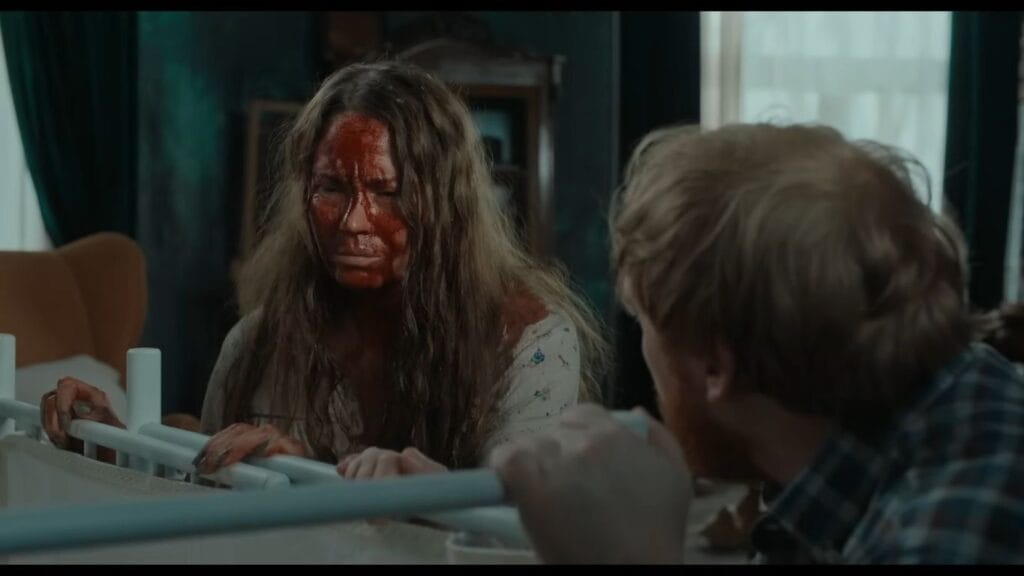
This final little bit of narrative fluffiness is actually pretty symbolic:
1. Acceptance of the Wild: Saga has completely abandoned the performative ideals of middle-class modern motherhood. Rather than trying to force an ancient creature into a sterile crib with wallpaper and baby food jars, she accepts Kuura for what he is and accepts herself for what she is. They are both Fae and belong to the woods.
2. The Restoration of Balance: The home that was built by hacking down ancient trees is finally reclaimed by the woods that has been trying to reclaim it for years. The figure in the trees represents Kuura and Saga’s ancestral lineage, welcoming them back into their true habitat.
Saga finally accepted that she was part of the Fae, or at least one with the forest. She has ultimately managed to bond with Kuura by simply recognising that he is not a human and neither is she. They are both folklore creatures of the woods; she has just been raised in a human society that made her conform to acting civilised.
Final Thoughts: A Primal, Uncompromising Folk Tale
I think that director Hanna Bergholm did a nice job bringing together maternal anxiety and Finnish folklore with Nightborn. It’s an interesting melding together of the modern and the ancient to reflect on very real matters of new motherhood while also respecting the stories of old. I particularly liked how she didn’t allow the story to drown in the subtext so that we could enjoy the folklore aspect on its own.
Thanks for reading! If you love digging through ending explanations without getting bogged down in fluff, stick around and check out some of our other Ending Explained breakdowns, browse our horror reviews, or take a look at our curated horror movie lists.
Frequently Asked Questions
Was Saga actually a changeling?
Yes, evidence throughout the film points to Saga being a changeling who grew up under a magical glamour. Her childhood alienation, insatiable hunger, difficulty bonding with her human mother, and deep supernatural affinity for the forest all support her non-human nature, making Kuura a raw Fae-human hybrid.
Why does Kuura have fur and a tail while Saga looks human?
Traditional folklore changelings placed in human families were concealed by a magical illusion known as a glamour to prevent immediate rejection or violence. Saga lived under this glamour. Kuura was not a changeling and so was born directly to a Fae mother and human father. He exhibited his true, raw hybrid form without an illusion.
Why did scrap metal and cold iron burn Kuura?
In Scandinavian and Finnish folklore, forest spirits, trolls, and changelings have an innate physical vulnerability to cold iron. Saga’s grandmother intentionally surrounded the home with scrap metal to create a protective barrier to keep woodland entities from taking Saga back.
Did Jon cause his own death?
Yes, Jon caused his own death. Jon dismissed the grandmother’s old scrap metal perimeter as silly superstition and removed the rusted cars and machinery to tidy the garden. By dismantling the protective iron barrier, he allowed the encroaching forest roots to penetrate the home and impale him when he tried to take Kuura away from Saga.
What does Saga eating Jon’s heart represent?
Consuming Jon’s heart marks Saga’s final acceptance of what she really is – one of the forest folk. It signifies her full awakening as a creature of the wild, aligning her predatory nature with Kuura’s and accepting their true place as beings of the forest rather than humans who have to exist in normal society.
A Note on Ending Explanations
While we aim to provide comprehensive explanations based on the events on screen, film analysis is inherently subjective. The theories and conclusions presented in this "Ending Explained" feature are personal interpretations of the material and may differ from the director's original intent or your own understanding. That's the beauty of horror, right? Sometimes the scariest version is the one you build in your own head.
You might also like:
- Superhost (2021) Ending Explained – The Clickbait Twist & Rebecca’s Secret
- Hive (2026) Review – Generic Socially-Conscious horror Fails to Land
- 14 Cameras (2018) Review – A Cluttered and Cliched Voyeuristic Slasher
- The Deep House (2021) Review – An Underwater Haunted House Horror
- Longlegs (2024) Review – A Highly Atmospheric But Overhyped Silence Of The Lambs Clone
Disclaimer: Images, posters, and video stills used in this horror ending explained article are the property of their respective copyright holders. They are included here for the purposes of commentary, criticism, and review under fair use. Knockout Horror makes no claim of ownership and encourages readers to support the official release of all films discussed.