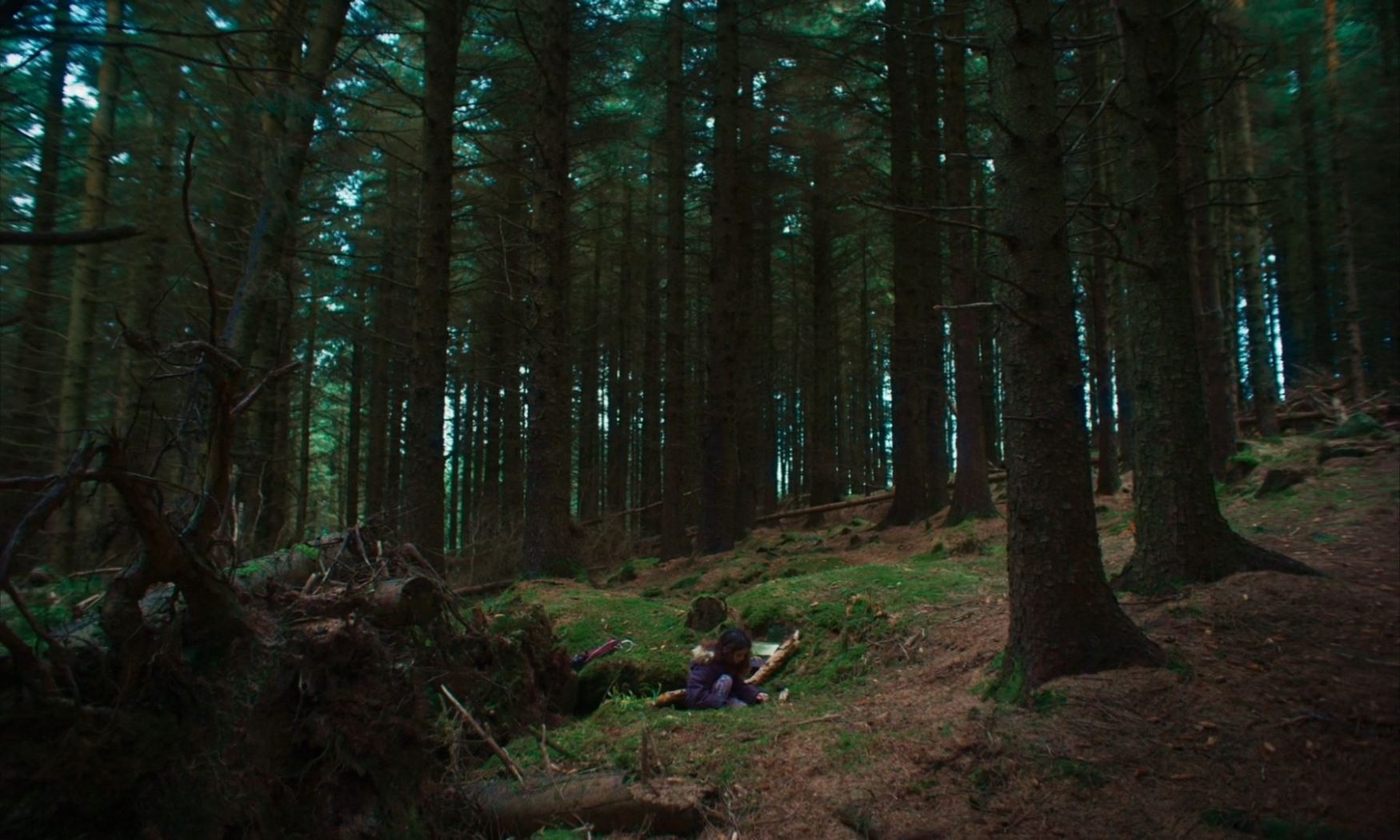
Nocebo (2022) Ending Explained – The Sweatshop Fire & The Ongo Curse
Movie Details: Director: Lorcan Finnegan | Runtime: 1h 36m | Release Date: 2022 | Star Rating: 3/5 Stars
Welcome to Knockout Horror. I recently reviewed Lorcan Finnegan’s Irish-Filipino horror collaboration, Nocebo. To be honest, while I really enjoyed it, I did find a few issues regarding pacing, a slightly messy plot and a ham-fisted social commentary element. Still, it is well worth a watch.
If you are checking this article out, there is a pretty good chance you have already watched the film and are looking for answers. You are in the right place. We are going to break down the events of the movie and explain that slightly complicated ending.
⚠️ Warning: Major spoilers follow below.
The Ending in Brief
The TL;DR: Christine dies. Diana reveals that she is a Filipino witch (Ongo) and that she orchestrated Christine’s illness as revenge. Decades prior, Christine ordered a sweatshop door locked to prevent theft, trapping Diana’s daughter inside during a fatal fire. Diana uses black magic to make Christine physically experience the sensation of burning to death. Diana then commits suicide, and her powers transfer to Christine’s daughter, Bobs.
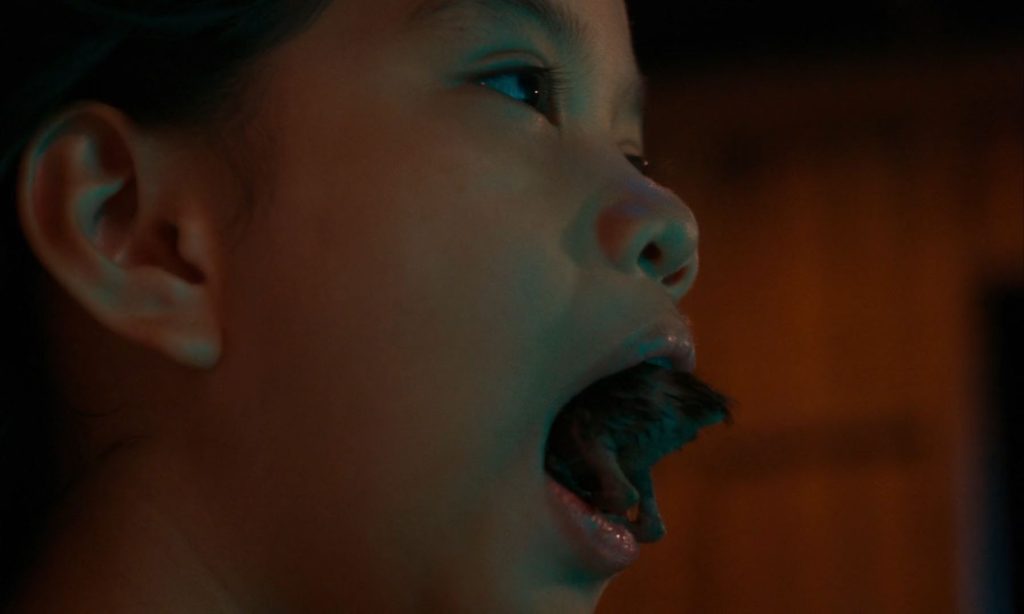
What is the Ongo? An Ongo is a creature from Filipino folklore, depicted here as a powerful shamanic entity capable of both healing and harming. The power is parasitic and passes from host to host via a black bird (chick) entering the mouth.
Why was Diana “healing” Christine? She wasn’t. The rituals were a ruse. Diana needed to gain Christine’s trust to collect biological taglocks – blood, hair, and fingernails. These were the necessary ingredients to cast the final, fatal hex that forced Christine to relive the sweatshop fire.
The Resolution: Christine burns to death at her sewing machine. Diana jumps to her death from the garden roof. The black bird crawls out of Diana’s corpse and enters Bobs, turning the child into the new Ongo.
Good to Know: The film is a direct allegory for the exploitation of the Global South by Western fast fashion. Christine represents the consumerist industry that literally consumes the lives of workers like Diana and her daughter.
Table of Contents
Nocebo (2022) Ending Explained
No plot recap, let’s get straight to explaining the ending. To understand the ending, we need to untangle the web of guilt, illness, and magic that binds the two main characters. The film operates on two levels: a folk-horror revenge tale and a biting social commentary on the fashion industry.
What was wrong with Christine?
Nocebo follows the story of fashion designer Christine (Eva Green). It is made pretty apparent at the beginning of the movie that something terrible has happened. Christine receives a phone call at work that obviously upsets her, mentioning “bodies being pulled out.” Immediately following this, a mangy dog appears and shakes ticks onto her. One bites her neck.
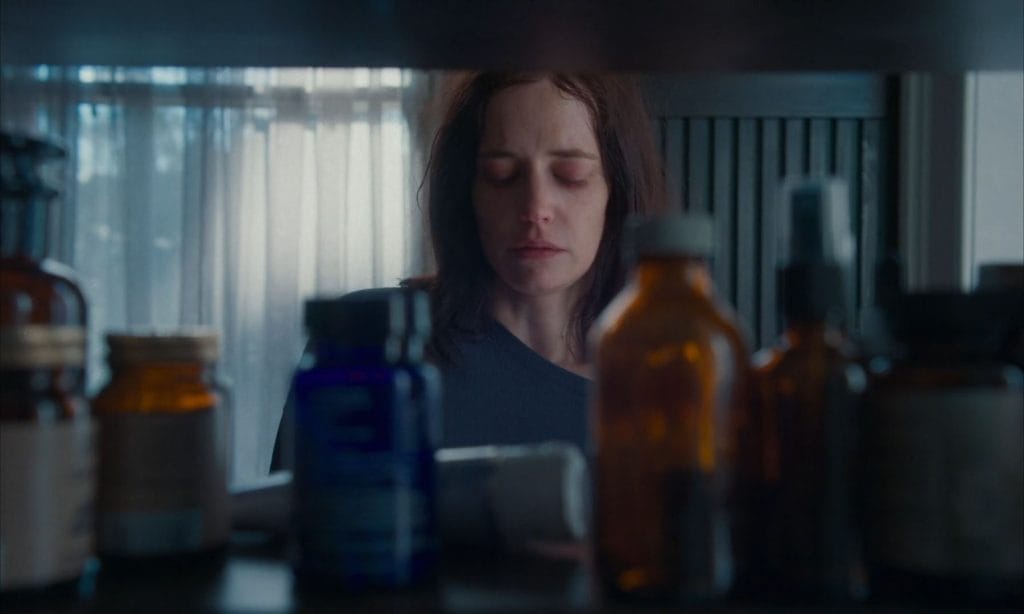
Fast forward eight months and Christine’s life is falling apart. She is afflicted with a mysterious and debilitating illness where she suffers pain, memory loss, and severe fatigue. She has to sleep with a CPAP machine and her joints frequently lock up. I know, it just sounds like the average 35+ experience but it is something far more sinister.
While her husband Felix (Mark Strong) believes the illness is psychosomatic (guilt manifesting as pain), the film misdirects us toward a medical explanation in the form of Lyme Disease.
It makes sense, right? Lyme disease is transmitted by ticks and it causes muscle pain, weakness, and neurological issues. However, this is a bit of a red herring. Christine isn’t suffering from a natural disease; she is suffering from a curse. The tick was not a random act of nature; it was a manifestation of Diana’s black magic.
The Perfect Red Herring: Lyme Disease
The film cleverly uses the initial tick bite to ground the horror in medical reality. Lyme disease, a bacterial infection transmitted by ticks, shares many symptoms with Christine’s curse.


Common symptoms include severe fatigue, joint stiffness, “brain fog” (memory loss), and sleep disturbances. By mimicking a real chronic illness, the film makes Christine’s dismissal by her husband feel more grounded – her symptoms could be medically explained, making the supernatural reveal more jarring.
However, in Nocebo, the tick is not a carrier of bacteria, but a carrier of intent. It is a biological bullet fired by Diana.
Who is Diana and what is an Ongo?
Diana (Chai Fonacier) arrives at Christine’s door claiming to be the new caregiver. Christine, suffering from memory lapses, assumes she hired her and forgot. Diana is actually an Ongo.
In Filipino folklore, the term “Ongo” (or Ungo) is often associated with the Aswang family of creatures, but in the context of this film, it refers to a witch or shaman with the power to heal and harm. Diana acquired these powers as a young woman when a dying Ongo passed them to her via a black chick (bird) that entered her body.
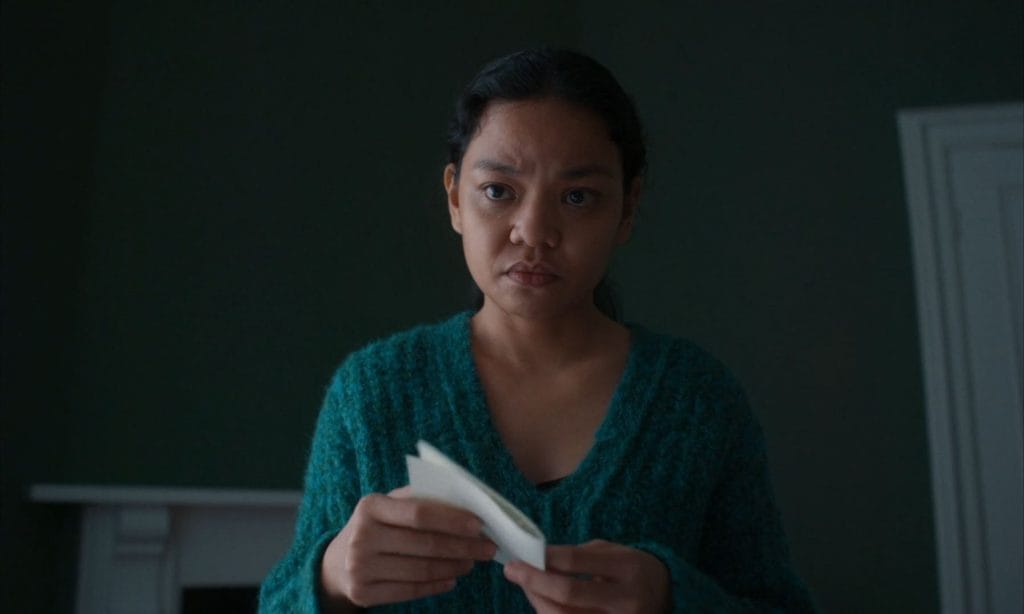
Diana uses sympathetic magic. This involves linking an object to a victim using biological taglocks like hair, blood, or fingernails. We see Diana collecting these items from Christine under the guise of “healing” her. She also steals Christine’s xylophone to use as a totem for her spells and maybe to whip out some sick xylophone tunes.
Why did Diana target Christine?
Diana targets Christine as a form of revenge after Christine’s cost cutting in the factory Diana worked at caused the death of her daughter.
The core mystery of Nocebo is Diana’s motivation. It is revealed through flashbacks that Diana was a garment worker in the Philippines. She was poor, ostracised by her community for being a witch, and forced to work in a sweatshop to support her husband and young daughter.

This sweatshop produced clothes for Christine’s fashion label. We see flashbacks of Christine visiting the factory where she is depicted as a ruthless boss; demanding increased production quotas (upping the count to 30 items per hour) and, crucially, ordering the factory doors to be locked to prevent workers from stealing merchandise.
Tragedy strikes when Diana leaves her daughter in the factory to buy water. A faulty fan sparks a fire that rapidly engulfs the building. Because Christine ordered the doors locked, the workers and Diana’s daughter are trapped inside. They all burn to death and Diana arrives too late, hearing her daughter’s screams from behind the locked gates.
Real-Life Horror: The Kentex Fire
The tragedy at the centre of Nocebo is based on the horrifying reality of the fast fashion industry. Specifically, it mirrors the 2015 Kentex Manufacturing fire in Valenzuela, Metro Manila.
In that real-life disaster, 74 people were killed. Many were trapped on the second floor because the windows were barred with wire and, just like in the film, the main doors were locked or difficult to access to prevent theft.
The film serves as a grim reminder that cheap Western fashion often comes at the cost of safety standards in the Global South, where workers are viewed as expendable commodities rather than people. Puts a new perspective on that cheap t-shirt from Shein, right? Not that large fashion brands are much better. Naked it is, I guess?
The Revenge Ritual
Diana’s presence in Christine’s house is a long-con revenge plot. She isn’t there to heal Christine; she is there to judge her for being a horrible piece of shit. The “healing” rituals were actually preparations for the final curse. Diana needed Christine’s trust and her biological matter to complete the connection.
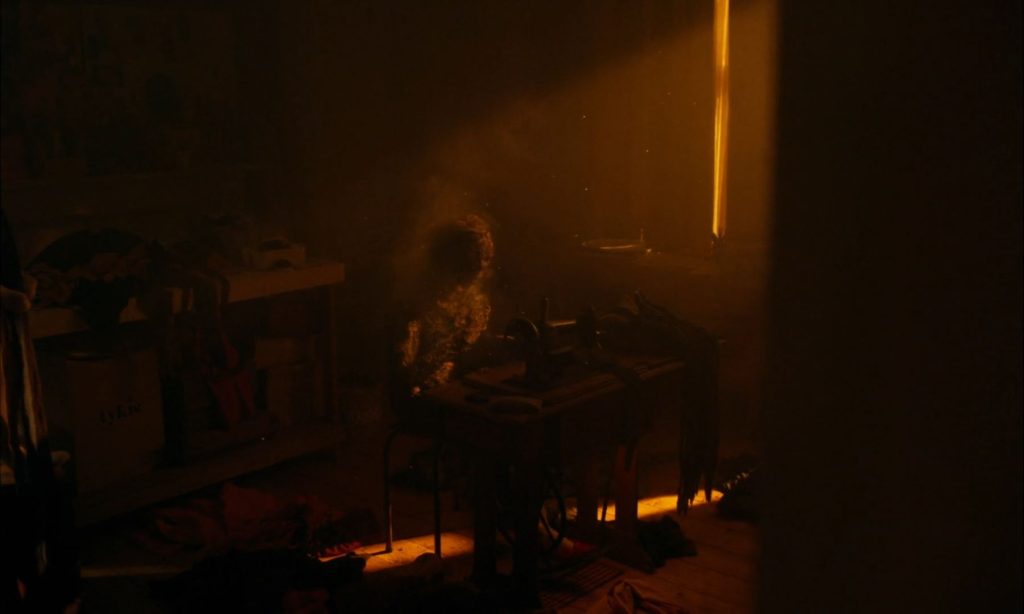
In the film’s climax, Diana reveals the truth. She uses her magic to transport Christine’s mind back to the sweatshop. Christine is forced to sit at a sewing machine, sewing endlessly in the sweltering heat. This mirrors the suffering of the workers she exploited. Diana tells her that this is no longer treatment; it is punishment.
As the vision intensifies, Christine experiences the fire. Her skin blisters and burns in the real world as her mind is consumed by the phantom flames. Christine burns to death at her sewing machine, finally feeling the pain she inflicted on Diana’s daughter.
The Transfer of Power to Bobs
While Christine is dying, Diana goes to the garden – she has completed her mission and has nothing left to live for. She climbs up high and jumps to her death, however, death is not the end of the Ongo’s power.
Throughout the film, Diana builds a relationship with Christine’s daughter, Bobs (Roberta). Bobs is neglected by her parents and bullied at school so Diana becomes something of a surrogate mother figure to her. She even teaches her to lie to her parents to keep Diana in the house… This grooming was obviously intentional.
When Diana dies, the black chick (the spirit of the Ongo) crawls out of her mouth, finds Bobs, and enters her body. Bobs has now inherited the powers of the Ongo. The final shot shows Bobs gathering herbs in the garden, looking directly at the camera with a knowing smile. Diana’s voiceover tells Bobs that she will “always be with her”.
What is an Ongo?
In Visayan folklore, the term Ongo (or Ungo) is often used interchangeably with the Aswang, a shapeshifting monster that eats the unborn or the sick. However, the film presents a more grounded interpretation.
Diana operates more like a Mangkukulam (a practitioner of Kulam, or black magic). She uses nature and sympathetic magic to heal or harm. Obviously, it’s presented here with a lot of creative license but the theme fits well. Particularly when you consider Diana’s exclusion from her village due to being classed as a witch.
The film does keep one very specific piece of lore accurate: the transfer of power. In legends, an Aswang cannot die until they transfer their “black chick” (a living stone or creature inside them) to a successor via the mouth, exactly as Diana does to Bobs at the end.
The Social Commentary: Fast Fashion
Nocebo is essentially a parable about the West’s exploitation of the Global South. Christine represents the fast fashion industry: wealthy, demanding, and willfully ignorant of the suffering required to maintain her lifestyle.
The title “Nocebo” is the opposite of “Placebo”. A placebo is a harmless substance that makes you feel better because you believe it will. A nocebo is a harmless substance that makes you feel sick because you believe it will harm you.
In the context of the film, Christine’s guilt is the ultimate nocebo. However, the film suggests that guilt alone isn’t enough punishment. The system that allowed Christine to thrive at the expense of Diana’s child required a violent correction.
The film ends with a dedication to the victims of the Kentex Slipper Factory fire, a real-life tragedy in the Philippines where 74 people died, many trapped behind barred windows. This grounds the horror elements in a very sobering reality.
Frequently Asked Questions
Why did Diana target Christine in Nocebo?
Diana targeted Christine for revenge. Years prior, Christine ordered the doors of a sweatshop in the Philippines to be locked to prevent theft. This trapped Diana’s daughter inside during a fire, causing her to burn to death.
What happened to Bobs at the end of Nocebo?
Bobs inherited Diana’s powers. When Diana committed suicide, the spirit of the Ongo (represented by a black chick) left her body and entered Bobs. The final scene shows Bobs gathering herbs, implying she is now a witch.
Was Christine actually sick with Lyme disease?
No. While her symptoms mimicked Lyme disease (which is carried by ticks), her illness was a curse. The tick that bit her at the start of the film was summoned by Diana to initiate the hex, not to transmit a bacterial infection.
What does the title Nocebo mean?
A “nocebo” effect is the opposite of a placebo. It occurs when a patient’s negative expectations or mental state cause a treatment to have a more negative effect than it otherwise would. In the film, it represents how Christine’s guilt and the curse manifested as physical pain.
Final Thoughts – Don’t Piss Off A Witch (Or Ongo)
So that is the entire events of Nocebo explained. The movie is a social commentary about the ills of fast fashion. For every cheap item of clothing produced, only to be worn for a few weeks and discarded for the next fad garment, a person living in unimaginable poverty is often forced to work in sweatshops. It is a shocking way to live and the people in these countries suffer terribly. All for the sake of cheap clothes.
The social commentary element in Nocebo wasn’t handled particularly well as it was very heavy-handed and obvious. Still, it is no less important and is worthy of your attention. Thanks for reading!
If you enjoyed it, I would love for you to stick around. I review Horror Movies, I Explain Horror Movie Endings and I make Horror Lists.
A Note on Ending Explanations
While we aim to provide comprehensive explanations based on the events on screen, film analysis is inherently subjective. The theories and conclusions presented in this "Ending Explained" feature are personal interpretations of the material and may differ from the director's original intent or your own understanding. That's the beauty of horror, right? Sometimes the scariest version is the one you build in your own head.
You might also like:
- You Are Not My Mother (2021) Review – A Gripping Irish Folk-Horror Gem
- I See You – 25 Terrifying Voyeuristic Horror Movies Ranked
- Dropbear (2025) Review – It’s Ridiculous and I Love It!
- Survive the Hollow Shoals (2018) Review – A Decent Found Footage Survival Effort
- Unseen (2023) Ending Explained – Hotline Twist & Who Survives
Disclaimer: Images, posters, and video stills used in this horror ending explained article are the property of their respective copyright holders. They are included here for the purposes of commentary, criticism, and review under fair use. Knockout Horror makes no claim of ownership and encourages readers to support the official release of all films discussed.