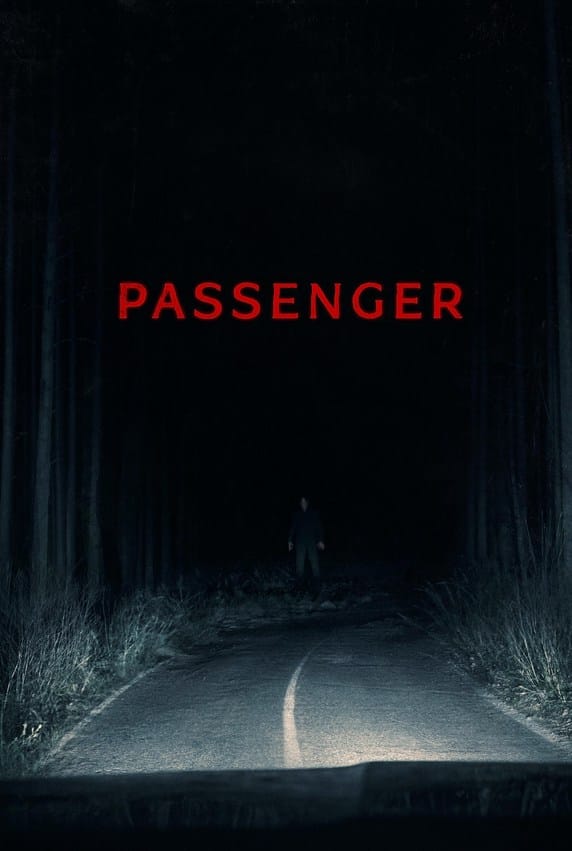
Passenger (2026) Ending Explained – The Highwayman Demon & The Hobo Code
Welcome to Knockout Horror. Today we are breaking down André Øvredal’s road-trip supernatural horror movie Passenger (2026). We are going to unpack exactly what the entity haunting the highway is, explain the significance of the Hobo Code symbols left on vehicles, and detail whether Tyler and Maddie managed to survive the ordeal.
As always, we will kick things off with our ND-friendly Ending in Brief for anyone who wants quick answers before moving into the full explanation. Don’t forget to check out our spoiler free Passenger review if you want to know my feelings on the film.
⚠️ Warning: Major spoilers follow below.
The Ending in Brief
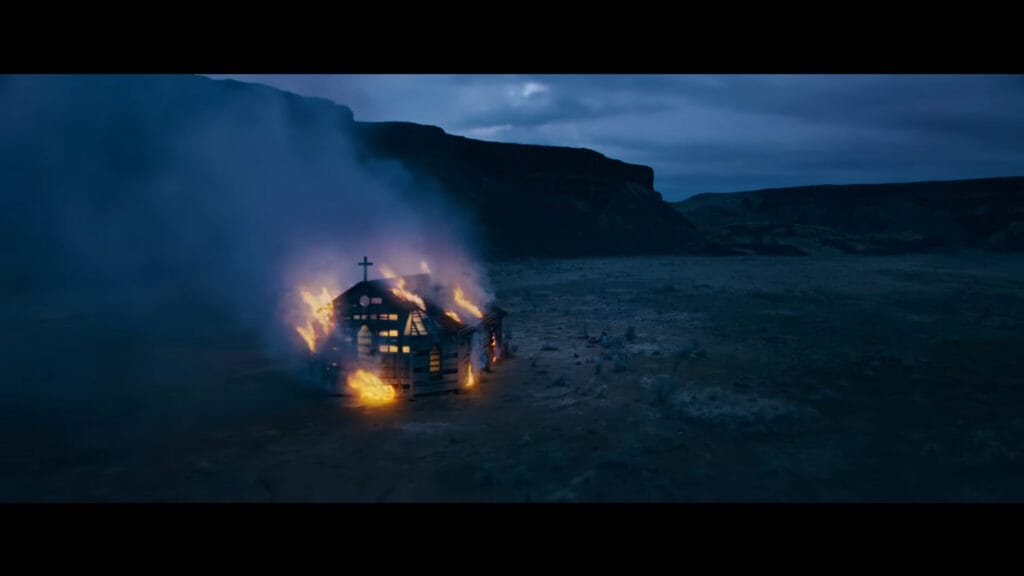
The TL;DR: The entity haunting Maddie and Tyler is known as the “Passenger”, an ancient, unholy highwayman from hell that targets, stalks, and kills travelers who break the rules of the road. After their nomad friend Diana is killed while trying to guide them, the couple follows a series of Hobo Code symbols through a gauntlet of hallucinations to find a hidden, unmapped church. Once on the church’s holy ground, the Passenger’s demonic abilities are severely weakened. Maddie uses the opportunity to ram the van directly into the entity, impaling it onto a church statue and destroying it, hopefully for good. Tyler and Maddie survive the ordeal and are reunited as emergency services arrive at the scene.
Who Survived? Honestly, the body count on this highway is pretty damn high. Daniel is slaughtered on the roadside at the start of the film, and Lucas is pulled back into his car and killed despite Tyler and Maddie’s intervention. The veteran nomad Diana is also brutally killed right in front of the couple. Ultimately, only Maddie and Tyler make it out alive.
Why did the Passenger target Maddie and Tyler? The Passenger is an opportunistic demonic entity that latches onto unsuspecting travelers. By pulling over to check on Lucas’s crashed car on a dark, remote highway at night, the couple broke the paramount rule of nomadic travel: “Never stop at night”. This fatal mistake essentially marked them as the entity’s next prey and allowed it to hitch a ride with them.
What do the three claw marks mean? The three claw marks slashed onto the vehicles are a bit of a cosmic calling card. They serve as a physical manifestation of the Passenger’s curse, indicating that the entity has officially marked the vehicle’s occupants and will haunt them relentlessly until they are dead.
Table of Contents
Passenger (2026) Ending Explained
You know how we roll at Knockout Horror, we never bother with tedious, passive plot recaps; you just sat through the film, after all, right? Let’s get right into explaining the supernatural mechanics, the overarching lore, and the climax of Passenger.
What is the “Passenger” Entity?
The main antagonist of the film is a supernatural, demonic entity known simply among the drifting community as the Passenger. It’s a highwayman from hell who latches onto travellers that break the code of the road.
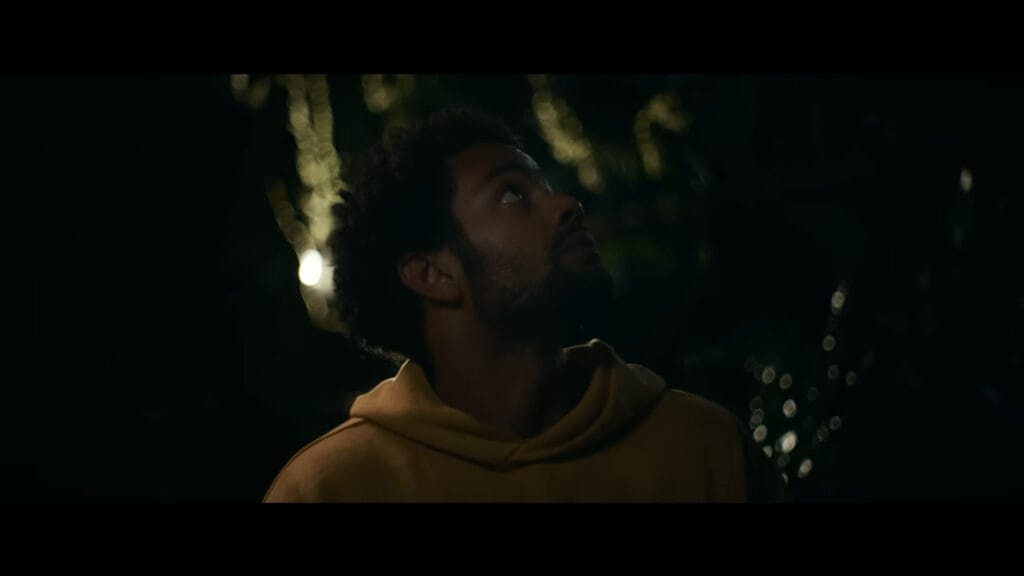
As the veteran nomad Diana explains before she eats it, the Passenger is an unholy highwayman from hell. It’s probably best described as an ancient, parasitic force that feeds exclusively on the isolation, panic, and suffering of vulnerable travelers.
The entity uses shape-shifting tricks, including taking the form of a deceptive preacher or a loved one, to break its victims’ minds before orchestrating fatal crashes on remote, quiet highways. When altruistic fellow travellers jump out to help, it latches onto them as its next set of victims which is exactly the case here.
Folklore Focus: The Demon of the Road
There’s a solid chance that the themes at play in Passenger feel a tad familiar to you. Anyone who has been driving in remote locations or on empty highways late at night knows how unsettling it can be. For as long as road networks and the vehicles that traverse them have been a thing, the urban legends of the demons and spirits that haunt them have, too.
Passenger is tapping into a number of these urban legends to weave its tale of horror on the highway. Let’s take a look at a few of its obvious inspirations:
- The Homicidal “Demon Trucker” of Route 666: The passenger’s tendency to stalk drivers on quiet highways and force them to crash is lifted directly from the demon said to haunt the infamous Route 666 (the “Devil’s Highway”). The road is supposedly haunted by a demonic trucker who appears out of nowhere, travelling at massive speeds and forces cars off the road.
- The Shape-Shifting Phantom Hitchhiker: Every quiet, remote road has legends of phantom hitchhikers who appear out of nowhere begging for a lift, only to disappear once they enter your car. These phantoms manifest as young children, vulnerable women, or even elderly people. Horror movies love to put a malicious spin on this otherwise innocuous urban legend.
- Spectral Pedestrians: Another classic urban legend is that of Spectral Pedestrians. These are spirits who appear out of the darkness and walk in front of your vehicle on lonely roads, forcing the driver to adjust, swerve, or even to crash. Some are simply there while others are deliberately malicious and out to cause chaos.
Passenger takes a little bit from each of these stories and legends, as well as a few others, and melds them together to create a malicious entity that would be pretty damn terrifying if the film managed to execute its scares a little better.


What are The Rules of the Road? Why Stopping is Fatal
There are a couple of very simple rules when it comes to the roads in Passenger. They are “Don’t drive at night” and if you do, “Don’t stop. Don’t ever stop.”.
We, the viewer, are introduced to this concept right at the beginning of the movie. When Daniel and Lucas pull over so that Lucas can go for a slash behind a tree on a dark stretch of blacktop, they immediately invite the entity in. They broke both of those cardinal rules. They were driving at night and, worst of all, they stopped in the dark. Should have just held it Lucas. Daniel is killed and Lucas has to flee.
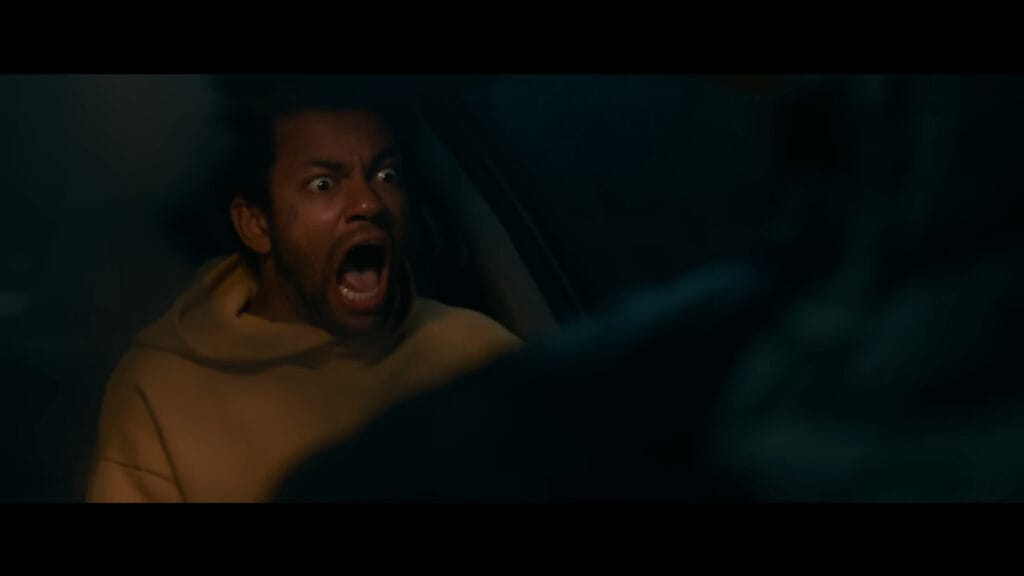
Later, when Tyler and Maddie have a moment of weakness and go out of the way to show some kindness to a fellow traveller, stopping to help Lucas inside his crashed car, they inadvertently step right into the entity’s trap. The Passenger plays on the natural human desire to help each other out. A fact which turns basic road-trip solidarity into something of a biological vulnerability.
Thematic Spotlight: The Staged Ambush
I personally think that the smartest piece of story telling here is the part that goes a bit unnoticed by viewers. The writers are basically using a supernatural plot to commodify a horribly real tactic used by violent criminals known as the Staged Crash Ambush. Perpetrators will stage apparent crashes to lure in unsuspecting helpful people before robbing or attacking them.
Naturally, Passenger puts a demonic twist on it by having the a supernatural entity take advantage of the empathetic person but the core message of “do not stop” is exactly the same. Anyone who has browsed scary dashcam videos on YouTube will have seen dozens of these staged ambushes and will likely immediately recognise the setup. Keep on going and call emergency services seems to be the best advice, regardless of whether the threat is a human or demonic one.
Decoding the Hobo Code Symbols
To navigate their way out of the Passenger’s curse, Maddie relies on the historic “Hobo Code“. This is a system of symbols used by early 20th-century drifters to communicate hidden dangers and resources along nascent American trade routes.
These markings are most commonly associated with rail-hopping hobos but have also been used by the homeless community for decades. The best way to think of the hobo code is as hieroglyphics for the transient community. All sorts of different messages can be conveyed using simple images:
- Safe camping spots
- Unsafe camping spots
- Unsafe towns
- Dangerous neighbourhoods
- Police presence
- Presence of dogs
- Unwelcoming townsfolk
- Dangerous water
- Water that’s safe to drink
- Good train hopping spots
It’s really quite fascinating and it’s become a bit of a trend on places like YouTube and reddit. People roaming locations and filming spots where these codes appear have gained a lot of popularity. Hobos would even use the codes just to share messages of encouragement.
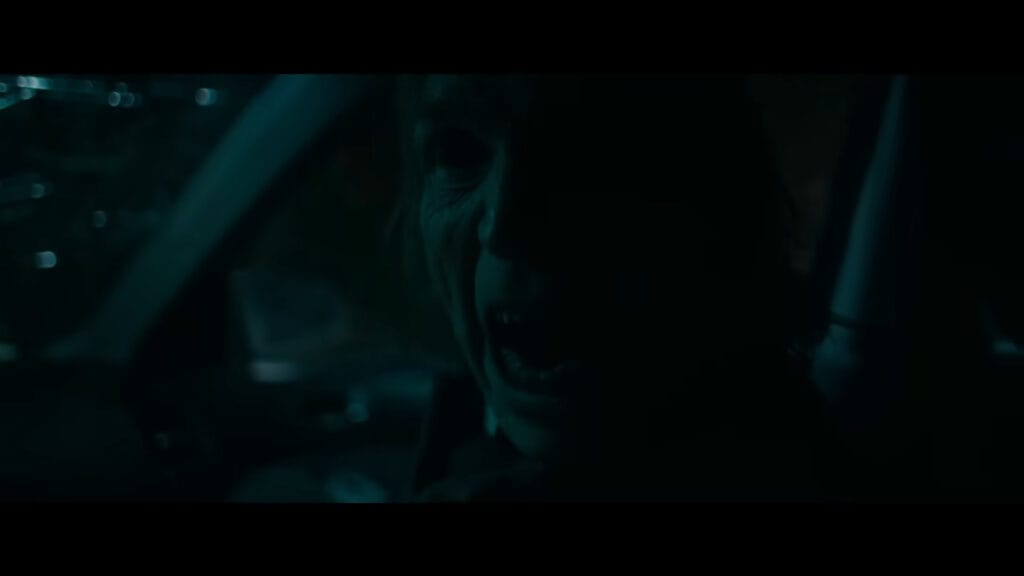
The three vertical lines scratched onto Lucas’s car and, subsequently, onto the couple’s van are the most important ones here. They are actually taken from a real hobo code which means “danger” or “unsafe area”. In Passenger, they serve as a warning of an active, predatory presence. In other words, the car has been marked by the demon.
Later, as the entity attempts to use sensory deprivation and sudden nighttime shifts to completely disorient them, Maddie spots a specific billboard featuring a distinct directional sign. Again, this is based on an actual hobo code image. Recognising that the symbol translates to “this way to safety” in the old code, she chooses to drive straight off the established pavement and into the uncharted desert.
Thematic Spotlight: The Death of the Nomad Dream
Let’s be totally honest about the writing here for a second. Passenger attempts to function as a dark, cautionary subversion of the highly romanticised online “van life” subculture but doesn’t quite nail it. Maddie and Tyler quit their mundane corporate jobs seeking ultimate freedom and an escape from societal entrapment. But horror loves a reality check, doesn’t it?
By turning the open highway into a literal playground for a demonic stalker, the movie strips away the aesthetic, Instagram-friendly glow of the nomadic lifestyle. The very thing that represents freedom, the infinite open road, becomes an inescapable trap where you are entirely exposed, isolated, and lacking a static, secure foundation to shield you from the dark.
Horror and van-life culture are starting to become pretty common bedfellows. Perhaps it’s because it is such an atypical lifestyle but maybe it is actually because the real life horror stories associated with this way of living haunt us more than we realise. It’s hard not to think of the final days of Gabby Petito and wonder just how many horror stories are hiding behind the glossy, Instagram-friendly veneer of young couples living in horribly cramped conditions with limited funds.
Why Do Maddie and Tyler Need to go to The Church?
Maddie and Tyler need to go to the church because the hallowed ground of St. Christopher, the patron saint of travellers, offers them protection from the demon, allowing them to fight it.
The final showdown takes place on the unmapped, abandoned grounds of the Church of St. Christopher and this is very deliberate on Maddie and Tyler’s part; with the assist to Diana, naturally.
Because St. Christopher is traditionally revered as the patron saint of travellers, his consecrated ground acts as a literal psychological and physical barrier against the demonic highwayman. Diana informs the pair of this because she knows it is their only chance to fight back. Because the church is unmapped, she offers to guide them there but is killed before she has the chance.
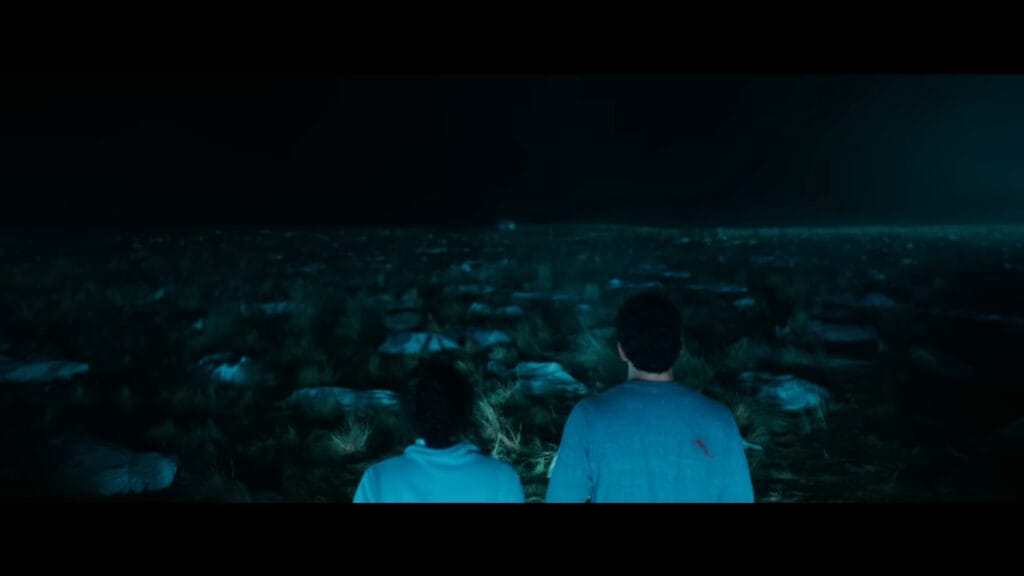
The Passenger attempts to use optical illusions to confuse and trick Maddie but she manages to use the aforementioned hobo code to locate the church. The moment Maddie steers the van onto the church property, the Passenger’s illusions fracture, and its skin visibly begins to sizzle and weaken. He’s vulnerable now, seemingly has a physical form, and, all of a sudden, it’s a much more fair fight.
It’s not completely plain sailing, though. Tyler assumes the medallions featuring the mark of St. Christopher will protect them but the passenger makes short work of that, pulling them out of the van which leaves Tyler completely vulnerable. He is violently ripped from the vehicle during the approach.
Maddie, realising that she has only one way to save Tyler, continues the assault. She accelerates the van to maximum speed, sending the Passenger flying through the windshield before she rams the Passenger directly into a heavy church statue of St. Christopher. The impact completely impales the entity on the holy masonry, breaking the curse and destroying the Passenger once and for all.
Kind of symbolic, I guess. The patron saint of travellers was the one that finished the Passenger off.
Horror Context: St. Christopher and the Unholy Inverse
To really understand the lore of Passenger, you have to look at the religious framework the writers are playing with. St. Christopher is famously revered in Christian tradition as the patron saint of travellers and nomads, symbolised by the classic medallion Maddie hangs in the van to guard their journey. According to ancient hagiography, Christopher was a literal giant who carried a small child, who revealed himself to be Christ, across a dangerous, raging river, bearing the weight of the entire world on his shoulders.
The film flips this concept. The “Passenger” functions as St. Christopher’s dark, unholy inverse, a demonic highwayman that mirrors the saint’s mythos. While Christopher carries travellers safely across dangerous boundaries, the Passenger hitches a ride to violently drag them into the abyss and, well, mess them up. As Maddie uncovers in the convenience store research, the demon historically paraded around as a nomadic preacher as an act of pure blasphemy, mocking the very idea of divine protection on the road.
This is why the St. Christopher medallions and the hidden, unmapped church are the only things that can physically harm the entity. Consecrated ground forces a localised reality-check on the demon, melting its flesh and severely stripping away its ability to warp space and project hallucinations as well as making it physically vulnerable. It’s a classic, if somewhat clunky, theological trap: the only way to kill a monster born from the lawlessness of the infinite open highway is to lure it onto holy ground where cosmic order actually rules. It’s a blending of the old and the new. Classic religious horror with van-life culture. Let’s be honest, it doesn’t work all that well.
What Does the Final Scene Mean?
The final scenes of Passenger show that Maddie and Tyler survived but they are completely done with life on the road. It’s time to buy a big ass house with thick ass doors and settle down away from malicious traveller demons.
The final scene of the film shows Maddie and Tyler huddled together in the wreckage as the morning light breaks and emergency vehicle sirens approach in the distance.
While the threat of the Passenger is entirely eradicated, the couple’s perspective on life has, understandably, completely shattered. Tyler triggers an emergency S.O.S. signal on their device, and they explicitly discuss giving up the van-life dream for good. Who could blame them?
The final dialogue sees them resolving to buy a home in a heavily fortified gated community, hire a guard dog, and effectively lock themselves away from the outside world forever. It’s a classic, if somewhat clinical, horror conclusion: they saved their physical lives, but the sheer trauma of the highway has permanently stolen their sense of freedom. Ah well!
Final Thoughts: A Disappointing, Generic Ride
Let’s be totally honest here: despite some decent physical effects and an interesting premise surrounding the historical Hobo Code, Passenger ultimately lands as a properly disappointing, generic Hollywood horror.
The jumpscares are highly predictable, the logic behind the Passenger’s reality-warping powers feels incredibly clutched-at, and the dialogue relies far too heavily on cheesy, direct exposition to explain its internal folklore. The actors try but a few energetic performances can’t entirely save a film that feels like it was assembled on a horror studio conveyer belt. If you want to check out my thoughts, remember to read our review of Passenger.
Thanks for reading. If you like this format, why not bookmark us and stick around? I try to do things differently here and think that our ending explained articles are the easiest to follow in the horror world. Check out some more Ending Explained articles, read our comprehensive horror movie reviews, or browse our curated horror lists.
Frequently Asked Questions
What was the Passenger?
The Passenger was a demonic entity that roams roads victimising people who break the rules “don’t travel in the dark” and “never ever stop” if you do travel in the dark. The demon would attach to people who break those rules, eventually killing them before moving onto another victim.
Why did the Passenger haunt Tyler and Maddie?
The Passenger haunted Tyler and Maddie because they broke the rules of the road. They were travelling at night and stopped to help Lucas when they found his car crashed on the side of the road.
Why did the Passenger mimic Tyler’s voice and appearance?
The Passenger uses acute psychological manipulation to break its victims’ survival instincts. By temporarily adopting Tyler’s physical form and voice to lure Maddie into another accident scene, the entity attempted to trick her into abandoning the safety of her vehicle and breaking her focus before she could reach holy ground.
Why did the St. Christopher medallion burn the Passenger?
Because the Passenger is explicitly an unholy, demonic entity, a dark opposite to the holy order essentially, it experiences severe adverse physical reactions when coming into direct contact with blessed religious icons. It’s an age old horror trope. Maddie’s family heirloom St. Christopher medallion acts as a localised shield that physically burns the demon’s flesh. Too bad a whole van full of them didn’t work for Tyler.
What do the dead bodies near the church symbolise?
The dead bodies near the church that Maddie has to drive over symbolise the many travellers and road trippers who disappear every year. The film alludes to this early on, 15,400 of the 130 million people who took road trips were never seen again. The implication is that the Passenger demon had claimed all of those people’s lives the same way he did with Daniel, Lucas, and Diana. Each body represents a victim of the Passenger.
Who Survived?
The only confirmed survivors are Maddie and Tyler. Diana was brutally murdered, Daniel was killed almost immediately, and Lucas died in the car crash. I’m sure most of the nomad travellers are fine because they are smart enough to follow the rules of the road.
A Note on Ending Explanations
While we aim to provide comprehensive explanations based on the events on screen, film analysis is inherently subjective. The theories and conclusions presented in this "Ending Explained" feature are personal interpretations of the material and may differ from the director's original intent or your own understanding. That's the beauty of horror, right? Sometimes the scariest version is the one you build in your own head.
You might also like:
- Ghost Webcam (2023) Review – A Low-Budget Screenlife Fumble
- Super Dark Times (2017) Review – A Dreamy and Disturbing 90s Thriller
- New Folder (2024) Review – An Ultra Low Budget Study In Voyeuristic Boredom
- Hungry (2026) Review – Enjoyable Hippo Themed Creature Carnage
- Time Cut (2024) review – 2003 Deserved A Better Horror Movie Than This Netflix Original
Disclaimer: Images, posters, and video stills used in this horror ending explained article are the property of their respective copyright holders. They are included here for the purposes of commentary, criticism, and review under fair use. Knockout Horror makes no claim of ownership and encourages readers to support the official release of all films discussed.