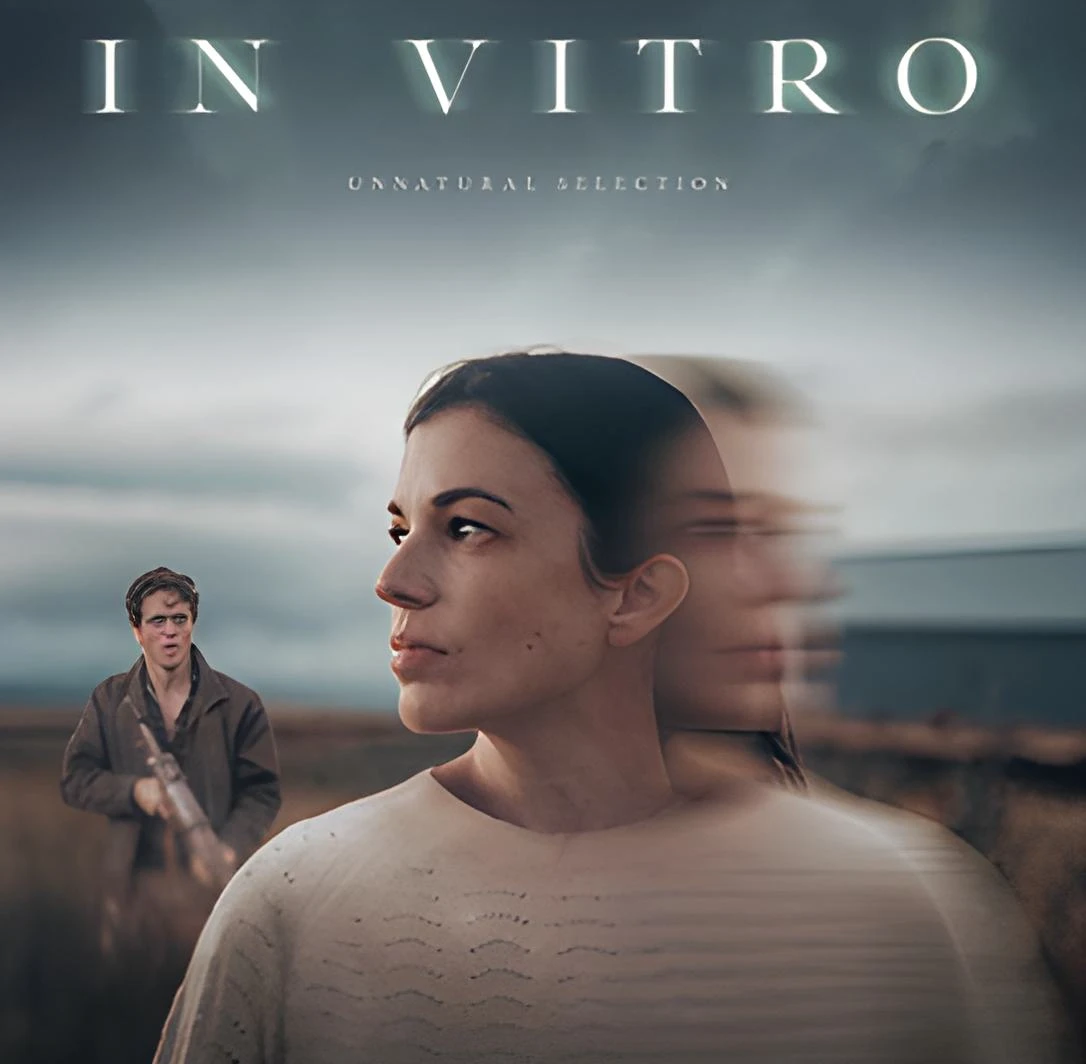
In Vitro (2025) Ending Explained – Who Was The Intruder?
Movie Details: Directors: Will Howarth & Tom McKeith | Runtime: 1h 28m | Release Date: 2025 | Star Rating: 3/5 Stars
Welcome to Knockout Horror. Today, we are explaining the ending to the Australian sci-fi horror In Vitro (2025). If you found the film a bit slow or the lack of exposition frustrating, you aren’t alone. It’s a moody, atmospheric burn that saves its biggest cards for the final ten minutes. We are going to cut through the silence and explain exactly who is a clone, who is real, and what happened to Jack.
⚠️ Warning: Major spoilers follow below.
The Ending in Brief
The TL;DR: Layla discovers she is actually a clone. The real Layla divorced Jack years ago due to his abusive behaviour. Unable to accept the rejection, Jack used his cattle-cloning technology to create copy after copy of his ex-wife. When our protagonist discovers the truth, she kills Jack, cuts off his thumb to bypass the lab’s security, and creates a clone of her son, Toby, to live out a twisted fantasy of the family life she remembers.
Who was the Intruder? The intruder was a newer, “replacement” clone of Layla. Jack was growing her in the shed because he planned to dispose of the protagonist (who was becoming too independent), but the new clone woke up early and escaped.
Is the son real at the end? No. The real Toby lives with the original Layla in Fairview. The boy seen at the end is a fresh clone created by the clone version of Layla to complete her fantasy.
Why were the cattle dying? The cloning technology was imperfect. The genetic degradation killing the cattle was also affecting the human clones, explaining why the “Intruder” clone was visibly sick and dying.
Good to Know: The film serves as a dark allegory for coercive control and domestic abuse. Jack represents the ultimate toxic partner – a man who literally objects to his wife’s independence by killing her and replacing her with a more compliant copy.
Table of Contents
In Vitro (2025) Ending Explained
The film operates on a bit of a “show, don’t tell” basis, which can be annoying when it doesn’t show you much for the first hour. It’s a bit slow, isn’t it? It really wants to set the scene and that’s where things can get a bit confusing. Let’s break down the major twists.
The “Clone Wars” Reveal
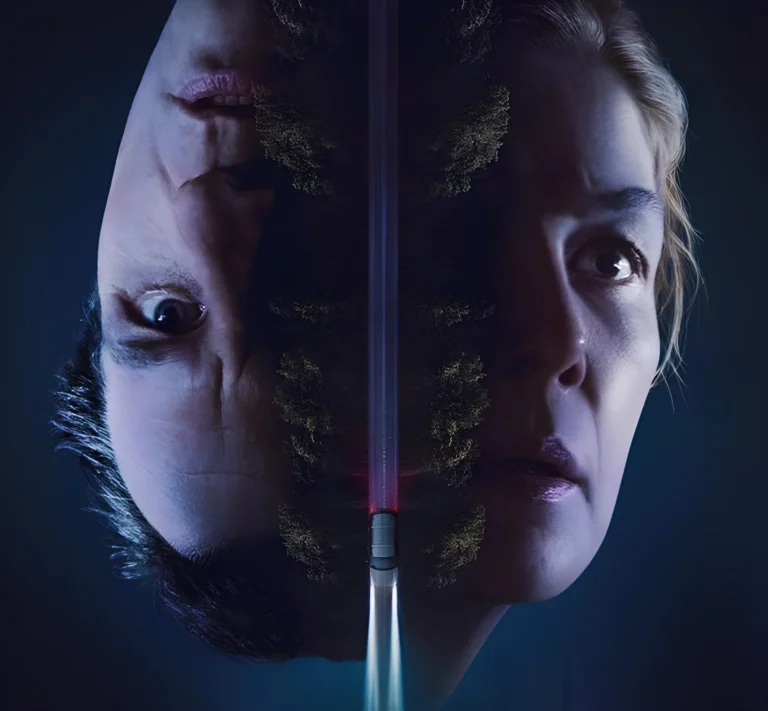
Throughout the film, Layla is searching for an “intruder” who looks exactly like her. Layla assumes Jack is cloning her, which makes sense because Jack has that technology available to him. He clones cattle, after all. The truth is far darker: Layla herself is a clone.

After escaping Jack, Layla tracks down her “son” Toby at a school in Fairview. She watches a woman pick him up – a woman who looks exactly like her, but older and freer. Breaking into the woman’s house, Layla finds divorce papers and restraining orders against Jack dating back years.
This reveals the frankly rather grim reality: The “Layla” we have been following was actually created in a vat. She possesses the original Layla’s memories only up until the point of the divorce. Jack essentially rebooted his marriage by building a compliant wife who didn’t remember leaving him.
Context: Engineered Ignorance
It is easy to wonder why Layla didn’t realise she was trapped sooner, but remember: she was literally engineered to stay in the relationship with Jack.
Jack implanted her with memories from the “honeymoon phase” of their marriage, deliberately deleting the years of abuse that led the real Layla to divorce him. She woke up believing she was in a happy, functioning relationship.
Combined with the extreme isolation of the farm, a classic tactic of coercive control, she had no external reality or frame of reference to compare her life against. Her eventual rebellion wasn’t just a plot twist; it was a glitch in Jack’s programming.


Why did Jack keep making clones?
Jack is the ultimate toxic ex. He couldn’t handle the real Layla leaving him, so he used his agricultural cloning technology to make a replacement. However, the clones kept failing in one of two ways. They either became ill almost instantly due to the technology being poorly made or they developed the same “flaw” as the original: independence.

As soon as a “Layla Clone” started showing signs of unhappiness or distance (which we see in the opening scenes), Jack would secretly start growing a new one in the shed to replace her. The “Intruder” was simply the new model waking up early and escaping. This intruder was ill because of the flawed technology. Just like the cows that come out and die within days, this intruder was set to die, too.
Jack views women like livestock – livestock that needs to be culled when it stops behaving.
Real Science: Why Clones Die Young
The rapid deterioration of Jack’s cattle (and the clones) is grounded in real biology. In the real world, clones created via Somatic Cell Nuclear Transfer often suffer from shorter lifespans.
This is partly due to telomere shortening. Telomeres are the protective caps on chromosomes that shorten as we age. When you clone an adult, the new clone often starts life with already-shortened telomeres, meaning they are essentially born “genetically old.”
This explains why the “Intruder” clone was so sick despite appearing young, her DNA was likely degrading at an accelerated rate. A common hurdle in real-life cloning attempts like Dolly the Sheep. Recent research suggests this may be an issue of that past.
The Twisted “Happy” Ending
Layla returns to the farm and pretends she wants to reconcile. It’s a ruse. As they prepare for bed, she shoots Jack in the head. It’s a brutal, yet necessary end to a monster. I’m sure we all secretly enjoyed this scene.
Despite what you might expect, Layla doesn’t leave. She cuts off Jack’s thumb to bypass the biometric locks on the cloning vats. In the final scene, we see Layla calling a young boy in for dinner. Since the real Toby is miles away with his real mother, this boy is a clone of Toby.
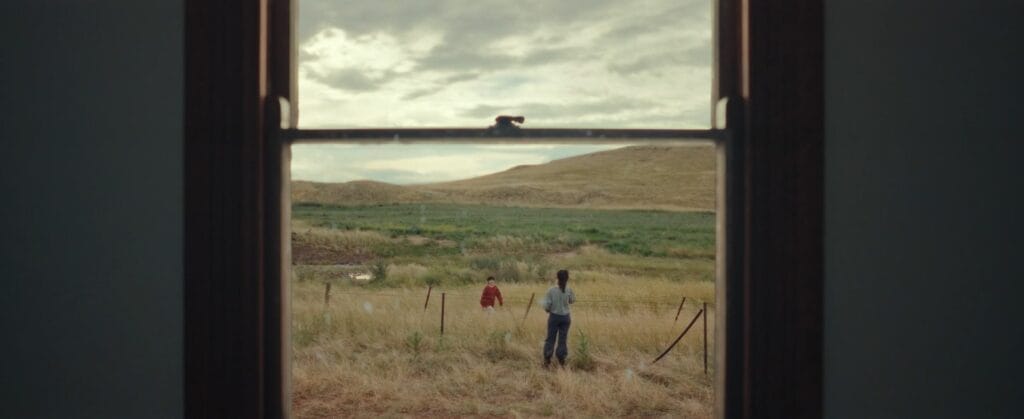
Our protagonist, realising she can never have her old life back (because it belongs to someone else), decides to build her own version of it using Jack’s technology. It is a happy ending… in the most messed up way possible. Let’s hope she doesn’t continue the cycle of replacements when Toby wants to head off to university or they have a random fight over something silly.
Theme: An Allegory for Domestic Abuse
Believe it or not, In Vitro is less about sci-fi and more about the cycle of abuse and coercive control. Jack represents the ultimate abuser who refuses to let his victim go.
- The Cycle: Jack literally recycles his victim. When she stops being “perfect” (i.e. compliant and obedient), he discards her and starts over.
- Isolation: He rigs the car so she can’t leave and isolates her on a remote farm – classic control tactics amplified by sci-fi tech.
- The Ring: The wedding ring is revealed to be a literal tracking device, symbolising how marriage to him is a cage.
Frequently Asked Questions
Why didn’t the car start?
Jack had installed a kill switch behind the steering column. He suspected Layla might try to leave (just as the real Layla did), so he ensured she was trapped on the property.
Why were the cattle dying?
The cloning process was flawed. The cattle suffered from genetic degradation that caused rapid illness and death. This foreshadows the fate of the clones; the “Intruder” clone was already showing signs of sickness, suggesting Jack hasn’t perfected the tech for humans either.
Is the Layla we follow the original?
No. She is a clone. The original Layla is alive, well, and living in Fairview with the real Toby.
What happened to Brady?
Brady, the delivery driver who knew about Jack’s experiments, was stabbed to death by Jack after helping Layla escape. Jack later used Brady’s car to hunt Layla down.
Final Thoughts – Science Fiction but Real World Abuse
In Vitro is a slow burn that might test your patience a bit, but the payoff is a chilling examination of real world abuse. Jack is actually one of the most pathetic villains in recent horror history. A man so insecure he has to build a wife in a shed because a real one won’t put up with him.

It’s an interesting way to reframe a fairly common subject and transform it into a horror movie concept. Was it a happy ending, though? Ignorance is bliss for Todd, I suppose. It’s hard to imagine him living a normal life, though. Layla will be forced to become the dominant, controlling personality that Jack was just to keep her own false reality alive. It’s kind of troubling when you think about it like that. Thanks for reading.
Looking for a critique? For our verdict on the pacing, the atmosphere, and a full rating, read our In Vitro (2025) Movie Review.
A Note on Ending Explanations
While we aim to provide comprehensive explanations based on the events on screen, film analysis is inherently subjective. The theories and conclusions presented in this "Ending Explained" feature are personal interpretations of the material and may differ from the director's original intent or your own understanding. That's the beauty of horror, right? Sometimes the scariest version is the one you build in your own head.
You might also like:
- A24 Backrooms’ Bollocks, Bonus Scary Movie, Resident Evil Hype, and More – Cutting the Crap Horror Roundup
- V/H/S/99 (2022) Review – A Mixed Bag of DIY Found Footage Horror
- F*** Marry Kill (2024) review – An outdated and uninspiring date-night thriller
- Observer (2022) Review – An Ambitious But Messy Religious Trip
- Sinister Switch (Daughter in Disguise)(2021) Ending Explained – Is It Really Olivia?
Disclaimer: Images, posters, and video stills used in this horror ending explained article are the property of their respective copyright holders. They are included here for the purposes of commentary, criticism, and review under fair use. Knockout Horror makes no claim of ownership and encourages readers to support the official release of all films discussed.