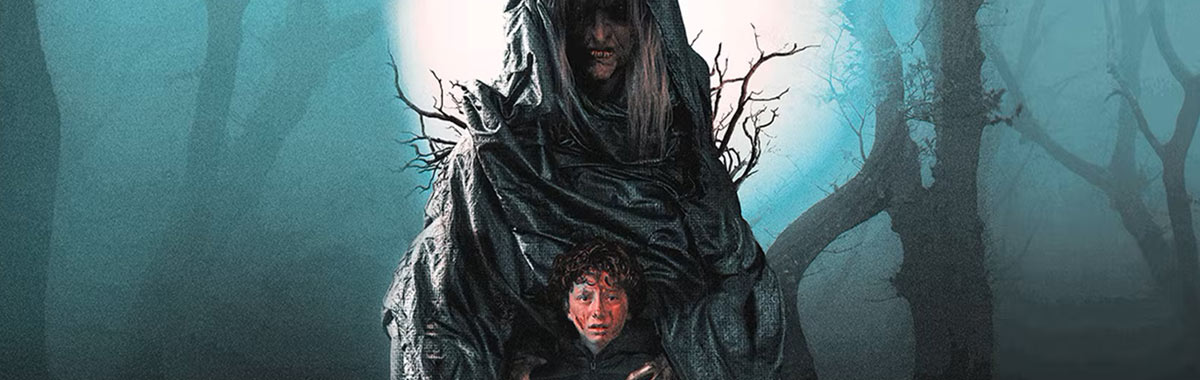
Slapface (2021) Ending Explained – Was the Monster Real?
Movie Details: Director: Jeremiah Kipp | Runtime: 1h 25m | Release Date: 2021 | Star Rating: 2.5/5 Stars
Welcome to Knockout Horror. Today, I am going to explain the ending to Slapface . This movie spent its entire run hinting at one thing before seemingly flipping it on its head and then, for some reason, flipping it back. It is a weird ending made even stranger by the message in the credits. Anyways, let’s get to it. If you haven’t checked out our review of Slapface, feel free to click the link.
⚠️ Warning: Major spoilers follow below.
The Ending in Brief
The TL;DR: Lucas is not being protected by a monster; he is suffering from severe psychological trauma and grief following his mother’s death. The monster, known as the Virago, is a manifestation of his own repressed rage and the abuse he suffers. In the end, Lucas carries out the violent acts himself, including the murder of his brother’s girlfriend and the final attack on his brother, Tom.
Was the monster real? No. The creature is a hallucination used by Lucas to distance himself from his own violence. This is confirmed when Lucas “kills” the monster at the end, only for the body to vanish, revealing that he was actually attacking his brother the entire time.
Why did he kill Anna? Lucas felt abandoned and jealous. He viewed Anna as a threat to his connection with Tom. Because he could not process these complex emotions, he let his “monster” persona take control and shot her with Tom’s gun.
The Resolution: Lucas experiences a moment of clarity as the police arrive. He realises the monster was never there and that he is responsible for the bloodshed. The film ends on a bleak note, suggesting the cycle of abuse has completely consumed him.
Good to Know: The “Slapface” game is a real-world metaphor for the way victims of violence often normalise pain, with the credits explicitly linking the film’s horror to the real-life consequences of bullying.
Table of Contents
Slapface Ending Explained
Slapface follows Lucas (August Maturo) who is a troubled and isolated young boy. He is bullied at school and lives a dysfunctional life with his older brother Tom (Mike Manning). Their primary way of communicating is a violent game called “Slapface”.
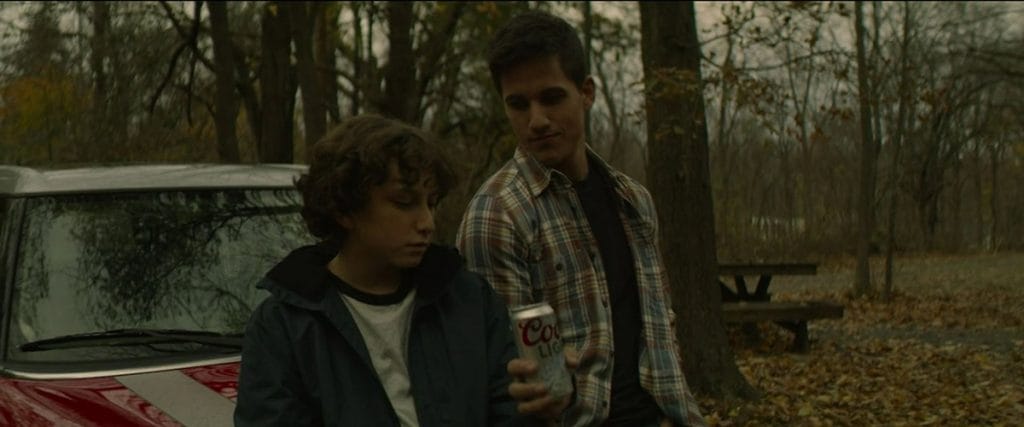
Slapface is a game used deliberately as a form of abuse. Tom frames it as simple fun but it’s actually a way the pair internalise their trauma after difficult lives. While it helps them control their internal grief for awhile, eventually it becomes nothing more than physical pain. This plays into the entire theme of Slapface. It’s a movie about the consequences of a mind fractured by abuse.
Thematic Spotlight: The Psychology of the Slapface Game
The central game from which the film takes its title is a harrowing depiction of the “normalisation of violence” within a traumatised household. By turning physical pain into a structured game, Tom and Lucas have created a way to bond that mirrors the abuse they likely witnessed or suffered from their parents. It is a coping mechanism that allows them to express aggression under the guise of sibling play, though the emotional damage is profound.
For Lucas, the game serves as a gateway to his eventual psychological break. When the physical pain of the slaps is no longer enough to numb his internal grief, his mind creates the Virago to “slap” the world back on his behalf. The game effectively desensitises him to violence, making the transition from a playground game to a murderous outburst feel like a natural progression of his daily life.
Ultimately, the film suggests that the “Slapface” game is the true monster. It represents a cycle where the victim learns that the only way to communicate or feel powerful is through the infliction of pain. By the time the credits roll, the game has evolved from a sad ritual between brothers into a literal life and death struggle, proving that violence, once invited in, rarely stays within the rules of a game.
The Manifestation of Violence
Early on Lucas meets a witch like creature in an abandoned building. This “Virago” appears to be his only friend. However the violence that follows is suspiciously human and just so happens to centre around Lucas himself.

Lucas is jealous of Tom’s girlfriend Anna and her car is suspiciously scratched. A dog that threatened Lucas is then killed with a knife. The house is also smashed up in a ridiculous scene that looked like something from a horror version of Sesame Street. Lucas eventually steals Tom’s gun and Anna ends up dead from a gunshot wound.


Lucas completely denies all of this however, claiming it was actually the monster. In every instance the “monster” performs an action that Lucas had a motive to carry out himself. Is it the monster or is it actually Lucas?
Folklore Focus: The Virago: From Myth to Monster
The term “Virago” is derived from the Latin word for a woman who demonstrates exemplary masculine virtues such as strength and courage. Historically, it was often used to describe female warriors or saints, but in the context of Slapface, the director reinterprets the word as something far more sinister. The Virago here is a “witch of the woods,” a creature that embodies a distorted, predatory form of maternal protection.
In folklore, forest hags often appear to children who have been abandoned or neglected, offering a dark companionship that eventually demands a terrible price. Lucas views the Virago as a surrogate mother who will “slap” his enemies for him, but this protection is a double edged sword. The monster does not just target his bullies; it isolates him further by removing the people he loves, effectively consuming his life under the guise of guardianship.
The creature’s design, with its long, matted hair and tattered clothing, mirrors the state of Lucas’s own home and mental health. Whether she is a literal spirit of the woods or a psychological manifestation, the Virago represents a primal, unguided force of nature. She is what happens when grief and rage are left to fester in the dark, transforming a lonely child into a vessel for ancient, unthinking violence.
The Police Station Massacre
The film takes a sharp turn into the utterly unbelievable (as if a friendly yet homicidal monster wasn’t unbelievable enough) when Lucas wakes up in a police station to find every officer dead. If we follow the “imaginary monster” theory then Lucas is responsible for this massacre.
Slapface wants to offer the viewer two readings – the metaphorical monster reading and the literal “it was a monster” reading. This is the weakest point of the narrative, however, and where it comes a bit undone as it is hard to believe a small boy could overpower several trained officers.

Considering what happens in the police station, the only reasonable way to look at it is that the monster really did appear and kill all of the police, aiding Lucas’s escape. Given the context afforded by the ending, however, that simply isn’t the case. He did this and used the monster as a cover for the violence.
This is a movie that wants to be both things but doesn’t make sense. The metaphorical reasoning should have been abandoned here but it isn’t. It’s going to flip straight back to that in just a second. It’s very poorly written.
Unpicking The Logic: The Police Station Paradox
The massacre at the police station is where Slapface struggles to maintain its dual narrative. Up to this point, the film carefully balances the idea that the monster could be a psychological manifestation of Lucas’s rage. However, when Lucas wakes to find a building full of dead, armed officers, the “delusion” theory hits a wall of impossibility. A traumatised child simply cannot execute a professional-grade slaughter of a police force, regardless of how much adrenaline or rage he possesses.
This scene forces the viewer to accept the monster as a literal, physical entity. It is a moment of heavy-handed writing that prioritises a “cool” horror set-piece over the grounded, metaphorical story the film spent so much time building. By introducing a massacre that only a supernatural force could achieve, the script undermines the later reveal that the monster was all in Lucas’s head.
Ultimately, this creates a confusing experience where the film wants to have its cake and eat it too. It uses a literal monster to drive the plot forward through impossible obstacles, only to pivot back to a psychological explanation for the finale. It is a significant narrative flaw that leaves the audience questioning the internal logic of the world rather than focusing on the tragic themes of the story. It’s one of many reasons why this film was heavily disliked by many viewers
Why Does Lucas Attack His Brother? The Final Slap
Lucas attacks his brother because he thought he was attacking the witch. When he came to, he realised that he had been imagining the monster all along.
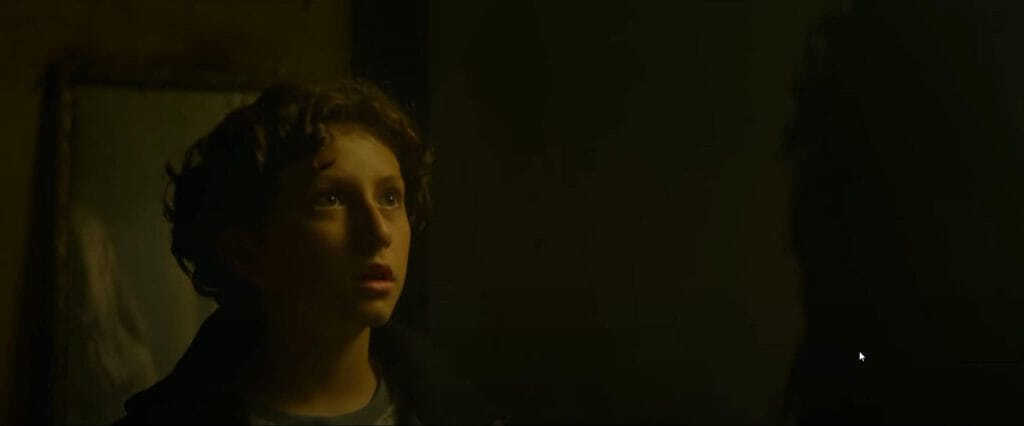
Back at home, the monster attacks Lucas’s main tormentor, Tom. Lucas eventually shoots and stabs the creature to death to save his brother. As the police arrive, Lucas looks down to find the body has completely disappeared.
There is no blood and no monster. He looks at his hands and seems to have a moment of clarity. He wasn’t shooting a witch; he was attacking his brother. The monster was a mental shield he used to process his own rage and the abuse he suffered at the hands of those who were supposed to protect him.
Theme: The Cycle of Abuse
The title Slapface refers to a game that Tom and Lucas play but it is a metaphor for their lives. Tom was abused by their father and now he “slaps” Lucas. Lucas in turn creates a monster to “slap” the world back. The creature is literally a projection of the hurt Lucas feels.
The film ends with a stark message about the impact of bullying and abuse. It hints that monsters aren’t born in abandoned buildings; they are made in homes through neglect and violence.
Frequently Asked Questions
Who killed Anna in Slapface?
While the film visually attributes the violence to the monster, it is heavily implied that Lucas killed her. He was resentful of her relationship with Tom and stole Tom’s gun earlier in the film, suggesting he used the weapon to remove the person he saw as a threat to his family bond.
Is the monster real or imaginary?
The monster is almost certainly imaginary, acting as a personification of Lucas’s trauma and rage. The fact that the body disappears at the end, and that Lucas has a history of “blackout” violence and smashing up his home, supports the idea that the creature is a psychological projection.
Did Lucas really kill everyone at the police station?
This remains the most controversial part of the film. While it seems physically impossible for a child to massacre an entire station, the scene represents Lucas’s total descent into his “monster” persona. It suggests that his internal rage has become so powerful that he is no longer limited by his identity as a young boy.
What is the meaning of the message in the credits?
The credits feature a message about the real-world impact of bullying and domestic abuse. This confirms that the film is intended as a social commentary on the cycle of violence, where the “monster” is simply a metaphor for how abused children can grow up to become abusers themselves.
Does Tom die at the end of Slapface?
While the film does not show a definitive death certificate, it is heavily implied that Tom dies. After the monster vanishes, it becomes clear that Lucas has shot and stabbed his brother in the chest. Given the brutality of the attack and Tom’s motionless state as the police arrive, the narrative intention is almost certainly that Lucas has accidentally killed his only remaining family member, completing the tragic cycle of violence.
Final Thoughts
Slapface is a frustrating experience. It works well as a psychological drama about a broken child but the horror elements feel poorly integrated. The massacre at the police station is a bridge too far for a movie trying to stay grounded. However as a metaphor for the way abuse transforms victims into victimisers it is a haunting and depressing watch.
Thanks for reading. If you enjoyed this analysis check out our other Ending Explained articles for more deep dives into psychological horror.
A Note on Ending Explanations
While we aim to provide comprehensive explanations based on the events on screen, film analysis is inherently subjective. The theories and conclusions presented in this "Ending Explained" feature are personal interpretations of the material and may differ from the director's original intent or your own understanding. That's the beauty of horror, right? Sometimes the scariest version is the one you build in your own head.
You might also like:
- Unseen (2023) Ending Explained – Hotline Twist & Who Survives
- Pet Sematary (1989) Review – A Classic Melancholic Monkey’s Paw Tale
- Loop Track (2023) Review – A Paranoid and Pacy Kiwi Forest Thriller
- Scream 7 Review: A Nostalgia Cash Grab? (Quick Verdict + Analysis)
- House on Eden (2025) review – Influencers take on found footage
Disclaimer: Images, posters, and video stills used in this horror ending explained article are the property of their respective copyright holders. They are included here for the purposes of commentary, criticism, and review under fair use. Knockout Horror makes no claim of ownership and encourages readers to support the official release of all films discussed.