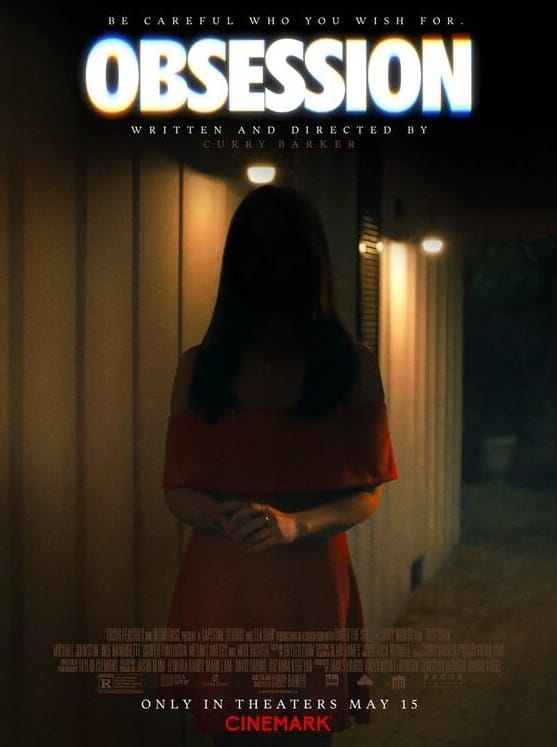
Obsession (2026) Ending Explained – Be Careful what You Wish For!
Welcome to Knockout Horror. Today we are explaining the ending to my favourite horror movie of 2026 – Obsession. We are going to be breaking down exactly what the One Wish Willow actually is, answering the question of whether Nikki really loved Bear, and talking a little bit about the real horror that drives the movie’s narrative. As always, we will start with our ND friendly Ending in Brief for anyone who wants quick answers before moving onto the full explanation. If you want to read my thoughts on the film, check out our review of Obsession (2026).
⚠️ Warning: Major spoilers follow below.
The Ending in Brief
The TL;DR: Desperate for his colleague Nikki’s affection, music store employee Bear Bailey uses an occult novelty toy called the “One Wish Willow” to wish that Nikki would love him more than anyone else in the world. The wish forces a terrifying, obsessive persona over Nikki, escalating into violence, self-harm, and the brutal murder of their mutual friends Ian and Sarah. In the climax, Bear attempts to escape the curse by taking a lethal overdose of oxycodone in the bathroom. However, Nikki breaks the final Willow to make Bear love her back. A wish-controlled Bear emerges to kiss her one last time before dying from the overdose. Bear’s death breaks the spell, leaving the real Nikki to wake up, lucid and utterly horrified, surrounded by the carnage.
Who Survived? Tragically, only Nikki survives. Sandy kicks things off passing away after eating Oxycodone from Bear’s medicine cabinet. Bear dies of a drug overdose forced to its completion by the curse. Their friends Ian and Sarah are both murdered by the wish-possessed version of Nikki before the nightmare ends.
Why did Nikki cook Bear’s cat? The supernatural force controlling Nikki has no human empathy or understanding of nuance. It operates under a single literal directive to make Nikki love Bear more than anything. Because it knew Bear loved his deceased cat, Sandy, its twisted logic concluded that feeding the beloved cat’s remains to Bear in a sandwich was an act of ultimate domestic caretaking and love. He loved the cat so he should love eating the cat, after all
Was Nikki’s love real before the wish? No, she did not have romantic feelings towards him. Shortly before the wish was made, Nikki explicitly told Sarah that she only saw Bear as a “little brother”. Furthermore, she was actively involved in a secret, casual two-year relationship with Ian, meaning her sudden, homicidal devotion was entirely manufactured by Bear’s mistake.
Good to Know: The film actually functions as a dark commentary on nice guy culture, male entitlement, and the avoidance of rejection. Bear is presented as a likable, introverted “nice guy”, but his actions prove he is actually a selfish prick-hole. Even when a lucid Nikki briefly awakens to beg for him to kill her so that she can escape the mental prison he built, Bear refuses to break the curse because he values his own emotional validation above her sanity and consent.
Table of Contents
Obsession (2026) Ending Explained
We never bother with plot recaps on Knockout Horror; what’s the point? You just sat through the film, after all. Let’s get right onto explaining the ending to Obsession. We will kick things off by answering a few question that are sort of imperative to understanding the plot of the movie.
How does Bear’s cat die?
Bear’s (Michael Johnston) cat dies after eating Bear’s grandmother’s Oxycodone tablets.
Bear’s cat, Sandy, somehow gets into the medicine cabinet, knocks down a bottle of Oxycodone that belonged to Bear’s grandmother, eats them, and passes away.
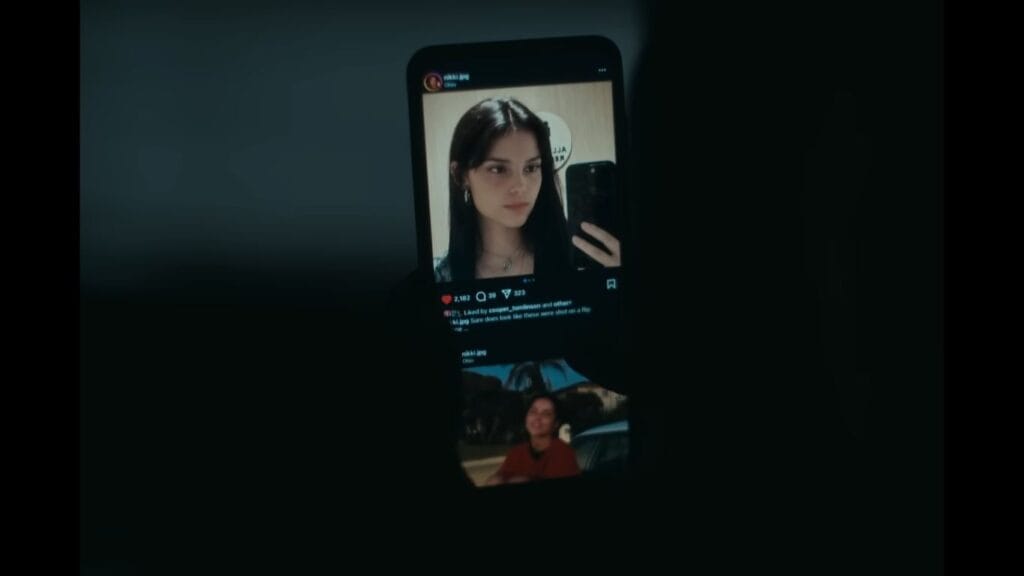
Bear is living in his grandmother’s house after she recently died from cancer. Oxycodone is prescribed as a painkiller to cancer patients. In, what turns out to be, the first of many examples of Bear procrastinating and avoiding confronting things he finds difficult, he kept the tablets in the bathroom cabinet rather than disposing of them.
It’s hard not to feel pretty bad for Bear as he cries on the bed, though. Losing pets is awful, especially when you are already suffering.
What is the One Wish Willow in Obsession?
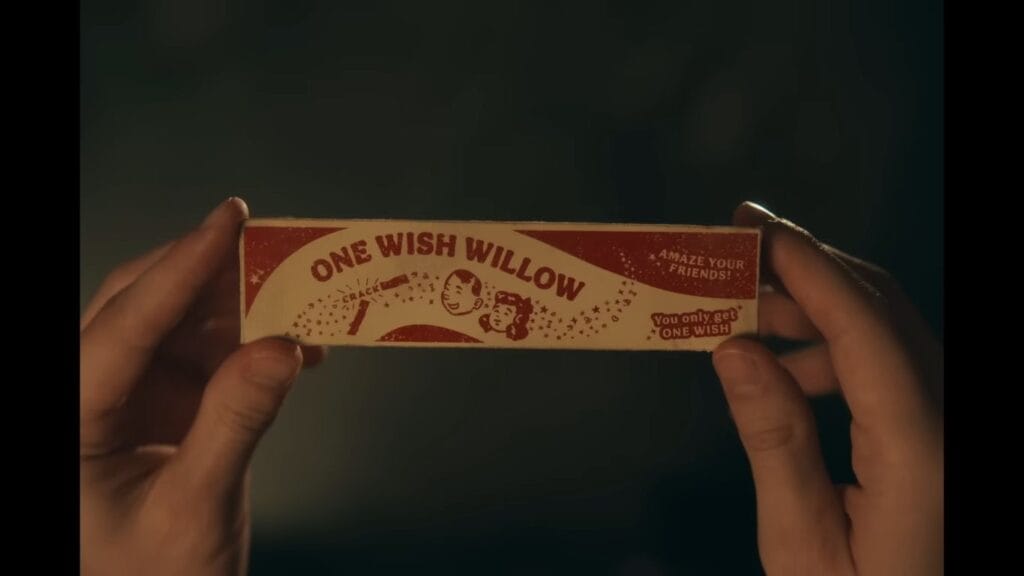
The One Wish Willow in Obsession is a cursed object that grants the user one single wish. A wish that won’t expire until the person who made the wish dies.
The One Wish Willow could best be described as a “cursed object”. What we mean by that, when it comes to horror lore, is an object that essentially acts as a medium for pushing along the story; they are a central narrative device. We’ll go into this more in our expanding the lore box just below if you want some more information.
In the case of the One Wish Willow, it’s a novelty willow branch that offers the user an opportunity to make one single wish. There are a few simple rules: the wish can’t be cancelled, altered, passed on, or changed. Every person gets one single wish and the wish only ends when that person dies.


Dissecting The Trope: The Cursed Object
Let’s be honest, we’ve all seen it a thousand times: the protagonist finds a creepy antique, an occult trinket, or a “wish-granting” toy, and despite every alarm bell in their brain ringing, they do exactly the opposite of what they are supposed to do with it. In horror, the cursed object acts as the ultimate shortcut for people who are too lazy, too horny, or too desperate to deal with their own problems like functioning adults.
Let’s not get it twisted, though. It’s not lazy writing; it’s a reflection of our collective obsession with the “magic fix”. That’s the entire idea behind the cursed object trope. It’s a conduit for a very human evil. We live in a culture of convenience where we want the relationship, the money, or the revenge and we want it now; screw whoever gets hurt along the way. We definitely don’t want any of the messy, tedious work of building or earning it.
Horror movies just take that consumerist desire and add a monkey’s paw to it. When Bear buys that Willow, he’s buying into the dangerous lie that there’s a simple, external solution to a human, internal mess. Cursed objects offer people the shortcut they so desire but at a cost.
The clever thing is, the person wielding the object never realises that it will backfire on them because it affords them this feeling of control. In reality, they were never in control at all, the object was in control of them.
The irony, of course, is that these objects rarely force us to do anything we didn’t already secretly want to do. They act as a bit of a moral solvent, stripping away the social niceties and letting the person’s true, often pretty foul, nature do the work. It’s not the object that’s evil! It’s the person who thinks they’re the one exception to the rule.
So, the next time you see a character bringing a “One Wish Willow” or a haunted doll into their home, don’t just roll your eyes at the predictability. Look at it as a mirror. Because if we’re being brutally honest with ourselves, how many of us would actually say “no” to a shortcut if we thought we could get away with it? That’s the real horror.
Is the One Wish Willow Evil?
No, the One Wish Willow isn’t evil. It’s just an object that grants a wish in a very literal manner. It’s the intentions of the person making the wish that leads to undesirable outcomes.
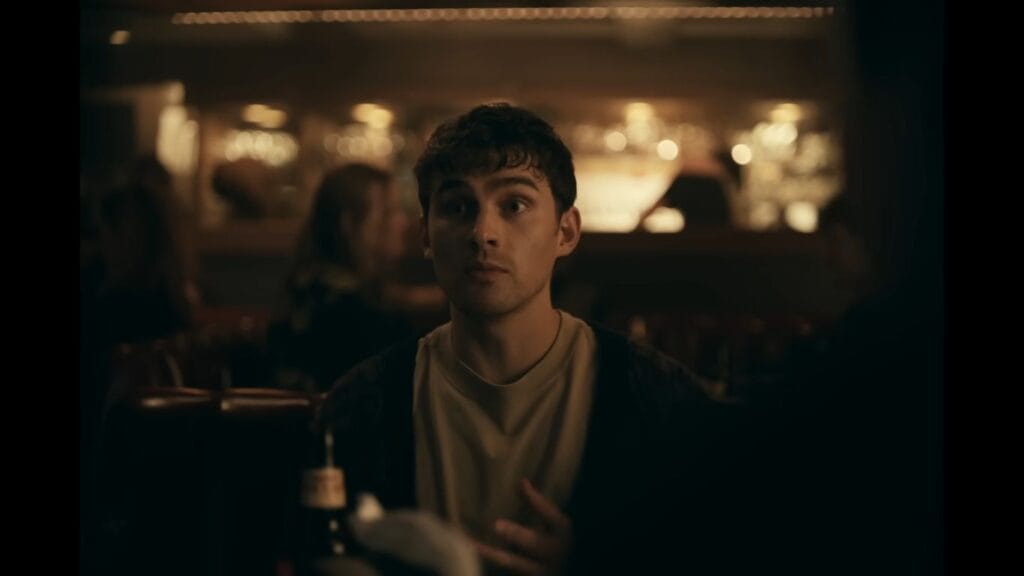
The wish is presented in an extremely literal manner without regard for the consequences or collateral damage. Think of it like an AI agent with limited understanding of nuance delivering the wish. You know all those stories of how AI has deleted a company’s entire code base because it believed that would be the easiest way to solve the problem of bugs in the code? The One Wish Willow is just like that; it takes things very literally.
If you wish for millions of dollars, you better grab an umbrella because it’s going to be immediately raining notes. If you wish for someone to fall in love with you, they will become obsessed with you. Again, not malicious, just very literal.
In the context of horror, it acts as a Monkey’s Paw device just like in Pet Sematary.
Thematic Spotlight: The Mechanics of the Monkey’s Paw
The “Monkey’s Paw” is one of the most enduring and unsettling tropes in the entire horror genre. Originating from W.W. Jacobs’ 1902 short story, the core mechanics of the trope rely entirely on a twist of cosmic irony: a desperate person is granted exactly what they asked for, but the universe fulfills the request in the most destructive and cruel way imaginable. The horror comes from the wish being granted with absolute, ruthless literalism.
Psychologically, the trope functions as a bit of a punishment for human hubris, desperation, or selfishness. When a character turns to a supernatural shortcut to bypass the natural order (whether trying to conquer grief by resurrecting a loved one, or overriding another person’s free will to force their affection) they are essentially trying to play god. The curse always strikes back by targeting the exact thing the wish-maker holds dear, proving that true control over destiny is an illusion.
What makes this trope one of my personal favourites in folk and cosmic horror is how it actually weaponises the protagonist’s own phrasing against them. It creates a wonderful “be careful what you wish for” trap where the supernatural force acts as a horror mirror, reflecting the character’s flaws and forcing them to witness the catastrophic fallout of their own desires. It’s a narrative device designed to show that our darkest shortcuts always carry a blood price we can’t afford to pay. If only they phrased those wishes a little more carefully, right?
That last statement I just made about phrasing actually plays into Obsession in a pretty cool way that places Bear in a less than complementary light. Bear wasn’t careful with his phrasing because he didn’t care about what Nikki wanted. He didn’t say “I want her to love me more than anything while retaining her own free will” or something similar. He didn’t care at all about that or about her. All he cared about was that she fell in love with him. What a selfish prick-hole!
Why doesn’t Bear just tell Nikki how he feels about her?
Bear doesn’t tell Nikki how he feels about her because he avoids doing anything that is difficult and is scared of rejection.
This is actually the crux of the entire film. Curry Barker holds a mirror up to the human tendency towards avoidance of difficulty and our need for instant gratification at whatever cost. Bear would rather avoid the embarrassment of admitting his feelings to Nikki (Inde Navarrette), and potential rejection, entirely. When presented with a shortcut, he jumps on it.
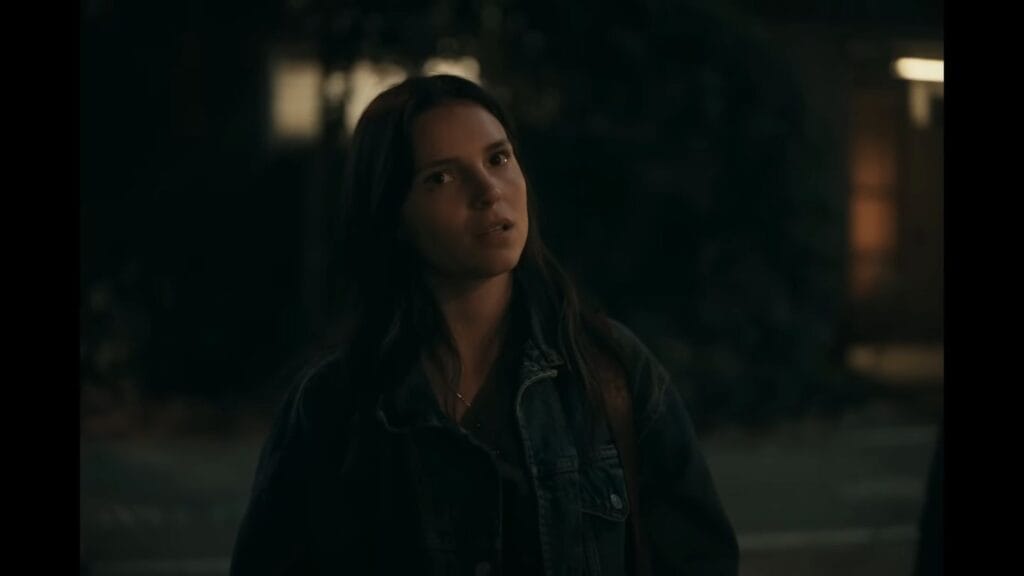
The manner in which the whole wish economy in Obsession is presented mirrors that of real life consumerism. Bear literally purchases his shortcut to Nikki’s love from a shop and even calls a customer support line when it doesn’t go the way he thinks it should.
The person on the other end of the call is a disinterested employee rather than some supernatural demon. Again, this reflects on consumerism, as a whole. You might not be satisfied with what you get for your brief moment of impulsiveness but your money is already gone.Too bad!
Did Nikki like Bear before he made the wish?
Nikki liked Bear before he made the wish but the implication is that it was in more of a brotherly way than anything else.
This is the biggest question mark in the film because Nikki pushes Bear to admit if he likes her just before she enters her house after he drives her home. This leads some to believe that she actually liked him. To be honest, when it comes to the actual narrative and the evidence at hand, that is contradicted by Nikki’s actions and what she says to Sarah.
Nikki explicitly stated to Sarah that she saw Bear as her “little brother”. She didn’t have romantic feelings towards him. He was “brother-zoned”. Nikki was also bumping uglies in a “friends with benefits” situation with Ian. If she had she had romantic feelings toward Bear, she would have been unlikely to not just state them outright.
It’s also noteworthy that Nikki wants to leave the music store because she is feeling unfulfilled and wants to find love, among other things. That suggests that love isn’t waiting for her there. She even confides this to Bear in the car, further implying that she sees him as a “safe space” where she can talk about love without judgement.
Nikki is a fiercely independent individual who knows what she wants which makes her change into an obsessed lover all the more drastic and noteworthy. If she had a romantic inclination towards Bear, he probably would have known about it. This is a classic story of a “nice guy” misreading the signs.
Does The real Nikki become obsessed with Bear?
No, the real Nikki doesn’t become obsessed with Bear. The real Nikki is still inside of, what is now, a husk being controlled by a supernatural force that was summoned by Bear’s wish. In horror, the best way to describe this is as Supernatural Identity Overwrite.
A supernatural entity has essentially taken over Nikki in order to fulfill the wish that Bear made. The thing that makes this seriously scary is that Nikki is still inside of the body witnessing everything and feeling every bit like she is in utter hell.
Nikki occasionally breaks through but, as the entity’s grip tightens, it’s harder and harder for her to regain control. When Nikki talks directly to Bear and asks her to kill him while her body sleeps, that’s her expressing the real horror of the situation. This has been going on for months completely against her will.
Dissecting the Trope: Supernatural Identity Overwrite
The “Supernatural Identity Overwrite” is potentially the most psychologically violating trope in horror. Unlike standard demonic possession, where an outside entity temporarily hijacks a victim’s body while their true soul is stuck inside, an identity overwrite is a much more insidious erasure because it is permanent. The victim’s authentic personality, memories, and free will are completely scrubbed or rewired to serve a supernatural mandate. Thus transforming a person into a living meat-puppet who looks completely normal but is entirely hollowed out.
This trope hits a raw nerve because it taps into the very real fear of losing our mental autonomy. It forces the audience to confront the existential horror of a compromised mind: if our memories, choices, and core affections can be forcibly rewritten by an outside force, do we actually exist at all? The tragedy is dialed up to eleven for the surrounding characters, who are forced to witness a friend or partner transform right in front of their eyes. This is why Nikki’s friends are so concerned about her. She is completely different.
In cinema, this device is frequently weaponised as a dark metaphor for real-world psychological dynamics, such as the destructive fallout of severe obsession, toxic relationships, or the slow erasure of a person’s identity under a controlling partner. When the supernatural overwrite finally cracks, briefly allowing a lucid version of the victim to wake up and grasp the horrific things their body has been forced to do, it cements the trope as a one of the most horrifying in cosmic tragedy. It highlights the ultimate horror conclusion: that losing your life is nothing compared to completely losing your self. Scary, right?
Why does Nikki cook Bear’s cat?
Nikki cooks Bear’s cat Sandy and places piece of it in a sandwich for him because her fractured logic believes he loved the cat and needs to eat so he would love to eat his cat.
The force controlling Nikki doesn’t actually have human empathy or common sense; it only has a single literal directive: Make Nikki love Bear more than anyone or anything else. When you throw in Nikki’s existing memories with that twisted logic, you get this horrible moment, among others.
In a twisted way of proving her love to Bear, she creates a memorial with the dead cat. When he reacts negatively to that, she ups the ante quite a bit. Her twisted logic believes that the way to show him how much she adores him is to feed him something he truly loves… His cat!
Think of it like you making your partner or friend’s favourite sandwich as an act of love. She did the same thing with something he loves… his cat. Remember, the entity lacks basic human empathy; it didn’t see how that might be horrifying to him.
Why does Nikki just stand in the same spot all day when Bear is at work?
Nikki stands in the same spot all day while Bear is at work because, without Bear, the entity controlling her basically ceases to function. The object of its obsession is gone so Nikki now has no purpose beyond waiting for him to return.
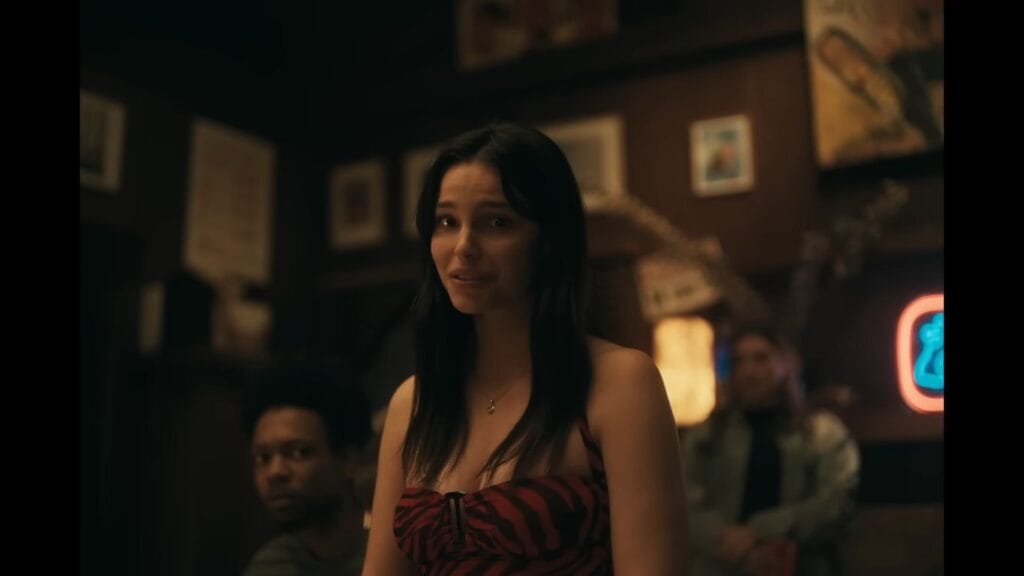
She’s still a human body so bodily functions like peeing still take place, obviously but that’s it. As soon as he closes the door, she enters a catatonic state until he returns and the entity can resume its purpose.
Why does Nikki kill Sarah and Ian?
Nikki kills Sarah and Ian because the wish is making her obsessed with Bear to the point that she becomes violently jealous of him spending time with other people. The literal interpretation of the wish is to love Bear more than anything in the world and both Sarah and Ian risk preventing that from happening.
Whenever Bear spends time with other people, Nikki becomes violently jealous because that focus on other people presents a threat to her total devotion to him. It starts with simple violence towards herself to scare people off and refocus Bear’s attention back onto her. Eventually, it manifests into her killing anyone that might get in-between them.
She kills Sarah because the supernatural entity controlling Nikki retains an awareness that Sarah is romantically interested in Bear. Sarah shared that with Nikki before Bear made his wish. She is trying to prevent Sarah from taking Bear away from her because the wish requires total devotion.
She then kills Ian because he, in essence, threatens to break them up purely through knowledge of the wish and the fact that he will have witnessed the crime scene when he came to talk to Bear at the end.
Thematic Spotlight: Borderline Personality and Cursed Fixation
Let’s strip away the supernatural framework for a moment, here. Curry Barker’s characterisation of the wish-possessed Nikki actually functions as a seriously uncomfortable, hyper-exaggerated manifestation of Borderline Personality Disorder (BPD, Emotionally Unstable Personality Disorder) traits, driven to a horrific extreme. The curse manifests as a volatile cocktail of severe separation anxiety, intense histrionic mood swings, violence, self-harm, and a terrifyingly fragile sense of reality that completely warps her interpersonal relationships with the people around her.
Throughout the film, Nikki displays a classic BPD pattern of “splitting” (viewing people or actions as entirely all-good or all-bad with zero room for emotional nuance). The moment she perceives even a hint of abandonment or a lack of absolute, reciprocal devotion from Bear, her affection instantly mutates into a blind, jealous rage. The best example of this might be the party, where a single Jenga prompt triggers a violent, self-mutilating outburst, and later, when she aggressively eliminates perceived romantic rivals like Sarah to protect the unstable, forced bond she shares with Bear.
BPD is a bit of a hot-button topic at the moment. By grounding the portrayal of the obsessed Nikki in these highly recognisable, real-world psychological struggles, the narrative somehow ends up all the scarier. The horror of the “One Wish Willow” is that it forces Nikki’s mind to mimic the absolute peak of emotional dysregulation and desperate attachment.
Naturally, this is taken to massive extremes and it’s not an accurate representation of the way in which most people suffer from, what is, an incredibly difficult condition to suffer from. People with BPD are fighting their own harrowing battle every single day of their lives. With that being said, it’s easy to imagine some people who have been on the other side of these relationship dynamics feeling seriously uncomfortable while watching Obsession.
Why does Ian wish for money and not to help Bear?
Ian wishes for a billion dollars rather than helping Bear because he doesn’t believe that the wish is real and, in his own way, is selfish just like Bear.
Why should Ian wish to help Bear, who ruined his own life with a selfish act, when he can improve his own life by being equally selfish? Plus, he is likely doubtful that the wish would actually work.
Explaining the ending to Obsession
The final moments of Obsession see all of the movie’s bullshit culminate in just about the worst way possible. Bear, having purchased the last two One Wish Willows and realising that he can’t make another wish himself, quickly returns to Nikki with the intention that she can wish for the entire thing to be over and she can go back to normal.
When he arrives, Nikki has sat Sarah’s corpse on a chair, stripped her naked, and is now wearing her clothes. The implication here is that Nikki believes that Bear desires Sarah so she is going to give him what he desires by dressing as her so that he will refocus his attention on her. Ian enters the house to tell Bear that he’s a billionaire but is unceremoniously shot dead by Nikki.
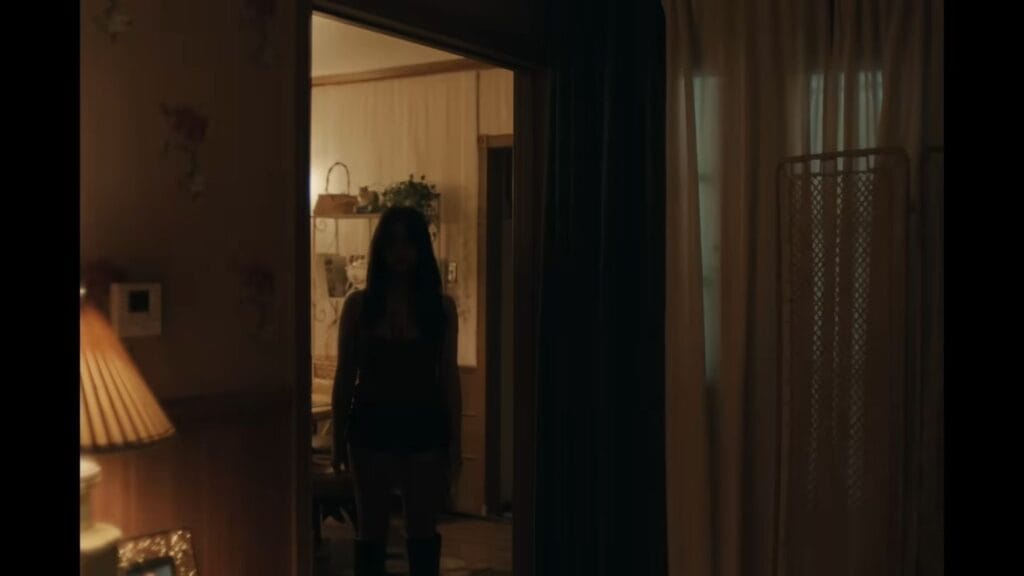
Bear, realises that the whole thing has gone a little too far (understatement) so locks himself in the bathroom. While in there, he finally manages to do something he probably should have done when everything started going wrong. He takes a lethal dose of the Oxycodone left by his grandmother to finally cancel the wish and release Nikki.
Naturally, he instantly regrets it and tries to make himself throw up to get the pills out of his stomach. He’s distracted, however, by a sudden overwhelming compulsion.
Nikki’s final wish and Bear’s death
While Bear is trying to make himself sick, Nikki has broken the final One Wish Willow and made a wish. That wish? That Bear will love her more than anything in the world.
Bear, suddenly distracted from trying to save his own life, wanders out of the bathroom and into Nikki’s arms. His only obsession now is her and he completely forgets all about swallowing the lethal dose of Oxycodone. As they embrace, Bear dies from the overdose.
What does the final scene of Obsession mean?
The final scene of Obsession means that Nikki is finally free of the curse and is no longer obsessed with Bear but her world is torn apart.
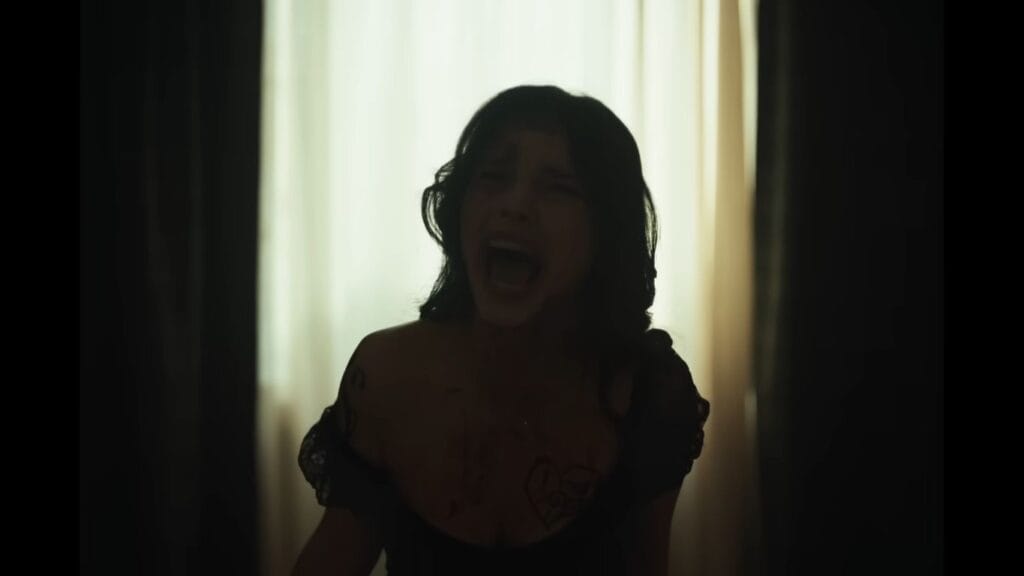
When Bear dies from the overdose, his wish is cancelled. Nikki is no longer possessed by the entity that had taken over her body to fulfill the wish but there is utter chaos everywhere she looks.
What happens to Nikki at the end of Obsession?
The implication is that Nikki will have to deal with the fallout of Bear’s wish. She will likely be arrested for killing Sarah and Ian because nobody will believe that it was due to the One Wish Willow. She will also be haunted by the trauma of the entire ordeal and she will have to deal with hideous injuries caused by her self harm.
Nikki was likely aware of everything that was happening the entire time. We have actually seen evidence of that earlier in the film. When she asks Bear to kill her because she is suffering, it becomes clear that she is still there inside and is seeing everything that is going on.
When Bear dies, she will know exactly what has happened. She is back in her body but she has killed her best friend and her former friends with benefits hookup. She has horrible injuries all over her the man who put her through all of this is lying dead next to her.
Nikki will probably be heading to jail and will suffer from lifelong trauma, hence the wailing and crying at the end. And all because of one selfish prick who we will talk about next.
Is Bear the real bad guy?
Absolutely! Bear is the bad guy in Obsession despite his clever presentation as a fairly likable dude.
Bear is presented as the quintessential “nice guy”. He’s friendly with everyone, goes out of his way to help people, and is pretty introverted. In reality, however, he is utterly selfish and horribly abusive.
His desire for Nikki overrides everything. He doesn’t actually care whether she really loves him or even if she is in pain; he just wants her to be his and to satisfy his need for affection.
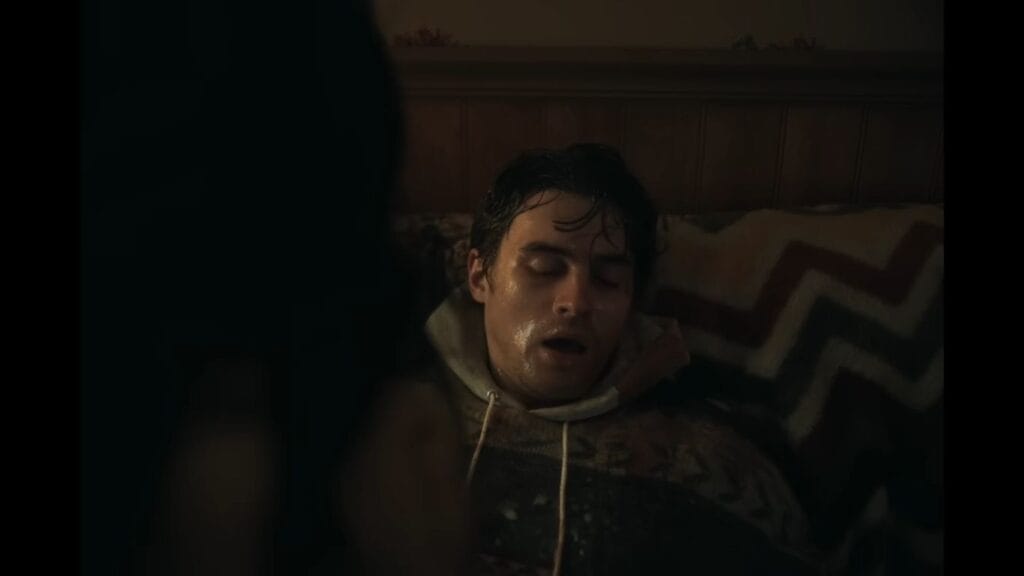
When it becomes abundantly clear to him that the wish worked, he still continues to have sex with her. One scene, in particular, shows him over the top of her, banging away while she looks on with a blank, almost pained expression on her face. This is a very deliberate shot from Barker to emphasise that he is taking advantage of her and she is not actually consenting to this because she is unable to. He is, for all intents and purposes, raping her.
When Nikki, in a rare moment of autonomy while the entity controlling her body is dormant, begs him to kill her because she is suffering so much. Rather than do the right thing (which isn’t to kill her but to kill himself to cancel the wish – something he won’t resort to until his friends are dead and the situation is beyond repair) he asks her “What’s so bad about being with me?”. Nikki replies that she has never been with him. Everything that is happening is against her will and she is the victim here.
It may not look that way but Bear is the bad guy. He’s not some hopeless romantic: he’s a self obsessed asshole. Curry Barker presents this so expertly that it’s actually really subtle. People who abuse others in life can be likable while hiding an ultimately selfish and horrifying side just like Bear.
Still Don’t Think Bear is the Bad Guy?
A really great way to think about whether, or not, Bear is a good guy is to put yourself in his shoes. I can guarantee that this will clarify the situation for you.
If you could make someone fall in love with you, knowing full well that it isn’t really them and they are suffering every single minute that they are with you, would you do it? I bet you wouldn’t. Even if you are lonely, I bet you wouldn’t do it.
The vast majority of people would say no. They would only want the person to love them if it is real and the person is happy. Bear is the opposite. Even when he knows Nikki is suffering and wants to die, he only cares about his own feelings. Everything that happens is completely against Nikki’s will. He’s a bad dude!
Final Thoughts: Horror Film of the Year?
I absolutely loved Obsession. I awarded it 4.5/5 in my review and this it’s going to be very hard to top this year. It’s a huge step up from Barker’s, also very good, last film Milk & Serial and I think a star is born in the utterly brilliant Inde Navarrette as Nikki.
The really clever thing about Barker’s writing and direction is how seamlessly he blends dark comedy with seriously troubling matters of consent. It’s somehow scarier than most other horror movies purely because of how many raw nerves he touches. Awesome stuff. Thanks for reading. Why not stick around? Check out some more Ending Explained articles. I also review horror movies and curate horror lists.
Frequently Asked Questions
Was Nikki secretly crazy before Bear made his wish?
No, she was not a murderer or a psychopath. While Nikki certainly had a bit of an unfulfilled and messy personal life, her extreme behaviour was entirely the fault of the Willow’s curse. The horrific actions she takes, such as the mutilation of Sarah and the murder of Ian, are driven entirely by the supernatural force overriding her mind to comply with Bear’s literal phrasing.
Why couldn’t Bear just use another Willow to undo his mistake?
The rules established by the customer support line make it clear that a wish cannot be countered, edited, or recalled once it is active. When Bear purchases the remaining stock and attempts to snap a new Willow to reverse the curse, the magic physically prevents him from breaking the wood. The unique contract established by the One Wish Willow stipulates that the magic only expires when either the person who made the wish or the subject of the wish dies.
Why did Nikki murder Sarah in the park?
Sarah met Bear at the park to warn him about Nikki’s history with Ian and subtly hinted at her own romantic interest in Bear. Because the curse literally interprets the wish to mean Nikki must love Bear more than anyone else in the world, it forces her to view any outside attachment or potential romantic rival as an existential threat. To safeguard this forced bond, the possessed Nikki ambushes Sarah and brutally kills her.
What did Nikki’s lucid breakdown in the bedroom mean?
It provided the ultimate confirmation of the film’s psychological horror, proving that the real Nikki was still trapped inside her own mind, completely conscious of the atrocities her body was executing. When the controlling entity temporarily became dormant, she used her few moments of autonomy to beg Bear to kill her. Bear’s refusal to do so, driven by his wounded vanity and obsession, highlights his true role as the antagonist.
What happens to Nikki after the screen cuts to black?
Logistically, her future is incredibly bleak. Although Bear’s death finally broke the spell and returned control to the real Nikki, she awakens to a horrific crime scene. She is left entirely alone in a house filled with three bodies, with her fingerprints on the weapons and Sarah’s clothes on her back. While she is entirely innocent of intent, she is legally responsible for the physical acts, making her the ultimate victim of Bear’s entitlement.
A Note on Ending Explanations
While we aim to provide comprehensive explanations based on the events on screen, film analysis is inherently subjective. The theories and conclusions presented in this "Ending Explained" feature are personal interpretations of the material and may differ from the director's original intent or your own understanding. That's the beauty of horror, right? Sometimes the scariest version is the one you build in your own head.
You might also like:
- Last Straw (2024) review – A Grating Slasher With An Insufferable Protagonist
- The Invitation (2015) Review – A Tense and Methodical Descent into Paranoia
- There’s Something Wrong with the Children (2023) Review – A Trope-Heavy Slog
- Until Dawn (2025) review – A splatter fest that ignores the game
- Hosts (2020) Review – A Spiteful and Narratively Messy Holiday Horror
Disclaimer: Images, posters, and video stills used in this horror ending explained article are the property of their respective copyright holders. They are included here for the purposes of commentary, criticism, and review under fair use. Knockout Horror makes no claim of ownership and encourages readers to support the official release of all films discussed.