
Life of Belle (2024) Ending Explained – What Happened to Belle?
Movie Details: Director: Shawn Robinson | Runtime: 1h 10m | Release Date: 2024 | Star Rating: 3/5 Stars
Welcome to Knockout Horror. We recently checked out the DIY found-footage horror Life of Belle, currently doing the rounds on YouTube via Terror Films. It starts as a police investigation into a family tragedy and descends into a nightmarish home video of a mother’s collapse.
If you have just finished the movie and are confused about why the mother was obsessed with the lights, why she attacked her son’s eyes, or where Belle actually went, you are in the right place. We are breaking down the supernatural twist hidden beneath the mental health narrative.
⚠️ Warning: Major spoilers follow below.
The Ending in Brief
The TL;DR: Belle’s mother was not merely suffering from psychosis; she was being tormented by a malevolent entity. She believed the entity could only harm her children if they could see it. In a desperate attempt to “save” them, she killed her husband, smashed all the lights, and removed her son’s eyes. When Belle refused to be blinded, the mother killed herself in despair.
Why did she remove the eyes? It was a twisted act of protection based on the logic: “If you can’t see them, they can’t take you.” The mother believed sight was the conduit for the demon, so she blinded her son to make him “invisible” to the entity.
What happened to Belle? Because Belle refused to let her mother remove her eyes, she remained sighted and vulnerable. In the final moments, the entity (visible as a shadow) approaches her. She is the only family member not found by police because she was abducted by the entity.
Good to Know: Despite the realistic found-footage style, this is not a true story. It is a “DIY” horror movie created entirely by the Robinson family, with the director, mother, and children all being related in real life.
Table of Contents
Life of Belle (2024) Ending Explained
Straight into the explanation here, no need to recap the pretty scant plot. To understand the ending, we have to look past the surface-level explanation of “mental illness” and look at the visual evidence provided by the security cameras. This is actually a ghost story.
The Setup: A Family in Crisis
The movie frames the narrative as a documented case of familicide. The police are investigating a scene where an entire family is dead, save for the missing daughter, Belle. The footage we watch explains how they got there.
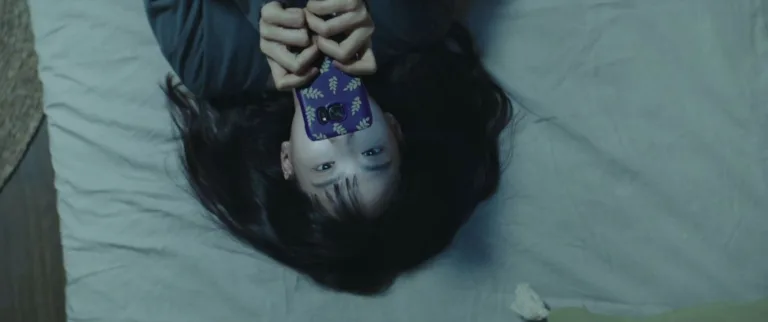
The mother (Sarah Mae Robinson) has a history of mental health struggles. When her husband leaves for a work trip, she begins exhibiting signs of severe paranoia and psychosis. She stops taking her medication and is seen on security cameras talking to empty space.
Real World Context: Familicide & Mental Illness
While Life of Belle is a supernatural horror, it draws on the very real and tragic phenomenon of familicide. Statistically, familicide (the killing of multiple family members) is most often committed by fathers (“family annihilators”). When mothers are the perpetrators, the motivation is frequently linked to severe mental health crises rather than control or malice.
This is most commonly associated with Postpartum Psychosis (PPP), a rare but severe emergency where a mother loses touch with reality. In some tragic cases of “altruistic filicide,” a mother suffering from delusions may believe she is “saving” her children from a worse fate – a terrifying logic that the film mirrors perfectly in the mother’s attempt to “save” her children from the demons. I’m not entirely sure how I feel about something so horrifying being turned into horror fodder but it happens often.
Psychosis or Haunting?
This movie depicts an actual haunting but the film deliberately blurs the line between that and a mental break. The husband believes it is an illness, repeatedly asking if she is taking her meds. However, the footage reveals actual poltergeist activity – objects moving and strange noises – that suggests the mother is telling the truth: she is being tormented by something.
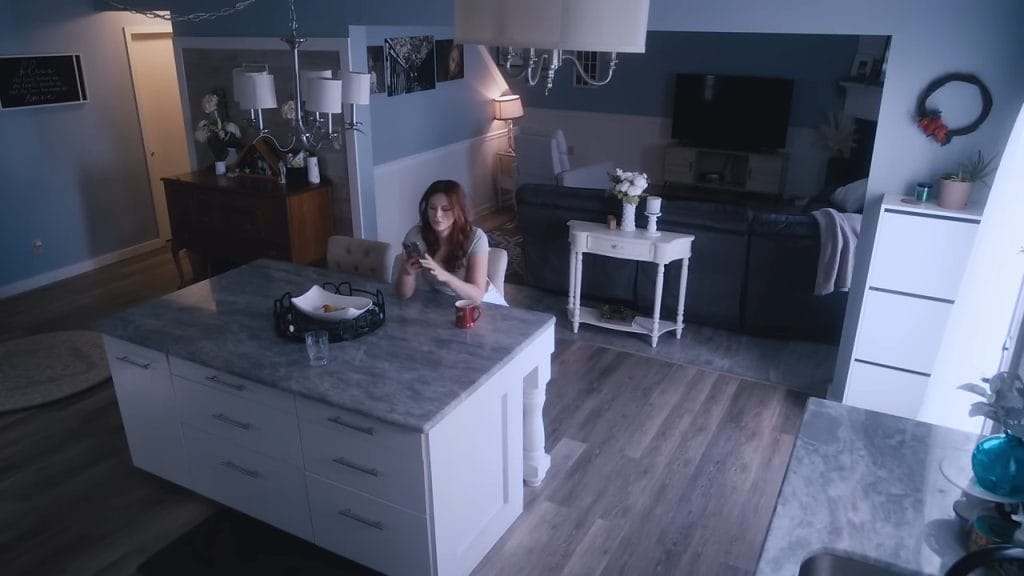
The entity bullies her, pushing her toward a breaking point. It uses the husband’s absence and refusal to believe her to isolate her, wearing down her resistance until she believes there is only one way to save her children. Why are the husbands always so dumb in these films? He can see the evidence right there.


The Blurred Line: Psychosis vs. The Paranormal
Life of Belle leans heavily into a common horror trope: using the symptoms of mental illness to mask supernatural activity.
The mother’s behavior (hearing voices, paranoia, self-isolation, and speaking to unseen figures) mimics the real-world symptoms of severe psychosis or schizophrenia. This allows the father to rationalise the events as a medical emergency rather than a haunting. Particularly given the fact that she had a history of mental illness.
This narrative device makes the horror more grounded and tragic. For the majority of the film, we aren’t just watching a ghost story; we are watching a family disintegrate under the weight of a health crisis, which makes the eventual supernatural confirmation all the more jarring.
The “Protection” Logic
The culmination of the film actually comes from the mother’s desire to protect her children. The rather gruesome climax is driven by the desperate logic: If you can’t see them, they can’t take you.
She smashes the lightbulbs to plunge the house into darkness. When the husband returns, she kills him, viewing him as an obstacle to her “saving” the children. She then attacks her son, Link, removing his eyes with scissors. To the outside world, this is mutilation; to her, it is an act of preservation.
The Final Scene
After maiming her son, the mother corners Belle and begs her to “play the game” – a euphemism for letting her remove Belle’s eyes. Belle refuses. In despair, the mother takes her own eyes (or kills herself), believing she has failed.
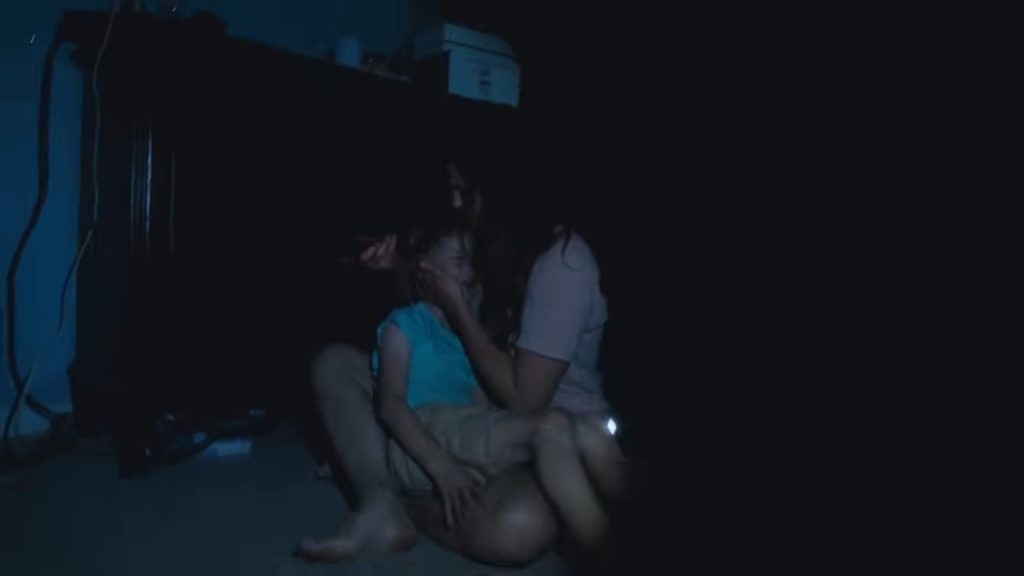
This leaves Belle alone in the pitch black of the house and, understandably, bloody terrified. Because she can still see, she is still vulnerable because this was an actual haunting. In the final frames, we see a shadowy figure approaching Belle.
She screams, and the footage ends. The police never find her body because, unlike her family who died in the physical world, Belle was dragged into the entity’s realm.
A True Family Affair
Life of Belle brings new meaning to the term “DIY Horror.” The cast and crew are almost entirely comprised of the Robinson family.
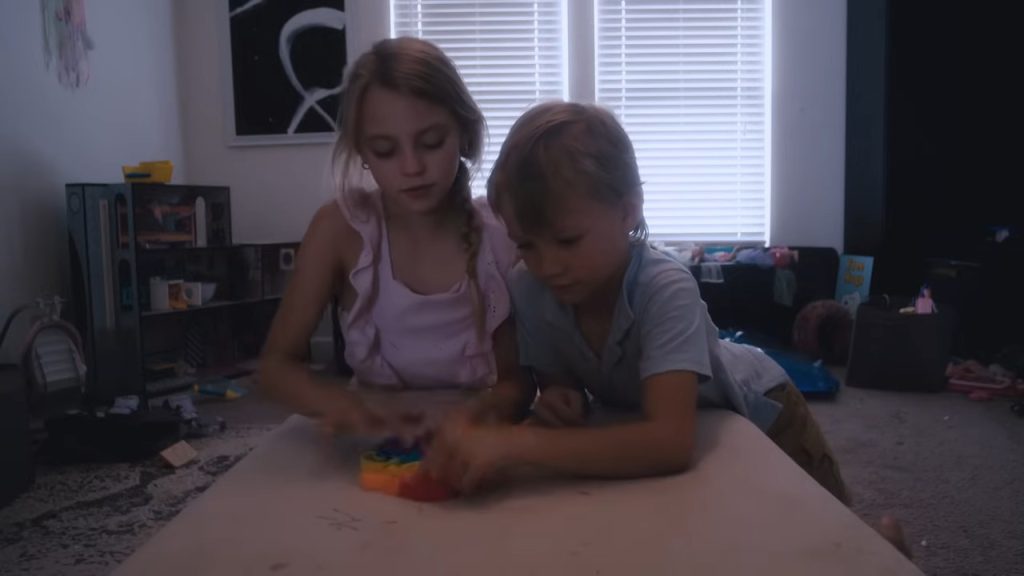
The film is directed by Shawn Robinson. The mother is played by Sarah Mae Robinson, and the children, Belle and Link, are played by Syrenne and Zachary Robinson. This real-life connection likely helped build the natural, uncomfortable chemistry seen in the home video segments.
Frequently Asked Questions
Is Life of Belle based on a true story?
No. Despite the found-footage format and realistic acting, the movie is entirely fictional. It is a scripted horror movie produced by the Robinson family.
Did the mother hate her children?
No. The tragedy of the film is that she loved them intensely. In her warped, haunted reality, blinding them was the only way she believed she could stop the demons from taking them to hell.
What was the figure at the end?
The figure is the demon or entity that had been haunting the mother throughout the film. It reveals itself only at the very end to claim Belle, confirming that the threat was supernatural, not just psychological.
Was the mother in Life of Belle mentally ill?
It is a mix of both. While she certainly displayed symptoms of severe psychosis, the film implies that her mental decline was a direct result of being tormented by the demon. The constant fear and sleeplessness drove her to a breakdown, allowing the entity to manipulate her into killing her family under the guise of “saving” them.
How long was the mother haunted for?
It is strongly implied that this wasn’t a new occurrence. The entity had likely been attached to the mother for years, perhaps even causing the “mental illness” her husband frequently referred to. It was simply waiting for the perfect opportunity, like the husband leaving for work, to finally strike and take Belle.
Final Thoughts – An Effective Micro-Budget Found Footage
Life of Belle is a surprisingly effective micro-budget horror, in my opinion. While it leans on familiar tropes of the “possessed parent,” the commitment to the bleak ending, where the innocent child is not saved but taken, gives it a nasty sting in the tail. It’s a grim reminder that in horror, sometimes mother doesn’t know best. Thanks for reading.
Looking for more? If you enjoyed this breakdown, check out our explanation of You’ll Never Find Me or browse our list of Horror Movie Review. We also have lots of Horror Movie Lists.
A Note on Ending Explanations
While we aim to provide comprehensive explanations based on the events on screen, film analysis is inherently subjective. The theories and conclusions presented in this "Ending Explained" feature are personal interpretations of the material and may differ from the director's original intent or your own understanding. That's the beauty of horror, right? Sometimes the scariest version is the one you build in your own head.
You might also like:
- They Look Like People (2015) Review – A Masterclass In Indie Psychological Horror
- Expecting Terror: 6 Horror Movies About The Dark Side Of Parenthood
- Passenger (2026) Ending Explained – The Highwayman Demon & The Hobo Code
- P2 (2007) Review – A Tense and Gory Parking Garage Nightmare
- Headgame (2018) Review – A Pointless and Painfully Inept Battle Royale
Disclaimer: Images, posters, and video stills used in this horror ending explained article are the property of their respective copyright holders. They are included here for the purposes of commentary, criticism, and review under fair use. Knockout Horror makes no claim of ownership and encourages readers to support the official release of all films discussed.