
Descendent (2025) Ending Explained: Was the abduction real?
Movie Details: Director: Eoin Glaister | Runtime: 1h 38m | Release Date: 2025 | Star Rating: 3/5 Stars
Welcome to Knockout Horror. We recently checked out the alien abduction-themed psychological horror Descendent (2025). While the film leaves a bunch of questions unanswered, this article will provide a concrete explanation of the ending.
Unlike other interpretations that sit on the fence, I am going to give you the definitive answer: Yes, the abduction was real. Let’s jump straight in. Oh, and there will be major spoilers so consider yourself warned.
The Ending in Brief
The TL;DR: The abduction was real. Sean was taken by altruistic aliens who placed him in a psychological simulation designed to act as extreme exposure therapy. By forcing him to confront repressed memories of his mother’s death and his father’s suicide, they allowed him to resolve his trauma. He awakens on Earth having passed the “test,” ready to become a capable father. The sketches on the wall at the end act as a metaphor to signify that while his past is processed, it will always be a permanent part of his identity.
How do we know it was real? The “Handler” who picks Sean up at the end confirms the physical reality of the event. He is a third party who specifically mentions the aliens “rooting around” in Sean’s brain, proving the experience wasn’t a hallucination or a shared delusion.
What does “Break Free From Aster” mean? It is not a code or anagram. “Aster” refers to Aster Road, the street where Sean grew up in the desert. The message was a subconscious prompt from the simulation, telling Sean he had to return to his childhood home to confront the memory of his father.
Why did Sean buy a gun? It was a manifestation of his powerlessness. In the simulation, throwing the gun away symbolised him finally accepting that he cannot control everything – a vital step in his recovery and acceptance of fatherhood.
Good to Know: The aliens in this film function less like invaders and more like therapists. They utilise a technique similar to a “Corrective Emotional Experience,” allowing Sean to relive his trauma in a safe environment to forge a new, healthier outcome.
Table of Contents
Descendent (2025) Ending Explained
Let’s get straight into this, no plot recap as I am sure you remember what happened in the movie. Despite the film leaning heavily into metaphors about parental anxiety and grief, the ending offers a concrete resolution. It isn’t “all in his head” – it is a literal event with a psychological purpose.
Was Sean really abducted? (The Proof)
Yes, Sean really was abducted. The confusion comes from the middle section of the movie, which is essentially a dream sequence, but the bookends of the film are reality. The smoking gun is the character at the very end: The Handler.
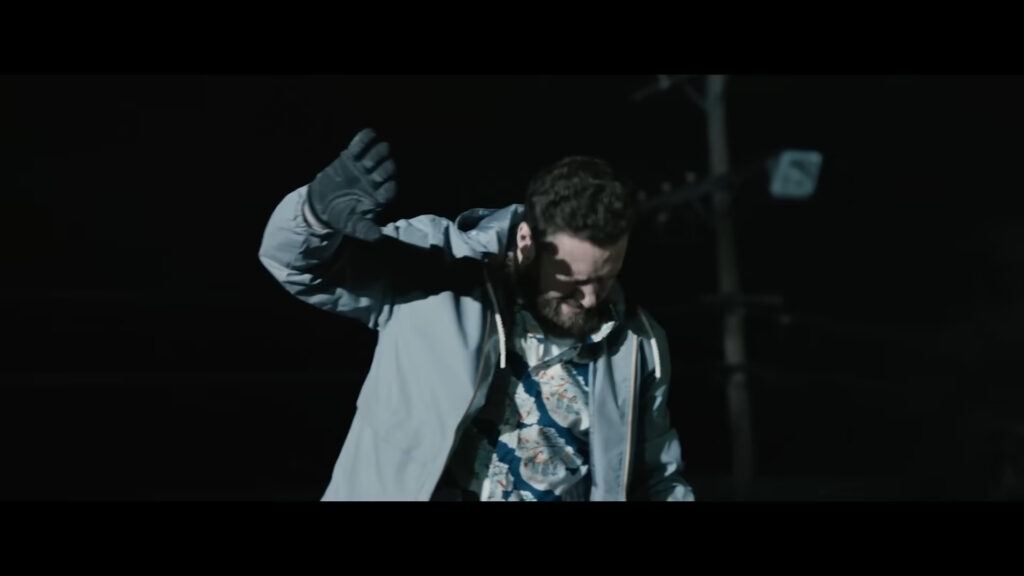
For the most part, when a character in a movie experiences or sees something that is then referenced by a third party, you can typically assume that it actually happened. The third party essentially acts as that confirmation. If they saw it too, it must be real. Obviously this varies in depictions of shared trauma and Folie à deux, but that wasn’t the case in Descendent.
When Sean wakes up on the ground, he is helped by a man who checks his name off a list. This man specifically comments on how the aliens had been “rooting around” in Sean’s brain. This character is a third party with no connection to Sean’s personal life, supposed delusion, or psyche.
He witnessed the return, he knows about the aliens, and he is facilitating the process. There are even many other names on the list waiting to return. If this were a delusion, this character wouldn’t exist in this context. He anchors the movie in reality and is a key narrative device.
Context: The “Benevolent Alien” Phenomenon
While pop culture loves scary Greys, real-world UFO lore is full of “altruistic” encounters. In the 1950s, the “Space Brother” phenomenon emerged, where contactees claimed aliens were benevolent teachers warning humanity about nuclear war or environmental collapse.
Some abductees have even reported “healing encounters,” claiming that extraterrestrials cured their chronic illnesses or performed life-saving surgeries. Descendent leans heavily into this niche of ufology, portraying the aliens not as invaders, but as cosmic therapists fixing a broken mind.


Why did the Aliens abduct him?
The aliens in Descendent are altruistic. They didn’t take Sean to probe him; they took him to heal him. They placed him in a simulation which you can consider as a more advanced version of the very real process of “Corrective Emotional Experience”. The aliens did this to force him to confront the trauma that was causing him to doubt his ability to be a good father and provider.
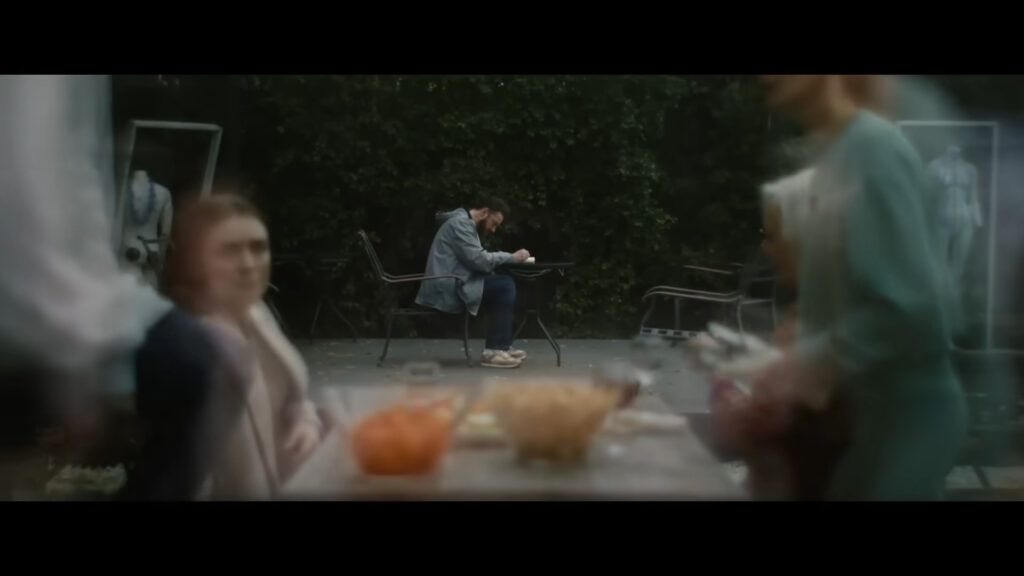
Sean was terrified of fatherhood because his own father committed suicide and his mother died in childbirth. He worked a low paying job and upward mobility was non-existent so he felt he couldn’t provide. He was also enormously paranoid that something would happen to his wife during pregnancy or childbirth itself.
These fears were deep-rooted in his psyche because of his traumatic childhood. The aliens forced him to relive distorted versions of these fears (seeing his wife dead, the baby drowning) until he reached the root of the problem: his childhood home. They then forced him to confront his childhood and his self-doubt in the process.
Psychology Corner: What is a “Corrective Emotional Experience”?
The aliens in Descendent are essentially applying a textbook psychological technique known as a Corrective Emotional Experience.
First defined by Franz Alexander in 1946, this therapy involves re-exposing a patient to a past emotional trauma, but in a safe environment where they receive a positive or different response than they expect.
In Sean’s case, he expects his father to be distant or condemn him (the trauma). Instead, the simulation allows him to hear his father say, “You will be a great dad” (the correction). This rewires the brain, replacing the traumatic memory with a resolved one.
Did he really meet his dead father?
No, he met a simulation of his father. This was the “Insight Moment” of his therapy. In the simulation, his father explains his own feelings of inadequacy. This allowed Sean to realise that his father didn’t abandon him out of malice, but out of despair.
Hearing his father tell him he would be a “great dad” was the closure Sean needed. It broke the cycle of trauma. He realised he is not his father, and he doesn’t have to repeat his father’s mistakes. His father was in a uniquely harrowing and difficult situation; a situation that Sean does not share.
Solved: What does “Break Free From Aster” mean?
One of the film’s biggest puzzles is the graffiti Sean keeps seeing that reads “Break Free From Aster.” It isn’t an anagram or a code.
The Solution: Aster Road is the name of the street where Sean grew up in the desert. The message was a subconscious prompt from the simulation, telling Sean that to move forward, he had to go back to his childhood home (Aster Road) and confront the memory of his father’s suicide. Thanks to a helpful reader that cleared that up after I missed it.
What do the sketches at the end mean?
In the final scene, Sean falls asleep next to his wife, and we see his sketches scattered on the wall above him. This is a visual metaphor. The trauma hasn’t vanished because you can’t just erase the past. He has essentially “pinned it to the wall”.
He has externalised his fears rather than burying them inside. By acknowledging them, he has stripped them of their power, allowing him to sleep soundly for the first time. They will always be there, though, and dealing with them will be a constant battle.
Did You Know? Therapy Isn’t a Magic Eraser
The ending of Descendent perfectly illustrates a core truth about trauma: therapy doesn’t delete bad memories; it just gives you the tools to carry them.
Sean’s sketches on the wall signify that his trauma is still part of his history. The difference is that now, instead of repressing it (hiding it away), he has “pinned it up” where he can see it. He acknowledges it, accepts it, and uses the techniques he learned to manage it, rather than letting it control him. It’s a lifelong management process, not a one-time cure.
Frequently Asked Questions
Who was the psychologist?
The psychologist Sean keeps recognising is actually a figure from the simulation. In his visions, she was the nurse tending to a frail, future version of Sean. This is a representation of who he would become if he didn’t confront his trauma.
Why did Sean buy a gun?
Sean bought the gun because he felt powerless to protect his family. Throwing the gun away on the beach was a symbolic act of accepting that he cannot control everything (like his wife’s health), a key step in his recovery.
Why did people look like aliens to him?
Because he was physically surrounded by aliens while in the simulation. Just as coma patients sometimes incorporate the voices of doctors into their dreams, Sean incorporated the appearance of his captors into his “reality.”
Why did Sean keep seeing a deer?
The deer is a direct metaphor for Sean himself. In the opening scene, Sean saves a trapped deer at personal risk. The aliens are mirroring this act of altruism. Just as Sean freed the physically trapped animal, the aliens are freeing Sean from the mental trap of his trauma. It serves as a clue that their intentions are benevolent, not hostile.
Final Thoughts: Therapy from the Stars
Descendent is a pretty unique entry in the alien abduction sub-genre because it frames the aliens not as invaders, but as therapists. It suggests that sometimes, to fix what is broken inside us, we need to be completely removed from our reality and forced to look at the pieces.

Sean returns to Earth not as a victim, but as a man who has finally grown up. He is ready to be a father because he has finally stopped being a scared child. This actually mimics the real life nature of therapy itself. It’s just condensed into a tiny space of time because… You know, aliens.
I’m sure there are plenty of “it’s an allegory” explanations out there but I stand by this one. There’s a third party to confirm it, therefore it is true. Thanks for reading.
Looking for a critique? For our verdict on the scares, the acting, and a full rating, read our Descendent (2025) Movie Review.
A Note on Ending Explanations
While we aim to provide comprehensive explanations based on the events on screen, film analysis is inherently subjective. The theories and conclusions presented in this "Ending Explained" feature are personal interpretations of the material and may differ from the director's original intent or your own understanding. That's the beauty of horror, right? Sometimes the scariest version is the one you build in your own head.
You might also like:
- Evidence of the Boogeyman (2025) Review – Another Padded Found Footage Horror
- The Frights Before Christmas: 25 Festive Horror Movies Ranked
- Baby Ruby (2022) Review – A Disjointed and Obnoxious Descent into Motherhood
- The Witch in the Window (2018) Review – A Sentimental and Slow-Burning Haunting
- Creep 2 (2017) review – Why This Found-Footage Sequel Is Just As Good As The First
Disclaimer: Images, posters, and video stills used in this horror ending explained article are the property of their respective copyright holders. They are included here for the purposes of commentary, criticism, and review under fair use. Knockout Horror makes no claim of ownership and encourages readers to support the official release of all films discussed.