

Sorry, Charlie (2023) Ending Explained – “True Story” vs. Urban Legend
Movie Details: Director: Colton Tran | Runtime: 1h 15m | Release Date: 2023 | Star Rating: 2.5/5 Stars
Welcome to Knockout Horror. Today we are breaking down the ending to the Tubi original Sorry, Charlie. This low-budget cat-and-mouse thriller has generated a decent amount of buzz, mostly due to the terrifying urban legend (Urban Legend is key, there) at its core and a twist that leaves viewers questioning everything they just watched.
If you have just finished the movie and are wondering how Charlie pulled off that stomach reveal, or if the “Crying Baby Killer” is a real person, you are in the right place. We are breaking down the elaborate revenge trap and the truth behind the urban legend.
⚠️ Warning: Major spoilers follow below.
The Ending in Brief
The TL;DR: Charlie was never actually pregnant. The entire film was a meticulously planned “honeypot” trap designed to lure the Gentleman (the Crying Baby Killer) back to her home so she could kill him. She wore a prosthetic stomach, isolated herself from her family to maintain the lie, and hid a gun inside the padding of the fake belly. In the finale, she shoots the Gentleman in the head, successfully completing her revenge.
Was the pregnancy real? No. Charlie used the fake pregnancy to tempt the Gentleman. She knew his MO involved wanting to take the children he conceived during his attacks. By appearing heavily pregnant and vulnerable, she ensured he would come to her to claim his “legacy.”
Why did she isolate herself? Charlie didn’t want anyone, her family or the police, knowing she wasn’t actually pregnant. She needed the Gentleman to believe he was watching a woman on the verge of birth so he would feel bold enough to break in and confront her.
The Resolution: Charlie reveals the ruse, mocking the Gentleman for falling for such a simple plan. She shoots him in the head, proving that the victim he thought he had broken was actually the one who outmanoeuvred him.
Good to Know: The film is loosely inspired by a famous Baton Rouge urban legend from the early 2000s regarding serial killers using baby recordings to lure women out of their homes – a tactic that has never been documented in real police records.
Table of Contents
Sorry, Charlie (2023) Ending Explained
As usual, no plot recap here, let’s get right into it. To understand the ending, you have to look back at Charlie’s behavior throughout the film. Every action she took, from “accidentally” letting the Gentleman see her through the windows to her frantic phone calls to her mother, was part of a scripted performance. She was setting a trap the entire time.
Fact Check: The “Crying Baby” Serial Killer
Before we start, we should clear up the old “true story” hook. The film claims to be based on true events, referencing the Baton Rouge “Crying Baby” Killer. This is an enduring urban legend that originated in Louisiana around 2003.
While it’s true that serial killers like Derrick Todd Lee were active in Baton Rouge at the time, there is zero evidence that any of them used baby recordings to lure victims. Local police even issued a public statement debunking the rumor, calling it a product of community paranoia.
The “true story” aspect is mostly a marketing tactic. The film is actually exploring a “what if” scenario based on a viral Facebook hoax.
Who is The Gentleman?
The Gentleman is a serial stalker in the city in which Charlie lives. He previously attacked Charlie 8 months before. Through some remarkably clumsy internet search exposition. We learn that he has been dubbed the “Crying Baby Killer,” otherwise known as The Gentleman.
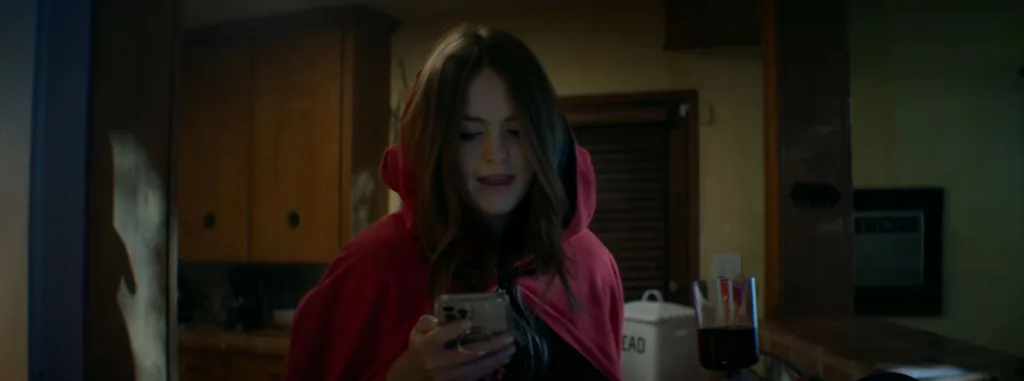
His calling card is as specific as it is bizarre. He lures victims out of their homes using a recording of a crying infant. When they are vulnerable, he assaults them with the express goal of conception. When the baby is due to be born, he will return to take it, killing the woman in the process.


It’s a bit of a logical leap on his part, really. He is essentially banking on his victims being the most staunchly right-wing of Christians. Most people would just abort the baby of their attacker. He relies on them carrying to term. Living with that trauma for the rest of their lives. All so he can eventually swoop back in and claim his “legacy.”
Either way, he attacked Charlie and he believes she is carrying his child.
Complex Motives: Real-World “Gentlemen”
While The Gentleman’s obsession with forced “legacy” feels like pure movie fiction, it mirrors real-world cases where criminals seek a twisted form of immortality.
This motive is seen in “biological” criminals like Donald Cline, the fertility doctor who secretly used his own sperm to impregnate dozens of patients. Much like The Gentleman, Cline’s motive wasn’t just the act itself, but the narcissistic desire to propagate his DNA across an unsuspecting population.
In the realm of serial killers, this type of obsessive ritual, luring victims with a specific sound or “test”, is often a way for the perpetrator to feel superior. By “proving” a victim’s nurturing instinct (the crying baby), The Gentleman isn’t just seeking a child; he’s seeking to punish the very empathy that makes his victims human.
The Long Game: Luring The Gentleman
After her initial assault, Charlie realized the police were useless (having arrested the wrong man, Edward Reed). She knew the real “Gentleman” was still out there and likely watching her. Instead of hiding, she decided to become the ultimate bait.

Charlie spent months wearing a prosthetic stomach and working from home. She isolated herself from her family so no one would see through the ruse. She even “performed” being pregnant for the cameras she knew he had installed. This ensured he believed his “son” was about to be born. Thus, forcing him to move his timeline up and break into her home ill prepared.
The Diminutive “Gentleman”
This is purely my opinion but, one of the biggest hurdles Sorry, Charlie faces in maintaining its tension is the physical presence, or lack thereof, of its antagonist. In the world of slasher and home invasion horror, the killer usually benefits from an imposing or uncanny physical silhouette.
The actor portraying The Gentleman is noticeably small in stature and slightly built. When he finally steps out of the shadows, his ill-fitting slacks and cheap-looking mask don’t exactly scream “apex predator.” Instead of a terrifying maniac, he looks like a teenager playing dress-up in his dad’s Sunday best.
This choice significantly undermines his threat level. It becomes difficult to believe that Charlie, or any of his previous victims, couldn’t have simply overpowered him in a physical struggle. While his “power” comes from his psychological games, a little more height or a bit more muscle would have gone a long way in making him a credible horror villain.
The Fake Birth Twist: A Masterclass in Psychological Warfare
The climax features Charlie “going into labor” as the Gentleman stalks her through the house. But this was more than just a distraction – it was the final hook in a lethal trap. By faking the water breaking and doubling over in staged contractions. She exploited the one thing she knew he valued: his “legacy.”
As the Gentleman closes in, believing he is about to claim his prize. Charlie delivers the ultimate shock and awe tactic. In a moment of potentially visceral horror, she takes a pair of scissors and stabs herself directly in her heavily “pregnant” stomach.

Naturally, she’s not an idiot: it is a calculated move designed to mess with his mind. For a predator who spent months orchestrating a “family”, seeing his victim apparently murder his unborn child causes a total system override. He is frozen in genuine concern for the baby, his guard completely dropped.
When Charlie reveals the stomach is actually a prosthetic filled with padding and a very real pistol, it marks a moment of total psychological defeat for the killer. He didn’t just lose his legacy; he realized he had been the one being played, studied, and out-manoeuvred for months… Feels like a good time for a “You go girl!“.
Charlie didn’t just kill him; she stripped away his sense of power and his “Gentleman” persona before finally pulling the trigger. She proved that while he thought he was the one watching her, she was the one truly seeing him.
Self-Defence or Vigilantism?
While it’s incredibly satisfying to see Charlie turn the tables, her legal standing at the end of the movie is… questionable at best. In most jurisdictions, self-defence requires an “imminent threat.” By meticulously luring the Gentleman into her home over several months, a prosecutor could argue she wasn’t defending herself – she was orchestrating an execution.
The real clincher, however, is the finale. After successfully neutralising the threat by shooting him in the nards (a move that certainly gets the point across), the Gentleman is effectively incapacitated and begging for mercy. When Charlie follows that up with a point-blank shot to the head, she crosses the line from “justified force” to “first-degree murder.”
The jury might cheer for her, but a savvy lawyer would have a nightmare explaining why she didn’t just call the police the moment he was on the floor clutching his business. It’s a cool ending for a horror movie, but in the real world, Charlie would likely be trading her nursery for a prison cell.
Frequently Asked Questions
Did Charlie have a baby in Sorry, Charlie?
No. Charlie was not pregnant during the events of the movie. She used a prosthetic belly as part of her plan to lure the killer back to her house.
Who was the man arrested at the beginning?
Edward Reed was a red herring. He was a suspect arrested by the police, but Charlie knew he wasn’t the real Gentleman, which is why she took matters into her own hands.
Why did Charlie hide the gun in her stomach?
Charlie knew the Gentleman would likely search her house or take her primary weapon (the gun under the desk). By hiding a second pistol inside her prosthetic belly, she kept her “trump card” in the one place he would never think to check.
Final Thoughts – Silly But Actually Fun
Sorry, Charlie is a textbook Tubi thriller, isn’t it? It’s rough around the edges with some questionable sound design, but bolstered by a solid final-act twist. While the “true story” claims are a bit of a stretch, the film does a nice job of tapping into a very real primal fear. It’s a satisfying revenge story that reminds us that sometimes, the person being hunted is the most dangerous person in the room. Thanks for reading!
Looking for more? If you enjoyed this breakdown, check out our review of Sorry, Charlie or browse our list of Horror Movie Lists.
A Note on Ending Explanations
While we aim to provide comprehensive explanations based on the events on screen, film analysis is inherently subjective. The theories and conclusions presented in this "Ending Explained" feature are personal interpretations of the material and may differ from the director's original intent or your own understanding. That's the beauty of horror, right? Sometimes the scariest version is the one you build in your own head.
You might also like:
- Speak No Evil (2024) Review – A Rare Remake That Actually Improves Upon The Original
- 25 of Horror’s Best Final Girls – A Definitive Countdown of Horror’s Toughest Heroines (Spoilers)
- The Confession (2025) Review – Wasted Potential
- Hokum (2026) Ending Explained – Was It Real or Just a Bad Trip?
- Slapface (2021) Ending Explained – Was the Monster Real?
Disclaimer: Images, posters, and video stills used in this horror ending explained article are the property of their respective copyright holders. They are included here for the purposes of commentary, criticism, and review under fair use. Knockout Horror makes no claim of ownership and encourages readers to support the official release of all films discussed.