The Long Walk (2025) ending explained: does Pete survive, the Alternate Ending, & would the walk be possible?
Movie Details: Director: Francis Lawrence | Runtime: 1h 55m | Release Date: 2025 | Star Rating: 4/5 Stars
Welcome to Knockout Horror. Today we are going to be explaining the ending to the Stephen King adaptation The Long Walk. This utterly bleak, totalitarian nightmare leaves viewers with plenty of questions about the rules, the setting, and that frankly gutting final shot. We are going to answer those questions right here. If you haven’t seen it yet, read our spoiler-free review first. We have also reviewed the 4K Blu-ray Steelbook so check that out if you are into physical media.
⚠️ Warning: Major spoilers follow below.
The Ending in Brief
The TL;DR: Ray sacrifices himself by stopping, allowing the Squads to execute him so that Pete can win. Devastated by grief, Pete uses his “Wish” to request a carbine rifle. He shoots and kills The Major in front of the stunned crowd, avenging both Ray and Ray’s father. The final shot sees Pete walking down an empty road, implying he is either executed immediately or has lost his mind to the trauma.
Who wins? Pete McVries is the technical winner, but only because Ray Garraty deliberately stops walking to save him.
Does Pete survive? It is heavily implied that he does not. After shooting The Major, the film switches to a dream-like state where Pete walks down an empty road, suggesting he was executed by the Squads immediately.
What is the Alternate Ending? In the alternate cut, Pete refuses to shoot The Major. He takes the money and uses it to support the families of the fallen walkers (Ray, Hank, and Art), fulfilling his original desire to make the world a better place.
Good to Know: Stebbins is revealed to be The Major’s illegitimate son. He joined the walk solely to force his father to acknowledge him, but succumbed to illness before he could finish.
Table of Contents
The Long Walk (2025) Ending Explained
Let’s get straight into the explanation. We never bother with dull, overly long plot recaps here at Knockout Horror. I am sure you don’t want to waste time reading about a movie you literally just watched. We will break down the final moments, the political setting, and answer the big questions surrounding The Major and the rules of the walk.
Where and When is The Long Walk set?
The Long Walk takes place in a fictional, dystopian version of America. It’s made clear that there was a big war at some point and the result of that war was America coming under the rule of a military dictatorship.
The leader of the country is the enigmatic character The Major (played in brilliantly camp fashion by Mark Hammil). The country lives in utter poverty and in perpetual fear of The Major who enforces compliance with an iron fist and punishes free thinking.

The Long Walk is set in a fictional timeline, but we can kind of work it out based on some of the things we see in the film. Evidence suggests it is the mid-to-late 1970s. We don’t see any cell phones or modern technology, and the cars look to be from the 60s/70s.
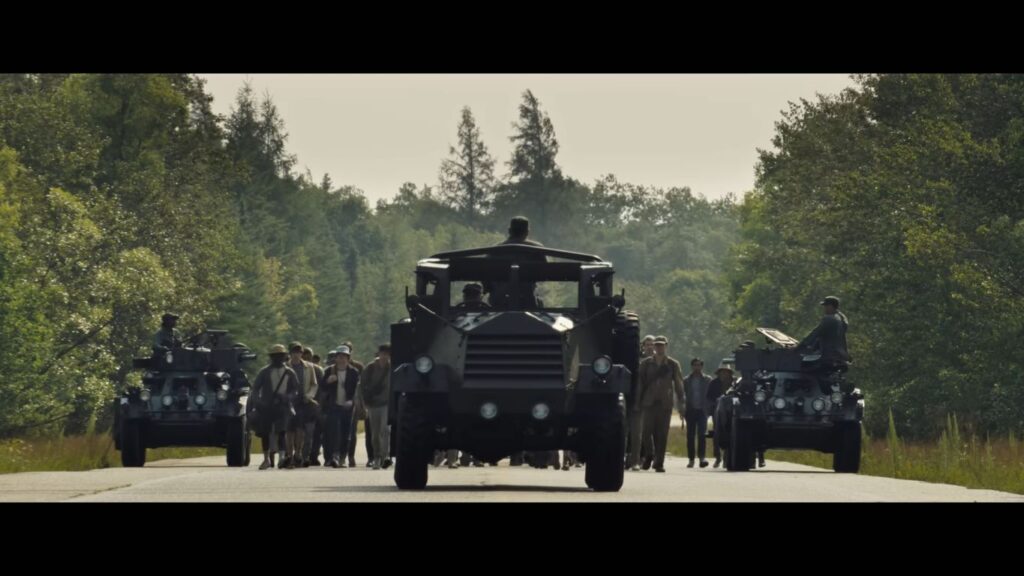
The biggest clue lies in the weaponry, however. The soldiers wield M16 Assault Rifles and wear OG-107 uniforms that were standard during the Vietnam War.
Honestly, if we place it here then this setting reinforces the film’s main allegory: young men being drafted against their will into a meat grinder, a direct parallel to the Vietnam draft.
What is The Long Walk and Why Does It Exist?
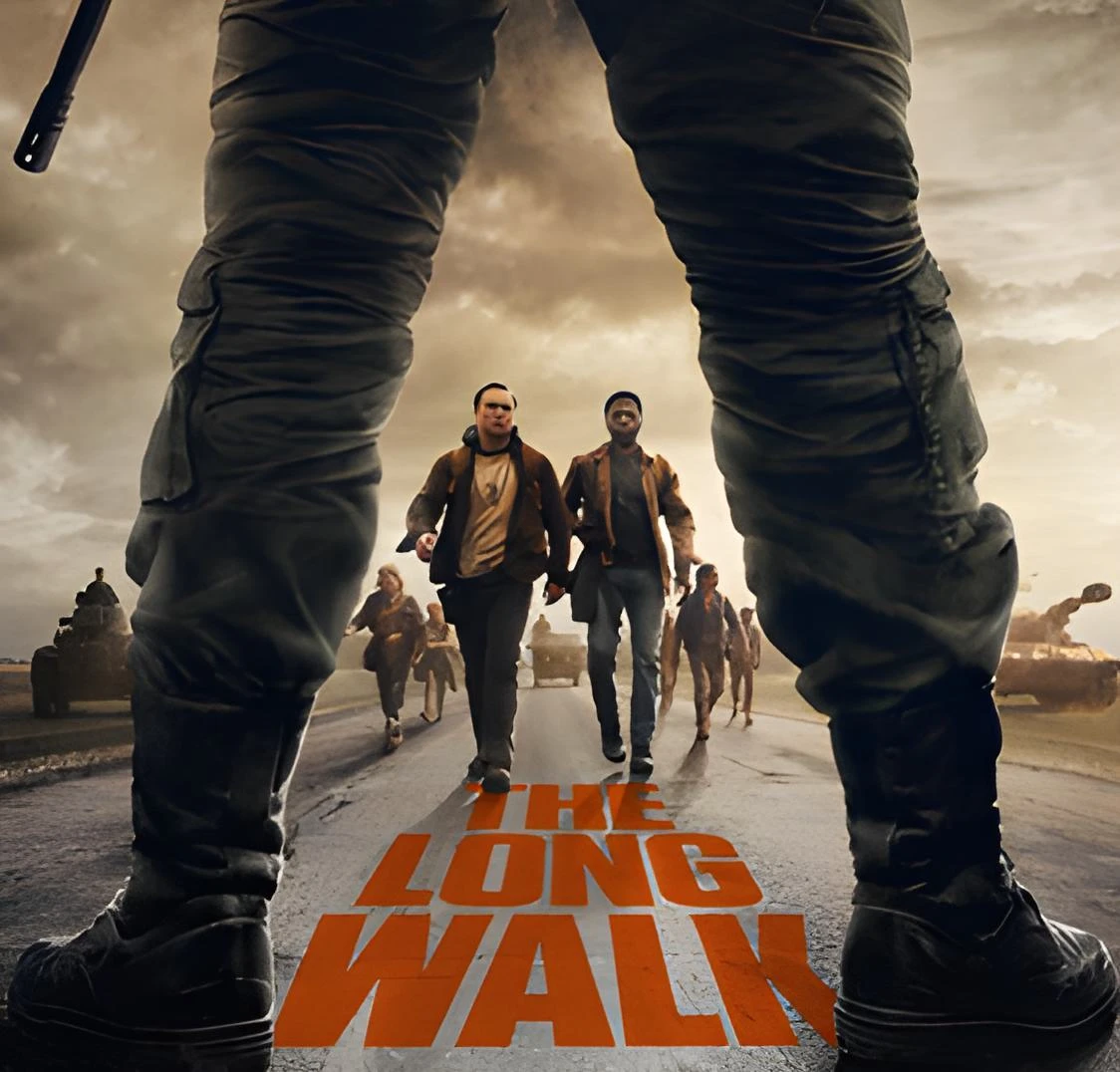
The Long Walk is a relentless march involving 50 volunteer teenage boys chosen from across America. The rules are simple but pretty damn brutal:


- Keep walking until one boy remains. There is no finish line here, just an endless march until only one person is left.
- Maintain a pace of 3mph at all times. If you fall below 3mph, you will be given a warning and ten seconds to speed up.
- Three warnings means you are out of there. After the third warning, the walker will have ten more seconds to get back up to pace before they are shot dead.
- Walkers can remove a warning by keeping the 3mph pace for one hour. Keep pace for three hours and they will remove all of their warnings.
- Never leave the road. If a walker leaves the road, they are immediately shot dead without any warning at all.
- Don’t interfere with the squads. Don’t touch or otherwise interfere with the squads. Any walker attacking or touching squad members will be shot and left to die a slow death.
The walk continues day and night. There are no breaks, no sleeping, and limited rationed food. Walkers can request infinite amounts of water. There are no changes of clothes, no medication, and no replacement boots.
The teens will keep walking until only one boy remains to claim the “Prize” – the prize being massive riches and a single wish.
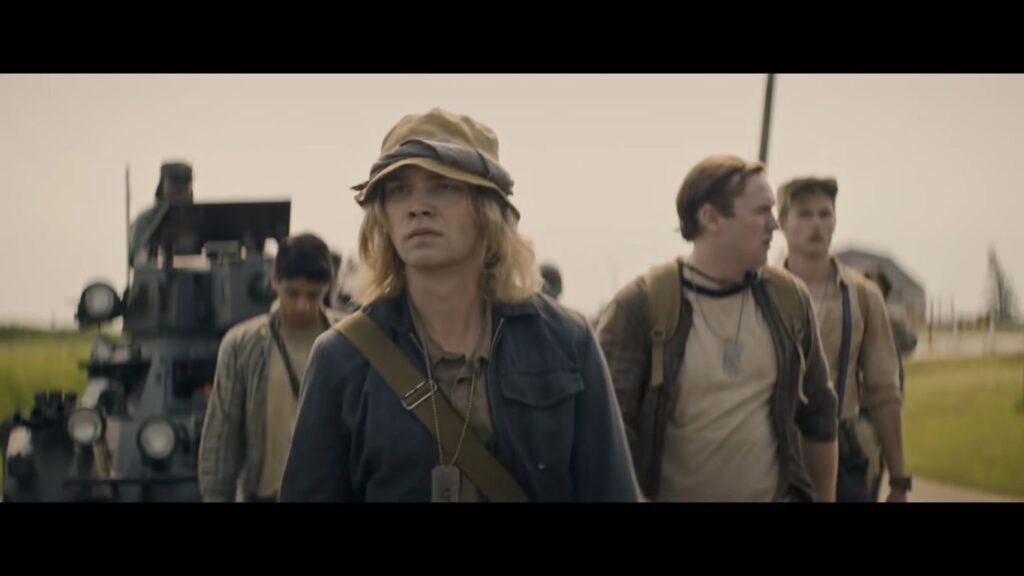
This wish is emphasised as being pretty much anything the boys could ever want outside of requests that impart regime change. The boys even relate that one winner requested a pet elephant and received it.
In reality, the Walk is a carefully calculated piece of militaristic propaganda designed to pacify a starving and poor population. The idea is that the boys being presented as willing to sacrifice everything to compete in the walk should act as encouragement to everyone else suffering under the regime.
If the boys can walk endlessly and face certain death, regular people can toil in low paying jobs and live in abject poverty without complaining. The entire purpose of the walk is to force compliance in the population living under the militaristic regime.
Did You Know? The Science Behind The Walk
There’s one big question that immediately comes to mind when watching The Long Walk, right? Is the walk actually possible? Well I think we can concretely answer that question.
Physiologically, absolutely not. At a minimum speed of 3mph with no stops for over 4 days, the walkers would take roughly 700,000 steps. The calorie burn alone would be absolutely insane. Did you know that to replace all of the calories they lose through walking would require eating about 90 cheeseburgers during the walk just to maintain energy. That’s not even factoring in the extra calorific burn from not sleeping.
In fact, let’s talk a little more about that lack of sleep. Extreme sleep deprivation causes hallucinations after only 48 hours and musculoskeletal breakdown is soon to follow. Just staying awake for nearly five days with no stimulants would be a tough ask but doing so while walking hundreds of miles would be impossible. The walkers have minimal rations and no ability to rest. The human body would simply shut down long before the finish line. The long walk is less a competition and more a death sentence.
What Did Each Boy Wish For?
Naturally, the money is a big reason to want to compete in the long walk, especially given the impoverished manner in which everyone lives. The other reason is that the winner gets to make one single wish. Each of the boys wishes for something different but you may have missed a few so let’s take a look.
Ray Garraty: This is the most obvious – Cold-blooded vengeance. Ray doesn’t care about the cash; he explicitly joined to use his One Wish to ask for a carbine rifle so he can personally execute the Major for murdering his father.
Peter “Pete” McVries: As the relentless optimist of the group, Pete’s wants to change the world for the better. The stated goal specific to his wish is to force a rule change allowing two Walkers to cross the finish line alive. This makes the climax, where the march breaks him and he abandons his morality to violently fulfill Ray’s revenge wish instead, a bit of a gut-punch.
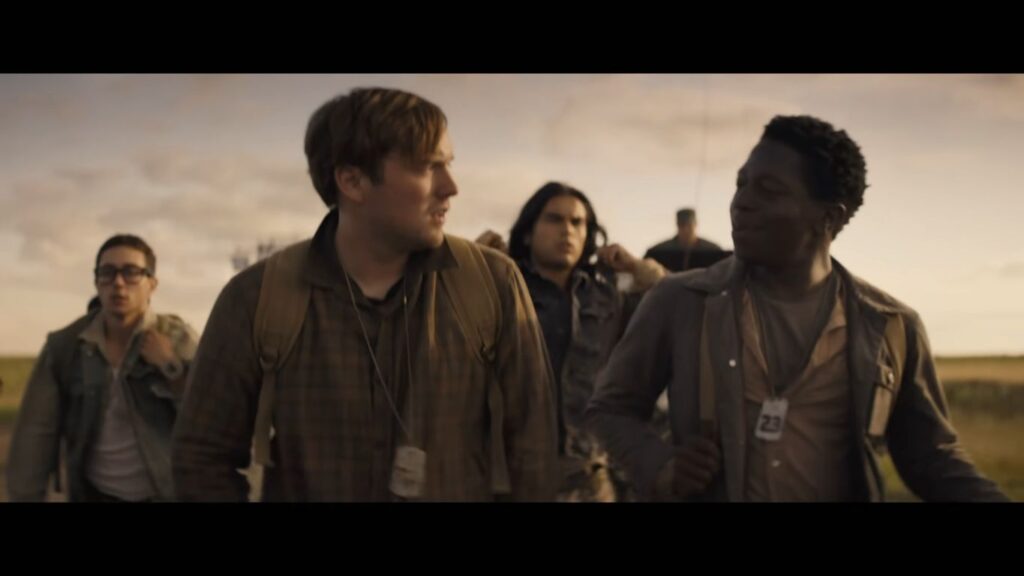
Hank Olson: Financial security… and ten naked women. He puts up a loud, arrogant front early on, jokingly declaring to the squad that he is going to wish for “10 naked women”. Underneath the bravado, however, he is just a desperate guy trying to secure the bag to keep his secret wife out of poverty.
Stebbins: Paternal acknowledgment. As the illegitimate bastard son of the Major, Stebbins is enduring sheer physical hell purely to force his sociopathic father to publicly claim him. He is going to use his wish to be taken in by the Major.
Arthur “Art” Baker: Family survival. The spiritual and comedic anchor of the Musketeers doesn’t have grand delusions of toppling the regime. He just wants the prize money to pull his grandmother out of the gutter in an economically ravaged America.
Gary Barkovitch: Barkovitch doesn’t have a noble cause or a tragic backstory, he’s just a prick who nobody likes. He joined the Walk simply because he wanted a front-row ticket to watch everyone else suffer and die, making his eventual guilt-driven psychological collapse wonderfully poetic. He doesn’t actually state his wish but it is likely purely dominance over others.
Thematic Spotlight: Revenge vs. Forgiveness – Pete’s wish vs. Ray’s.
Much of the thematic weight of the film squarely falls on the dichotomy between the intended wishes of Pete and Ray. This plays into their respective characters, too.
Ray lived a life with a loving family and a father who imparted on him a desire for free thinking. He loved Jazz, he enjoyed the writings of different socialist authors, and he was encouraged to be open about religion. Pete’s life was the opposite. Pete lost his parents in the big war, he was then raised by an abusive uncle. Pete turned into an aggressive young man who picked fights. He was nearly killed in one such fight and, after pulling through, decided to devote his life to always searching for the light and the positive. Ray has become the opposite. His sole purpose for competing in the walk is to avenge his late father who was killed by the Major.
It’s Pete’s positive outlook on life that changes Ray’s desire to take revenge. He quickly realises that killing the Major would be a selfish act that might only benefit himself. He sees that Pete would make an actual difference on the world with his wish. It’s in this moment that his desire to win changes and eventually leads to the ultimate conclusion of the story. Little does Ray realise, however, that his revenge filled outlook has rubbed off on Pete, too.
The Fate of the Fallen: How the Walkers Died
While the story focuses predominantly on Ray and Pete, before their final scenes, we basically watch every single other character get their ticket in brutal ways courtesy of the squads.

It’s easy to lose track. Here is how the rest of the core group met their end, including the other members of the Musketeers:
- Adam “Curley” White: One of the first walkers to die, Curley gets a Charley horse, otherwise known as cramp, and can’t carry on despite the others trying to help him. He’s shot after three warnings.
- James Ewing: Ewing suffers a seizure while walking and is shot after his third warning.
- Robert Zuck: He suffers an off-screen death after hurting his leg while walking.
- Rank Sanders: Rank is antagonised by Barkovitch which leads him to try and punch him. He completely whiffs and falls on his face where he is injured and then shot by the squads.
- Ronald: He gets the shits and falls behind trying to crap before the squads shoot him.
- Richard Harkness: Breaks his ankle and tries to persevere through the pain until it gets too much and he is shot.
- Patrick Smith: He tries to get help from the squads but is pushed over and has his legs ran over by a tank.
- Barkovitch (The Antagonist): After spending the march antagonising others, the guilt of causing Rank’s death and being ostracised by the group finally breaks him. He stabs his own throat repeatedly with a spoon handle before being shot by the squads.
- Hank (The Husband): It is revealed Hank was secretly married and walking to win money for his wife. Delirious from hunger, he attacks the Squads and is shot. In a rather cruel twist, the soldiers allow him to bleed out slowly on the road as a warning to the others to not repeat his actions.
- Art (The Friend): The comedic heart of the group and just a generally decent guy, Art suffers a sudden internal bleed (likely from the physical strain). Realising he can’t go on, he says a tearful goodbye to Ray and Pete before stopping to accept his execution.
- Collie (The Warrior): Overwhelmed by the stress, Collie snaps. He manages to steal a rifle and kill a Squad member before taking his own life, choosing to go out fighting rather than walking.
- Stebbins (The Secret Son): Revealed to be The Major’s illegitimate child, Stebbins joined the walk because he wanted his father’s acceptance. He was going to ask his father to take him in as his one wish. Ironically, he falls victim to a random illness rather than fatigue, even after having not been ill once in the past ten years. Unable to continue, he gives up and is executed just miles from the finish line but not before making friends with Ray and Pete.
How does Ray die?
Ray dies by choosing to give up. He kneels down without Pete knowing, incurring his third warning. Before Pete can get back to pick him up, Ray is shot.
Incidentally, the major shoots Ray dead, here. Stebbins mentions this earlier in the film, the Major is always responsible for the final kill and there will be crowds waiting along the path to see this happen.
Why did Ray give up?
Ray gives up because Pete’s kind nature changes his desire for revenge. Ray initially joined the walk to get close enough to The Major to kill him (avenging his father). However, Pete makes Ray realise that there is more to life than violence.
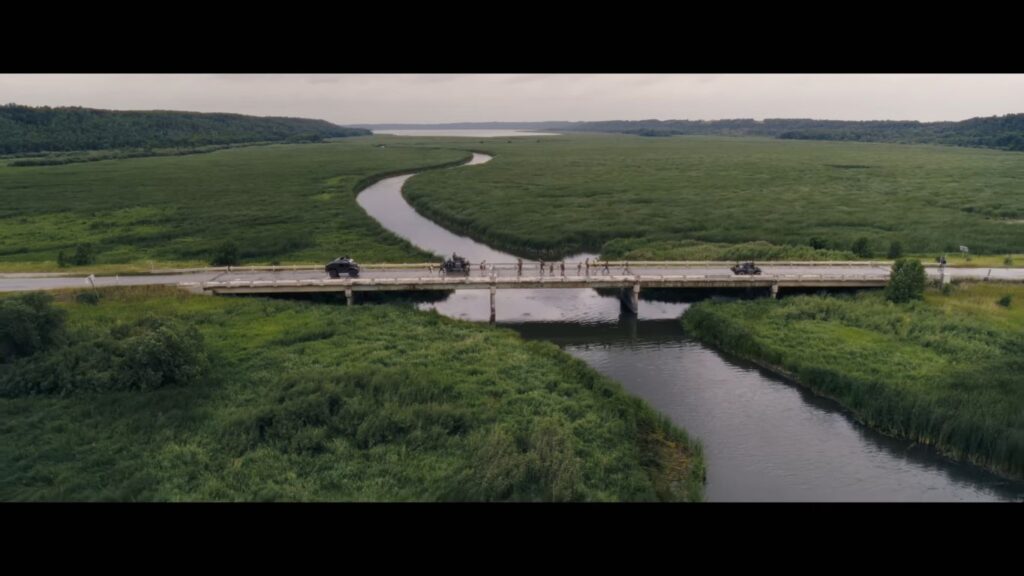
Ray eventually realises that his act of revenge would be less beneficial to the world than Pete winning. Pete wants to use the Wish to help people, whereas Ray would only use it for violence. In a moment of self-sacrifice, Ray decides to give his own life so that Pete can make the world a better place.
Why did Pete kill the Major?
Pete killed The Major because of his grief at losing Ray. Pete spent much of his life alone and finally found people he cared about, only for them to be murdered in front of him.
While Pete changed Ray for the better, Ray also changed Pete. Pete had never really cared for anyone before, so when Ray was killed, it hurt him immensely.
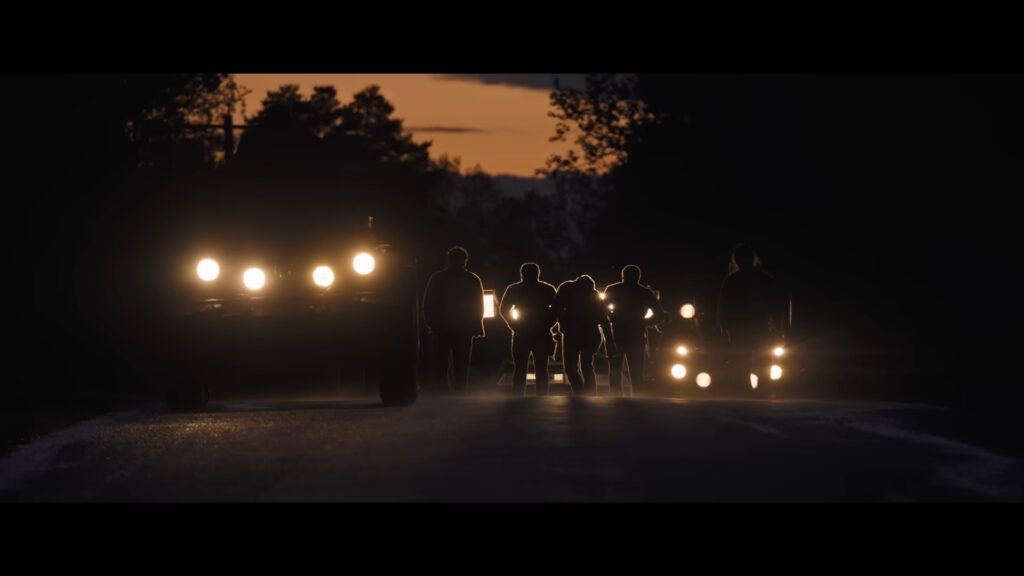
He immediately wanted to take revenge on The Major who had just shot his friend. By killing him, Pete is essentially fulfilling both his and Ray’s wish: Ray’s revenge is complete, Pete has avenged his friend, and the world is arguably a better place without the dictator.
It’s a pretty grim ending, to be honest, but, as I mentioned earlier, it plays on the themes of how Pete and Ray changed each other for both the better and the worse.
The Alternate Ending: A Path of Peace
The Long Walk received an alternate ending as a bonus feature on the 4K Blu-ray release in the US. Unfortunately, I’m in the UK so my copy Limited Edition 4K Steelbook Blu-ray didn’t include it. As is a bit of a tradition with alternate US endings, this one lightens things up a little.
In this version, Ray still gives up and Pete is still left as the winner. The change comes, however, when Pete refuses to shoot The Major, dropping the rifle and walking away from the celebration. He uses his prize money to anonymously support the families of his fallen friends, sending envelopes of cash to Hank’s widow, Art’s grandmother, and Ray’s mother. This ending fulfills Pete’s original wish to make the world a better place through kindness rather than revenge and validates Ray’s decision to give up.
Did Pete survive? (The Final Shot)
It is extremely unlikely that Pete survived. The Major’s squad would not let an assassin live. The final scene shows Pete walking down an empty road in the rain, with no crowds or soldiers visible.
This reflects the fading perception of the world by a dying man. Everyone is gone and Pete is now alone. No soldiers, no noise, no fireworks. This is a clear visual cue that he died. It is left ambiguous, as is the nature of Stephen King stories, but the implication is clear: he has walked into the afterlife to meet Ray.
The Book vs. The Film: Key Differences
Adapting Stephen King’s miserably bleak 1979 novel for the screen obviously necessitated some major narrative trims and shifts in tone. While the movie retains the core premise of a dystopian death march, several key changes stand out for fans of the original text:
- The Scale of the Walk: In the novel, 100 teenage boys begin the march, maintaining an even more gruelling minimum speed of 4 mph. The film scales down the contestant roster significantly to keep the focus tighter on core interpersonal dynamics and grants a slightly more cinematic, realistic, and lower walking pace of 3 mph.
- The Major’s Presence: King’s Major is a distant, almost mythical figure who appears briefly at the start and shadows the boys from a mechanical vantage point atop a halftrack. The adaptation turns him into a far more overt, hands-on fascist antagonist with direct face-to-face confrontations and a love for getting hands on with the killing.
- Ray’s Backstory: The film expands significantly on Ray’s father as an active anti-regime rebel executed by the state. In the book, his father was simply “taken away” by the Squads years earlier for speaking out, leaving Ray’s motivations far more ambiguous. Ray is not strictly seeking revenge in the novel.
- Stebbins’ Revelation: While both versions reveal Stebbins to be the Major’s illegitimate son, his sudden physical illness and collapse near the finish line are handled with much more abrupt melodrama on screen compared to his quiet psychological battle with Ray in the novel.
- Character Differences: There are a lot of character changes in the movie. Certain characters have been merged together, other characters have been completely removed, motivations have been changed, backstories are different, and the camaraderie is far more central to the story.
The Bleak Original Ending: The most significant divergence is probably in the finale. In King’s book, Ray Garraty is the sole survivor after Stebbins collapses. Pete actually dies before Stebbins after simply giving up, as his character intends to do in the movie. However, Ray doesn’t receive a heroic send-off or a confrontation with the Major; his mind completely shatters. Hallucinating a shadowy dark figure ahead of him, Ray simply keeps walking into the darkness thinking he is still competing having gone completely insane. The film radically alters this by having Pete survive to take out the Major, trading King’s pitch-black psychological collapse for a much more obvious form of Hollywood rebellion. Naturally, this left fans of the book quite disappointed.
Final Thoughts: A Victory In Name Only
The 2025 adaptation of The Long Walk trades the rather ambiguous ending of the novel for a violent, and much more definitive conclusion. It’s going to be divisive, though. By having Pete assassinate The Major, the film offers the viewer at least a brief moment of catharsis that the book denies the reader, granting Ray his revenge from beyond the grave.
The final shot of the empty road suggests that this victory is probably quite hollow. Pete may have stopped the man, but he couldn’t stop the trauma. Much like the Vietnam veterans the story allegorises, Pete is the “winner” who lost everything to survive. The Walk took his future, leaving him wandering a metaphorical road that has no end. It’s ultimately tragic.
The alternate end where he survives to support the family members of the fallen leaves a little more hope. I wonder which one people prefer? My vote goes to the original… Let’s enjoy a little nihilism and chaos in our horror movies.
Looking for a critique? For our verdict on the adaptation choices, the pacing, and a full rating, read our The Long Walk (2025) Movie Review.
Frequently Asked Questions
What happened to Ray’s father?
Ray’s father, a rebellious free-thinker, was shot dead by the Major after rebelling against the military dictatorship by speaking out against the government, the Major, and the very idea of the long walk itself.
What was Stebbins’ secret?
Stebbins was the Major’s illegitimate son. He wanted to win the walk so that the Major would recognise his achievement and accept him. Unfortunately, he falls ill right before the walk begins and dies before he can finish.
Why did Barkovitch snap?
Barkovitch was suffering from immense guilt due to causing Rank’s death earlier in the walk. After being ostracised by the other boys, the mental strain became too much, and he took his own life.
Does Pete survive in the alternate ending?
Yes. In the alternate ending, Pete refuses to shoot The Major. He walks away and uses his prize money to support the families of the fallen walkers, fulfilling his wish to be a good person.
Who is The Major?
The Major is the military dictator of this alternate America. He is a “cult of personality” figure, ruthless and omnipresent, serving as a composite of real-world dictators like Franco or Pinochet.
Why didn’t the squad shoot Pete immediately?
The Major arrogantly told his squad to stand down, believing his authority was absolute. He didn’t believe Pete would actually pull the trigger, viewing the boy as broken and controlled by the allure of the prize.
A Note on Ending Explanations
While we aim to provide comprehensive explanations based on the events on screen, film analysis is inherently subjective. The theories and conclusions presented in this "Ending Explained" feature are personal interpretations of the material and may differ from the director's original intent or your own understanding. That's the beauty of horror, right? Sometimes the scariest version is the one you build in your own head.
You might also like:
- Super Dark Times (2017) Review – A Dreamy and Disturbing 90s Thriller
- Influencer (2022) Review – A Fresh and Cunning Social Media Thriller
- Slanted (2026) Review – Disappointing “Body-Horror” Wastes Potential
- Saw (2004) Review – The Birth of a Modern Horror Phenomenon
- Rare Exports: A Christmas Tale (2010) Review – A Gritty Finnish Masterpiece
Disclaimer: Images, posters, and video stills used in this horror ending explained article are the property of their respective copyright holders. They are included here for the purposes of commentary, criticism, and review under fair use. Knockout Horror makes no claim of ownership and encourages readers to support the official release of all films discussed.