MaXXXine (2024) Ending Explained – Who Was The Killer?
Movie Details: Director: Ti West | Runtime: 1h 44m | Release Date: 2024 | Star Rating: 3/5 Stars
Welcome to Knockout Horror. We just finished watching Ti West’s third entry into the X series, MaXXXine. To be brutally honest, I didn’t get the hype with X, and I don’t really get the hype with MaXXXine either, though Pearl remains a masterpiece imo.
If you have just finished the movie and are confused about who the leather-clad killer was, what the deal was with the home movie, or if that red carpet interview actually happened, you are in the right place. We are breaking down the ending, the “Night Stalker” red herring, and Maxine’s final ascent to stardom.
⚠️ Warning: Major spoilers follow below.
The Ending in Brief
The TL;DR: The killer stalking Maxine is not the Night Stalker; it is her father, Ernest Miller. He is a religious cult leader who hired a private investigator to track her down. Miller has been murdering Maxine’s friends to isolate her, intending to film a “snuff documentary” where she repents for her sins. In the finale, Maxine corners him at the Hollywood sign and shoots him dead with a shotgun.
Who was the leather-clad man? That was Maxine’s father, Ernest Miller. He reacted violently at the peep show because he was disgusted to see his daughter working in the sex industry.
Did the red carpet scene happen? No. The scene where Maxine is interviewed about stopping the killer is a fantasy sequence. However, the final shot of her cutting cocaine with her SAG card confirms that her fantasy eventually came true: she became a genuine Hollywood star.
The Resolution: Maxine survives the shootout, kills her father, and uses the trauma as “divine intervention”… In other words, the tragic backstory she needed to finally achieve fame.
Good to Know: The film uses the real-life 1985 “Night Stalker” panic (serial killer Richard Ramirez) as a red herring. The characters assume the murders are the work of Ramirez, allowing Maxine’s father to operate unnoticed.
Table of Contents
MaXXXine (2024) Ending Explained
As always, no boring plot recap, let’s get straight to the explanation. To understand the ending, we need to strip away the neon-soaked 80s aesthetic and look at the actual plot mechanics: The Red Herring, The Father, and The Fame… Oh my!
The Setting: The Night Stalker Panic
It is 1985 and Maxine Minx (Mia Goth) has made it to Hollywood. At the very same time, the city is gripped by fear of the Night Stalker. This is where writer, director Ti West blends fantasy with fiction. This is the actual real-life serial killer Richard Ramirez.

West uses Ramirez as a convenient smokescreen to further the plot. Whenever a body drops in the world the film is set in, the police and the public assume it is the Night Stalker. This allows the actual villain of the movie to operate with impunity, murdering Maxine’s friends under the guise of a Satanic serial killer.
Real Life Horror: The Night Stalker
The film uses real-life serial killer Richard Ramirez (The Night Stalker) as a clever narrative shield. Active during the summer of 1985, Ramirez terrorised Los Angeles with home invasions and murders that often involved Satanic imagery.
By setting the film during this exact window, director Ti West creates a plausible reason for why the police overlook Maxine’s father. Every time a body drops, law enforcement and the public naturally assume it is the work of the infamous serial killer already dominating the headlines, allowing the true villain to hide in plain sight.
Who Was The Killer? (It Wasn’t Ramirez)
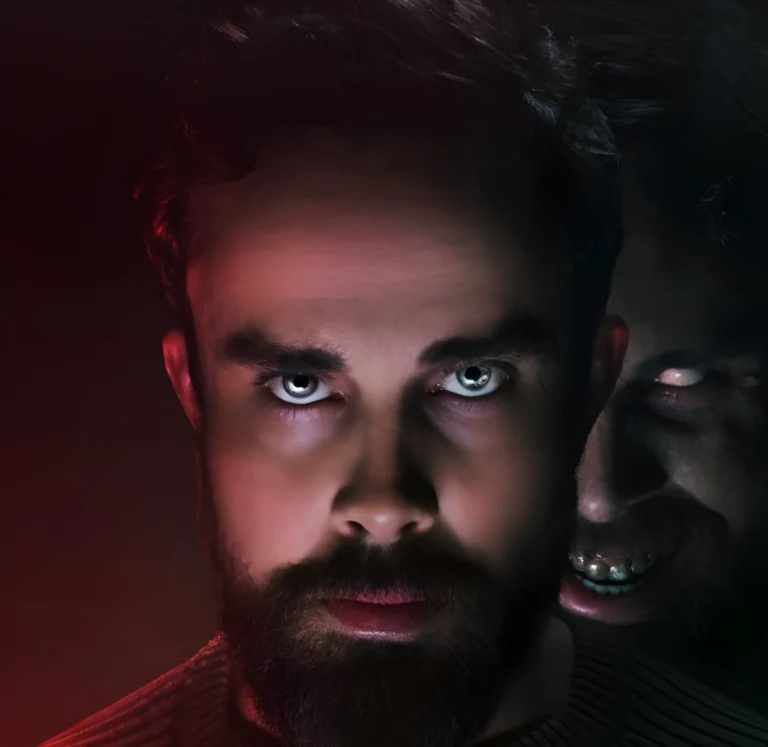
The killer is actually Ernest Miller (Simon Prast), Maxine’s father. He is the televangelist whose voice we heard preaching throughout the first movie, X.

Miller views Hollywood as a cesspit of sin. He hired the sleazy private investigator John Labat (played brilliantly by acting legend Kevin Bacon) to track Maxine down. Once he found her, he began systematically killing everyone close to her (Amber, Tabby, and Leon) to strip away her support system and terrify her.
Maxine’s Hidden Past: The Prodigal Daughter
Maxine wasn’t just a random victim; she was the “star” of her father’s show long before she reached Hollywood. As hinted in X, Maxine grew up in Ernest Miller’s strict religious cult and was the child featured in his televangelist broadcasts.
Her career in the adult film industry and her hedonistic lifestyle aren’t just a pursuit of fame; they are a deliberate, violent rebellion against her father’s oppressive authority. Every “sin” she commits is a direct rejection of the man who tried to control her.
Miller now sees her as an enormous failing of his program and almost a true representation of the corruption of evil. She was supposed to be a vessel for his religious ideation but, instead, she became a coke sniffing, adult film star who lives a life of hedonism. Hence why he makes her the target of his documentary.
The Plan: A Holy Snuff Film
Miller’s plan is pretty damn deranged but very simple. He is filming a documentary intended to expose the “evils” of Hollywood. The grand finale is supposed to be an exorcism of sorts: he captures Maxine, ties her up at a mansion on Starlight Drive, and plans to force her to “repent” on camera.
He isn’t trying to save her, as such. He is trying to break her because in evangelical logic, suffering equals correction and trauma equals truth. If she refuses? He will brand her and scar her for life, ruining the one thing she values most – her image.
Context: The Satanic Panic
The movie relies heavily on the 1980s “Satanic Panic” – a mass hysteria where Americans believed secret Satanic cults were abusing children and committing murders. This is a pretty common theme in West’s films, also being central to the plot in The House of the Devil.
Ernest Miller exploits this cultural anxiety. By using Satanic imagery (pentagrams, black leather), he disguises his fundamentalist Christian violence as Satanic ritual murder, knowing the media will eat it up which is exactly what they do. Well, I suppose it helps having a satanic killer on the loose at the same time in the form of the Night Stalker.
The Climax: Divine Intervention
The “documentary” filming is interrupted by Detectives Torres and Williams, leading to a bloody shootout. Miller escapes and flees up the hill to the Hollywood sign. Maxine pursues him before catching up and overpowering him.

In the final confrontation, Miller pleads with her for mercy. Maxine, realising that killing him will not only free her but likely make her famous, recites her mantra: “I will not accept a life I do not deserve“.
She tells him, “You’re divine intervention”, acknowledging that his twisted plan has inadvertently given her the “tragic backstory” she needs to become a legend. She blows his head off with a shotgun.
Did You Know: The Origin of the Mantra
Maxine’s famous catchphrase, “I will not accept a life I do not deserve”, wasn’t something she came up with in Hollywood. It was actually part of her brainwashing.
In the first film, X, the televangelist on the TV (Ernest Miller) can be heard repeating this exact line. Maxine was forced to recite it as a child in his cult to reinforce obedience and piety. In a twist of irony, she re-purposed her father’s own words of control into her personal fuel for stardom and rebellion.
What Was With The Red Carpet Scene?
Right after shooting her father, we see a sequence where Maxine is on a red carpet giving an interview about how she stopped a serial killer. This did not actually happen.
This was a fantasy sequence, a visualisation of Maxine’s narcissism, if you like. She isn’t traumatised by killing her father; she is calculating how it will boost her career. This is actually a more important plot quirk than you might realise and it ties back into something that happened earlier in the film.
Maxine, due to her harrowing past, has become something of a sociopath. She doesn’t feel pity for her father, only opportunity. Remember when she crushes that man’s balls in the alleyway? All of the people who have treated Maxine poorly have turned her into a monster who doesn’t care about anything other than fame and success.

It’s quite easy to imagine Maxine as a horror movie antagonist in much the same way that Pearl was. Their stories actually share parallels.
The movie cuts back to reality, showing the police helicopter arriving. However, the final shot of her doing cocaine with her SAG card confirms that her fantasy eventually came true: she became a star.
Symbolism: The SAG Card
The final shot of Maxine cutting cocaine with a card isn’t just a random drug reference; it is the ultimate status symbol. The card is a Screen Actors Guild (SAG) membership card.
In Hollywood, earning a SAG card is the definitive proof that you have “made it” as a legitimate, professional actor. By using it for such a hedonistic act, Maxine is telling the audience that she has successfully transitioned from the adult film world to mainstream stardom, but she hasn’t lost her dangerous edge. Ti West can be so utterly cheesy at times it makes your toes curl but, hey, people enjoy his style.
Frequently Asked Questions
Who was the leather-clad man at the peep show?
That was Maxine’s father, Ernest Miller. He reacted violently because he was disgusted to see his daughter working in the sex industry.
What happened to Kevin Bacon (John Labat)?
Maxine lured him into a trap. Her friends beat him unconscious and threw him into his car, which was then crushed in a compactor .
Why did Maxine crush the man’s testicles in the alley?
To show that she is no longer a victim. The man was a random attacker, unconnected to the main plot, used to demonstrate Maxine’s ruthlessness.
What happened to the detectives in MaXXXine?
Both detectives die in the final act. Detective Torres (Bobby Cannavale) is shot and killed by Ernest Miller during the confrontation at the mansion. Detective Williams (Michelle Monaghan) pursues Miller up the hill but is stabbed through the eye with a crucifix and falls to her death.
Final Thoughts – The Ultimate Final Girl?
MaXXXine is a stylish but ultimately messy conclusion to the trilogy. While it lacks the raw horror of X or the character depth of Pearl, the ending cements Maxine Minx as a true horror icon – a final girl who didn’t just survive the monster, but ruthlessly used him as a stepping stone to fame.
Hell, she’s a full blown sociopath by the time this movie clocks out. I want to see her as the bad guy next time she is on screen. Let’s turn her into a full blown villain. Thanks for reading!
Looking for more? If you enjoyed this breakdown, read our full review of MaXXXine.
A Note on Ending Explanations
While we aim to provide comprehensive explanations based on the events on screen, film analysis is inherently subjective. The theories and conclusions presented in this "Ending Explained" feature are personal interpretations of the material and may differ from the director's original intent or your own understanding. That's the beauty of horror, right? Sometimes the scariest version is the one you build in your own head.
You might also like:
- The Conjuring: Last Rites (2025) review – A soulless end to the saga
- Mercy Falls (2023) Ending Explained – Carla’s Motive & The Cave Fight
- Candyman (1992) Review – A Groundbreaking, Socially Conscious Gothic Masterpiece
- Deadbolt (2024) Review – A Predictable and Mind-Numbingly Basic Tubi Thriller
- From The Depths (2020) Ending Explained – It Was All A Dream?
Support the Site Knockout Horror is a participant in the Amazon Services LLC Associates Program. Basically, if you click a link to rent or buy a movie, we may earn a tiny commission at no extra cost to you. As an Amazon Associate, I earn from qualifying purchases. This helps keep the lights on and the nightmares coming. Don't worry, we will never recommend a movie purely to generate clicks. If it's bad, we will tell you.
Disclaimer: Images, posters, and video stills used in this horror ending explained article are the property of their respective copyright holders. They are included here for the purposes of commentary, criticism, and review under fair use. Knockout Horror makes no claim of ownership and encourages readers to support the official release of all films discussed.