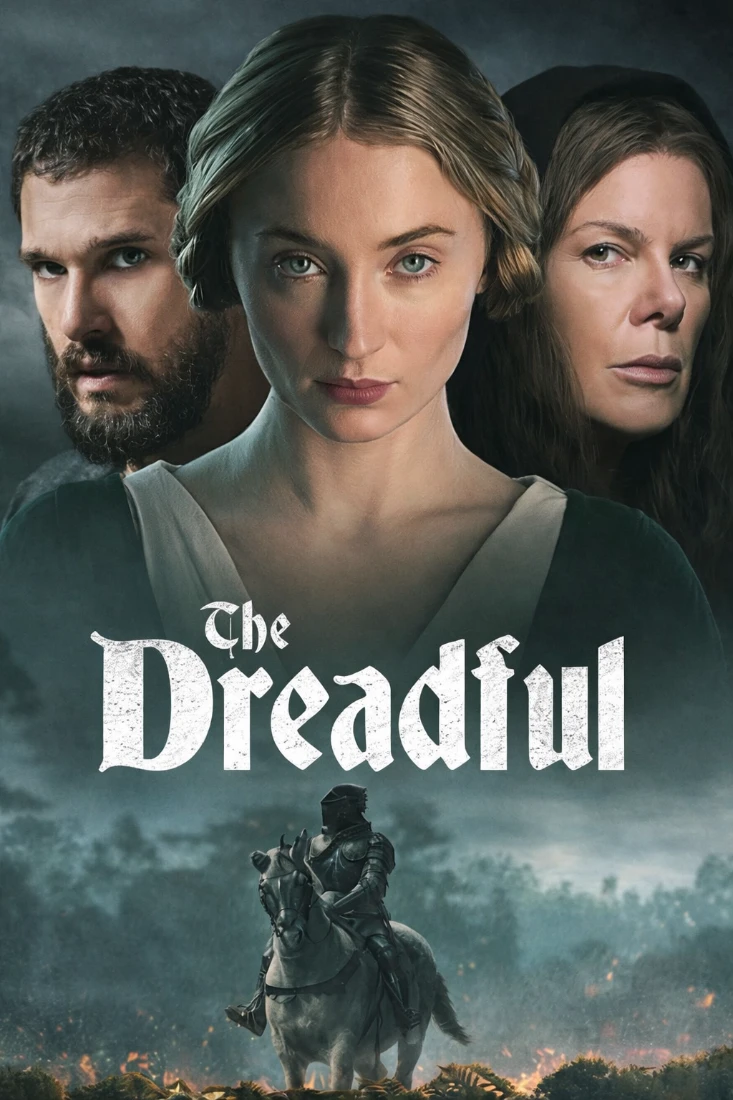
The Dreadful (2026) Ending Explained – The Helmet and The Greed
Movie Details: Director: Natasha Kermani | Runtime: 1h 34m | Release Date: February 20th 2026 | Rating: 2/5 Stars
Welcome to Knockout Horror and to this The Dreadful (2026) Ending Explained article. I won’t beat around the bush here, this movie wasn’t great. It’s a pretty damn bleak and muddy descent into medieval madness that seems to confuse a lot of viewers. Anyone else feel like it was pretty aptly titled? The narrative starts out feeling like a standard historical drama but rapidly descends into a dark tale of greed and supernatural punishment. Let’s get into some explaining. You can check out our review of The Dreadful right here.
⚠️ Warning: Major spoilers follow below.
The Ending in Brief
The TL;DR: Jago finally drops the act and confesses the truth about Seamus. War turned Anne’s husband into a bloodthirsty monster who murdered his own comrades for loot. After killing an armoured knight and stealing his helmet, Seamus was cursed, screaming as it burned his flesh. Jago played the coward and abandoned him. Meanwhile, Morwen spots the now demonic looking knight wandering the woods and, driven by her usual parasitic greed, murders him for a coin purse. Removing the helmet reveals she just killed her own son, Seamus. Desperate to keep Anne under her thumb, Morwen weaponises Anne’s religious fear and dons the helmet to scare her. It backfires spectacularly, fusing to her head and leaving her blind. Anne splits the helmet, completely rejects both Morwen and Jago’s manipulative bullshit (though she does still offer care to Morwen for some reason), and boldly picks up the self restoring metal to listen to its whispers.
Who Survived? Anne survives, finally taking control and seemingly with a hint that she might be about to embrace the dark power of the helmet. Jago survives but is completely rejected by Anne. Morwen survives but gets exactly what she deserves, left blind, disfigured, and totally alone. Seamus is dead, ironically murdered by his own greedy mother. The shipwreck survivors and Friar Penrose are also dead.
Why Did Morwen Do It? Let’s be real, Morwen never “snapped”; she was always a cynical, parasitic grifter. She spent the whole film using religious fearmongering to keep Anne subservient. When she saw a chance to steal a coin purse, she acted on her usual murderous instinct without realising it was her own cursed son. Putting the helmet on was just another pathetic attempt to manipulate Anne through fear, but karma finally caught up with her.
What Was the Final Helmet Scene? Anne is absolutely exhausted from living in the dirt while liars and hypocrites thrive. Picking up the helmet represents her total rejection of Jago and Morwen’s games. She may be about to embrace the temptation so she can experience a life of pleasure. The helmet, acting as a litmus test for the demon Mammon, doesn’t burn her because she isn’t a cowardly thief hiding behind fake piety. It whispers to her, waiting until she is ready to embrace her own dark ambition and finally get a comfortable life.
Good to Know: The film is set against the backdrop of the Wars of the Roses, a brutal series of English civil wars fought between the House of Lancaster and the House of York during the late 15th century. This historical context really puts Seamus’s transformation into a ruthless, looting monster into perspective. Those battles were notoriously messy, confusing, and completely devoid of honour, making it the perfect breeding ground for the kind of greed that cursed him.
Table of Contents
The Dreadful (2026) Ending Explained
As always, no tedious plot recap here; lord knows I can’t be the only one who doesn’t want to sit through that again. Let’s unpick this bleak ending and answer some of the questions about what exactly happened in those cursed woods.
The finale of The Dreadful strips away the facade of religious piety to reveal the ugly truth about human greed. Every character other than Anne is driven by entirely selfish motives, leading to a climax where everyone effectively ruins their own lives. Great!
Why Are Anne and Morwen Stuck Together? The Family Dynamic
If you found yourself scratching your head wondering why a seemingly sweet, introspective girl like Anne is living with a miserable grifter like Morwen, you are probably not alone. Morwen is actually Seamus’s mother, making her Anne’s mother in law. Before the War of the Roses tore their lives apart, it was always just the three of them living together in that isolated, muddy home in the middle of nowhere.
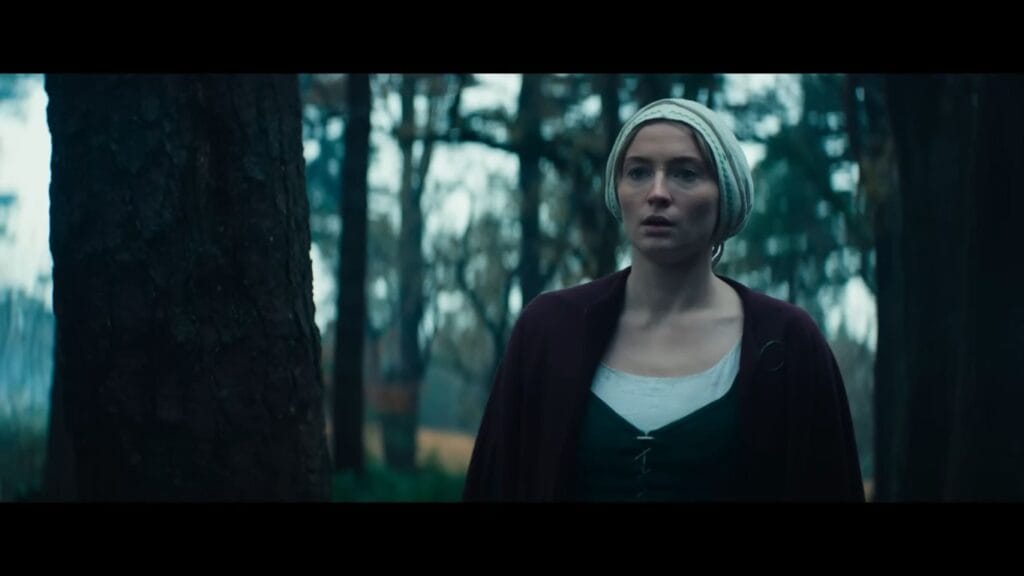
When Seamus left to fight, the two women were left entirely dependent on each other to survive the crushing poverty. Anne explicitly states that she has always obeyed Morwen’s commands, even the stomach churning ones, purely out of familial duty because Morwen is her husband’s mother. Morwen aggressively reinforces this dynamic, reminding Anne that caring for her is “God’s law”.
It is actually a pretty interesting bit of social commentary on the era. Women were often left completely vulnerable and bound by rigid familial duty when their men went off to die in pointless wars.
Why Does Morwen Actually Need Anne? Parasitic Survival
While Morwen acts like a fearsome authority figure who rules the roost, the ugly truth is that she is entirely dependent on Anne for her own survival. Morwen might do the heavy lifting when it comes to slitting throats and stealing shiny things, she needs Anne’s youth, obedience, and physical labour to actually get by in the harsh medieval wilderness. Anne is the one doing the grunt work and following Morwen’s commands, even when they make her stomach turn.
Underneath all the religious bluster, Morwen is seriously terrified of being abandoned. At one point, she even drops the hardened grifter act and explicitly confesses to Anne that she does not want to be alone. That’s not because of genuine affection, though. It is purely parasitic.


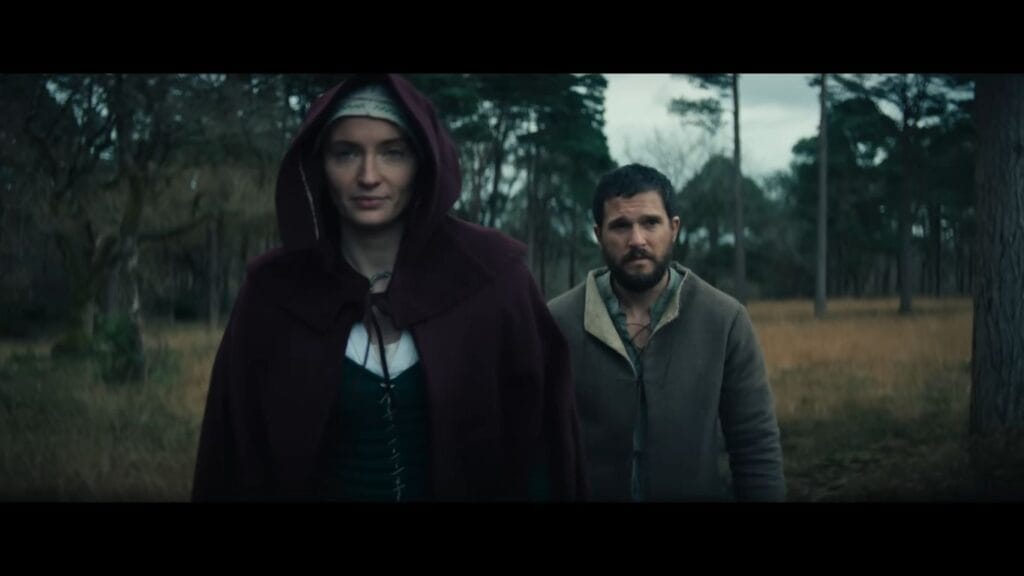
When Jago confronts Morwen and accuses her of stealing Anne’s youth and chance at a family, Morwen’s response is brutally honest. She flat out admits that she would gladly deny Anne any joy or physical pleasure if it means she gets to live through the winter. This is all about survival; Anne isn’t a daughter to Morwen, she’s a means to an end.
Without Anne acting as her loyal caretaker and accomplice, Morwen is just a miserable, ageing woman who would quickly succumb to the elements or the consequences of her own horrific actions.
Was Morwen Really Pious?
Absolutely not! Morwen was not pious at all, she was simply using religion as a way to control Anne and force her to both live with and care for her.
Morwen bangs on about duty and God throughout the entire film, but she is actually a thief, liar, and a stone cold killer. She constantly warns Anne that the Knights of Hell will drag her into the pit if she leaves to live with Jago. However, Morwen is the one committing actual atrocities. She murders shipwreck survivors without hesitation. Later, she slits the throat of a pilgrim priest named Friar Penrose just to steal his shiny relics.
Morwen’s entire existence is a complete hypocritical grift. She uses the fear of demons to keep Anne isolated and subservient, ensuring she always has someone to care for her. None of it is true and she’s actually a horrible person.
Unpicking The Logic: Jago’s Fabricated Story
Jago claims Seamus was split “neck to navel” by thieves. He basically spins this lie to get into Anne’s pants, taking advantage of her grief to win her over but, in a weird way, he was doing her favour by hiding the truth. The reality is far bleaker because the war turned Seamus into a monster. He started killing his own men purely to steal from them.
When Seamus murdered an armoured knight and stole his helmet, the resulting supernatural punishment was so terrifying that Jago simply abandoned him. Jago returning to the village and playing the hero was actually an act of cowardice.
Who Was the Demonic Knight?
The demonic knight Anne keeps seeing in the woods isn’t actually a demon at all. It is her husband Seamus though he’s obviously a little bit different from how she remembers him. After donning the helmet he stole from the soldier he killed, Seamus became cursed by it. He was hideously burned, disfigured, and left to wander. He was attempting to return back to Anne when Morwen spotted him.
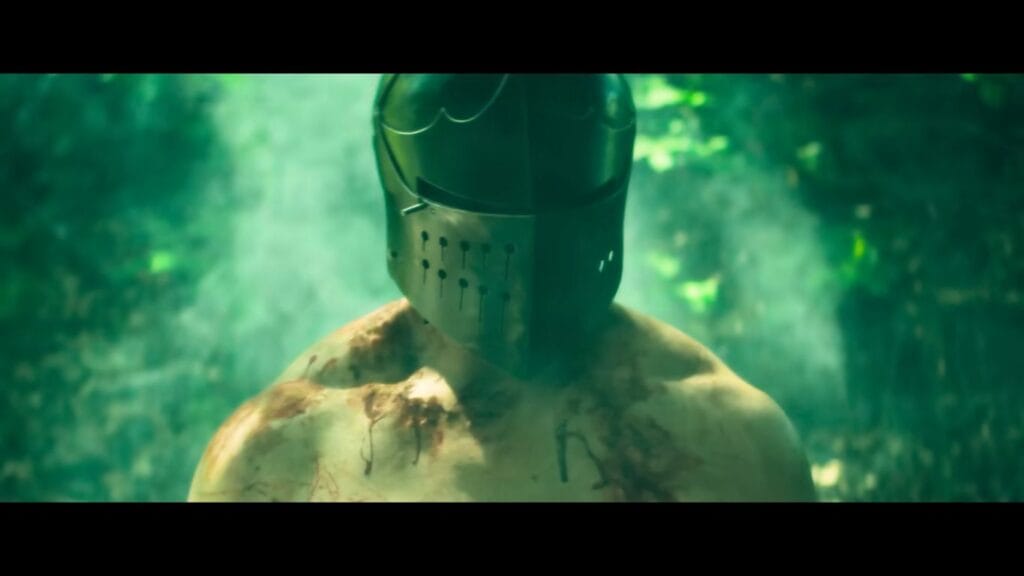
Morwen, driven by her insatiable greed as always, follows the knight and, when he collapses, she attacks him. She kills him purely to steal his coin purse but discovers something she could never have expected. When she removes the helmet, she realises she has just murdered her own son.
What Happens at the End of The Dreadful?
In a desperate bid to maintain control, Morwen puts on the cursed helmet to terrify Anne back into submission. Remember the whole demons will drag her to hell thing and how Anne believed the knight she was seeing was demonic? Morwen wanted to appear as one of those demons to stop Anne leaving her to live with Jago. The plan backfires horribly as the helmet begins to burn her flesh and permanently fuses to her head the same way it did with Seamus.
Anne uses a cross to physically split the helmet open. This reveals Morwen’s face covered in disgusting pustules and she has gone completely blind. As Anne helps Morwen to her feet, the helmet reforms and we briefly see the foggy figure of the demon that haunts the helmet reaching out to Anne before the pair leave.
When the pair make it back to the house, they hear noises outside and Anne spots a figure moving around the window. Realising that the curse has no power over her, she opens the door to find the helmet lying on the floor. Morwen tells her to not touch it because it is cursed but Anne picks it up and tells her there is nothing to fear.
Anne reaches her breaking point in the final scenes. She realises she does not belong to Jago or Morwen and, frankly, they are both lying, self absorbed pieces of crap. She rejects Jago entirely who acts like a petulant child about it, revealing his true colours.
The movie ends with Anne still helping to care for an ailing and blind Morwen but no longer dependent on her. She leaves the house and heads into the woods where the cursed helmet sits in a box calling to her. Anne picks it up and listens to it whisper. The suggestion here is that she is still driven by the temptation of the helmet, despite the curse, and still can’t ignore its calling. Perhaps the temptation will overtake her.
Thematic Spotlight: Anne’s Breaking Point
If we look a little closer at Anne’s journey, her eventual turn towards the dark side makes complete sense. She spends the entire film surviving in absolute squalor, constantly reminded of her place at the bottom of the ladder. The real turning point happens when she confesses her deepest frustrations to Jago. She tells him about a recent church sermon focusing on the demon Mammon, a figure associated with the lust for material wealth and earthly pleasures. She believed the demon was influencing her.
This sermon clearly struck a nerve because Anne immediately compares her miserable existence to that of Mistress May. She admits that seeing Mistress May looking so happy with a newborn baby, who is even wearing a tiny silver cross, filled her with a terrifying greed. Anne is incredibly vulnerable in this moment, confessing that she simply wants what Mistress May has. She is tired of the dirt, deprivation, and bullshit; she wants “the comfort, the wealth, the rosy cheeks, and the fat baby”.
This plays heavily into the ending. Morwen tries to keep Anne trapped using religious guilt and tales of demons, but Anne is just too exhausted to care anymore. When she finally accepts the cursed helmet, she is rejecting a life of pious suffering. She is choosing agency and the potential for a better life, even if it means embracing the darkness she was taught to fear.
How Morwen Controlled Anne: Weaponised Fear
Let’s wrap up this The Dreadful ending explained talking about Morwen and the helmet itself, for a second. She is the classic toxic mother in law from hell that I am sure we all fear, but dialled up to a legitimately psychotic level. Throughout the film, she runs a constant, hypocritical grift. Literally, nobody is safe from her; be it petty theft from people she deems to have more than her or actual murder of completely innocent people. She’s a demon in her own right, to be perfectly honest.
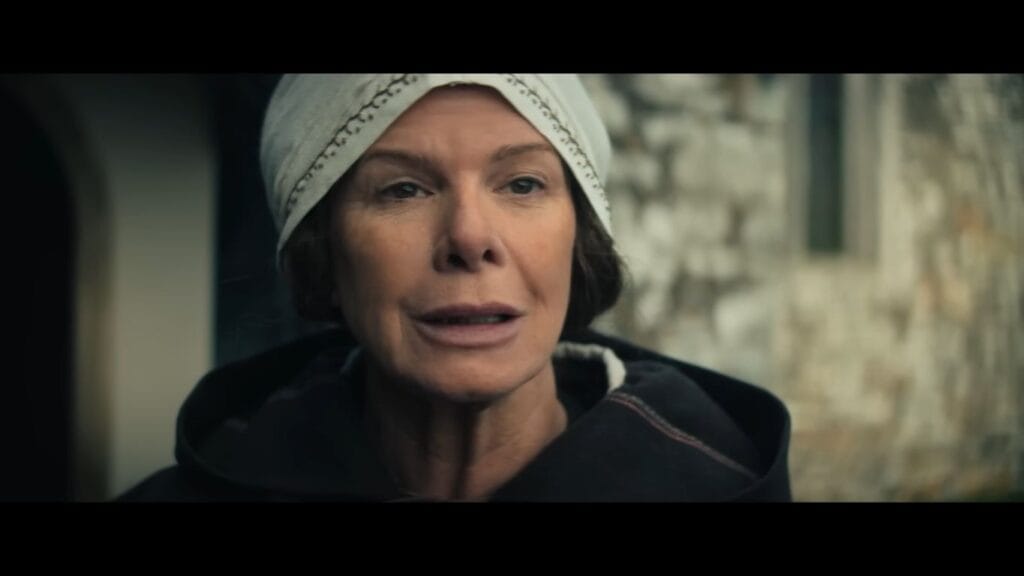
The big question is, why does she turn on Anne? Well, it’s quite simple – Anne wants to leave her as she eventually comes to the realisation that Morwen is taking advantage of her. Jago seems to be the perfect opportunity for her to walk away but Morwen is not at all happy about this so comes up with a plan.
She knows Anne is absolutely terrified of the armoured knight, genuinely believing him to be a literal demon or a “Knight of Hell”. Morwen weaponises this religious fear with some textbook psychological abuse built on her years of fearmongering. She has convinced Anne that she must stay with her “or else” but, over time, her grip loosens.
Unpicking The Logic: The Boy Who Cried Demon
Morwen spends the entire runtime hammering Anne with religious guilt and terrifying tales of the Knights of Hell. She uses this constant fearmongering as a way to keep Anne obedient and subservient to her but here is the fun irony of Morwen’s manipulation – she overplays her hand completely. By constantly screaming about demons and eternal damnation for the smallest infractions, Morwen inadvertently desensitises Anne to the actual horrors around them.
The real breaking point for Anne is the realisation that every single person in her life is playing her for what they can get. Literally, they are all sinners including Morwen who is actually a murderous grifter hiding behind piety. Jago poses as the heroic saviour but is actually a coward who fabricated the story of Seamus’s death just to get Anne into his bed. Even the local friar turned out to be a complete fraud.
Anne learns that playing by the rules of the righteous only leaves you starving in the dirt while the liars and cheats thrive. When she finally picks up the cursed helmet, she is entirely numb to the fear Morwen tried to instil in her. If the “good” people are all manipulative parasites, she might as well embrace the darkness and finally take control of her own miserable life. After all, are there actually any decent people in the town at all? It seems as though everyone is just in it for what they can get.
The Cursed Helmet: A Supernatural Litmus Test
If you pay close attention to how the helmet behaves, it becomes clear that the metal acts as a supernatural judge of character, specifically focusing on the sin of greed. It is essentially a physical manifestation of the demon Mammon that the local priest warned the village about. However, the helmet does not treat all greed equally.
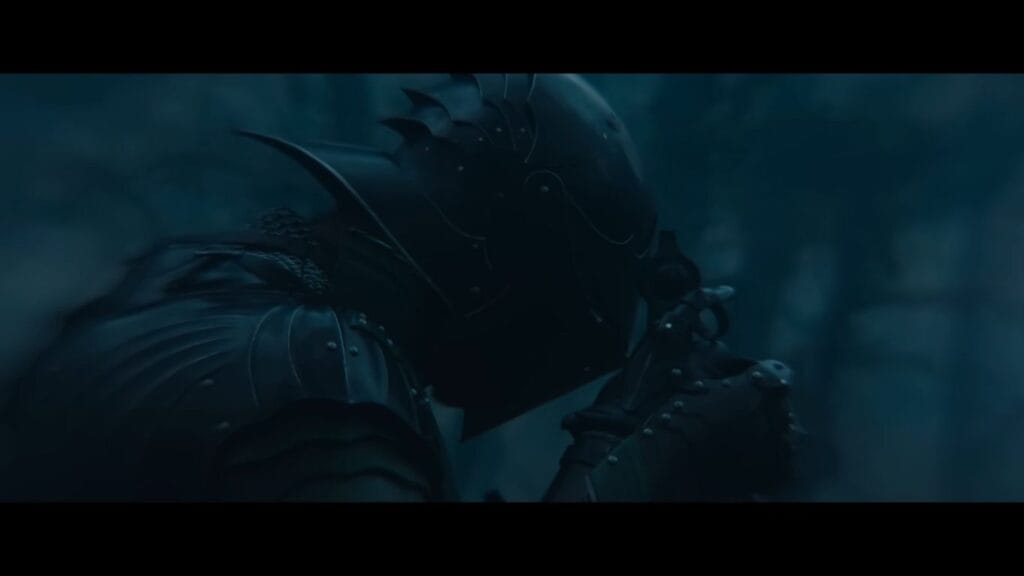
- Seamus: The war corrupted Seamus into a bloodthirsty monster who murdered his own comrades for their loot. When he killed the original knight and stole the helmet for himself, it instantly reacted to his cowardly thievery by burning him alive.
- Morwen: She is the ultimate parasitic grifter. She murdered the wandering knight purely to snatch his coin purse. When she later put the helmet on to selfishly reassert her dominance over Anne, the metal punished her hypocrisy by fusing to her flesh and permanently blinding her.
- Anne: This is where the lore gets a little more interesting. Anne freely admits to Jago that she is filled with a “terrifying greed” for a comfortable life. Yet, when she picks up the fully restored helmet at the end of the film, she is completely unafraid and it does not burn her. Instead, it simply whispers to her.
So why does the curse spare Anne? The film is actually presenting a sharp bit of social commentary here. The helmet violently rejects pathetic thieves and grifters who hide their horrific actions behind a veil of wartime necessity or religious piety – you know, bullshitters… Anne, on the other hand, is not stealing a few measly coins. She is boldly claiming her own agency and fully embracing the darkness on her own terms.
The helmet seemingly respects a willing, fearless host who owns their dark ambition over a cowardly thief hiding behind the church. The implication at the end suggests the cursed helmet might actually give Anne what she wants because she is different from the others who put it on. That’s if she gives into the temptation, of course.
Frequently Asked Questions
Who was the demonic knight in the woods?
The demonic knight was actually Seamus, Anne’s husband. He had been cursed after stealing a helmet from a knight he murdered during the war.
Why was the demonic knight following Anne?
Despite being cursed and physically deformed by his own wartime greed, some fractured part of Seamus’s mind was still drawn back to his wife. He wanted to return to Anne, but because his face was a grotesquely diseased nightmare and he was trapped inside that cursed helmet, he could only lurk in the trees. His violent greed destroyed him, but his lingering devotion kept him tethered to those woods.
Why did Jago lie about Seamus dying?
Jago wanted to win Anne over and convince her to live with him. He claimed Seamus was killed by thieves, but he actually abandoned Seamus after seeing him put on the cursed helmet and scream.
Why did Morwen kill the knight?
Morwen is driven by greed and a desperate need to survive. When the knight collapsed, she killed him simply to steal his coin purse. She had no idea it was her own son until she removed his helmet.
What happened to Friar Penrose?
Morwen murdered him. She slit the pilgrim priest’s throat just to steal the holy relics he was carrying.
Does Anne leave with Jago?
No. In the end, Anne rejects both Jago and Morwen. She declares that she does not belong to either of them and walks her own path.
Final Thoughts
I have to be honest, The Dreadful isn’t a great film. It does deliver on its message that the monsters in the woods are rarely as dangerous as the people sleeping under our own roof, though. It kind of reminds me of The Witch when it comes to the ending. It’s not exactly happy but things seem to work out for Anne in a very dark kind of way. She gets to live deliciously now, I am sure.
Thanks for reading! Why not stick around? Check out some more Ending Explained articles. I also review horror movies and curate horror lists.
A Note on Ending Explanations
While we aim to provide comprehensive explanations based on the events on screen, film analysis is inherently subjective. The theories and conclusions presented in this "Ending Explained" feature are personal interpretations of the material and may differ from the director's original intent or your own understanding. That's the beauty of horror, right? Sometimes the scariest version is the one you build in your own head.
You might also like:
- The Bay (2012) Review – Frighteningly Believable Mocku-Horror
- Wind Chill (2007) review – An atmospheric but tonally frozen ghost story
- Quicksand (2023) Ending Explained – What Happened in the Jungle
- Fun in the Sun – 15 Best Summer Horror Movies Ranked
- Hive (2026) Ending Explained – The Hive Mind and the Missing Babysitters
Disclaimer: Images, posters, and video stills used in this horror ending explained article are the property of their respective copyright holders. They are included here for the purposes of commentary, criticism, and review under fair use. Knockout Horror makes no claim of ownership and encourages readers to support the official release of all films discussed.