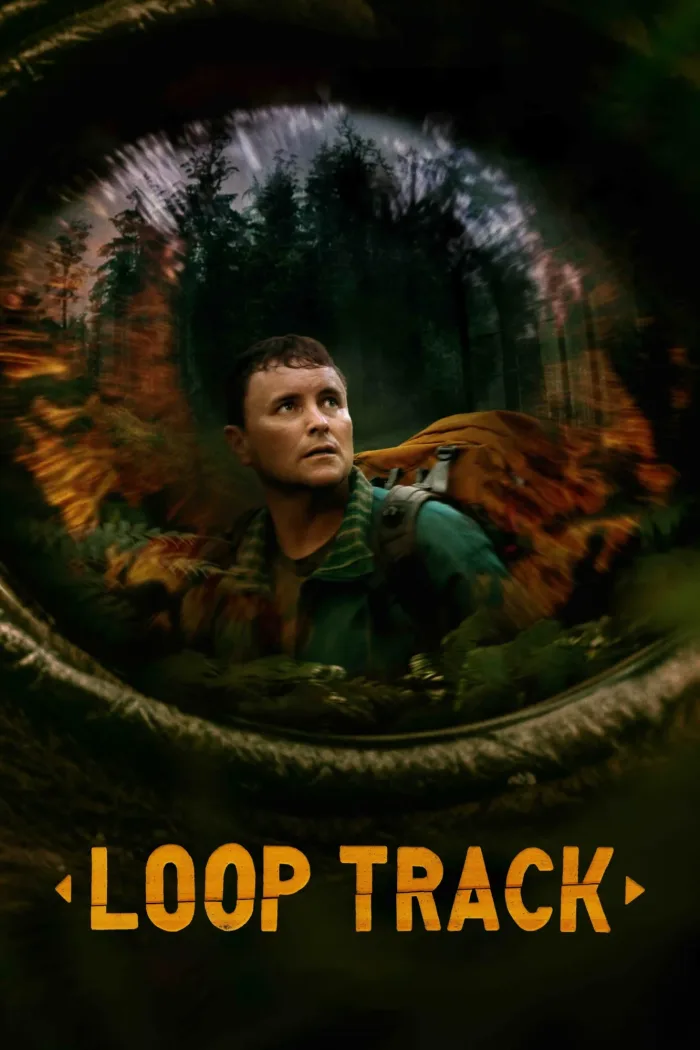
Loop Track (2023) Ending Explained – What Was Chasing Ian
Movie Details: Director: Thomas Sainsbury | Runtime: 1h 32m | Release Date: 2023 | Star Rating: 3.5/5 Stars
Welcome to Knockout Horror. We recently checked out the New Zealand psychological thriller-turned-creature feature Loop Track. It’s a fantastic slow-burn that uses the gorgeous New Zealand bush to hide a very nasty secret.
If you have just finished the movie and are frustrated by the lack of answers regarding Ian’s past, or if you are just trying to figure out what exactly that giant bird thing was, you are in the right place. We are breaking down the creature lore, Ian’s mental state, and that wild finale.
⚠️ Warning: Major spoilers follow below.
The Ending in Brief
The TL;DR: Ian is not a criminal; he is suffering from a severe nervous breakdown due to business and relationship failures. His paranoia, however, turns out to be justified. The “stalker” is not a human, but a colony of giant, prehistoric, man-eating birds. In the end, the birds kill the other hikers. Ian taps into his primal survival instinct, kills one of the birds with his bare hands, and escapes to the main road.
What was the monster? The creature is a biological anomaly, heavily inspired by the Poukai (a legendary man-eating bird from Māori mythology) or a surviving, carnivorous evolution of the extinct Moa or Haast’s Eagle.
What was Ian running from? He wasn’t running from the police. He was running from life. His phone is full of missed calls because his business has collapsed and his relationship has ended. He went into the bush to escape the shame, not the law.
The Resolution: Ian stops freezing and starts fighting. He gouges the bird’s eyes out, chokes it to death, and flees. He survives because his anxiety kept him alert to the danger the others ignored.
Good to Know: The giant “goat traps” seen early in the film were likely actually set by rangers to catch these birds, suggesting a government cover-up to protect the local tourism industry.
Table of Contents
Loop Track (2023) Ending Explained
No drama here, let’s get to the explaining. You already know what the plot is, right? To understand the ending, we need to separate Ian’s internal demons from the external monster. The movie plays a clever trick on the audience, making us believe we are watching a psychological drama about a dangerous man, only to flip the script into a creature feature.
The Red Herring: Ian’s Paranoia
For the first hour, the film frames Ian (Thomas Sainsbury) as the threat. He is jumpy, hides from people, and obsesses over Nicky (Hayden J. Weal). When Ian finds a camera in an abandoned bag and accuses Nicky of murder, we are supposed to think Ian has lost his mind.

However, Ian’s paranoia is actually a symptom of hyper-vigilance caused by extreme anxiety. His body is in a constant state of “fight or flight” due to his personal life collapsing. This heightened cortisol level means he notices the threat (the birds) long before the relaxed, happy hikers do. Being “crazy” is exactly what saves his life.
The Science of Fear: Anxiety & Hyper-Vigilance
Ian’s behavior throughout the film is a textbook example of hyper-vigilance, a state of increased sensory sensitivity often caused by severe anxiety or trauma.
When a person is under extreme stress (like losing a business or a marriage), their brain floods with cortisol, keeping them in a constant state of “fight or flight.” They constantly scan their environment for threats that others might miss.
In a cruel twist of irony, this condition, which made Ian seem “crazy” to the other hikers, is exactly what saved him. Because his brain was wired to look for danger, he spotted the birds long before anyone else did.


The Root of the Paranoia: A Nervous Breakdown
Throughout the film, Ian’s jumpy behavior leads the audience (and the other characters) to suspect he might be a criminal on the run. The truth, however, is honestly far more mundane and relatable. Ian isn’t fleeing a crime scene; he is fleeing his own life.
Subtle clues, like the barrage of missed calls on his phone from work and family, suggest he is in the midst of a severe nervous breakdown. The stress of his failing business and collapsing relationships likely triggered a “flight” response, causing him to retreat into the bush to escape the pressure.

His paranoia wasn’t guilt; it was his brain’s stress response firing on all cylinders, unable to distinguish between the emotional threats he left behind and the physical threats waiting in the woods. Compounding that is the fact that he just wanted to be alone and then the jovial and over-the-top Nicky appeared to ruin his peace.
The Urge to Disappear
Ian’s decision to flee into the wilderness is a surprisingly common psychological response to modern burnout. Known as dissociative fugue in its most extreme form, or simply “escapism,” the urge to detach from society often strikes when a person feels trapped by their responsibilities.
For Ian, the bush represented a place where his failing business and broken relationship couldn’t reach him. It wasn’t about enjoying nature; it was about removing himself from the source of his pain – a “flight” response taken to its literal extreme. I wonder what he will do when he gets back to civilisation?
The Creature Reveal
The twist lands when Ian finds Nicky’s half-eaten body. The threat isn’t a serial killer; it is a giant, flightless bird that’s sort of based on creatures of Maori legend. The creature picks off the group one by one:
- Nicky: Killed while going to the dunny in the bush.
- Monica: Dragged into the undergrowth and bifurcated (torn in half).
- Austin: Impaled through the head by the bird’s beak inside the hut.
The bird eventually breaks into the hut. Ian, realising there is nowhere left to run, snaps. He attacks the bird, gouging its eyes and choking it to death. It is a messy, desperate fight that signals Ian’s transition from a passive victim of life to a survivor. Finally, am I right? He was annoyingly antsy this entire film.
What is the Poukai?
While the film doesn’t name the creature so we are going to have to use some creative deduction here. It closely resembles the Poukai from Māori mythology. The Poukai is a massive, man-eating bird said to inhabit the South Island of New Zealand.
Legends of the Poukai are likely based on the real-life Haast’s Eagle, an extinct raptor that was large enough to prey on the massive, flightless Moa and potentially early human settlers.
The creature in Loop Track looks like a hybrid: it has the size and body of a Moa but the carnivorous aggression of a Haast’s Eagle (or perhaps a terror bird).
The Finale: Survival
After killing the bird, Ian runs toward the car park to get back to his car. On the way, he stumbles across a nest filled with massive eggs and sees other birds in the distance. This confirms that this wasn’t a rogue mutant; it is an entire colony of apex predators living undetected in the bush.

Ian is attacked one last time near his car. The bird bites his leg, but he manages to slip out of his shorts (which contain his car keys) to escape. He limps onto the main road and flags down a car. He survives not because he was the strongest or the bravest, but because his anxiety kept him alert enough to react when it mattered. See, you should be grateful for that horribly sense of unease you are constantly feeling.
The “Goat Trap” Theory
Early in the film, we see a ranger setting large traps for “goats.” Later, Nicky nearly steps in one and remarks on its massive size. This leads to a dark theory: The rangers know about the birds.
New Zealand relies heavily on tourism. It is possible the “goat traps” are actually intended to catch these birds, or perhaps the “culling” of goats is actually a way to provide a food source for the birds to keep them away from hikers. The ranger clearing up “goat remains” might have been cleaning up the birds’ leftovers to hide the evidence.
It’s important to note that New Zealand’s government does have an extremely strict pest eradication program that hunts all manner of creatures from Hedgehogs to cats. They even courted controversy for hosting a child’s cat hunting competition with prizes for the most successful hunter with the most killed cats. Grim!
The Elephant (Bird) in the Room
Let’s be real for a second: the biggest suspension of disbelief required here isn’t that prehistoric birds survived; it’s that nobody noticed them. The “Loop Track” is depicted as a fairly popular hiking destination. We are talking about 10-foot-tall apex predators that screech loudly and leave massive footprints.

How have they gone unnoticed for so long? The film subtly implies a government cover-up. New Zealand’s economy is heavily reliant on tourism, specifically its reputation as a safe, predator-free outdoor paradise. Admitting that the bush is full of man-eating monsters would destroy the industry overnight. It’s farcical enough to make Bigfoot blush!
Frequently Asked Questions
What was Ian running from in Loop Track?
Ian was suffering from a nervous breakdown. He mentions a failed business and an ex-wife. He retreated into the bush to escape the shame of his professional and personal failure, not because he committed a crime.
Is the bird in Loop Track real?
The specific creature is fictional, but it is based on real extinct New Zealand megafauna like the Moa and the Haast’s Eagle. The film posits a “what if” scenario where a carnivorous version of these birds survived in the deep bush.
Did Ian kill the hikers?
No. The film plays with the idea that Ian might be unreliable, but the ending confirms the monsters are physically real. Nicky, Monica, and Austin were all killed by the birds.
Does Ian escape at the end of Loop Track?
Yes. After killing the bird that attacked him near the car park, Ian manages to limp to the main road. He flags down a passing car and is driven to safety, surviving the ordeal while the colony of birds remains hidden in the bush.
Final Thoughts – Stay The Hell Off The Loop Track!
Loop Track is a brilliant subversion of the “psycho in the woods” trope. It frustrates some viewers by refusing to explicitly spell out Ian’s backstory, but that ambiguity is the point. His mundane, sad problems are rendered insignificant in the face of a prehistoric predator. It’s a reminder that sometimes, anxiety isn’t a weakness – it’s a survival mechanism even if it might not feel like that. Thanks for reading!
Looking for more? If you enjoyed this breakdown, check out our review of Loop Track or browse our list of Horror Movie Lists.
A Note on Ending Explanations
While we aim to provide comprehensive explanations based on the events on screen, film analysis is inherently subjective. The theories and conclusions presented in this "Ending Explained" feature are personal interpretations of the material and may differ from the director's original intent or your own understanding. That's the beauty of horror, right? Sometimes the scariest version is the one you build in your own head.
You might also like:
- Killer Whale (2026) Ending Explained – The Orca, The Cello & The Betrayal
- What Happened to J-Horror?
- The Bay (2012) Review – Frighteningly Believable Mocku-Horror
- Late Night With The Devil (2024) Ending Explained – The Perils of a Faustian Bargain
- Goodnight Mommy (2014) Review – A Chilling Masterpiece of Austrian Horror
Disclaimer: Images, posters, and video stills used in this horror ending explained article are the property of their respective copyright holders. They are included here for the purposes of commentary, criticism, and review under fair use. Knockout Horror makes no claim of ownership and encourages readers to support the official release of all films discussed.