Late Night With The Devil (2024) Ending Explained – The Perils of a Faustian Bargain
Movie Details: Directors: Cameron Cairnes, Colin Cairnes | Runtime: 1h 33m | Release Date: 2024 | Star Rating: 4.5/5 Stars
Welcome to Knockout Horror. We recently reviewed the found-footage gem Late Night With The Devil. It is a fantastic satire of 70s television that descends into absolute chaos. But between the mass hypnosis, the black vomit, and that trippy final sequence, it leaves a lot of questions unanswered.
If you are confused about whether the worms were real, what Jack Delroy actually did at “The Grove,” or who he stabbed at the end, you are in the right place. We are breaking down the Faustian bargain and the bloody reality of the live broadcast.
⚠️ Warning: Major spoilers follow below.
The Ending in Brief
The TL;DR: Jack Delroy made a Faustian bargain with the demon Abraxas at “The Grove” to become famous. The price was his wife’s life (she died of lung cancer). The Halloween broadcast is the demon collecting its due. In the chaotic finale, Jack hallucinates that he is stabbing his dying wife to end her suffering, but in reality, he stabs the possessed teenager, Lilly, live on air.
Were the worms real? No. The skeptic Carmichael Haig successfully hypnotised the audience and crew into thinking they saw worms to prove mass hysteria is possible. However, the camera playback later proves that, while the worms were fake, the demonic possession of Lilly was real.
Who did Jack kill? Jack believed he was performing a mercy killing on his wife, Madeleine. However, once the hallucination ends, it is revealed he has actually stabbed Lilly.
The Resolution: The broadcast cuts to a test card as sirens wail in the distance. Jack is left standing in the wreckage of his studio, finally having achieved the number one rating he desperately wanted, but at the cost of his soul.
Good to Know: The “Grove” mentioned in the film is a direct reference to the real-life Bohemian Grove, an exclusive club in California where wealthy and powerful men gather in secret annually.
Table of Contents
Late Night With The Devil Ending Explained
As always, we are straight into the explanation with no plot breakdown so grab a seat in the audience. To understand the ending, we have to look at the three layers of the narrative: The desperate host, the cult connection, and the reality-bending climax.
The Context: The Ratings War
Jack Delroy (David Dastmalchian) is a late night talk show host on the brink. He’s repeatedly beaten in the ratings by the much more successful Johnny Carson (of “Here’s Johnny” fame for all us horror fans) and cancellation looms around every corner.

To understand his desperation, you have to understand the landscape of 1970s television. Johnny Carson wasn’t just popular; he was a monopoly. At his peak, Carson drew in an average of 9 million viewers nightly, with special events reaching upwards of 45 million viewers.
Jack Delroy’s show, Night Owls, was drowning in Carson’s wake and he absolutely needed to do something to turn the tides in his favour. He’d tried exploitative specials and they didn’t work so he needed some help from a very dark source. This desperation is what drove him to The Grove.
Context: When Late Night Talk Shows Were King
While the USA still has a lot of late night talk shows, including those presented by Jimmy Fallon and Seth Meyers, it’s kind of difficult for younger people to understand just what an institution these shows were in the pre-internet era.
Years ago, appointment viewing was a thing. Basically everyone that happened to be awake when these shows aired would tune into one or another. They were essential night time viewing and the stars of these shows would become nationwide celebrities with almost cult like followings. This, naturally, lead to fierce competition between broadcasters and presenters.
The undisputed king of late night, however, was Johnny Carson with his eponymous viewing staple The Tonight Show Starring Johnny Carson. Carson was huge! His impact was even felt in the horror genre. Jack Nicholson’s improvised line “Here’s Johnny!” from the horror megahit The Shining was taken from Ed McMahon’s iconic introduction of Johnny Carson on The Tonight Show. Understanding the popularity of late night talk shows helps you to understand the story of Late Night With The Devil. Delroy wanted to rule the roost but the odds of him doing that were very slim.
The Grove & The Bargain
The film reveals that Jack is a member of “The Grove,” an elite, secretive men’s club in the California redwoods. This is a direct reference to the real-life Bohemian Grove.
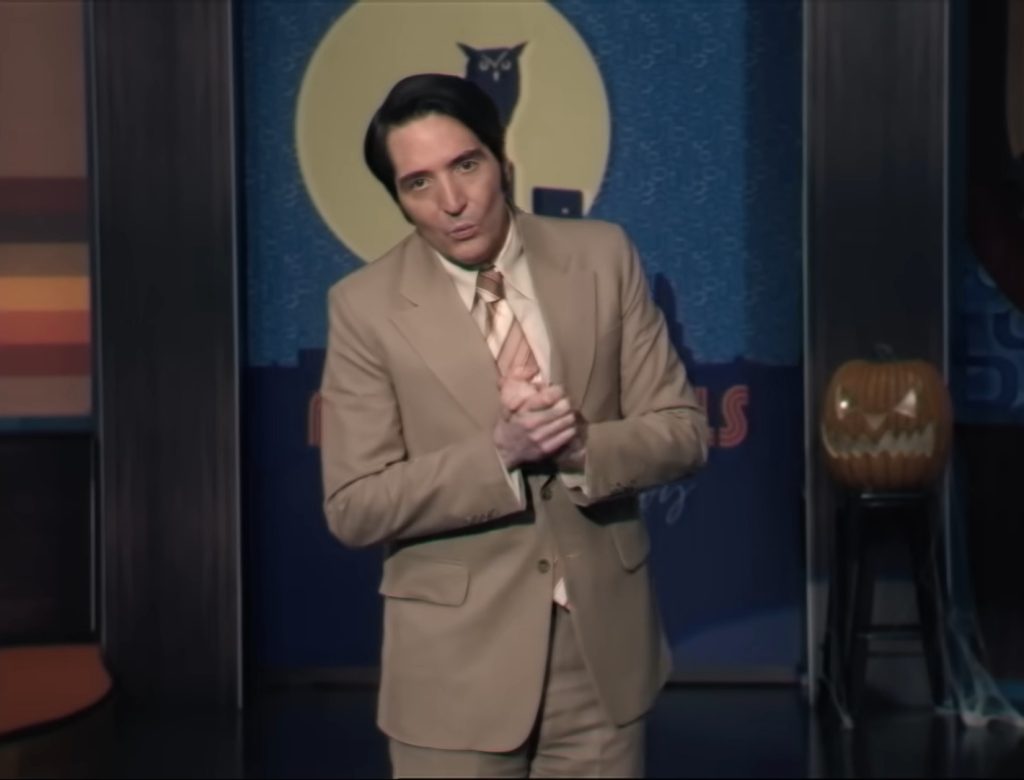
Jack made a Faustian bargain (a deal with the devil) during a ritual “under the tall trees.” He traded his wife’s life for success. This is why his wife, a healthy non-smoker, died of lung cancer not long after he made the bargain. The demon, Mr. Wriggles (a manifestation of Abraxas), confirms this during the broadcast when he taunts Jack about their meeting.
This means he essentially sold his soul for his show to do well. It does, but not in the way he thought it would. Most Faustian bargains don’t exactly go the way the person planned. The episode of Night Owls where everything goes badly wrong was supposed to be his big Halloween special. This episode would be hugely important for one specific reason.
Real Life Inspiration: Bohemian Grove
“The Grove” depicted in the film is a thinly veiled reference to the real-life Bohemian Grove, a restricted campground in Monte Rio, California.
Every summer, it hosts an exclusive two-week encampment for some of the most powerful men in the world, including U.S. Presidents and media moguls. The film plays on the long-standing conspiracy theories surrounding their “Cremation of Care” ceremony, which involves a ritual performed in front of a 40-foot concrete owl statue.
This connection is hinted at throughout the movie, most notably by the owl mascot of Jack’s show, Night Owls.
The Stakes: Why This Broadcast Mattered
Jack Delroy’s special takes place on Monday the 31st of October, 1977. This date wasn’t chosen at random and it is absolutely crucial to explaining why he was willing to take such risks; it was right at the start of sweeps week.
For those unfamiliar with the term, “sweeps” is a period where television companies attempt to draw in extra viewers to set advertising rates for the following year. It is basically the Super Bowl of TV scheduling. If you don’t succeed in sweeps week and viewership is low, you can’t charge advertisers as much money for your commercial slots. In turn, everyone’s pay will be lower and the show will make significantly less money.
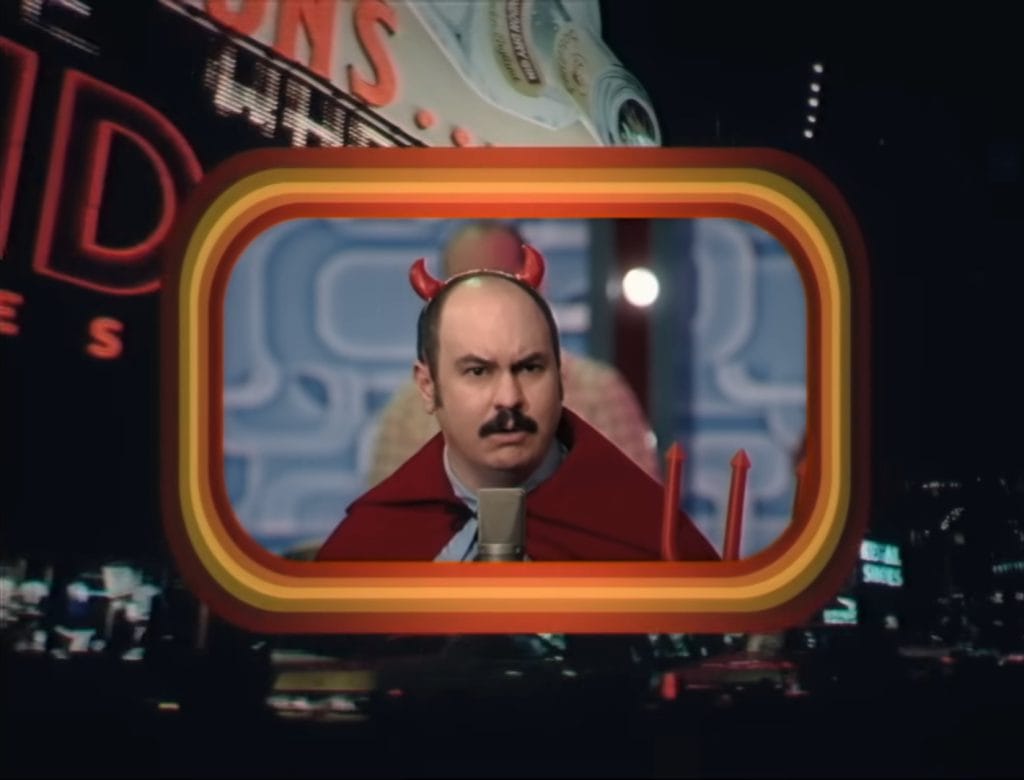
This financial pressure cooker explains why Jack was willing to keep the cameras rolling. Even after a guest vomited black liquid and another died. He wasn’t just chasing fame; he was fighting for the financial survival of his entire production.
The Hypnosis vs. Reality Twist
The middle act of the film introduces a brilliant bit of gaslighting. The skeptic, Carmichael Haig, seemingly debunks the supernatural events by proving he can hypnotise the audience. He makes the sidekick, Gus, believe he has worms crawling out of his stomach.
Haig claims everything that we have seen so far, the psychic’s death, the possessed girl, is mass hysteria. However, the movie pulls a bit of a double-reverse twist. When they play back the raw footage of the hypnosis, it proves Haig was right about the worms (Gus was just hallucinating), but wrong about the girl.
The camera captured Lilly’s demon as real. The technology (the camera) serves as the objective eye that cannot be hypnotised and proves she really was possessed.
Real Life Inspiration: James Randi
The character of Carmichael Haig is a direct homage to James Randi (The Amazing Randi). Randi was a Canadian-American magician turned skeptic who dedicated his life to challenging and debunking psychics, faith healers, and paranormal claims.
Just like Haig in the movie, Randi famously offered a cash prize (The One Million Dollar Paranormal Challenge) to anyone who could demonstrate supernatural ability under scientific test conditions. Over a thousand people applied, but nobody ever won.
Randi was also a frequent guest on The Tonight Show Starring Johnny Carson, where he would often expose charlatans like Uri Geller, making him the perfect template for the Haig character in a movie set in the world of 70s late-night TV. The movie kind of asks the question: “What if Randi met something he couldn’t debunk?
The Final Hallucination
In the ultra chaotic finale, the demon takes full control of Lilly and unleashes literal hell. Lilly suddenly levitates and her head splits open. She kills Gus who was trying to subdue the demon with his crucifix, ala The Exorcist – “The power of Christ compels you“… Poor bastard. She then kills June by slitting her throat before setting Carmichael on fire as he attempts to control the demon.

Jack is transported into a dreamscape where he sees horrifying moments from his past. He also relives the trauma of his wife’s death bed where she begs him to put her out of her misery.
Jack, believing he is performing an act of mercy, takes the athame (ritual dagger) and stabs her. The film snaps back to reality to reveal the horrific truth: He has stabbed Lilly. Jack stands over the dead bodies of his guests, covered in blood, while sirens wail in the distance. He has finally achieved the “number one rating” he sacrificed everything for.
What is a Faustian Bargain?
The term “Faustian bargain” comes from the German legend of Faust, a scholar who sells his soul to the devil (Mephistopheles) in exchange for unlimited knowledge and worldly pleasures.
In modern storytelling, it refers to any deal where a person trades their moral integrity or spiritual well-being for power, fame, or success. In Late Night With The Devil, Jack Delroy follows this archetype perfectly: he trades the life of his wife (his moral anchor) for the success of his TV show (worldly fame), only to realise too late that the cost was far higher than the reward.
Frequently Asked Questions
Who is Abraxas?
Abraxas is the entity worshipped by the cult in the film. Historically, Abraxas is a Gnostic figure, sometimes considered a demon, sometimes a god, representing the union of good and evil. In the movie, he is actually the source of the dark power.
Did Jack kill his wife?
Jack did not physically kill his wife (until the hallucination at the end), but he is responsible for her death thanks to the Faustian bargain he made. By making the pact at The Grove for fame, her terminal cancer was the price required by the demon.
Why did Christou vomit black liquid?
Christou was a fake psychic, but he accidentally made contact with the real demon possessing Lilly. The entity was too powerful for him, causing a massive physical hemorrhage that killed him.
Final Thoughts – A Faustian Nightmare
Late Night With The Devil is a masterful blend of media satire and occult horror that feels legitimately unique. Especially against a backdrop of formulaic found footage horror. It perfectly captures the aesthetic of 70s television while delivering a legitimately shocking finale.
It serves as a bit of a grim reminder that, in the world of entertainment, the price of fame is often higher than just your privacy – sometimes it costs your soul… I mean, surely Keith Richards made some kind of deal to still be kicking now? Thanks for reading!
Looking for more? If you want to know how we felt about the movie, check out our review of Late Night With The Devil.
A Note on Ending Explanations
While we aim to provide comprehensive explanations based on the events on screen, film analysis is inherently subjective. The theories and conclusions presented in this "Ending Explained" feature are personal interpretations of the material and may differ from the director's original intent or your own understanding. That's the beauty of horror, right? Sometimes the scariest version is the one you build in your own head.
You might also like:
- The Dreadful (2026) Ending Explained – The Helmet and The Greed
- The Final Rose (2022) Review – A Reality TV Slasher With No Bite
- Lovely, Dark and Deep (2023) Review – A Tense Missing 411 Inspired Wilderness Horror
- Invited (2024) Review – A Tense But Ultimately Absurd Digital Nightmare
- MaXXXine (2024) Ending Explained – Who Was The Killer?
Support the Site Knockout Horror is a participant in the Amazon Services LLC Associates Program. Basically, if you click a link to rent or buy a movie, we may earn a tiny commission at no extra cost to you. As an Amazon Associate, I earn from qualifying purchases. This helps keep the lights on and the nightmares coming. Don't worry, we will never recommend a movie purely to generate clicks. If it's bad, we will tell you.
Disclaimer: Images, posters, and video stills used in this horror ending explained article are the property of their respective copyright holders. They are included here for the purposes of commentary, criticism, and review under fair use. Knockout Horror makes no claim of ownership and encourages readers to support the official release of all films discussed.