
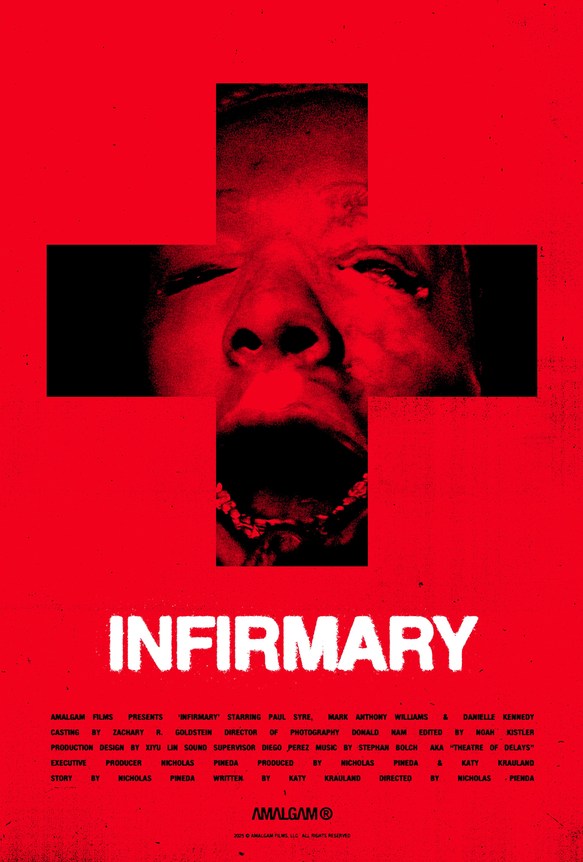
Infirmary (2026) Review – Terrifying Location, Lukewarm Horror
Infirmary (2026): Quick Verdict
The TL;DR: Infirmary (2026) is Nicholas Pineda’s ultra-low-budget indie found-footage chiller streaming on Shudder, capturing the uncanny, claustrophobic DNA of Anthony DiBlasi’s Last Shift through recovered body-cam and CCTV footage. Centred on rookie security guard Edward (Paul Syre Lee) working his first night shift inside a shadowy, decaying psychiatric hospital, the film opens with an expertly lit, atmospheric slow burn that wrings genuine dread out of every corridor and pitch-black corner. However, once the supernatural phenomena kick in, an undercooked script, repetitious wandering, awkward character beats, and a lack of narrative escalation cause the tension to fizzle out into diminishing returns. A very strong first effort but a tough recommend for hardened horror fans.
Details: Director: Nicholas Pineda | Cast: Paul Syre Lee, Mark Anthony Williams, Danielle Kennedy | Runtime: Approx. 1 hour 27 minutes | Release Date: October 2nd 2026 | Where to Watch: Shudder
Best For: Found-footage purists who appreciate authentic “recovered media” aesthetics, indie cinema supporters, and fans of spooky abandoned medical settings.
Worth Noting: Looking for more October found footage films? Check out our 2026 31 Days of Halloween 2026 Guide.
Did You Know: Day 23 of our 31 Days of Halloween 2026 feature! Explore every daily spooky season review directly on our central 31 Days of Halloween 2026 category.
Is It Scary: The first thirty minutes are brilliantly tense and atmospheric thanks to the shadowy, authentic location and stellar direction. Later on, however, the scares become sparse and repetitive, diluting the fear factor significantly.
Rating: 2.5/5 Stars
(A visually promising indie with exceptional atmosphere and location work that simply lacks the script and narrative payoff to sustain a full-length feature.)
Welcome to Knockout Horror. It’s day 23 of our annual 31 Days of Halloween review marathon and something dawned on me today. I haven’t actually checked out any tiny indie horror films this October, it’s all been well known, big releases. Aiming to correct that, I headed over to Shudder to see what was new, and fired up the found-footage movie we are looking at today – Infirmary (2026).
Table of Contents
Last Shift but Make It Found Footage
Infirmary follows security guard Edward (Paul Syre Lee) on his first night working in a psychiatric hospital. What starts off as a fairly routine night of checking the halls and watching cameras quickly turns sinister as a series of bizarre events begin to take place.
“I was immediately reminded of the fantastic Last Shift when watching Infirmary.”
A lot of found footage films seem to forget the whole “found” part, as of late. There’s very little attempt to reflect the fact that the events have already taken place and what we are watching is the recovered evidence of what happened. That’s not the case here.
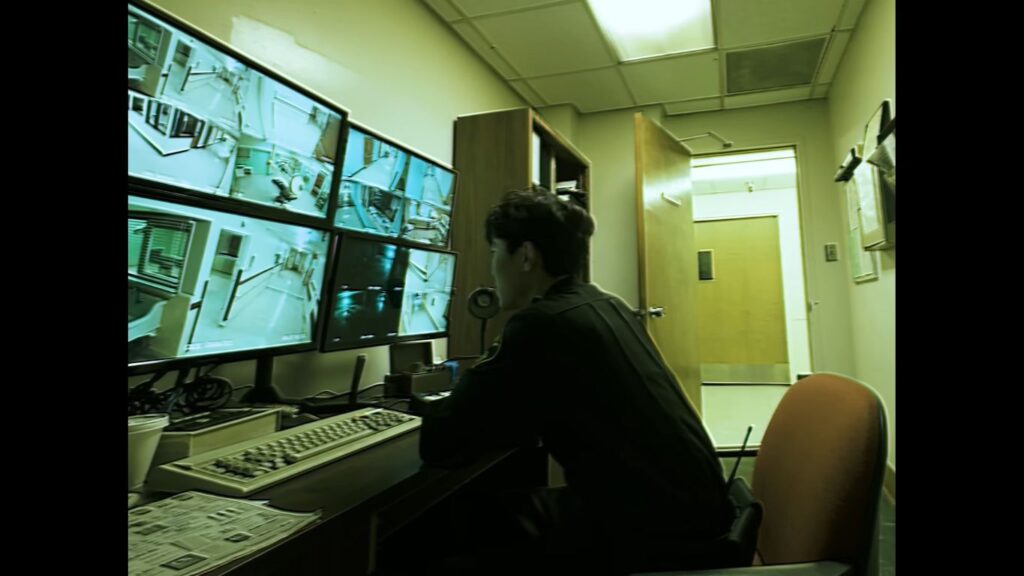
This is the recovered footage depicting the disappearance of a security guard via body-cam videos and CCTV recordings. For the most part, it’s extremely self-contained, too. The entirety of the events take place over one night and in one location – an extremely creepy old hospital.
There’s a very limited cast and we mostly follow Edward himself as he encounters increasingly strange phenomena while roaming the halls and rooms of this legitimately scary location.
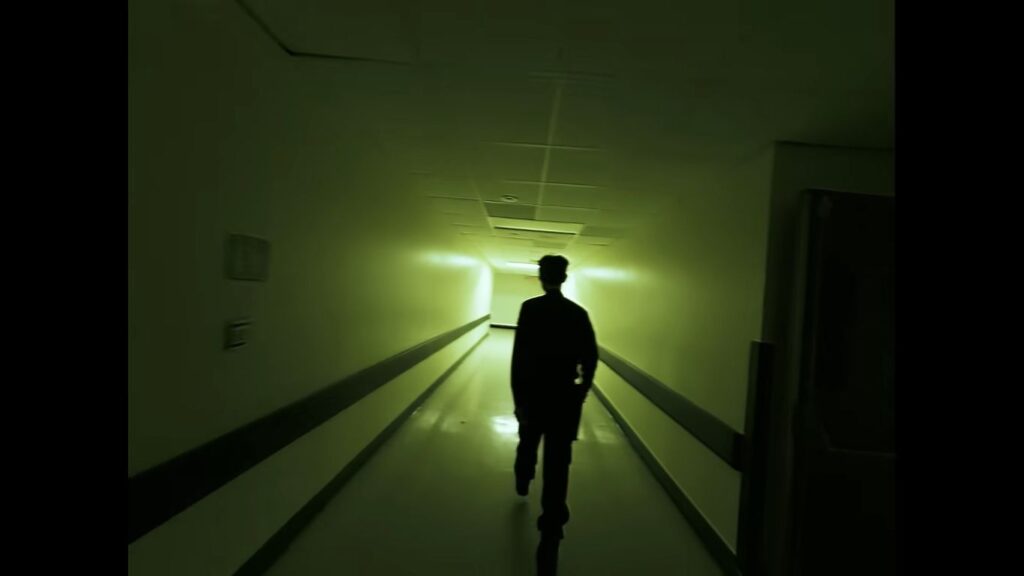
I was immediately reminded of the fantastic Last Shift when watching Infirmary. Everything from the careful lighting to the dingy rooms and claustrophobic halls conjures up memories of that film. Even the slow burn first half feels extremely reminiscent.


That’s not a criticism, either. It’s more of a grounding point to help you establish what you are getting into, here. This is one of those movies that is less a meticulously constructed narrative piece and more a collection of scary sequences designed to keep you on edge.
It works pretty well, initially
The first half of Infirmary is genuinely effective when it comes to building tension. Director Nicholas Pineda has a keen eye for a spooky shot. This is an absolutely fantastic location and every effort has been made to maximise its creepiness.
The dark, dingy corridors have been fantastically well lit to create shadows absolutely everywhere and the shot is, more often than not, positioned perfectly to get the most out of each and every room. We are going to be visiting a lot of different parts of the hospital, too. Each offering something new.
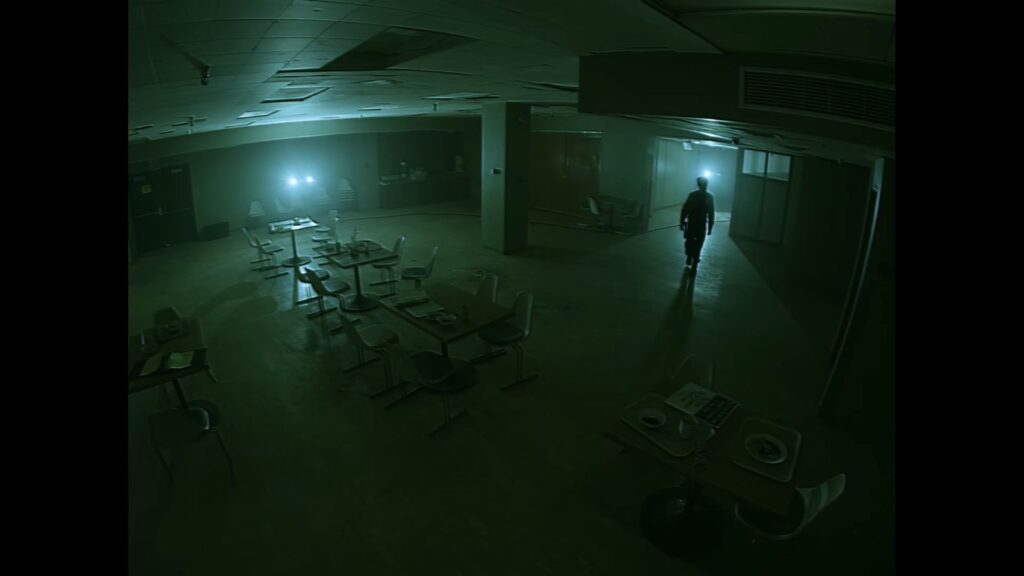
A pitch black corner here, a slightly obscured figure there; there’s plenty of reason to frantically scan every scene as if you yourself are about to walk through the corridors with only a flashlight to guide the way. I would not want to find myself in this hospital during the dead of night. That’s about the best compliment you can give to a horror location.
The first 30 minutes, or so, are more of a suggestion of strangeness than a full blown display of supernatural scares. Pineda spends plenty of time setting the scene in order to ensure that the viewer is feeling off base.
Occasionally, a shot will linger to reveal something quite sinister, while other times it’s purely to take in the ambience.
“This is an absolutely fantastic location and every effort has been made to maximise its creepiness.”
I wouldn’t say it is utterly compelling stuff as it really isn’t. It’s an inexperienced security guard starting a new job and trying to find his way around his new workplace. It does establish the location extremely well, though, and it builds up a certain level of tension that has you eager to get to the scares.
The scares arrive to mixed results
When the horror arrives in earnest, it does so to fairly mixed results. There are a couple of moments that I feel worked quite well, but for the most part the scares don’t land.
“The continued exploration of the same dark halls and rooms suddenly arrives to diminishing returns”
I couldn’t shake the prevailing sense that Pineda perhaps lacked a decently cohesive story and structure, here. This can leave a lot of what happens feeling a bit more confusing than legitimately frightening.
Edward begins to act a little strange. Rather than unsettling, this comes across as more awkward and out of place than anything. Much of what happens in the middle feels like narrative padding to bulk out the story.
The continued exploration of the same dark halls and rooms suddenly arrives to diminishing returns, as well.
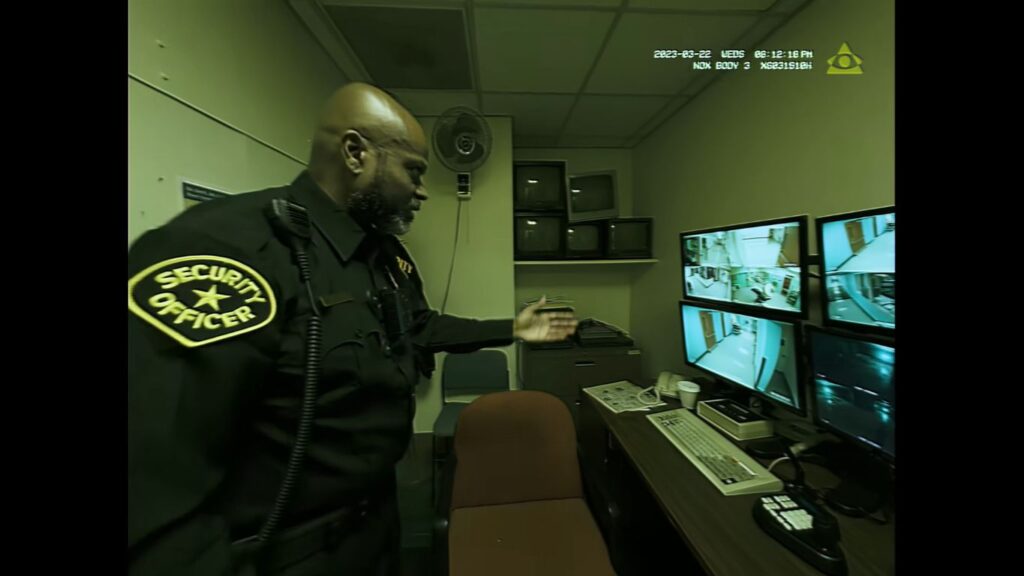
We haven’t actually seen enough reason to feel scared while Edward is roaming around so our eyes become complacent. There wasn’t anything here last time, why will there be something this time? We’ve already seen 30 different mannequins, why would this one suddenly be scary?
The flow of the film becomes extremely repetitive and you’ll be begging for some escalation. I really struggled not to mentally drift off into my thoughts when watching as so much of what happened felt inconsequential.
If you don’t feel engrossed by the prevailing mystery regarding the hospital itself, there is very little to grab onto. The carefully curated atmosphere from the first half begins to evaporate as the promise of effective scares never comes to fruition.
The bones of a fantastic horror
Nicholas Pineda is clearly a very talented filmmaker. Infirmary has all the bones of a fantastic horror movie, it’s just not fleshed out or fully developed.
The shot setups, location, and lighting are so expertly crafted that I found myself feeling quite disappointed when the payoff never really comes. So much is done right that it is actually rather frustrating when the scares don’t come.
I feel like I say this a lot, but this would have made a fantastic short. There’s only around 15-20 minutes of legitimately effective horror so condensing it down would have allowed the best parts to shine.
As it stands, there’s a fantastically atmospheric location, a decent setup, but virtually no pay-off. Infirmary feels diluted to the point of losing effectiveness and that’s a real shame because there is bags of promise to be found throughout this film.
I would say that horror fans who aren’t overexposed to found footage might find that this is a decent entry point into the world of DIY filmmaking. It’s so well crafted that it makes some of the style sins far more forgivable. The atmosphere established early might be enough to carry them through the underwhelming back half, too.
I’m going to be looking out for Pineda in the future because I bet his next film will be a significant improvement. This is a great effort but it just lacks substance which makes it a bit of a tough recommend.
The Good
- Incredible Location & Lighting: Director Nicholas Pineda makes fantastic use of shadows, negative space, and dingy hospital architecture.
- Pure Found-Footage Aesthetic: Truly commits to the “recovered media” conceit via realistic CCTV angles and gritty body-cam perspective.
- Creeping First Act: Builds a palpable sense of isolation and claustrophobia during the early shift rounds.
The Bad
- Repetitive Hallway Wandering: Drags Edward through the same corridors so many times that the environment ceases to be scary.
- Underwhelming Payoff: Promises substantial supernatural escalation that never materialises, resulting in an anti-climactic middle and end.
- Thin Narrative Flesh: Lacks enough lore, character development, or plot cohesion to comfortably fill out a feature runtime.
The Ugly: The mannequin fatigue. Stumbling upon creepy stationary props and mannequins in the dark works great once or twice, but cycling through dozens of them drains the trick of any eerie impact.
Should You Watch Infirmary?
Infirmary demonstrates that director Nicholas Pineda has a sharp directorial eye, an intuitive understanding of lighting, and the chops to build authentic dread out of a single decrepit location. Unfortunately, it suffers from the classic low-budget curse of feeling like an exceptional 15-minute short stretched beyond its breaking point. While the early Last Shift vibes and immersive hospital exploration will hold appeal for die-hard found-footage completists, the repetitive pacing and hollow narrative make it an uneven, lukewarm recommendation overall.
You might also like:
- Resident Evil (2026) Ending Explained – What Happens to Bryan in Raccoon City?
- It Chapter One (2017) Review – A Stylish and Nostalgic Descent into Derry
- Apartment 7A (2024) review – A Pointless And Derivative Prequel To A Horror Classic
- Whalefall (2026) Review – It’s Not What I Expected and That’s Okay
- Bed Rest (2022) Review – A Predictable and Paint-By-Numbers Haunted House Horror
Our Scoring Philosophy: A Fair Fight
Horror is a genre that thrives thanks to indie film makers and low budget creators. At Knockout Horror, we firmly believe that every movie that we review deserves a fair fight. That's why we grade on a curve. Our star ratings are all about context, judging a film on what it achieves with the resources it has.
A 4-star rating for a scrappy indie horror made for $10,000 is a testament to its ingenuity and raw power. A 4-star rating for a $100 million blockbuster means it delivered on its epic promises. We don't compare them side-by-side; we celebrate success in every weight class, from the back-alley brawler to the heavyweight champion. Please keep this in mind when considering star ratings.


