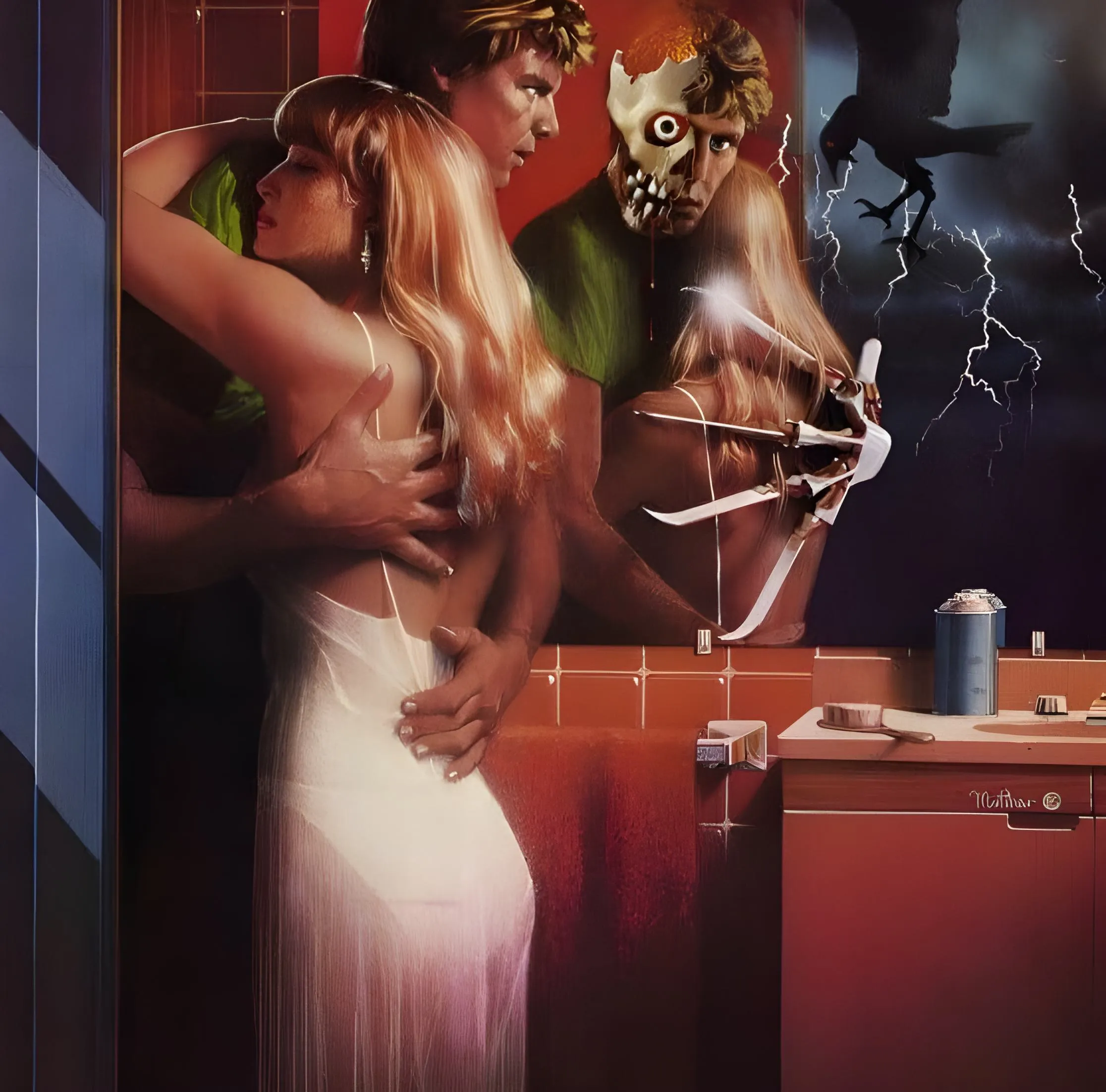
A Nightmare on Elm Street Part 2: Freddy’s Revenge (1985) review – The franchise’s confusing black sheep
A Nightmare on Elm Street Part 2: Quick Verdict
The Verdict: It’s the black sheep of the franchise for a reason. Freddy’s Revenge breaks the rules established in the first film by dragging Freddy into the real world, stripping him of his dream-based menace. While it features some great practical effects and has gained a cult following for its queer subtext, it’s a muddled, unscary mess that feels painfully rushed compared to the original.
Details: Director: Jack Sholder | Cast: Mark Patton, Kim Myers, Robert Englund | Runtime: 1h 27m | Release Date: November 1, 1985
Best for: Franchise completionists, fans of 80s cheese, and those interested in the film’s status as a “queer horror” cult classic.
Worth noting: This movie ignores almost all the lore from the first film. Freddy possesses people in the real world here, which makes him far less scary than the dream demon we know and love.
Where to Watch: Rent or Buy on Amazon / Max.
⭐ Knockout Rating: 2.5 / 5
(Muddled plot, great subtext)
Welcome to Knockout Horror. Today we are checking out a classic horror sequel – A Nightmare on Elm Street Part 2: Freddy’s Revenge (1985).
Table of Contents
The middle child
When it comes to iconic horror series, few jump to mind as quickly as A Nightmare on Elm Street. Even today, the first movie is frequently referenced as a ground breaking example of how slashers can feel both subversive and fresh. The third movie, A Nightmare on Elm Street 3: Dream Warriors, also stands as one of the best of its era.
“The fascinating dream sequences are almost completely gone. This is a movie that is rooted firmly in the everyday and that takes away a ton of its ability to scare.”
Sandwiched in between those two genre redefining classics was a movie that a lot of people seem to forget about. Probably for good reason. A Nightmare on Elm Street Part 2: Freddy’s Revenge (1985).
The story follows high school student Jesse Walsh (Mark Patton). Jesse, along with his family, has recently moved into the former Elm Street home of Nancy Thompson. It isn’t long before Jesse begins experiencing the same nightmares that Nancy was haunted by five years prior.
A hideously burned man wearing a striped shirt and a glove adorned with blades wants to possess him to continue his rampage in the real world. Freddy Krueger is back and determined to find a way to enter the real world.
The Nightmare That Changed the Game
A couple of years back, we covered one of the most important slasher titles ever in the form of 1984’s A Nightmare on Elm Street. This is a movie that breathed new life into a genre that was already starting to feel a little stale.
Freddy Krueger bucked the trend of masked, soulless killers thanks to his well developed backstory and sardonic personality. He wasn’t just a shape, he was an entire vibe created by the very parents of the teens he would soon be butchering.


This wasn’t just your typical horror movie, either. This was a film that frequently took us inside of the character’s nightmares. It was disturbing in a way that few other slashers could possibly hope to be. You couldn’t hide from Freddy, he was inside your head whenever you were most vulnerable.
Director Wes Craven managed a deft balance between compelling storytelling and creating a scenario that was actually scary. This was a movie that subverted expectation at every turn. Even its lead character, Nancy, wasn’t your ordinary final girl. She was smart, far from virtuous, and proactive, earning her a place on our list of 25 of Horror’s best final girls.
The Breakneck Race for Freddy’s Revenge
This was a new breed of horror and it felt like the breath of fresh air the genre needed. New Line Cinema realised very quickly that they had a massive hit on their hands and they needed to capitalise. A sequel was commissioned almost immediately and this began a breakneck production schedule.
Writer David Chaskin put together a 15 page story treatment in a staggering three days. He was then left with only two months to flesh it out into a fully blown script. Director Jack Sholder was given a frankly absurd six weeks to work on pre-production.
That’s a laughable amount of time for a movie that would demand an abundance of practical effects and complex shot setups. Sholder would later say that this schedule was anxiety inducing and felt almost impossible to pull off.
Now let’s get a little more perspective here to really put this whole conundrum into frame. A Nightmare on Elm Street released on the 9th of November 1984. New Line Cinema gave Sholder a proposed release date of November 1985 for A Nightmare on Elm Street 2.
Principal photography didn’t even start until June of that year. Insane! Lead actor Mark Patton said that shooting began only a week after he was hired for the part.
Filming wrapped in late July, early August after only 32 days of shooting. That’s when the post-production crunch kicked in. This left the team with only three months to score the film, edit it, and add all the complex special effects.
It’s, frankly, one of the most intense schedules I have ever seen on a major horror movie. Off the top of my head, I can only really think of Scary Movie 2, Halloween 5, and the notoriously chaotic Paranormal Activity 2 as more intense examples.
So… What Went Wrong?
When it comes to A Nightmare on Elm Street Part 2: Freddy’s Revenge, that incredibly tight schedule shows throughout the final product. This is a movie that feels incredibly rushed and misses almost everything that made the original movie so compelling. The most notable thing might be how much of Freddy’s aura is completely lost. This is partly thanks to an abundance of appearances in the real world.
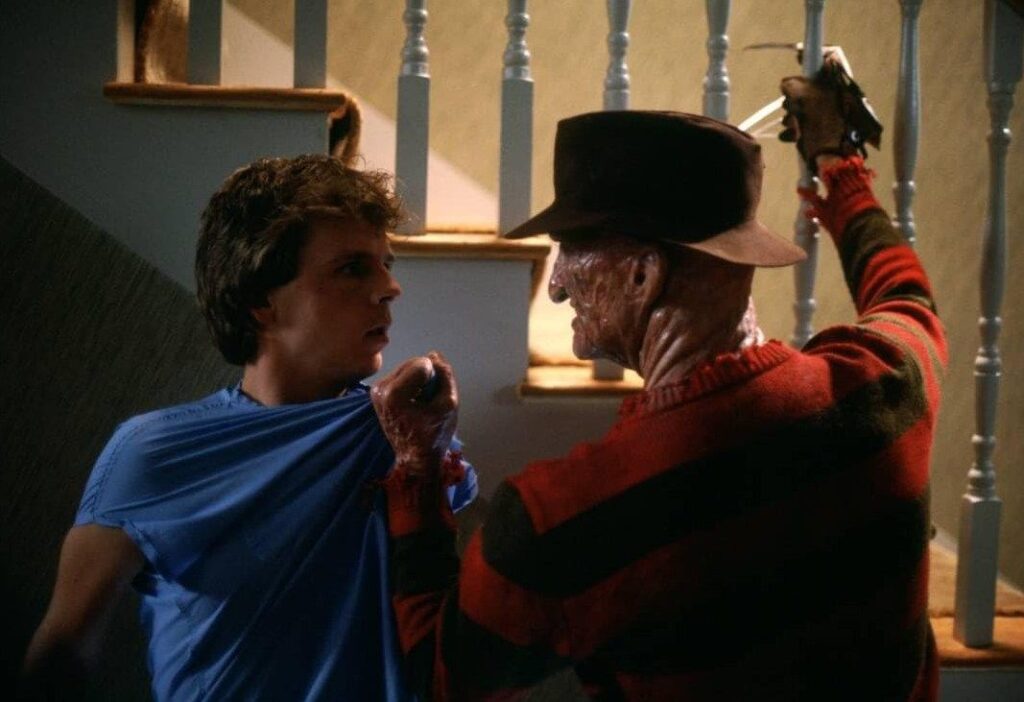
Freddy isn’t exactly an imposing figure. Robert Englund stands at only 5 foot 8 inches tall and is quite slight. Freddy’s power was never in his ability to look intimidating; it was in his ability to invade your dreams and turn them into nightmares. That was the whole hook with A Nightmare on Elm Street: if you die in your sleep, you die in real life.
Inside the dream world, Freddy could be whatever he wanted and do whatever he wanted. This made him legitimately terrifying. His weakness actually came when he was dragged into the real world where he had no such power. That’s exactly how Nancy defeated him in the first film.
That Modus Operandi is almost completely gone in this sequel. He wants to actually posses our lead character and enter the real world to go on a rampage. This means the fascinating dream sequences are almost completely gone. This is a movie that is rooted firmly in the everyday and that takes away a ton of its ability to scare. It also transforms the movie into more of a standard slasher, only with a far less imposing antagonist.
A Killer Parakeet and a Pool Party Problem
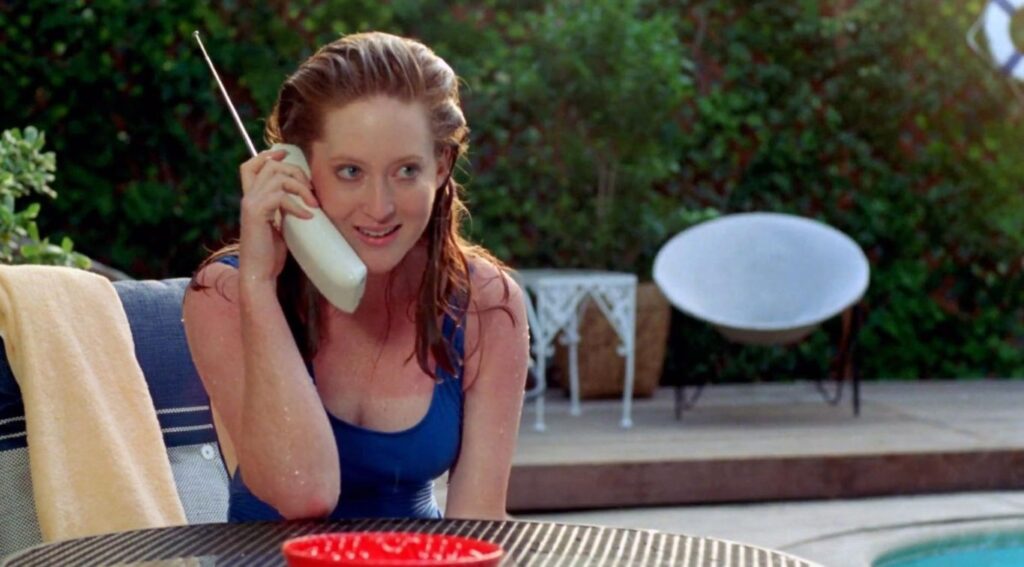
One scene features Freddy rampaging around a pool full of teens. He’s by far the smallest and slightest man there which lends the whole sequence a feeling of the absurd. You are almost shocked when he isn’t tackled by a group of jocks and beaten mercilessly.
In fact, Wes Craven refused to return for this sequel after seeing the script, partly due to this scene. He felt as though a number of moments undermined what it was that made Freddy so terrifying. Well, along with a ridiculous scene where a parakeet is possessed and goes on the attack. Either way, bringing Freddy into the real world was a big mistake.
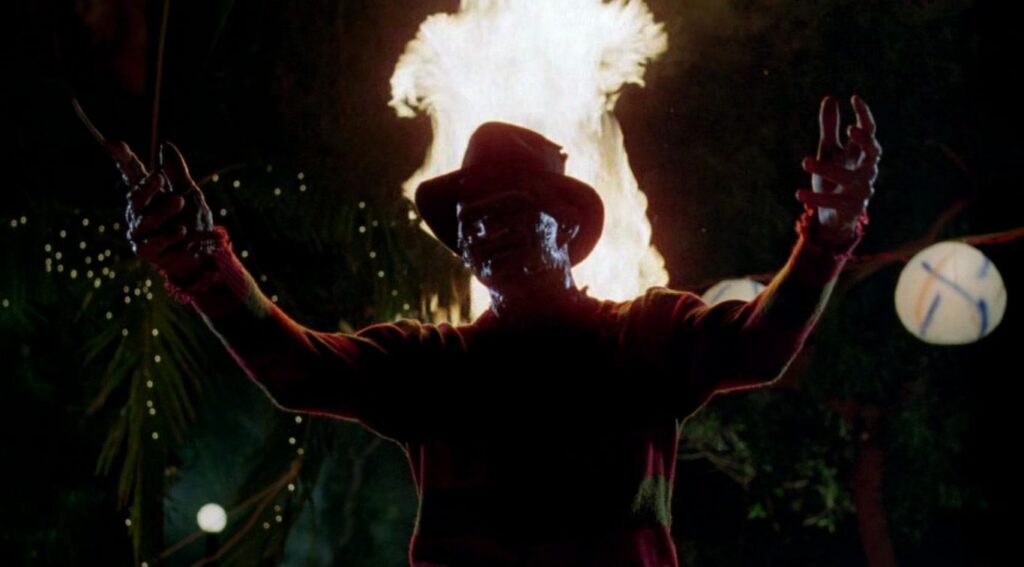
As a movie, it just feels very muddled, too. There’s far too much time spent on the boring mundane life of Jesse and nowhere near enough time spent actually getting deep into the horror. There are barely any kills, as well, which would have been completely fine if the plot was interesting but it just isn’t.
Hell, there isn’t even the usual levels of titillation that make even bad slashers appeal to fans of b-movie silliness. I feel as though Mark Patton is pretty damn weak as our protagonist, as well. He is pretty flat throughout and when he does try to emote it comes across as very wooden. His terrible performance almost elevates the movie to “so bad it’s good” 80s cheese territory, but it never quite gets there.
Okay, So It’s Not All Bad…
There are plus points, despite my complaints. Part of me feels like a bad Elm Street movie is still better than a lot of 80s slashers. Freddy is still fascinating and Robert Englund remains one of the greatest horror actors of the slasher era. He is still exceptional here. This is very much Freddy in his pre-goofy stage, as well. It’s actually one of the last chances to see him acting like a full blown psychopath.
“Writer David Chaskin put together a 15 page story treatment in a staggering three days. He was then left with only two months to flesh it out into a fully blown script.”
Some of the practical effects are fantastic. It’s a shame the movie doesn’t lean into the body horror stuff more because some of those scenes show a lot of promise. There’s some chest-buster scenes that are seriously well done.
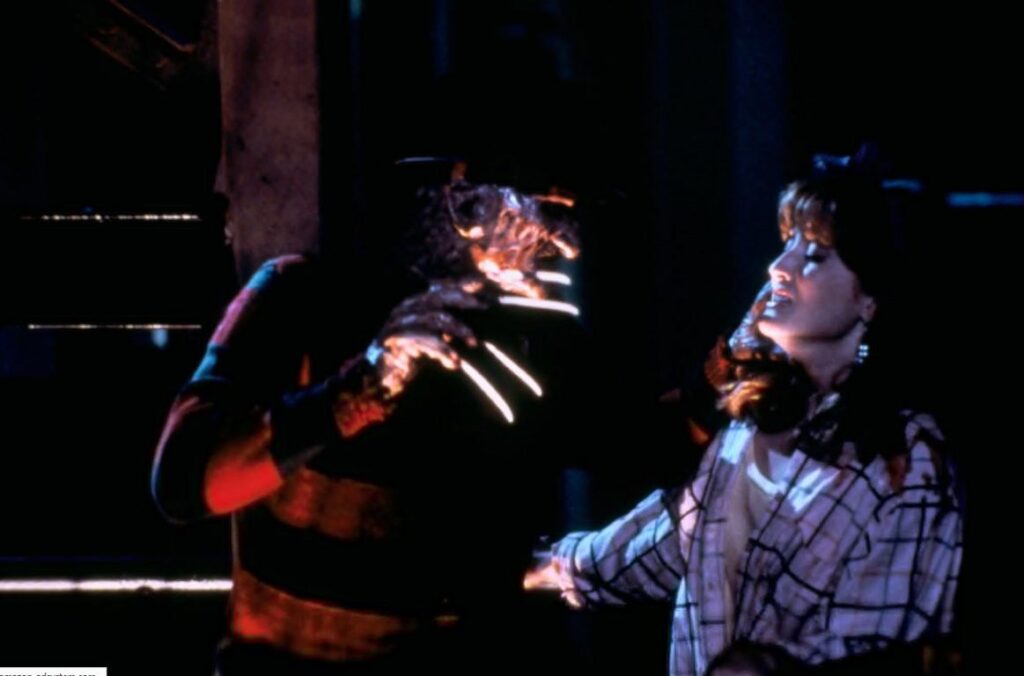
A Nightmare on Elm Street Part 2: Freddy’s Revenge has become something of a queer cult classic in recent years. There’s a lot of homoerotic subtext that is far less subtle than the crew would lead you to believe with their many denials in the years after. If they had been honest about this, it would be even more praise worthy in an era that was marred by rampant homophobia amid the AIDS crisis.
It’s difficult not to, on one hand, applaud the production team for trying something new and, on the other hand, sympathise with their predicament. This was a tall task and with few of the people behind the first film’s vision returning, it would have been a huge surprise if it was anything other than a disappointment. As it stands, this is the weakest entry into the entire series.
The Good, The Bad & The Ugly
The Good
- Robert Englund: Even in a bad movie, he shines. This is one of the last times we see a truly dark, non-comical Freddy.
- The Subtext: The unintentional (or intentional?) homoerotic themes were way ahead of their time, earning the film a deserved status as a queer cult classic.
- Practical Effects: While underused, the body horror moments, like the chest-burster scene, are impressive and gruesome.
The Bad
- Real World Freddy: Dragging Freddy out of the dream world strips him of his power and makes him look small, weak, and decidedly unscary.
- The Lead: Mark Patton’s performance is flat and wooden, making Jesse a difficult protagonist to root for.
- The Rushed Feel: The insane production schedule is evident in the messy plot, lack of scares, and confused lore.
The Ugly: The Pool Party Scene. Seeing a tiny Freddy running around in broad daylight among high schoolers isn’t scary; it’s just awkward and unintentionally funny.
Should You Watch A Nightmare on Elm Street Part 2?
If you are a completionist or want to see the film that has become a fascinating case study in queer horror cinema, give it a watch. It has some great practical effects and Robert Englund is always a win. However, if you are looking for the genuine terror and dream-logic creativity of the original, this will be a massive disappointment. It’s a messy, rushed sequel that fundamentally misunderstands what made Freddy an icon in the first place.
This review was part of our 31 Days of Halloween 2025 Marathon. Check out the full category for more recommendations.
You might also like:
- Ghost Webcam (2023) Review – A Low-Budget Screenlife Fumble
- Bed Rest (2022) Review – A Predictable and Paint-By-Numbers Haunted House Horror
- 31 Days of Halloween 2026 – Horror Movie a Day Pick Your Poison
- Love Bites – 10 Recent Romantic Horror Movies Ranked
- Somnium (2025) review – A Lynchian sci-fi with an identity crisis
Our Scoring Philosophy: A Fair Fight
Horror is a genre that thrives thanks to indie film makers and low budget creators. At Knockout Horror, we firmly believe that every movie that we review deserves a fair fight. That's why we grade on a curve. Our star ratings are all about context, judging a film on what it achieves with the resources it has.
A 4-star rating for a scrappy indie horror made for $10,000 is a testament to its ingenuity and raw power. A 4-star rating for a $100 million blockbuster means it delivered on its epic promises. We don't compare them side-by-side; we celebrate success in every weight class, from the back-alley brawler to the heavyweight champion. Please keep this in mind when considering star ratings.