No One Gets Out Alive (2021) Ending Explained – The Aztec Box & Ambar’s Fate
Movie Details: Director: Santiago Menghini | Runtime: 1h 27m | Release Date: 2021 | Star Rating: 3/5 Stars
Welcome to Knockout Horror. Today I will be explaining the ending of the Netflix horror movie No One Gets Out Alive. We quite enjoyed this movie. It is very middle of the road but certainly not bad. To be honest, No One Gets Out Alive has a pretty straightforward ending, but there is a slight twist regarding the lore and the protagonist’s final choice that is worth exploring.
If you haven’t checked out our review of No One Gets Out Alive, you can do so at the link. See whether my view matches up with your own. If it doesn’t, feel free to grumble under your breath about how much of a dunce I am.
⚠️ Warning: Major spoilers follow below.
The Ending in Brief
The TL;DR: Ambar is strapped to an altar to be sacrificed to the monster in the stone box. However, she rejects the creature’s attempt to subdue her with a vision of her mother. She fights back, kills Becker (the older brother), and drags the injured Red (the younger brother) to the basement. She sacrifices Red to the monster. The creature accepts the offering, heals Ambar’s broken leg, and she chooses to stay in the house, seemingly becoming the box’s new master.
What is the Monster? The creature is a manifestation of the Aztec goddess Itzpapalotl (Obsidian Butterfly). It grants health and longevity in exchange for human sacrifices (specifically heads).
Why did Ambar survive? The ritual requires the victim to accept a dream-state fantasy (usually of a loved one) to be consumed. Ambar realised the vision of her mother was a trap and “killed” it, causing the monster to retreat and giving her a chance to escape.
The Twist: Ambar doesn’t leave. After sacrificing Red, her injuries are miraculously healed. She stands in the doorway, smiling as moths flutter around her, indicating she has entered into the same symbiotic pact with the goddess that the brothers had.
Good to Know: The box was brought back from Mexico by the brothers’ father in the 1960s. He sacrificed his wife (the brothers’ mother) to it, starting the generational cycle of violence that Ambar has now inherited.
Table of Contents
No One Gets Out Alive Ending Explained
As always, no time wasting with the recap here, let’s get straight to checking what’s inside Ambar’s box… Okay, I shouldn’t have phrased it like that. To understand the ending, we have to look at the mechanics of the box and why the brothers, Red and Becker, were doing what they were doing. It wasn’t just sadism; it was a transactional affair with a dirty demon.
The Transaction: Blood for Health
The stone box is not just a container; it is a portal or a shrine to an ancient entity. The movie establishes that Becker is physically ill. After finding this box, the pair realise that there is a tasty bargain on the table. Becker’s health and continued long life in exchange for the souls of women.
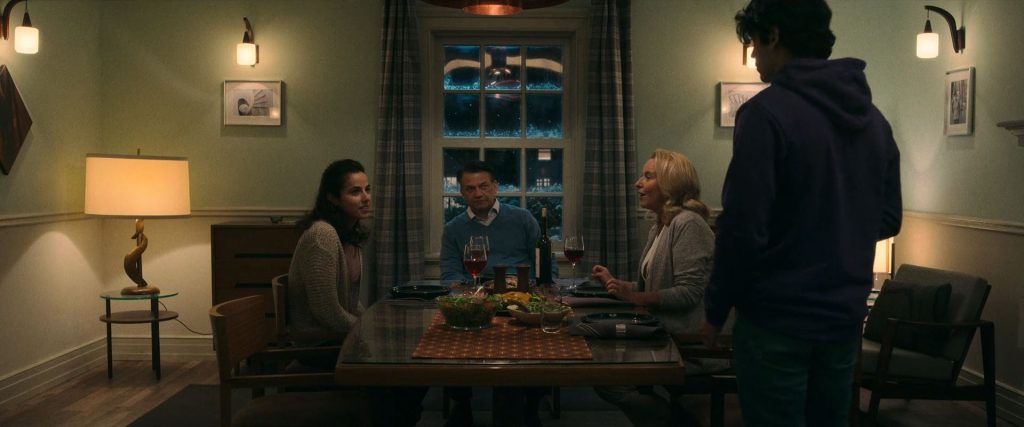
It’s an easy decision for these pair who lack any kind of ethics so they agree. Red helps him secure victims not just out of brotherly loyalty, but because the box heals the person who feeds it.
It is sort of a symbiotic relationship. The entity gets sustenance (human sacrifices), and the provider gets vitality. This explains the brothers’ obsession with said box; they are trapped in a cycle where they must kill to keep Becker alive. When Ambar arrives, she is simply intended to be the next battery pack for Becker’s health.
Is it a Dybbuk Box?
Many viewers mistake the stone container in No One Gets Out Alive for a Dybbuk box. While the trope of a “haunted vessel” is similar, they are culturally distinct.
A Dybbuk box stems from Jewish folklore (and modern internet urban legends) and typically describes a wine cabinet haunted by a restless, malicious spirit (a dybbuk). The box in this film is an Aztec reliquary designed to house a deity.
While a Dybbuk possesses the living to cause chaos, the entity in this box (Itzpapalotl) requires transaction and ritual sacrifice to grant boons, functioning more like a dark altar than a simple haunted object. It’s still a very keen observation by viewers, though. The similarities are definitely there.
The Ritual: The Dream State
When Ambar is strapped to the stone altar in the basement, the film reveals how the monster hunts. It doesn’t just attack; it seduces in the sickest way possible. The victim is placed into a trance state where they see their deepest desire or their most comforting memory. For Ambar, this is her deceased mother.

In the vision, her mother comforts her and begs her to stay but this is a trap. If Ambar accepts the comfort and submits to the dream, the monster (Itzpapalotl) will emerge from the box and bite her head off. We see this happen to other victims in flashbacks – they smile or look peaceful right before they die because they are lost in the fantasy.
The Real Horror: The Immigrant Experience
Beyond the jump scares, No One Gets Out Alive serves as a bit of a grim allegory for the undocumented immigrant experience in America. Ambar is trapped long before she is strapped to the altar.
Without documentation, she is exploited by employers, denied safe housing, and isolated from legal protection. Becker and Red explicitly target women like her because they are “invisible” to the system – if they go missing, no police investigation will follow.
The ending offers a dark subversion of the American Dream. Ambar survives not by escaping the system, but by conquering it. By sacrificing Red, she accepts that to survive in a hostile environment, she must become as ruthless as the forces oppressing her.
Why did Ambar Survive
Ambar survives because she rejects the fantasy, completely. Throughout the movie, she has been haunted by guilt over placing her mother in a care home. In the vision, her mother is suffocating her while saying “stay”…

Ambar realises that this is not her mother; it is a manipulation. She chooses to fight back, physically choking the vision of her mother. In the real world, this translates to her resisting the monster’s influence.
By rejecting the submission that the ritual requires, the monster recoils, retreating into the box. This gives Ambar the window she needs to grab a weapon (an obsidian-edged Macuahuitl) and free herself.
The Tables Turn: Sacrificing Red
After a brutal fight upstairs where Ambar kills the older brother, Becker, she turns her attention to Red. Red has been the “nice guy” face of the operation, giving needy women a place to stay while pretending to be helpless. Ambar sees through this now.
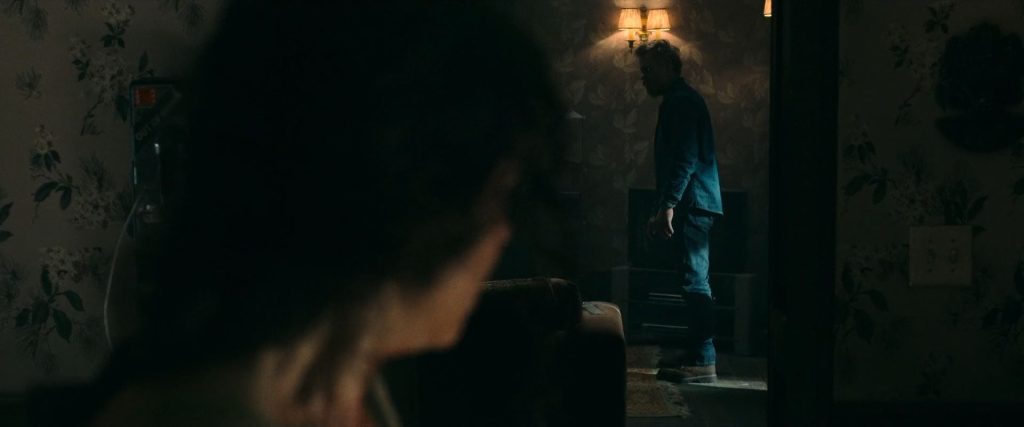
Despite having a broken leg (compound fracture that she’s somehow still pretty capable with), Ambar drags the unconscious Red down to the basement. This requires a bit of suspension of disbelief regarding physics, but thematically it is pretty powerful. She straps Red to the altar. The monster emerges, and because Red is incapacitated and likely unable to resist the ritual, it consumes his head.
The Final Twist: Ambar Stays
The most important part of the ending happens after Red dies and this is No One Gets Out Alive’s huge twist. As Ambar limps toward the exit, her ankle snaps back into place. The wound heals instantly. She looks down, realising that the deal has been struck. She fed the box, and the box healed her.
She walks to the front door but stops where moths (the symbol of Itzpapalotl) flutter around her. She smiles slyly which signifies that Ambar is not actually leaving. The title No One Gets Out Alive is literal. Even though she survived, the Ambar who entered the house is gone.
She has now taken Becker’s place as the caretaker of the box. As an undocumented immigrant with no money and nowhere to go, she has found a source of power and survival, albeit a dark one.
The Goddess Itzpapalotl
The monster in the box is heavily implied to be Itzpapalotl, the Aztec “Obsidian Butterfly.” She is a warrior goddess often depicted with skeletal features and jaguar claws.
In Aztec mythology, she rules over Tamoanchan, a paradise realm where humans are created. She is associated with sacrifice, moths, and bats. The film adapts this lore by making her a consumer of heads who grants vitality in return. The weapon Ambar uses, the Macuahuitl, is a traditional Aztec wooden club embedded with obsidian blades, fitting for a battle against this specific deity.
The moths seen throughout the film and in the final scene are her signature, marking Ambar as her new priestess.
A Note on The Themes
One of the more troubling aspects of the film is its depiction of violence against women. The monster seems to prefer female sacrifices, and the film indulges in the torture of vulnerable immigrant women. This is a movie with a very distinct and troubling misogynistic rhetoric. Even some of the kills feel pretty mean-spirited. Poor Petra being thrown over the staircase, for example.

While the ending sees a woman taking power back, it is a pyrrhic victory. She actually becomes the victimiser, herself. It is worth noting that Ambar feeds a man (Red) to the box, proving the entity isn’t picky, which makes the brothers’ exclusive targeting of women feel even more misogynistic in hindsight.
Frequently Asked Questions
What was the monster in No One Gets Out Alive?
The monster is the Aztec goddess Itzpapalotl. She is represented by moths and requires sacrifices to grant health and healing.
Why did Ambar’s leg heal?
The box has a symbiotic relationship with its owner. Because Ambar sacrificed Red to the creature, the creature fulfilled its end of the bargain by healing her ailments, including her broken leg.
Did Beto really come to save Ambar?
No. The sequence where Beto unties Ambar was part of the hallucination induced by the box to keep her docile. Beto was killed by Becker the moment he entered the house; his body remains on the stairs.
Does Ambar leave the house at the end?
It is implied that she stays. The final shot shows her smiling as moths surround her. She has accepted the power the box offers and will likely continue the cycle of sacrifice.
Where did the box come from?
The box was discovered in Mexico by the brothers’ father in the 1960s. He brought it back to the US and became obsessed with it, eventually sacrificing his wife (Red and Becker’s mother) to the entity inside to cure his own ailments.
What happened to the Romanian girls?
Maria was taken to the basement and sacrificed to the box earlier in the movie. Petra attempts to flee during the climax but is thrown over the stairwell banister by Becker, falling to her death on the floor below.
Final Thoughts
When all is said and done, this was a basic, by-the-numbers horror movie with a fairly predictable ending, saved by some cool creature design. Ambar escaped from the basement through sheer force of will, but she ultimately succumbed to the temptation of power. By feeding Red to the box, she ensured her survival but lost her humanity.
Thanks for reading. If you enjoyed, why not stick around? We review horror movies, explain horror movie endings and make horror lists. Stay away from those Aztec Gods and see you soon.
A Note on Ending Explanations
While we aim to provide comprehensive explanations based on the events on screen, film analysis is inherently subjective. The theories and conclusions presented in this "Ending Explained" feature are personal interpretations of the material and may differ from the director's original intent or your own understanding. That's the beauty of horror, right? Sometimes the scariest version is the one you build in your own head.
You might also like:
- The Hem (2025) Review – Found Footage For The Easily Pleased
- Candyman (1992) Review – A Groundbreaking, Socially Conscious Gothic Masterpiece
- Audition (1999) Review – A Disturbing Masterclass in J-Horror Dread
- No One Gets Out Alive (2021) Review – A Generic Haunting with a Social Twist
- Superhost (2021) Review – A Fantastic Antagonist in a Formulaic Film
Support the Site Knockout Horror is a participant in the Amazon Services LLC Associates Program. Basically, if you click a link to rent or buy a movie, we may earn a tiny commission at no extra cost to you. As an Amazon Associate, I earn from qualifying purchases. This helps keep the lights on and the nightmares coming. Don't worry, we will never recommend a movie purely to generate clicks. If it's bad, we will tell you.
Disclaimer: Images, posters, and video stills used in this horror ending explained article are the property of their respective copyright holders. They are included here for the purposes of commentary, criticism, and review under fair use. Knockout Horror makes no claim of ownership and encourages readers to support the official release of all films discussed.