
Spoonful of Sugar (2022) Ending Explained – The Babysitter Graveyard Twist
Movie Details: Director: Mercedes Bryce Morgan | Runtime: 1h 34m | Release Date: 2022 | Star Rating: 2.5/5 Stars
Welcome to Knockout Horror and to our Spoonful of Sugar ending explained article. I have to be honest, I didn’t really enjoy this movie. I found it a little boring and even a tiny bit ridiculous in parts. Still, I can see why others might have enjoyed it and I can also see why you might have a few questions. That plot was definitely a little on the confusing side, here and there. Let’s explain the ending.
⚠️ Warning: Major spoilers follow below.
The Ending in Brief
The TL;DR: Millicent attempts to steal the family by seducing the father, Jacob, and convincing the child, Johnny, to kill his mother, Rebecca. However, the plan backfires. Johnny is not a victim of allergies; he is a budding psychopath. He kills Millicent instead. The parents, fully aware of their son’s murderous nature, bury Millicent in the backyard alongside the bodies of several previous babysitters.
The Twist: Millicent thought she was the predator entering a dysfunctional home. In reality, she was prey. Rebecca and Jacob hire transient babysitters like Millicent specifically to feed Johnny’s bloodlust, hoping it will keep him from killing them.
What is wrong with Johnny? Johnny exhibits the classic signs of psychopathy. The parents disguise this as severe allergies to keep him isolated, but they are actually managing a serial killer in the making.
The Resolution: Jacob dismembers Millicent’s body while Rebecca calmly plans to buy the neighbouring plot of land to expand their “graveyard,” ensuring Johnny can continue killing indefinitely.
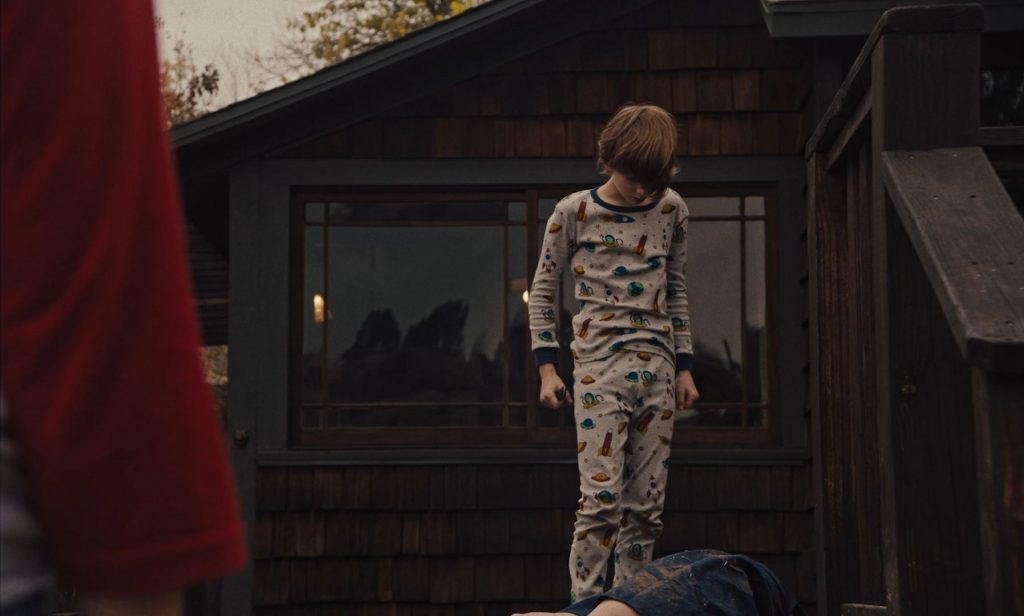
Good to Know: The “allergies” Johnny suffers from are a complete fabrication by the parents. The astronaut suit is a method of control to prevent him from attacking others, not to protect him from the environment.
Table of Contents
Spoonful of Sugar (2022) Ending Explained
No plot recap here, let’s avoid all the cringey sex scenes and get to the ending explanation. To understand the ending of Spoonful of Sugar, we have to look past the hallucinations caused by the LSD and focus on the power dynamics at play. The film presents itself as a story about a deranged nanny infiltrating a weak family. The ending flips this entirely, revealing that the family is a well-oiled machine of murder and enablement.
Millicent’s False Reality
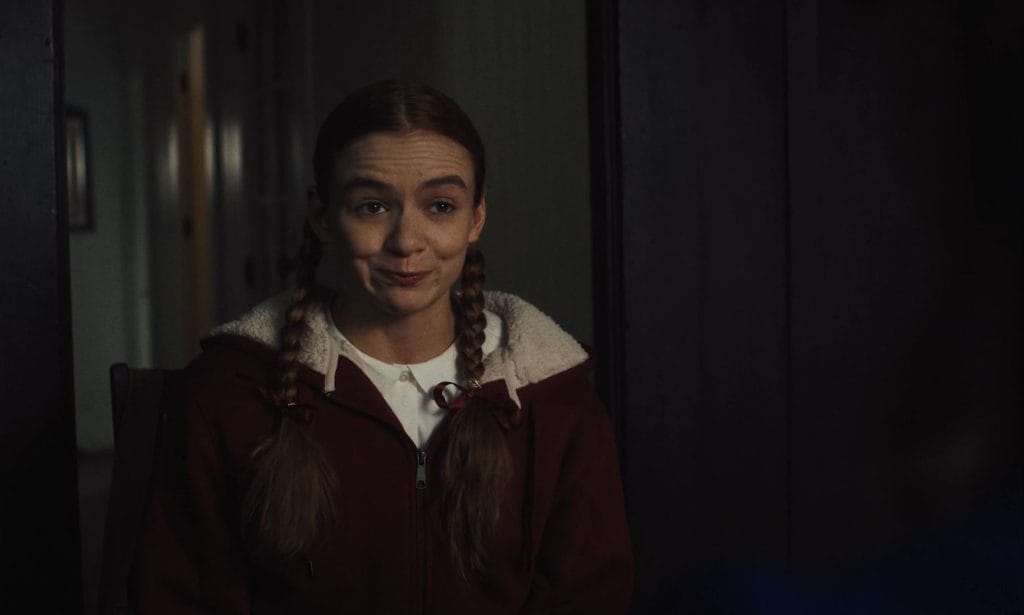
Throughout the film, we view events primarily through Millicent’s (Morgan Saylor) perspective. That’s important to note because Millicent is an unreliable narrator, heavily influenced by her micro-dosing (and often macro-dosing) of LSD. She believes she is “fixing” the family. She thinks she is curing Johnny (Danilo Crovetti) by secretly dosing him, and she believes she is saving Jacob from a loveless marriage.
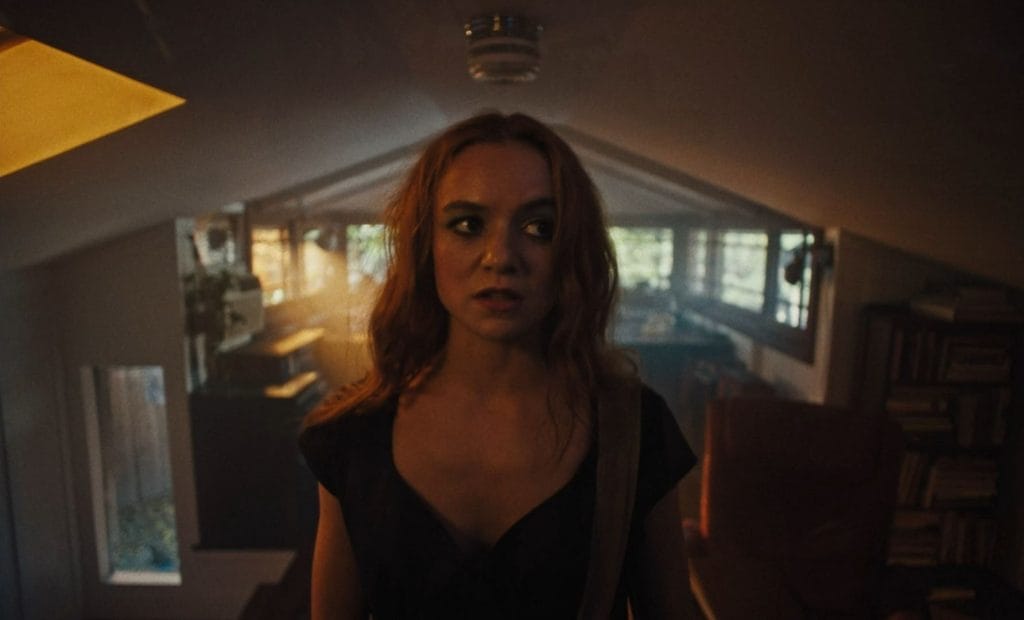
This chemical alteration of her reality makes her miss the warning signs that were oh so obvious on reflection. She assumes Johnny’s attachment to her is genuine affection. In reality, the LSD likely just made Johnny more malleable and uninhibited, accelerating his natural violent tendencies. Apparently he was just vibing!
Because we see things from Millicent’s perspective, we miss the same things that she does. When Millicent sees Dr. Welsh’s finger crawling on the floor or hallucinates sexual encounters, it serves to distract the audience from the very real danger staring her in the face: Johnny isn’t a victim; he is a monster and his family are no better.
The Truth About Johnny
The film spends a lot of time debating whether Johnny has severe allergies or is perhaps autistic. Rebecca (Kat Foster) insists on the allergies, while Jacob hints at something developmental. The ending reveals that both of these are red herrings. Johnny is a psychopath.

Early in the film, Johnny digs up a dead rabbit to show Millicent. This is a classic indicator of the “Macdonald Triad,” a set of behaviours often linked to future violent tendencies. Johnny doesn’t just kill animals; he takes pride in it.
When Millicent skins the rabbit for him, she isn’t bonding with a misunderstood child; she is signalling to a predator that she is also a predator. However, Johnny is the apex predator in this house. His silence and his “allergies” (the astronaut suit) are mechanisms of control imposed by his parents, not to protect him from the world, but to protect the world from him. They would have been much better off with a bespoke Hannibal Lecter setup, in my opinion.


The Macdonald Triad
Johnny displays all the classic signs of the Macdonald Triad, a set of three behaviours historically associated with future violent tendencies and sociopathy in children.
- Cruelty to Animals: Johnny kills and buries rabbits.
- Pyromania (Fire-setting): While not explicitly shown, his destructive tendencies align with this urge.
- Enuresis (Bedwetting): Johnny wears diapers well past the toddler age, often linked to this triad in psychological profiling.
While modern psychology views the triad as more nuanced (often indicating trauma rather than inherent evil), horror movies frequently use it as shorthand for “born bad”. That’s definitely the case with this little shit!
What Happens to Millicent? The Ultimate Betrayal
The climax of the film hinges on a massive miscalculation by Millicent. After the confrontation with Rebecca and then trying to seduce Jacob, she has no idea what is about to happen. Rebecca stabs her in the back.
Bleeding from the wound Rebecca inflicted, she flees into the garden and spots Johnny standing there with the flick knife she gave him. In a moment of supreme arrogance and delusion, she throws herself at his mercy. She truly believes she has won him over. She thinks that because she “freed” him with LSD and encouraged his violent tendencies, he will protect her from his mother.

It is here that the film delivers its cruellest and most hilarious irony. Johnny doesn’t see a saviour or a new mother; he sees prey. Without a moment’s hesitation, he plunges the knife into her repeatedly. What a brilliant ending… I actually didn’t see it coming.
Millicent thought she was the puppet master pulling the strings of a confused child. In reality, she was just another bunny rabbit to Johnny, and he was simply waiting for the right moment to skin her.
The Parents’ Complicity
Probably the most disturbing aspect of the ending isn’t Johnny’s violence, but the parents’ reaction to it. When Johnny stabs Millicent to death, Rebecca and Jacob don’t scream, they don’t call the police, they simply watch. Jacob proceeds to chop up the body, and Rebecca discusses real estate.
This recontextualises the entire movie and also addresses some of the ridiculous plot holes from earlier. They are gonna need a bigger garden because of this little bastard. Rebecca didn’t hire Millicent because she was desperate; she hired her because Millicent was expendable.
She was a foster child with no real family connections, making her the perfect victim for Johnny. The “awkwardness” and hostility Rebecca showed earlier wasn’t just jealousy; it was the cold detachment of someone preparing a pig for slaughter.
The parents are living in a state of terror appeasement. They know that if they don’t provide Johnny with victims (rabbits, and eventually babysitters), he will turn his knife on them. We see this when Johnny stabs his father in the leg and his mother in the hand. These were warnings, really. The parents are essentially sacrificing babysitters to the volcano to keep it from erupting.
The “Evil Autistic” Trope
Spoonful of Sugar leans heavily into a controversial horror trope: coding a character with autistic traits (non-verbal, sensory processing issues, lack of eye contact) only to reveal them as violent or psychopathic.
This conflation of neurodivergence with “creepiness” or a lack of humanity is a harmful stereotype often found in the genre. The “uncanny valley” effect is frequently exploited by directors who use autistic behaviours to signal that a child is “wrong” or dangerous.
In reality, studies consistently show that autistic people are far more likely to be the victims of violence than perpetrators. The lack of social affect displayed by Johnny is a common trait of autism that has nothing to do with the capacity for murder, despite what Hollywood might suggest.
Why Did Johnny Kill Millicent?
Because he is a psychopath. Millicent’s plan was simple: seduce the father, kill the mother (by proxy), and take over the family. She gave Johnny a knife and instructed him to kill Rebecca. So, why did Johnny turn the knife on Millicent?
It comes down to possession. Johnny doesn’t love Millicent in a maternal way; he possesses her. But more importantly, he understands the hierarchy of his own survival. His parents are his primary enablers. They are the ones who cover up his crimes, buy the land to bury bodies, and maintain his facade. Millicent was an interloper trying to disrupt the ecosystem that allows Johnny to kill.
Furthermore, psychopathy is characterised by a lack of empathy and shallow affect. Johnny likely felt no loyalty to Millicent despite the drugs and the “bonding.” She was simply the closest thing available to stab when the urge took over. The irony is palpable: Millicent, a serial killer of foster parents, thought she was manipulating a child, only to be out-manipulated by a much more efficient killer.
The Significance of the Title
The title Spoonful of Sugar obviously references Mary Poppins (“helps the medicine go down”), contrasting the magical, helpful nanny with the toxic Millicent. However, it also refers to the sugar cube method of ingesting LSD.
In the context of the ending, the “sugar” is the babysitter. Millicent is the sweet treat given to Johnny to make the “medicine” (his suppression and isolation) tolerable. She is a disposable commodity used to pacify a monster.
The Final Shot: The Babysitter Graveyard
The movie ends with a panning shot of the backyard. We see the fresh grave for Millicent, but as the camera continues to move, we see the earth is disturbed in multiple other locations, revealing the limbs and faces of previous women. This confirms that this has been going on for a long time.
This visual reveal answers several plot holes. Why was Rebecca so casual about the interview? Why did they tolerate Millicent’s weird behaviour? Because none of it mattered. The outcome was always going to be the same. They weren’t looking for a caregiver; they were looking for a corpse.
It is a chilling conclusion that suggests the cycle will continue indefinitely, with Rebecca already planning to buy the lot next door to expand their capacity for bodies. It also made me look stupid for moaning about the plot holes all through the film… Ah well!
Frequently Asked Questions
Did Johnny have allergies or autism?
While Johnny exhibited traits of autism (sensory issues, non-verbal), the film implies he is actually a psychopath. The “allergies” and the astronaut suit were likely a fabrication by the parents to keep him isolated and control his environment to prevent him from killing others.
Why did Millicent kill Dr. Welsh?
Millicent murdered Dr. Welsh because he knew too much about her history and the family’s dynamics. As she planned to replace Rebecca, she needed to remove any link that could expose her past crimes or interfere with her new life.
Did the parents know Johnny was a killer?
Yes. The ending confirms that Rebecca and Jacob were fully aware of Johnny’s nature. They actively participated in covering up his crimes and sourcing new victims (babysitters) to satiate his violent urges.
What was with the Foster Father subplot?
It is revealed that Millicent is a serial killer who murders her foster fathers, staging them as suicides. This establishes that Millicent is also a predator, making the final showdown a case of “killer vs. killer,” rather than “innocent vs. killer.”
Final Thoughts
I really enjoyed the end of this movie; it was a nice surprise. After thinking Millicent would probably end up with a ready-made killer family, it was fairly obvious that Johnny was probably a psychopath. I didn’t expect it to flip in the way it did, though. Director Mercedes Bryce Morgan does a great job of subverting expectation.
I was actually shocked when Johnny stabbed Millicent; it was great fun and executed really nicely. It is a bit of a shame the rest of the movie wasn’t as great. I do recommend director Mercedes Bryce Morgan’s most recent film Bone Lake, though. It is actually a ton of fun in a 90s erotic thriller/chaotic splatter-horror way.
Thank you very much for reading. Why not stick around? Check out some more Ending Explained articles. I also review horror movies and I also write horror lists.
A Note on Ending Explanations
While we aim to provide comprehensive explanations based on the events on screen, film analysis is inherently subjective. The theories and conclusions presented in this "Ending Explained" feature are personal interpretations of the material and may differ from the director's original intent or your own understanding. That's the beauty of horror, right? Sometimes the scariest version is the one you build in your own head.
You might also like:
- It’s What’s Inside (2024) review – A Neon-Soaked Sci-Fi Comedy That Ties Itself In Knots
- The Den (2013) Review – A Chilling and Effective Screenlife Slasher
- Misery (1990) Review – A Masterclass in Psychological Dread and Obsession
- Pet Sematary (1989) Review – A Classic Melancholic Monkey’s Paw Tale
- Unfriended: Dark Web (2018) Review – A Sinister and High-Stakes Sequel
Disclaimer: Images, posters, and video stills used in this horror ending explained article are the property of their respective copyright holders. They are included here for the purposes of commentary, criticism, and review under fair use. Knockout Horror makes no claim of ownership and encourages readers to support the official release of all films discussed.