The Lodge (2019) Review – A Bleak and Brutal Study in Grief
The Lodge: Quick Verdict
The Verdict: A relentlessly bleak and atmospheric psychological thriller that succeeds as a visceral study of grief and religious trauma. The Lodge thrives on a powerhouse performance from Riley Keough, who navigates her character’s fragile mental state with harrowing precision. While the film occasionally leans too heavily on “Ari Aster lite” tropes, directors Veronika Franz and Severin Fiala maintain a suffocating sense of dread throughout. The remote, snow-covered setting is used to great effect, transforming a family retreat into a claustrophobic trap. However, the experience is marred by significant plot holes and leaps of logic that may frustrate viewers seeking a tighter narrative. Despite these flaws, the film’s shocking opening and disturbing conclusion make it a memorable entry in the modern slow-burn horror movement. This 3.2 star effort is a visually impressive, albeit derivative, piece of cinema that prioritises mood over logic. It is a cold, unforgiving watch that will stick with you long after the credits roll. If you can overlook the narrative inconsistencies, the atmospheric payoff is well worth the frostbite.
Details: Directors: Severin Fiala, Veronika Franz | Cast: Riley Keough, Jaeden Martell, Lia McHugh, Richard Armitage | Runtime: 1h 48m | Release Date: 2019
Best for: Fans of “elevated” horror and slow-burn psychological thrillers that focus on domestic trauma and cult history.
Worth noting: The film’s unique visual style was achieved by shooting primarily on 35mm film to give the snow-covered landscapes a more organic and textured feel.
Where to Watch: Hulu, Amazon🛒, VOD
Rating: 3.2/5 Stars
(A cold, atmospheric, and deeply disturbing psychological horror that trades narrative logic for a crushing sense of dread and standout performances.)
Welcome to Knockout Horror. Today we are reviewing The Lodge (2019).
Table of Contents
Slow burn festive psychological horror
Coming by way of Goodnight Mommy‘s Veronika Franz and Severin Fiala, The Lodge is a slow-burning horror movie that plays on themes of mental illness, grief, and cults. It follows the story of a pair of young children who recently lost their mother to suicide.
“Mia, in particular, appears to be coping extremely poorly. The kids have been raised with a religious influence, something which leads to Mia feeling a lack of closure with her mother’s death.”
Still not recovered from their grief, their father places them in the awkward situation of having to spend time alone in a remote, snowed-in, lodge with their new step-mum. Unfamiliar with the woman and aware of her complicated history of mental illness and abuse at the hands of a religious cult, the children are alarmed when things appear to suddenly not be as they seem.

So, to start, grief plays a big theme in this movie. There are some effective scenes here focusing on the children’s very specific struggles with losing their mother. The movie absolutely kicks you in the stomach right at the start when depicting the moment she passed away. It’s utterly shocking and comes right out of the blue. Naturally, the kids are traumatised and far from ready to accept their new step-mother.
Mia, in particular, appears to be coping extremely poorly. The kids have been raised with a religious influence, something which leads to Mia feeling a lack of closure with her mother’s death. It just so happens that their dad’s new girlfriend also has a history with religion. Only, Grace’s history is one of abuse and cult-like obsession. While Grace has tried to distance herself from it, the kids have moved closer to religion. The contrast of comfort and carnage caused by these themes is quite interesting. Indeed, it provides much of the backbone of the story and plays heavily into the ending.
A focus on a complicated character
Needless to say, this is a movie that wants to get into your head. There is an unsettling feeling of not quite knowing what is going on. It’s a bit of a trademark of this director duo. Grace is a complicated character with a troubled past. She takes medication, seemingly, to control symptoms associated with her PTSD.
“Riley Keough, as Grace, puts on a magnificent performance, completely convincing as a person suffering from mental illness.”
The years of religious conditioning in the cult have stayed with her. She bears physical and mental scars to show what she has been through. As the movie goes on, it becomes increasingly clear that she hasn’t completely healed from her childhood trauma.

Despite her problems, Grace tries extremely hard with the children. She wants to spend time with them and wants them to like her. The kids cannot begin to get over their grief though, and their anger towards their father for divorcing their mother is directed squarely at her. They want absolutely nothing to do with Grace.
In fact, they would sooner research her history on the internet and use that against her to reinforce their idea that she is unfit to be around them and is, actually, a “psycho”. It’s a captivating and compelling setup for a psychological horror and it is going to go to some very disturbing places. Along the way however, it will hit a few noticeable roadblocks.
So many plot holes
There are a mountain of plot holes in this movie. For a start, the setup, itself, is a bit ridiculous and demonstrates some serious lack of foresight on the kids’ father’s part. As the film goes on, things only get more and more silly. It is one unlikely event after another. As the movie goes on, the constant leaps of logic become a bit of a chore. It’s annoying having to dismiss some of the huge logic fails.
Naturally I can’t go into it too much as I will spoil the movie. Suffice to say, you will be asking yourself how character A managed to do this. Why did character B do that? Would character C really react like that? And it suddenly makes less and less sense.
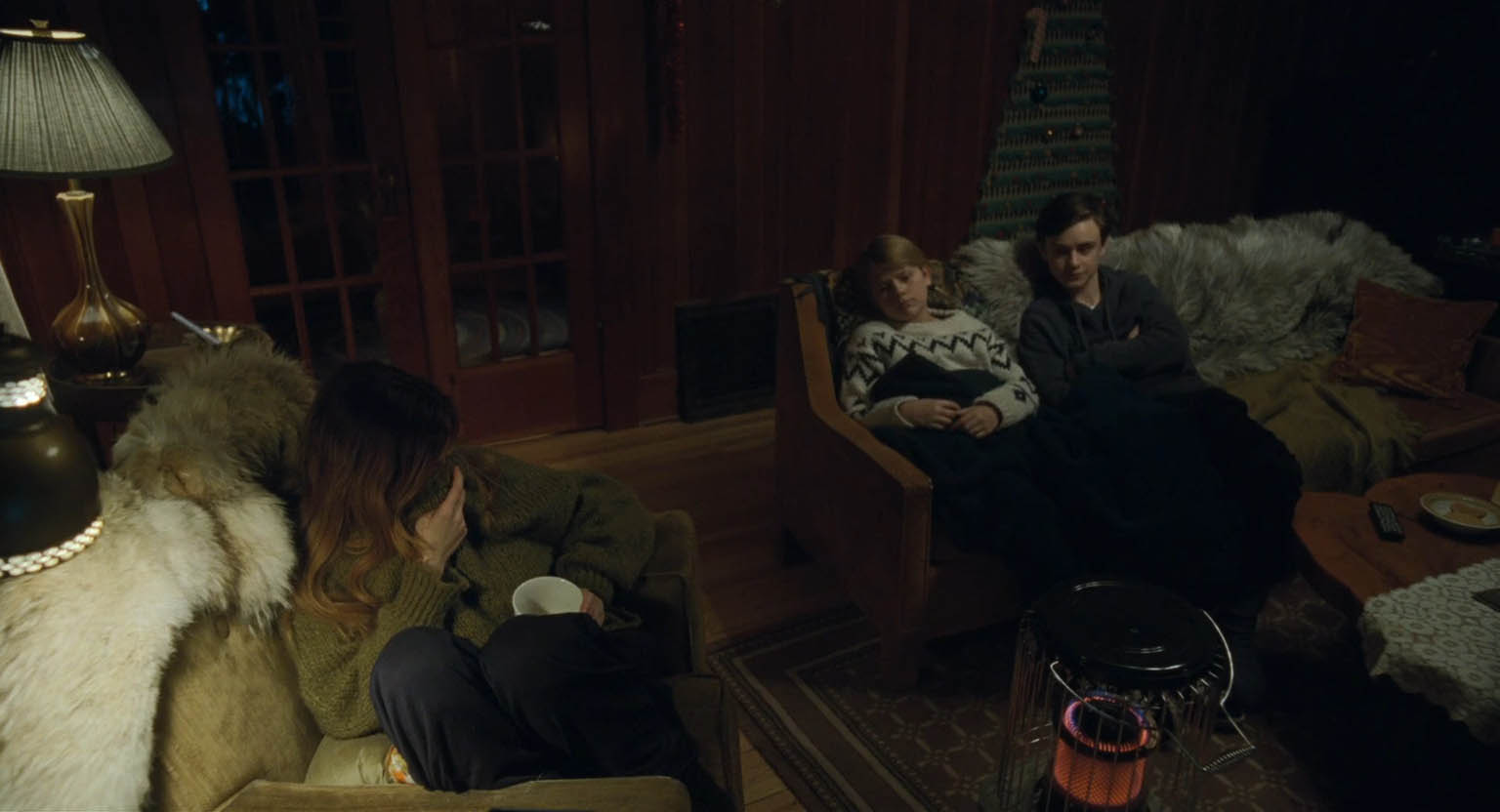
Fans that like this movie tend to criticise people who take umbrage with the ridiculous setup, which is fair enough. They love the film, they can defend it. But some people are simply going to find it hard to vibe with.
“As the movie goes on, the constant leaps of logic become a bit of a chore. It’s annoying having to dismiss some of the huge logic fails.”
The fact that the movie centres around a huge twist somewhere in the middle is something people love about The Lodge. It’s a very obvious twist if you have been following the events, but still fairly satisfying. The influence of similar recent slow-burn horror is very apparent here. The desire to pull the rug out from underneath the viewer is clear, which brings me onto my next point.
Gorgeous and reminiscent of recent horror
There is a real attempt here to channel what made Ari Aster so successful. From the plot twists to the camera work, this feels like Aster lite. The heavy use of scenes focused purely on characters crying will have you feeling a sense of deja vu. A dollhouse used to reflect what is happening in miniature form is less a tribute and more blatant robbery. Scenes designed to shock the viewer with sudden, unexpected, events are extremely familiar. I couldn’t help but think that Hereditary probably wants its tropes back.
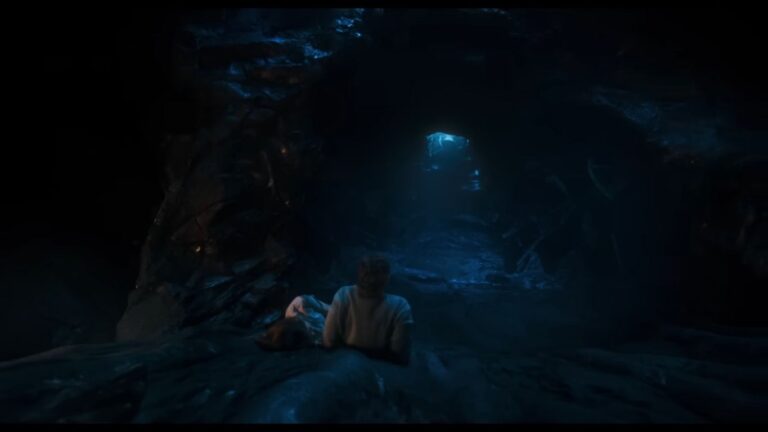
There are elements of Franz and Fiala’s earlier hit Goodnight Mommy here, as well, a movie I love. Indeed, the theme itself is similar and the focus on young children is very reminiscent. The liberal sprinkling of Ari Aster styling is unmistakable, however. It makes this feel less like an impressive piece of work and more of a tribute. Still, cinematography is a strong point. The use of 35mm film is of note, as is the use of winter light. Even with the glistening sun reflecting off the snow, there is a haunting greyness draped over every shot. It’s deliberately moody and oppressive; it looks fantastic.

Scripting in The Lodge suffers from being somewhat basic and unnatural. Camera work is not fantastic and feels low budget at times. The location, however, is great. The house is suitably huge. It is full of visual touches to indicate Grace’s declining mental state.
Acting is fantastic. Riley Keough, as Grace, puts on a magnificent performance, completely convincing as a person suffering from mental illness. Both of the kids, played by Jaeden Martell from It and Lia McHugh, are brilliant and Richard Armitage is generally fine as the kids’ dad. It’s an excellent cast. Scares are minimal but the tension and atmosphere is stellar throughout. The ending is a complete shocker that will stay with you long after the movie is done.
The Good, The Bad & The Ugly
The Good
- Riley Keough: Delivers a professional and haunting performance that anchors the film’s psychological weight and cult-related themes.
- Atmospheric Cinematography: The use of the remote, snow-covered lodge creates a tangible sense of isolation that enhances every scene.
- Shocking Opening: The film begins with a visceral and unexpected moment that immediately sets a high-stakes tone for the children’s grief.
The Bad
- Derivative Style: Frequent nods to Ari Aster, specifically the dollhouse and certain camera movements, make the film feel less original.
- Mountain of Plot Holes: Several character motivations and technical plot points require a massive suspension of disbelief to remain engaged.
- Unnatural Dialogue: Certain segments of the script feel a bit basic or stiff, occasionally pulling the viewer out of the immersive atmosphere.
The Ugly: The Dog. The fate of the family pet serves as a particularly cruel and effective turning point in Grace’s mental breakdown.
Should You Watch The Lodge?
Yes. It is a 3.2 star film that offers a solid, albeit flawed, experience for fans of the genre. While it might suffer from being a bit of a “tribute” act to other modern horror hits, the atmosphere and acting are more than enough to justify a watch. If you prefer your festive horror to be cold and relentlessly depressing, The Lodge is the perfect choice for a winter evening.
You might also like:
- Better Watch Out (2016) Review – A Wickedly Mean-Spirited Holiday Treat
- 31 Days of Christmas Horror: The Ultimate Festive Fright Movie Marathon
- Destroy This Tape (2025) review: Authentic aesthetics, ruined potential
- Final Days: Tales from the End Times (2025) review – Tales from the bargain bin
- I Watched Nothing But Low Budget Tubi Horror for a Month – Here’s What Happened
Our Scoring Philosophy: A Fair Fight
Horror is a genre that thrives thanks to indie film makers and low budget creators. At Knockout Horror, we firmly believe that every movie that we review deserves a fair fight. That's why we grade on a curve. Our star ratings are all about context, judging a film on what it achieves with the resources it has.
A 4-star rating for a scrappy indie horror made for $10,000 is a testament to its ingenuity and raw power. A 4-star rating for a $100 million blockbuster means it delivered on its epic promises. We don't compare them side-by-side; we celebrate success in every weight class, from the back-alley brawler to the heavyweight champion. Please keep this in mind when considering star ratings.
Support the Site Knockout Horror is a participant in the Amazon Services LLC Associates Program. Basically, if you click a link to rent or buy a movie, we may earn a tiny commission at no extra cost to you. As an Amazon Associate, I earn from qualifying purchases. This helps keep the lights on and the nightmares coming. Don't worry, we will never recommend a movie purely to generate clicks. If it's bad, we will tell you.
Disclaimer: Images, posters, and video stills used in this review are the property of their respective copyright holders. They are included here for the purposes of commentary, criticism, and review under fair use. Knockout Horror makes no claim of ownership and encourages readers to support the official release of all films discussed.