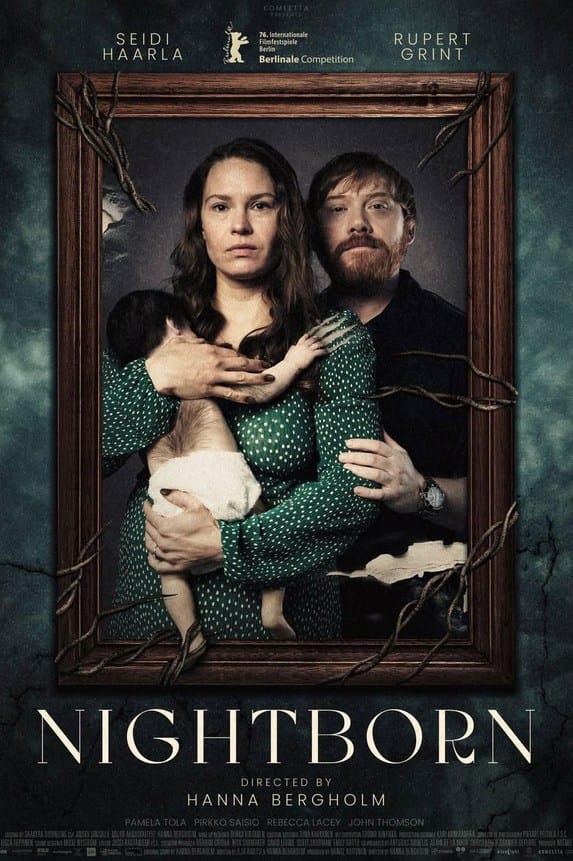
Nightborn (2026) Review – Fun Folklore Fantasy Horror
Nightborn (2026): Quick Verdict
The TL;DR: Nightborn (2026) is an entertaining, folklore-infused fantasy horror from Finnish director Hanna Bergholm (Hatching) that delivers a campy B-movie spin on the postpartum depression subgenre. Streaming on Shudder, the film follows Saga (Seidi Haarla) and her mild-mannered partner Jon (Rupert Grint) as they move into a dilapidated rural estate to raise their newborn. While Jon and the extended family remain oblivious, Saga realises their baby is far from ordinary, distinguished by a tail-like appendage, growling outbursts, and an insatiable need for blood. While built on an undeniably familiar allegorical foundation seen in films like Baby Ruby and Grace, Bergholm eschews heavy-handed misery in favor of dark humor, absurd effects, and tongue-in-cheek family dynamics. Supported by strong performances from Haarla and Grint, it struggles occasionally with ear-splitting baby cries, dodgy prosthetic sequences, and an ambiguous finale, but remains a fun, accessible post-partum horror.
Details: Director: Hanna Bergholm | Cast: Seidi Haarla, Rupert Grint, Pirkko Saisio, John Thomson | Runtime: Approx. 92 Minutes | Release Date: July 31st 2026 | Where to Watch: Shudder
Best For: Fans of maternal horror, Nordic folklore features, campy B-movies, and viewers who enjoyed Hanna Bergholm’s Hatching.
Worth Noting: Looking for a similarly themed take on new-parenthood paranoia? Check out our full review for Baby Ruby (2022) right here on Knockout Horror.
Did You Know: Nightborn marks Finnish director Hanna Bergholm’s English-language feature debut following the critical success of her 2022 body-horror hit Hatching.
Is It Scary: Rarely terrifying; the film opts for absurd visual gags, farcical family tension, and dark fantasy tropes over genuine jump scares or oppressive dread.
Rating: 3.5/5 Stars
(A refreshingly fun, B-movie take on maternal horror elevated by excellent performances.)
Welcome to Knockout Horror and to our review of the fantasy horror film Nightborn (2026). This is Finnish director Hanna Bergholm’s second feature film after the release of the very successful Hatching in 2022. This is, also, Bergholm’s first feature film in the English language… well, mostly English. If you enjoy maternal horror with a folklore twist, it’s worth jumping on Shudder to check it out. Let’s take a look.
Oh, and before we start, if you are looking for an explanation for this movie, why not check out our Nightborn Ending Explained article? I go heavy into the folklore reasons for the narrative here rather than the metaphorical stuff so check it out for some answers but, be warned, it does contain spoilers unlike this spoiler free review.
Table of Contents
I Was Expecting Something Completely Different
I have to be honest, going into Nightborn, I was expecting a slow and thoroughly serious folk-horror take on new parenthood, but that isn’t really what I found, here.
“You have seen this one before but that’s not going to be a huge barrier to enjoyment.”
I mean, sure, there are definite folk-horror leanings and the movie occasionally dips a toe into the serious and stoic, but I think Nightborn has far more b-movie about it than I ever could have imagined.
The story follows couple Saga (Seidi Haarla) and Jon (Rupert Grint) as they move into Saga’s grandmother’s rural home to begin their lives as new parents. What starts as a dream scenario, quickly turns into a nightmare as Saga notices something is very off with their newborn, even if nobody else can see it.
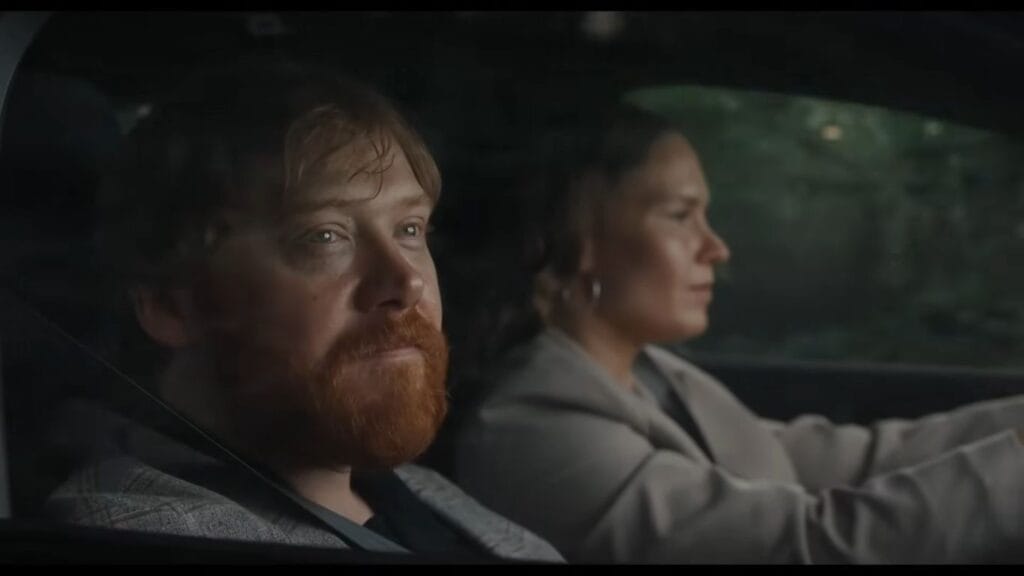
You should know what to expect here, particularly if you have watched movies like Baby Ruby or Grace. Saga is desperate to have a big family with at least three kids. After the pair make the beast with two backs in the middle of the woods, she falls pregnant and gives birth.


While just about everyone else around her is incredibly enthusiastic about the new addition to the family, Saga believes something is seriously wrong. The baby cries relentlessly, has an unusual coating of hair, and draws blood at every opportunity.
Unfortunately, absolutely nobody else believes her so she begins to feel both isolated and scared. You have seen this one before but that’s not going to be a huge barrier to enjoyment.
It’s a familiar formula
So let’s get the obvious stuff out of the way with first – this is a pretty derivative plot. Nightborn is, essentially, another writer/director using an allegorical monster to tell a story about post-partum depression.
Bergholm is weaving an age-old horror tale as if she is the first to tell it and, in some ways, I can appreciate that. I think you really have to act like this has never been done before so that you can attempt to bring something new to the fold. Don’t let the influence of previous genre films define your vision.
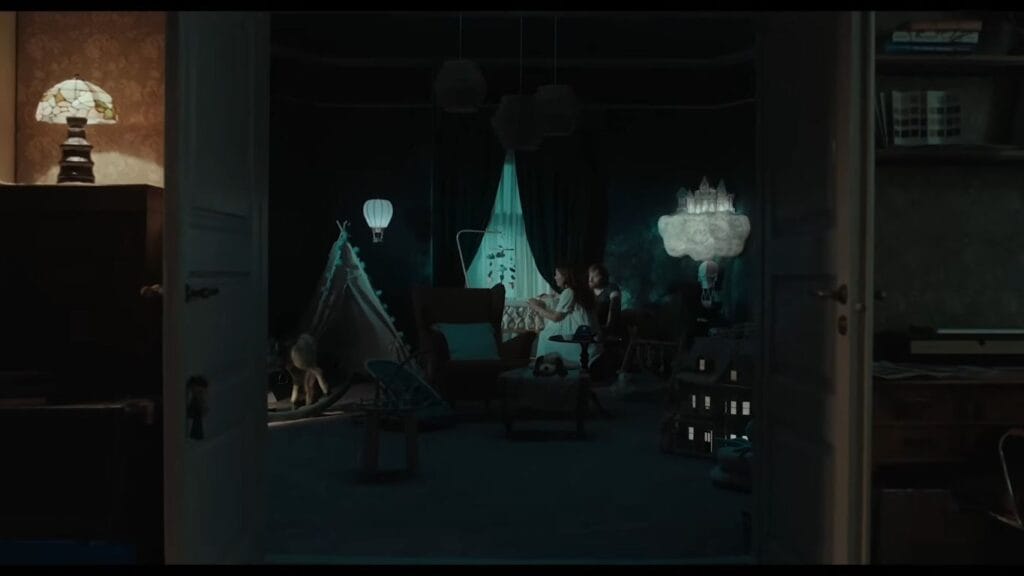
While I wouldn’t say that is entirely the case here because the influence of similar movies is very apparent. Bergholm has actually managed to strip away much of the subtext that bogs these types of films down.
I mean, sure, the metaphor is very apparent but this is a proper fantasy-horror film that’s never once going to lose its way when it comes to simply being entertaining. As I mentioned earlier, there’s a whiff of the b-movie about it.
It doesn’t take itself too seriously
Right from the start, there is an air of humour and tongue-in-cheek that keeps Nightborn feeling pretty light. Jon’s relentless optimism in the face of a dilapidated house and an extremely hairy, blood-thirsty baby perfectly contrasts against Saga’s increasing desperation. Jon and Saga’s eventual clashes frequently prove rather comical due to her eventual anger at his constant passivity.
“There’s enough going on to completely ignore the metaphorical element, if you so choose.”
It’s not just Jon, either, it’s her entire family that are driving her bananas. As with most horror movies that follow this theme, the baby demands more and more from her as she becomes increasingly ignored by the people around her. Saga’s relationship with her sister starts off well but begins to fracture and her dynamic with her mum is maddening but also quite funny.
Sure, all of these tropes are pretty on the nose but Bergholm constantly reminds the viewer that Saga is, most definitely, not crazy.
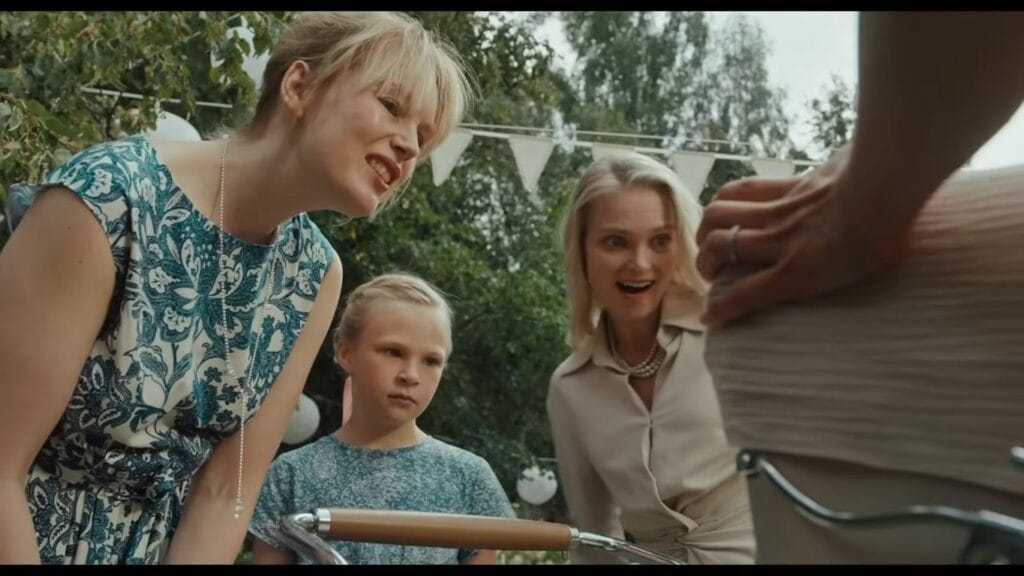
There’s something ancient and evil in the woods around the property and Saga’s grandmother was acutely aware of it. Indeed, Saga herself was a difficult child and it should be, perhaps, no surprise that she is experiencing such strange phenomena with her own newborn.
Many post-partum horror films tend to blur the lines between metaphor and real terror to the point where the two themes almost cancel each other out. That’s not the case, here. There’s enough going on to completely ignore the metaphorical element, if you so choose.
The baby’s incessant crying coupled with a tendency to growl, a strange tail like appendage, and its consistent need for blood and meat really allow the viewer to simply enjoy this as a good old fashioned fantasy horror b-movie. It’s never scary but the visuals are often fun and it’s quite farcical in that classic b-movie way.
Worth mentioning
Acting is absolutely fantastic. Rupert Grint is perfectly cast as the mild mannered Jon and does a fantastic job of making his optimism feel genuine rather than forced. I really liked Pirkko Saisio as Saga’s mother and it was fun to see British television stalwart John Thomson in a small role.
“The ending leans back into the metaphors while also doubling down on the literal horror aspect. I’m not sure it works.”
The real star of the show is Seidi Haarla, as Saga. She does a fantastic job and I especially enjoyed the way her performance evolved as Saga begins to gradually lose her ability to pretend that everything is okay.
On the flip side, some people are going to absolutely hate the constant crying. It’s right at the front of the audio mix and completely surrounds you if you are using a decent sound system. This is, obviously, deliberate but it’s a trait used in absolutely every one of these post-partum horror movies I have watched and never stops being horribly grating.
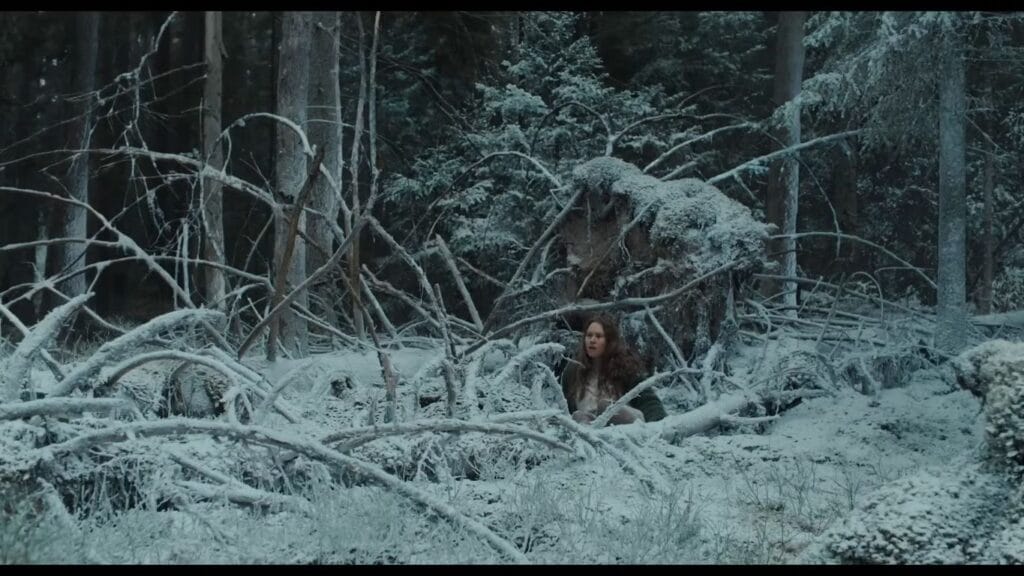
Some people are going to seriously dislike the way this movie doesn’t lean entirely into the metaphor. Again, I think it is a positive because it never drowns in the subtext or ever stops being a proper horror movie, but people looking for something deeper may feel short-changed.
Bergholm goes out of her way to shock on a few occasions and I am not sure whether it always lands. Full nude scenes using dodgy looking prosthetics didn’t work for me. Skipping the prosthetics entirely in these scenes would have been better as they aren’t particularly well done. There’s a few gross out moments that don’t really land, either.
I think a lot of viewers are going to find the story a little unsatisfying. There’s enough loose ends to leave you with questions and the ending leans back into the metaphors while also doubling down on the literal horror aspect. I’m not sure it works.
With that being said, this is an enjoyable movie that is worth checking out for fans of fantasy horror with a folk-lore leaning.
The Good
- Excellent Lead Performances: Seidi Haarla shines as the spiraling Saga, perfectly complemented by Rupert Grint’s humorously passive, optimistic Jon.
- Refreshingly Fun Tone: Strips away self-serious subtext to focus on B-movie humor, ancient forest lore, and farcical family interactions.
- Unambiguous Monster Horror: Ensures the creature elements are literal rather than purely metaphorical, providing plenty of fun visual horror.
- Strong Supporting Cast: Pirkko Saisio and British TV veteran John Thomson add great personality to the eccentric family dynamic.
The Bad
- Repetitive Audio: Features relentless, front-and-center baby crying that can become intensely grating.
- Unconvincing Prosthetics: Certain shock moments rely on questionable prosthetic work that undermines the scene’s impact.
- Muddled Third-Act Resolution: The ending attempts to balance literal horror with open-ended allegory, leaving a few loose narrative threads.
- Highly Derivative Premise: Reuses a core postpartum horror framework that genre fans have seen executed many times before.
The Ugly: The front-and-center baby crying. In keeping with subgenre traditions, the mix subjects viewers to relentless, ear-piercing infant wailing that will test the patience of even the most tolerant horror fans.
Should You Watch Nightborn?
If you enter Nightborn expecting a somber, slow-burn folk-horror piece on early parenthood, you might be surprised by how much campy B-movie energy director Hanna Bergholm brings to the table. While built on a familiar postpartum framework, the film sets itself apart through dark comedy, strong performances from Seidi Haarla and Rupert Grint, and an unabashed commitment to being an entertaining fantasy-horror flick. It suffers from a few clumsy prosthetic shock attempts and a grating audio mix, but it remains a rewarding Shudder watch for fans of folklore horror.
You might also like:
- Horror in the High Desert 3: Firewatch (2024) Review – A Dry And Repetitive Sequel
- I Know What You Did Last Summer (2025) review – A soul-less sequel
- Forest of Death (2023) Review – A Formulaic and Dull Tubi Cash-Grab
- Pearl (2022) Review – A Masterful And Technicolor Descent Into Madness
- Descendent (2025) review – Aliens, trauma, and identity crises
Our Scoring Philosophy: A Fair Fight
Horror is a genre that thrives thanks to indie film makers and low budget creators. At Knockout Horror, we firmly believe that every movie that we review deserves a fair fight. That's why we grade on a curve. Our star ratings are all about context, judging a film on what it achieves with the resources it has.
A 4-star rating for a scrappy indie horror made for $10,000 is a testament to its ingenuity and raw power. A 4-star rating for a $100 million blockbuster means it delivered on its epic promises. We don't compare them side-by-side; we celebrate success in every weight class, from the back-alley brawler to the heavyweight champion. Please keep this in mind when considering star ratings.