The Verdict: A remarkably innovative and historically significant entry in the horror genre that effectively birthed the “screenlife” sub-genre a decade before it became mainstream. The Collingswood Story (2002) succeeds by turning its ultra-low-budget constraints into a creative strength, utilizing a webcam-driven narrative that feels surprisingly authentic for the era. While the technology on display is a fascinating time capsule of the early 2000s internet, the core mystery remains genuinely compelling and well-paced. The performances from Stephanie Dees and Johnny Burton are grounded and believable, helping to anchor the film’s more fantastical elements. Though it lacks the visceral jump-scares of modern equivalents like Host, it excels at building a lingering sense of vulnerability and psychological dread. Some of the editing is understandably jarring due to the shoestring budget, but the film’s overall ingenuity more than compensates for its technical rough edges. This 3.5 star effort is a must-watch for horror historians and fans of DIY filmmaking. It is a stylish, effective, and visionary piece of work that proved you don’t need a massive budget to pioneer a new way of telling scary stories. It remains a hidden gem of the found footage movement.
Details: Director: Michael Costanza | Cast: Stephanie Dees, Johnny Burton, Diane Behrens | Runtime: 1h 20m | Release Date: 2002
Best for: Fans of found footage, horror historians, and those who appreciate early 2000s internet nostalgia.
Worth noting: To maintain the low budget, the actors were often filmed in their own homes and were not actually interacting in real-time during the recorded chats.
(An innovative and technically pioneering screenlife horror that balances low-budget charm with a genuinely engaging and atmospheric mystery.)
Welcome to Knockout Horror. Today we are looking at the 2002 surprise, ultra low budget hit The Collingswood Story.
Table of Contents
The screenlife horror granddaddy
Directed and written by Michael Costanza, The Collingswood Story is the progenitor of the computer screen horror genre. All conversations take place over a video chat app and all other footage is filmed selfie-style with a handicam. It would be a decade before we saw another high-profile computer screen horror movie. Movies like Host and Unfriended have a lot to thank The Collingswood Story for. It pretty much set the benchmark for this style of film. It showed the world how to successfully use the screenlife presentation for effective horror.
“The Collingswood Story is the progenitor of the computer screen horror genre. Movies like Host and Unfriended have a lot to thank this film for. It set the benchmark for this style.”
The film follows a short period in the life of young couple Rebecca and Johnny. The pair are attempting to navigate a long-distance relationship but kind of struggling. After interacting with an online psychic for a bit of Birthday fun, they receive a troubling prediction. Something is haunting Rebecca’s home. It’s not long before some seriously strange revelations come to light that threaten more than just their relationship.
Obviously this movie is entirely dependent on strong characters and decent performances to keep the story moving along. Rebecca is presented as a somewhat vulnerable girl. She is alone in a large house but dismisses many of Johnny’s concerns which frustrates him a lot. This is going to provide the bulk of the film’s content. It’s a lot of investigation into the mystery and bickering over whether they should take it seriously. Johnny’s inability to be with his girlfriend only adds to her sense of vulnerability. It’s a fun, somewhat old-fashioned, tense mystery horror with a twist.
Innovative and actually effective
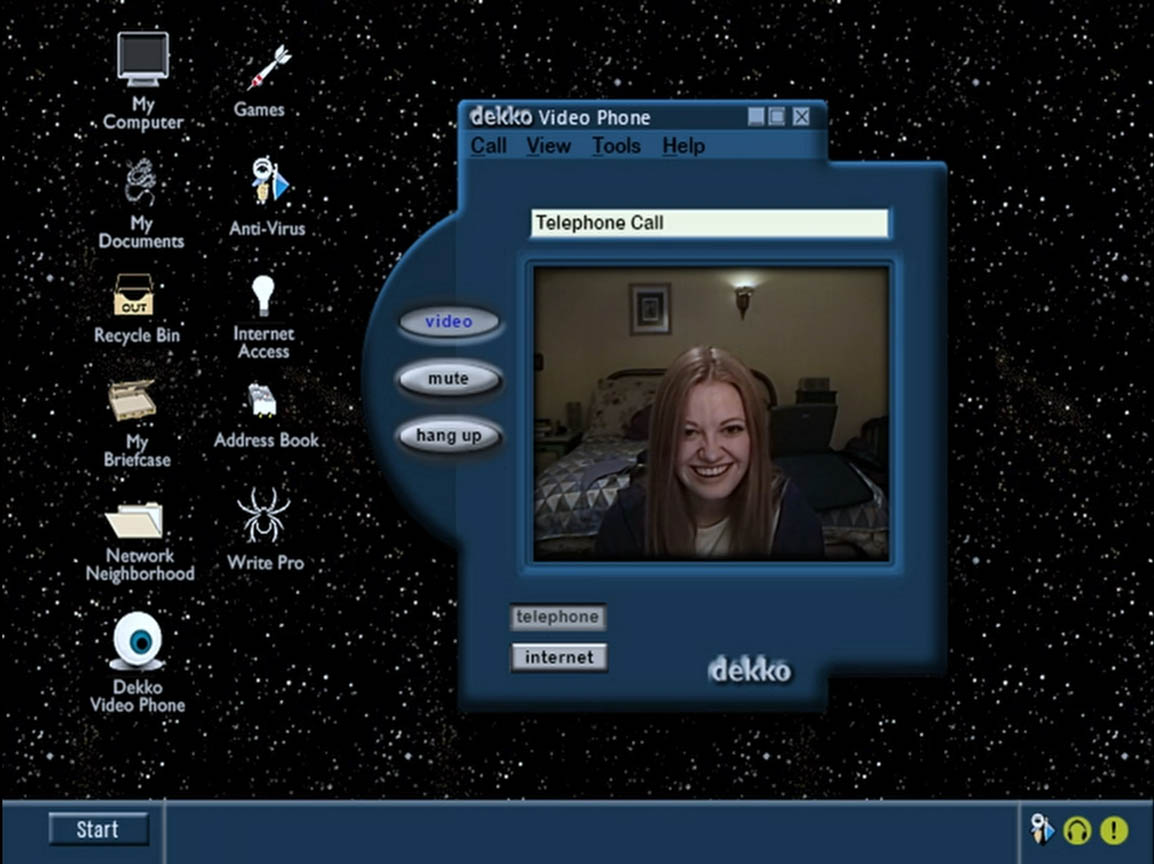
Rebecca and Johnny use a piece of software called Dekko Video Phone. The software requires them to dial with their landline first. When the call connects they click a button to activate the video using their webcam. Bizarre yes, but also very inventive. It allows the writer to explore a bunch of internet concepts that really weren’t widespread at the time. A range of comical chat lines exist and people are monetizing the service; hence the couple calling this online psychic.
Interestingly, the movie was actually filmed using a Sony HI8 Camcorder which is something of a blessing. How awful would this have looked using an old webcam? Luckily, it is pretty good for the age.
“I imagine some viewers will likely get a kick out of the Windows 98 style applications. This movie acts as a bit of a time capsule for the internet many of us grew up with.”
I imagine some viewers will likely get a kick out of the Windows 98 style applications. The antique-looking websites are rather amusing as well. Things have come on a lot in the past 20 years. This movie acts as a bit of a time capsule for the internet many of us grew up with. It should be pointed out that screenlife has been refined in recent years. The Collingswood Story, in comparison, can feel old and a bit cheesy. The need for the characters to hang up to make other calls can disrupt the flow a little. The obvious edits stand out, as well, for how jarring they are.
The actors here were not actually talking to each other and were filmed independently. This becomes very obvious when characters change positions in between sentences. At times they basically teleport across rooms in a matter of milliseconds. It is easy to forgive, however. This was raw innovation working on a shoestring budget with limited technology. Comparing it to more recent, better polished movies is unfair. In fact, for something so low budget, it would be doing it a disservice.
Tense and very compelling
An other thing that stands out about The Collingswood Story is how engaging the plot is. Despite the limited filming locations and cast, it’s hard not to be impressed. It is genuinely captivating for much of its run time. The twists and turns come in frequently and the story develops at a fantastic clip. The believable performances also help you buy into the events occurring.
“What Michael Costanza achieved with so little is worthy of praise. This is a very good movie that is still enjoyable today, all while acting as a fascinating time capsule.”
It’s not a particularly scary film, if I am being honest. It aims to get into the viewer’s head by building an atmosphere of tension and apprehension. The film utilises the suggestion of something ominous in the town. Combine this with Rebecca’s sense of vulnerability and you have something unsettling. It works better than you might think but anyone expecting scares a minute will be disappointed.
Decent acting
Acting in The Collingswood Story is actually pretty decent. Johnny, played by Johnny Burton, is your sort of every-man normal dude. Concerned with his girlfriend’s safety, he appears thoughtful but somewhat insecure. Burton does a fine job portraying the character. He manages to get across the frustration of the separate living situations well.
Stephanie Dees, as Rebecca, is fine. She does well portraying the sceptical girlfriend focused on her school work and prioritising personal progression over her relationship. Dees does a nice job of expressing Rebecca’s growing frustrations, too. She is struggling, after all, to split her time between work and relationships. I particularly liked her performance in the last 15 minutes. Her character experiences some interesting growth and develops a little.
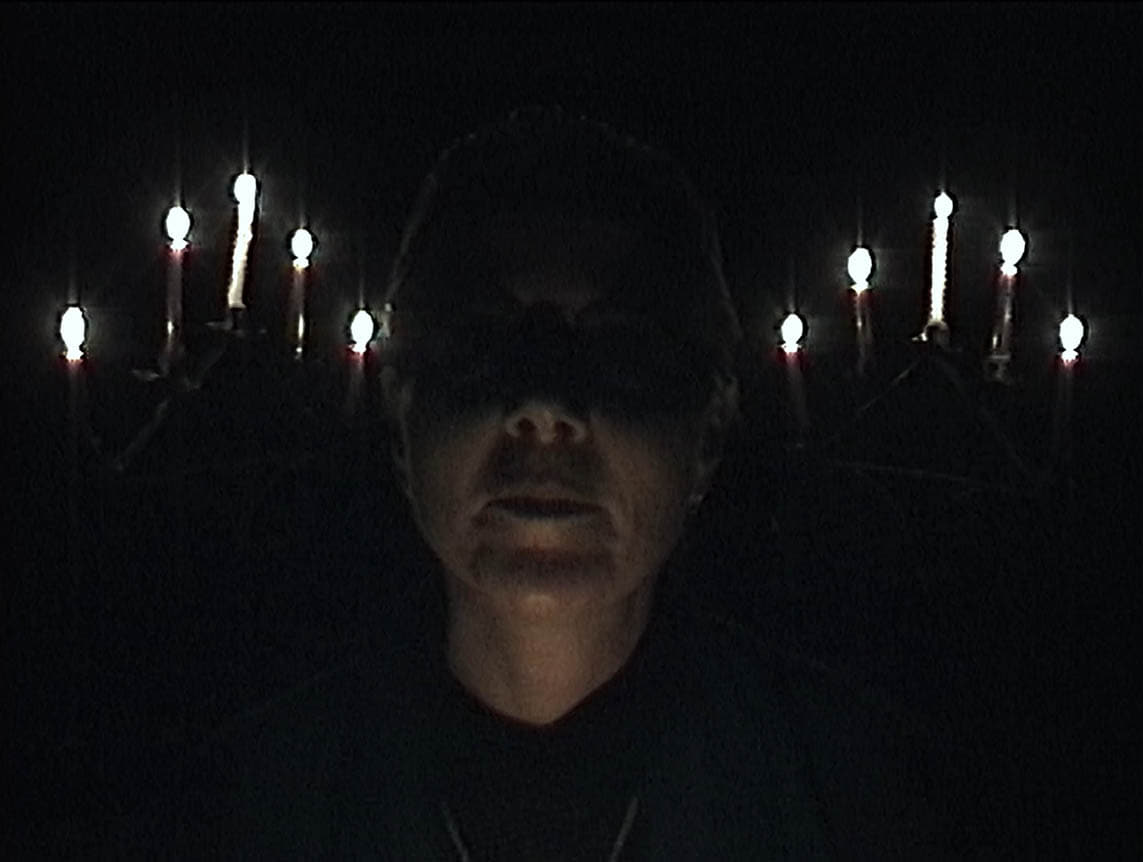
The most experienced actor here is Diane Behrens who plays psychic Vera Madeline. She is suitably creepy. She manages to switch her personality quite well between scenes. It’s a convincingly kooky performance but I imagine some people might find it a little too cheesy and out of place. Behrens went on to have a great career and acts in big productions to this day.
The Good, The Bad & The Ugly
The Good
Pure Innovation: The film successfully pioneered the “screenlife” format long before it became a popular sub-genre.
Engaging Mystery: The plot is genuinely captivating, featuring enough twists and turns to keep the audience invested.
Atmospheric Dread: By focusing on isolation, the movie builds a solid sense of psychological tension.
The Bad
Technical Limitations: The shoestring budget is apparent in the jarring edits and the stilted flow of the video chat conversations.
Dated Aesthetic: While nostalgic for some, the early 2000s internet interfaces and webcam quality may feel too “cheesy” for others.
Lack of Scares: Those looking for high-octane horror will find the film’s suggestive approach a bit too restrained.
The Ugly: The “Teleporting” Actors. Because scenes were filmed independently, characters frequently jump positions between frames in a hilariously obvious fashion.
Should You Watch The Collingswood Story?
Yes, especially if you enjoy horror history. It is a 3.5 star film that deserves more recognition for its influence on modern “computer screen” horror. While its technical rough edges are obvious, the ingenuity and the effective atmosphere make it a worthwhile experience. It is a fascinating time capsule of early DIY digital horror that proves a good story can transcend a lack of resources. It is a low-budget win.
Horror is a genre that thrives thanks to indie film makers and low budget creators. At Knockout Horror, we firmly believe that every movie that we review deserves a fair fight. That's why we grade on a curve. Our star ratings are all about context, judging a film on what it achieves with the resources it has.
A 4-star rating for a scrappy indie horror made for $10,000 is a testament to its ingenuity and raw power. A 4-star rating for a $100 million blockbuster means it delivered on its epic promises. We don't compare them side-by-side; we celebrate success in every weight class, from the back-alley brawler to the heavyweight champion. Please keep this in mind when considering star ratings.
Richie
Lifelong horror fan and reviewer. Richie is the founder of Knockout Horror and Ranking Horror (where he writes as Richie Ranks). Specialises in honest, conversational reviews, curated horror movie lists, and clear explanations of horror movie endings designed specifically for both neurodivergent and busy minds. Richie has been curating horror lists and reviewing films since 2019. His work focuses on unearthing hidden gems on Tubi, spotlighting indie horror, and decoding the most confusing movie endings.
Mars Horodyski directs the Tubi Original Deadbolt, a psychological thriller about a woman seeking a fresh start in a house with a dark history. Is it a hidden gem or just another predictable bore?
Ryan Hendrick takes us into the Scottish Highlands for the survival thriller Mercy Falls. A group of friends search for a cabin, but find a nightmare instead.
Annabelle Comes Home is the cinematic equivalent of a haunted house attraction. A shallow but highly entertaining jump-scare fest that revisits the Warrens.
Amelia Moses directs the Tubi Original Guess Who, a holiday slasher that trades tropes for a cohesive crime narrative. Is this the rare high-budget gem Tubi fans have been waiting for?
It’s day 21 of our 31 Days of Halloween 2026 review marathon and it’s time to take a look at a deadly twist on an old parlour game. We check out the surprisingly enjoyable Would You Rather (2012).
Adam Leader and Richard Oakes attempt to blend home invasion with alien possession in Hosts. Despite one standout kill, the film is marred by a weak script.
Manage Consent
To provide the best experiences, we use technologies like cookies to store and/or access device information. Consenting to these technologies will allow us to process data such as browsing behaviour or unique IDs on this site. Not consenting or withdrawing consent, may adversely affect certain features and functions.
Functional
Always active
The technical storage or access is strictly necessary for the legitimate purpose of enabling the use of a specific service explicitly requested by the subscriber or user, or for the sole purpose of carrying out the transmission of a communication over an electronic communications network.
Preferences
The technical storage or access is necessary for the legitimate purpose of storing preferences that are not requested by the subscriber or user.
Statistics
The technical storage or access that is used exclusively for statistical purposes.The technical storage or access that is used exclusively for anonymous statistical purposes. Without a subpoena, voluntary compliance on the part of your Internet Service Provider, or additional records from a third party, information stored or retrieved for this purpose alone cannot usually be used to identify you.
Marketing
The technical storage or access is required to create user profiles to send advertising, or to track the user on a website or across several websites for similar marketing purposes.