Why Black Christmas (2019) Failed: It Wasn’t Just the Trolls
Welcome to Knockout Horror. I wanted to spend a little bit of time, this December, talking about some of the very specific controversies surrounding festive themed horror movies. We are going to kick things off by looking into how and why the 2019 Blumhouse remake of Black Christmas was such an abject failure in Why Black Christmas (2019) Failed: It Wasn’t Just the Trolls.
But before we get into the nitty-gritty, let’s be clear about something. The failure of Black Christmas (2019) (check out our review) wasn’t just because of internet trolls or “review bombing”, though that certainly happened. It failed because it was a bad movie that cynically used social issues as a shield for lazy filmmaking.
It insulted the legacy of the original by pretending to be the first “feminist” take on the story, while delivering a script so didactic and patronising that it felt less like a horror movie and more like a remedial lecture. To understand just how badly they missed the mark, however, we first have to look at what made the original so special.
Highlights
1974: Feminism Done Right (Intentionally or Not)
Now, let’s be honest for a second, nobody wanted yet another remake of the 1974 proto-slasher classic Black Christmas (click for our review). While the original version is flawed and, perhaps, shows its age thanks to the general evolution of the slasher genre. It’s still a devilishly effective horror movie.
Billy was a quintessentially misogynistic character. He derived pleasure out of tormenting his female victims before butchering them in horrific ways. You never fully saw his face, he was almost entirely without motive, and he was completely terrifying. He was an avatar for the controlling, abusive male figures women are forced to navigate in real life.
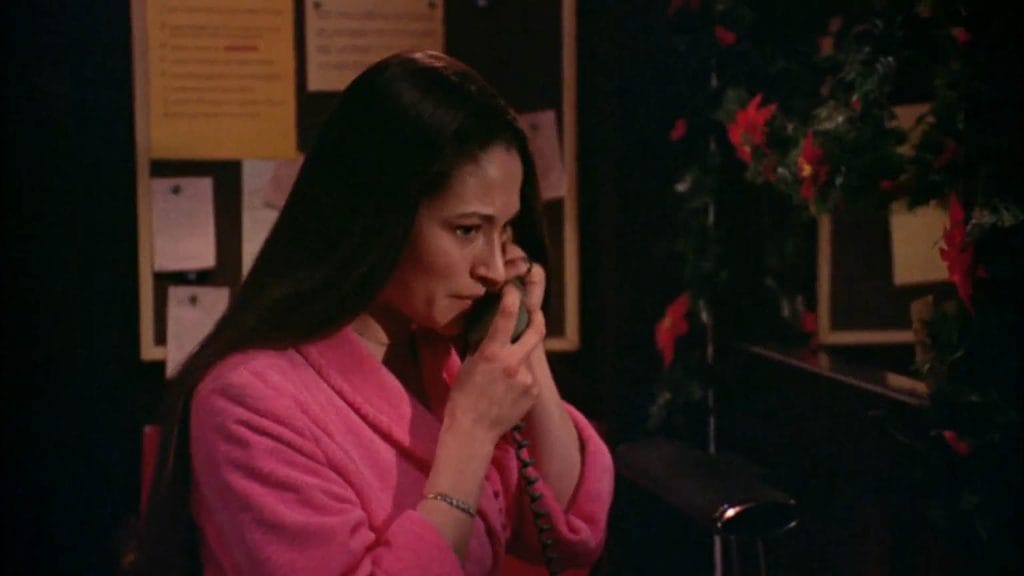
The sorority sisters who found themselves at his mercy where a complex bunch. They felt enormously atypical of what the genre would come to demand as time went on. They are emotionally believable, fully formed, and never treated as mere objects.
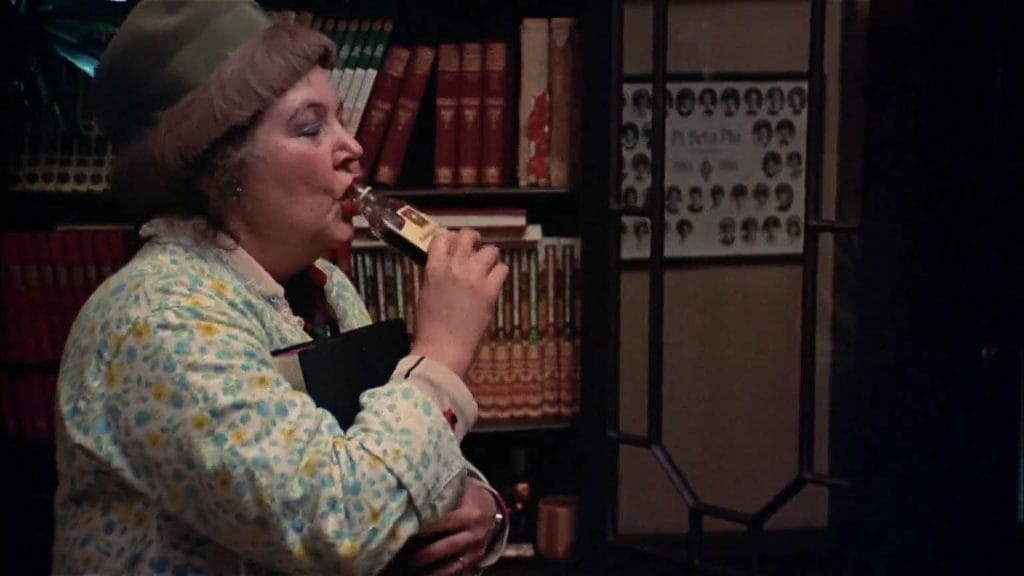
Barb was a tough as nails, wise cracking woman with an alcohol problem and a ton of attitude. Phyl was the ultra supportive friend who was there to look after everyone else but still didn’t take any shit. Jess was the fiercely independent one with a drive to start a career of her own and a complete unwillingness to give her body over to the whims of a man.
Hell, even the house mother, Mrs. Mac, was completely no-nonsense. She was more than a match for the people that tried to push the sisters around. This was a cast that, still to this day, remains one of the greatest and most likable in slasher history.
2006: The Wildly Different But Harmless Misfire
That would all change in 2006. Glen Morgan assembled an all star cast to reboot the franchise and it was an unmitigated disaster. It boasted names such as Michelle Trachtenberg, Mary Elizabeth Winstead, Lacey Chabert and a returning Andrea Martin taking on the role of Ms. Mac. Despite the promise, the decisions he made stood in stark contrast to what made the original so great.
The kills were over-the-top, there were moments of titillation that went against the haunting realism of the original, the cast were mere slasher stereotypes, and he overexposed the killer by taking a deep dive into the backstory of the movie’s antagonist Billy.
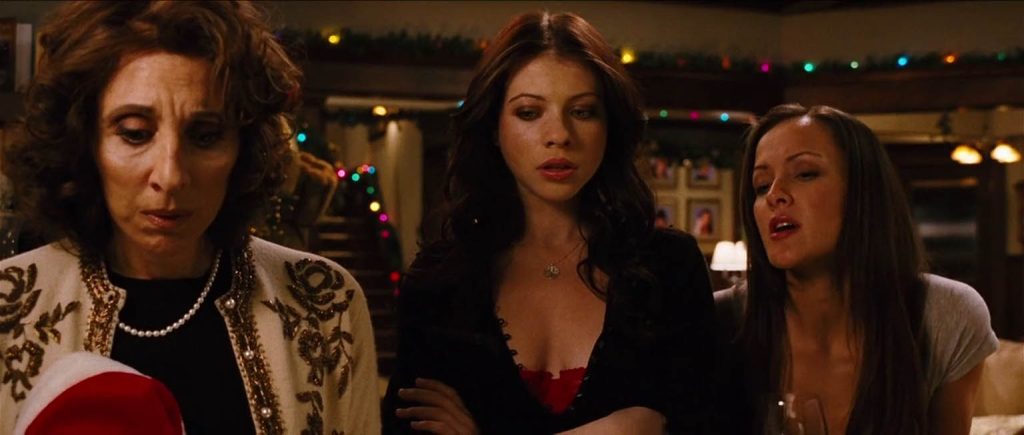
In trying to explain the context of Billy’s obscene phone calls, he pulled back a veil that should never have been pulled back. In creating a generic cast of characters, he removed what made the original so easy to invest in. This was no longer a scary and unsettling movie. It was pure splatter Gorno for a generation that was obsessed with films like Saw and Hostel.
For all of those complaints, the 2006 version of Black Christmas is starting to find a new audience. Sorting by most recent on IMDb’s user reviews for the movie will reveal a whole host of 6/10 and 8/10 scores. It’s kind of astonishing. The truth of the matter is that gory slashers that don’t try to do anything other than entertain will always find an audience.
2019: The Performative Feminist Rebrand
The movie we are actually here to talk about today receives no such positive re-appraisal. Looking at the IMDb user scores for Blumhouse’s 2019 remake of Black Christmas is a rather depressing endeavor. Rarely will you see so many 1/10 scores for a film that has, for all intents and purposes, everything going for it.
It had the backing of a big studio, stars like Imogen Poots in lead roles, a director in Sophia Takal who had been around the business for years, and a production crew that’s a veritable who’s who of horror. Combine that with a well known name and surely it’s a recipe for, at the very least, minor success.
My fiancee and I were actually majorly hyped about its release, too. A remake of the original with a great cast and more of a feminist bent sounded like a winning formula. So what the hell went wrong? Why is this movie so damn hated?
Well, to understand that, you have to understand the narrative that surrounding its release. Back in 2019, the reasons given for its failure were almost entirely focused on “review bombing.” The story went that angry internet misogynists hated the film’s feminist message. Tanking the score before giving it a fair chance.
And look, let’s be real, that absolutely happened. Unfortunately, it’s going to be a problem whenever this type of feminist horror movie comes around. There is a dark corner of the internet that hates women, and they definitely came out in force. But hiding behind that narrative ignores a much more uncomfortable truth: Black Christmas (2019) is a bad movie. Like… A really, really bad movie.
Spitting on a Legacy
Before we start the bashing, let’s try to be positive for a second. It’s not all bad. The idea of institutional misogyny as a horror engine is fantastic, in theory. The campus setting is ideal for a slasher movie. I do have to applaud the writers for pivoting away from the norm with the supernatural plot, as well. Imogen Poots gives it her absolute all and the movie looks pretty decent, for the most part.
With all of that being said, praise is hard to come by, here. Aside from the fact that it simply isn’t a great horror movie. It’s a movie that fundamentally misunderstands the franchise it is named after. It talks down to its audience and cynically uses social issues as a shield to deflect from lazy film-making. Let’s put the review bombing aside for a moment and talk about why this movie really failed.
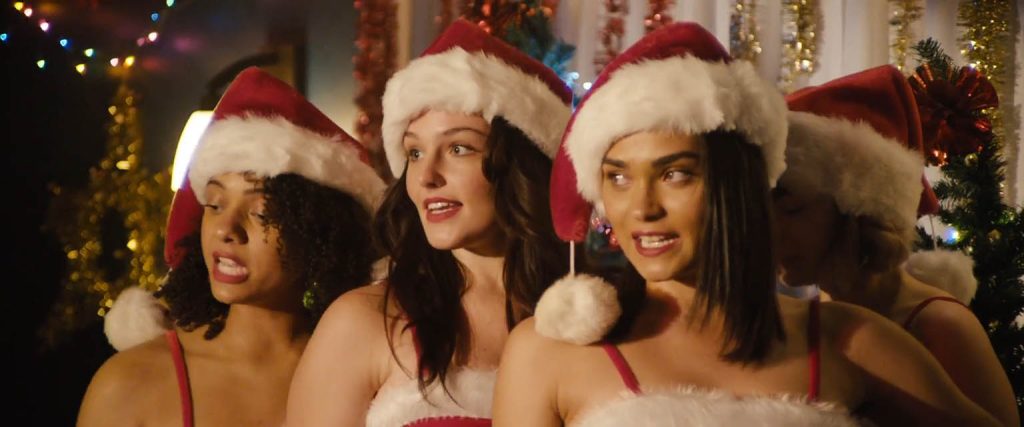
One of the biggest crimes committed by director Sophia Takal and co-writer April Wolfe wasn’t that they made a “woke” horror movie; it’s that they acted as if they were the first ones to bring feminist themes to Black Christmas. This attitude is not only arrogant; it is factually incorrect. In fact, it kinda spits on the legacy of Bob Clark’s 1974 masterpiece.
The original Black Christmas is one of the most authentically feminist horror movies ever made. Sure, it was a mix of intentional and emergent feminism but in creating characters who felt like real people, Clark essentially tapped into real issues that real women face each and every day. He respected both the characters and the viewer in presenting the reality of life as a woman in a heavily patriarchal society.
Feminist Horror Without the Megaphone
Released just after Roe v. Wade, it featured a protagonist, Jess Bradford, whose primary conflict wasn’t just a killer in the attic, it was her fight for bodily autonomy. She planned to have an abortion, refused to marry her controlling boyfriend, and prioritised her own future. The film treated her choice with dignity and seriousness. There was no trumpeting of the message; it was matter-of-fact and presented without judgement.
Peter, himself, was deliberately designed to illustrate the controlling nature of certain men. He reacts to Jess’s calm and collected decision making with aggression and anger. Peter treats Jess’s bodily autonomy as a betrayal. Before bearing down on her with the expectation that she will collapse under the burden of his emotional pressure. He’s a representation of selfish men who are threatened by women’s independence.
While perhaps more of an accidental feminist message than deliberate. Bob Clark wanted to illustrate the way young people, women in particular, are ignored or dismissed by people in power. Police treat the sorority sisters terribly; mocking the calls, dismissing their concerns, and downplaying the danger. This leaves the women to create their own protective bubble absent of male influence.
Even Billy could be seen as another thematic reading. Namely that of an aggressive man invading a female space, forcing sexually violent rhetoric on them, and becoming violent when they resist. He’s a chilling representation of the real danger many women deal with each and every day. As well as the inability many have to find a safe space away from that.
There are few male heroes in Black Christmas but many male villains. The sisters can only rely on each other. When it is all said and done, Jess is still let down when she can no longer fight and it is left to a man to protect her. It didn’t need to shout its message through a megaphone. The themes were woven into the DNA of the story.
Why the 2019 Version Failed (Beyond Review Bombers)
The 2019 remake ignores this completely. By marketing itself as a “modern feminist update,” it implicitly suggests that the original was outdated or regressive. It erases the quiet, groundbreaking bravery of the 1974 film in favor of a loud, superficial version of empowerment that feels more like a Twitter thread than a narrative. This is Tumblr feminism and, frankly, it’s pretty remedial.
Let’s address the elephant in the room: this movie has absolutely nothing to do with Black Christmas. If you change the title to Sorority House Massacre or Campus Cult, not a single frame of the movie changes. There is no Billy, there are no obscene phone calls (a staple of the franchise), there is no “The calls are coming from inside the house” tension.
Instead, we got a PG-13 supernatural thriller about a cult of annoying frat boys using black goo to possess people. It feels like a rejected script for a CW show that was dusted off, slapped with a recognisable IP, and rushed into theatres to capitalise on the holiday season.
This isn’t the movie we were all promised. It is a shameless cash-in. By wearing the skin of Black Christmas, the filmmakers invited comparison to one of the most disturbing and realistic slashers of all time, and then delivered a bloodless, toothless teen drama.
Show, Don’t Tell
The problems go right to the core, as well. One of the first rules of cinema is “Show, Don’t Tell”. It’s like a joke, right? If you have to explain it, is it really all that funny? Sophia Takal seemingly decided to do the exact opposite to that. The dialogue in this film is unnatural, clunky, and stuffed with Tumblr buzzwords that felt dated six months after release.
Characters don’t speak to each other like human beings; they speak like walking cue cards. Allow me to present you with a few quotes for your indulgence… “Rebuild yourself, bitch“. “Ho, ho, ho! I got a text from my secret santa… It’s a vibrator“. And the ol’ Twitter classic “It’s not my job to educate you“. Oh, and we can’t forget the classic “Up on the rooftop / Click, click, click / You slipped me a roofie / And your d**k“. It turns a horrifying reality into a punchline for a pop song.
They even had a male character give it the classic “Not all men” spiel. It’s like they filled in the blank parts of the script with motifs from t-shirts. Everything about Sophia Takal’s Black Christmas is fake and performative. This isn’t feminism, it is slogans to slap in your Twitter bio. What a huge disappointment!
A big part of the problem is that the film doesn’t trust its audience to understand the themes of toxic masculinity or rape culture through subtext or action. Instead, it pauses the horror to have characters lecture the viewer like they are drooling idiots.
Mindless Drones & Failed Messages
It’s didactic and condescending. The scary thing about the original film’s villain, Billy, was that he was an unknowable, chaotic force of misogyny. In the 2019 version, the villains are cartoonish caricatures of frat bros who literally monologue like Scooby-Doo villains about their evil plans. It removes all the dread and replaces it with eye-rolling and slightly insulting obviousness.
Weirdly enough, the ridiculous nature of the antagonists somehow manages to undermine the severity of the story. In a very bizarre and actually quite amusing turn of events, the antagonists are the complete opposite of what the movie is trying to make them out to be.
Rather than aggressive and controlling men poisoned by the well of toxic masculinity. They are a group of mindless drones who aren’t responsible for their actions, have no agency at all, and don’t represent misogyny because they don’t have enough free will to even scratch their asses if they wanted to. It’s ridiculous.
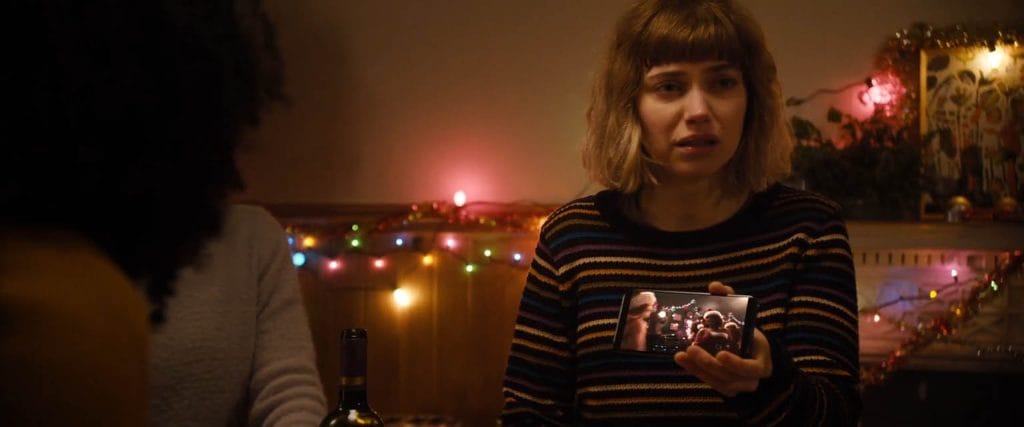
When you boil it down, the film purely comes down to a group of girls fighting some magical monsters… Nothing more. Sophia Takal and April Wolfe removed the accountability from the bad guys by making them simple monsters while seemingly forgetting that feminism is all about accountability.
I actually think the movie would have been less horrendous if it was purely Sophia Takal in front of a white board writing down and explaining each of the story’s messages. It would have somehow been less insulting.
Aesthetic Feminism with No Substance
If those issues weren’t bad enough, the movie treats its cast of women as a monolith rather than actual fleshed out individuals. There’s no grey area here. We have the final girl who is going to survive, the activist, the sceptic, and the shy girl. The characters literally exist purely to make a point and nothing else.
They even fall out and fight in a way that suggests a group of women simply can’t get along. While desperately trying to shout down a megaphone about it’s message, it completely misses the fact that it is presenting the world with a collection of characters that are stereotyped to a point of being completely insulting.
There seems to be a distinct sense that all of the problems can be wiped away by the women talking about Diva Cups, masturbation, and how hairy they are. This is aesthetic feminism with no substance at all. Black Christmas is a film that had an agenda and worked backwards to fit the story around it.
The plot was warped to slot it in, the characters were bent into place, and the slogans were dialed up to 11. What could have been a doubling down on the subtle feminist messages of the original was, instead, turned into a surface-level interpretation that only the most terminally online corners of social media would relate to.
The Shield of Criticism
Perhaps the most frustrating aspect of the film’s release was how the marketing team and filmmakers handled the reception. The narrative was set early: this is a movie for women, and if you don’t like it, you are part of the problem. This created a convenient shield against any kind of valid criticism.
Did you think the script was weak? You must hate strong women. Did you dislike the PG-13 rating and lack of gore? You just don’t get the message. Did you feel it disrespected the original? You’re just a toxic fanboy.
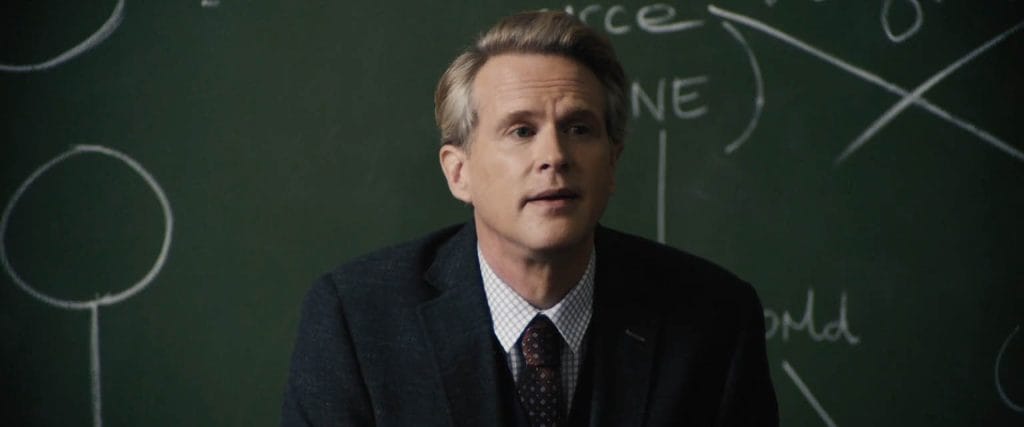
This tactic is incredibly damaging. It alienates genuine horror fans, men and women alike, who wanted to love the movie. I’ll never forget how disappointed my fiancee and I were when we first watched it. We actually chucked on the 2006 version right after to wipe the taste away. That’s how bad it was.
There are plenty of us who crave socially conscious horror (look at Get Out or The Invisible Man), but we also want a good movie. Using misogyny as a deflective shield to protect a poor product is beyond cynical. It reduces legitimate film criticism to a culture war, letting the studio off the hook for producing a sub-par, rushed product.
A Missed Opportunity
The tragedy of Black Christmas (2019) is that the core concept, women fighting back against institutional misogyny on a college campus, is a fantastic premise for a horror movie. It could have been absolutely fantastic.
Imogen Poots gives it her all and tries her best to elevate the material. But she is let down by a script that prioritises noisy messaging over storytelling and a direction that forgets that a horror movie, first and foremost, needs to be scary.
It didn’t fail because of internet trolls. It failed because it forgot what made Black Christmas legendary: the atmosphere, the mystery, and the respect for its characters and the viewer. Instead of honoring that legacy, it used it as a trojan horse for a remedial lecture, leaving horror fans out in the cold.
Black Christmas didn’t fail because audiences reject feminist or socially conscious horror. Horror fans have embraced feminist films for decades. It failed because it spoke down to its audience, misunderstood the franchise’s history, and mistook slogans for substance. The original earned its feminism. The remake licensed it.
For some genuinely positive feminist themed movies, try The Descent (2005), The Invisible Man (2020), Ginger Snaps (2000), You’re Next (2011), Raw (2016), and Fresh (2022). I think Unseen (2023) is another great one as an example of just enjoyable girl power, too. Thanks for reading!
Key Takeaways: Why Black Christmas (2019) Failed
The Failure
- Betrayal of Legacy: It ignores the genuine, groundbreaking feminist themes of the 1974 original in favor of a loud, superficial version of empowerment that feels more like a Twitter thread.
- Name Only: The film has nothing to do with the Black Christmas franchise. It’s a generic PG-13 supernatural thriller about a cult, slapped with a recognizable IP to make a quick buck.
- Performative Feminism: The characters are stereotypes rather than people. The dialogue is stuffed with buzzwords that feel didactic and condescending, lacking any real substance or nuance.
The Irony
- Removing Accountability: By making the male villains mindless drones possessed by black goo, the film accidentally absolves them of their toxic behavior – the exact opposite of the message it was trying to send.
- The “Shield”: The filmmakers and studio used the “review bombing” narrative as a shield to deflect valid criticism, alienating genuine horror fans who just wanted a good movie.
- The 2006 Redemption: Ironically, the once-hated 2006 remake is finding a new audience because, unlike the 2019 version, it prioritised being a fun, scary slasher over lecturing its audience.
The Verdict: Black Christmas (2019) didn’t fail because of internet trolls; it failed because it forgot to be a good movie. It prioritised messaging over storytelling, insulted its audience’s intelligence, and delivered a product that felt like a remedial lecture rather than a horror film.
Support the Site Knockout Horror is a participant in the Amazon Services LLC Associates Program. Basically, if you click a link to rent or buy a movie, we may earn a tiny commission at no extra cost to you. As an Amazon Associate, I earn from qualifying purchases. This helps keep the lights on and the nightmares coming. Don't worry, we will never recommend a movie purely to generate clicks. If it's bad, we will tell you.
Disclaimer: All movie images, posters, video stills, and related media featured in this article are the property of their respective copyright holders. They are presented here under the principles of fair use for the purposes of commentary, criticism, and review. Knockout Horror makes no claim of ownership over these materials. Each image is used purely to illustrate discussion of the films and to provide context for readers. We encourage audiences to support the official releases of the movies mentioned.