Pontypool (2008) Ending Explained – Words Can Kill
Movie Details: Director: Bruce McDonald | Runtime: 1h 36m | Release Date: Sep 18th 2008 | Star Rating: 3.8/5 Stars
Welcome to Knockout Horror. Today we are going to be explaining the ending to the cult classic Canadian psychological horror Pontypool (2008) (review after the jump). I re-watched this last night and briefly wondered why I never explained it and so, here we are. This is widely considered one of the smartest “zombie” movies ever made, though using the Z-word doesn’t really do it justice. It’s claustrophobic, tense, and insanely weird. The ending is notoriously abstract, so let’s break down the linguistics behind the madness. Let’s go!
⚠️ Warning: Major spoilers follow below.
The Ending in Brief
The TL;DR: Trapped in the radio station, Grant Mazzy and Sydney realise the virus is transmitted through the English language itself – specifically through understanding the meaning of certain words themselves. Sydney becomes infected by the word “Kill” which is why she keeps repeating it. In a desperate bid to save her, Grant comes up with a plan to “disinfect” the word by changing its meaning to something completely different. He convinces Sydney that the word “Kill” actually means “Kiss”. This fundamentally changes her understanding of the word. It works, curing her symptoms. Realising that the only way to stop the virus is to disrupt the language, they go on air one last time, shouting confusing, non-sequitur phrases to “scramble” the signal. As the military counts down, Grant and Sydney kiss. The station is seemingly bombed, but a post-credits scene shows them surviving in a stylised, noir-like reality.
Who Survived? Physically? Likely nobody in the town of Pontypool. The implication is that the military bombed the town to contain the infection. However, the post-credits scene suggests that Grant and Sydney survived, at least metaphysically, evolving into new personas (“Johnny Deadeyes” and “Lisa the Killer”) who exist outside of conventional reality/language.
How Does The Virus Work? It is a semantic virus. It doesn’t infect the blood; it infects the mind through understanding. Once a specific word (a “infected word”) is heard and understood, the victim enters a loop (echolalia), repeating the word until their mind breaks. They then become violent, seeking to chew the mouths off uninfected people to gorge on new words.
What Did The Final Message Mean? Grant’s final monologue sounded like gibberish but he was essentially sharing a vaccine with the people listening. By screaming phrases like “Mrs. French’s cat is missing” mixed with contradictions, he was trying to induce “semantic satiation”, in other words – stripping words of their meaning so the virus had nowhere to hide and couldn’t infect people. If the words don’t mean anything, they can’t hurt you.
Good to Know: The film is based on Tony Burgess’s novel Pontypool Changes Everything. In the book, the virus is even more surreal and eventually infects the text of the book itself, making it difficult to read. The movie does a really nice job of adapting this by visualising the virus as sound waves on an oscilloscope.
Table of Contents
Pontypool (2008) Ending Explained
No plot recap here, I am sure you remember what happened. Let’s get right into the explanation. Pontypool is almost completely unique in the world of Zombie movies. Unlike standard outbreak films where you just need to aim for the head, Pontypool asks you to aim for the dictionary. Let’s dig into the strange logic of the virus, that bizarre post-credits scene, and what it all means. We are even going to talk about the alternate radio ending.
How Does The Virus Work?: It’s Not In The Blood
The virus in Pontypool works by infecting a person’s understanding of the English language.
Dr. Mendez provides the key exposition here and he works it out because he is bilingual: “It’s not the blood, it’s the understanding”. The virus hides in the English language itself. Specifically, it seems to attach itself to specific terms of endearment (honey, sweetheart) and rhetorical speech. So basically, if you understand the meaning of a certain English word, you can be infected by the virus.
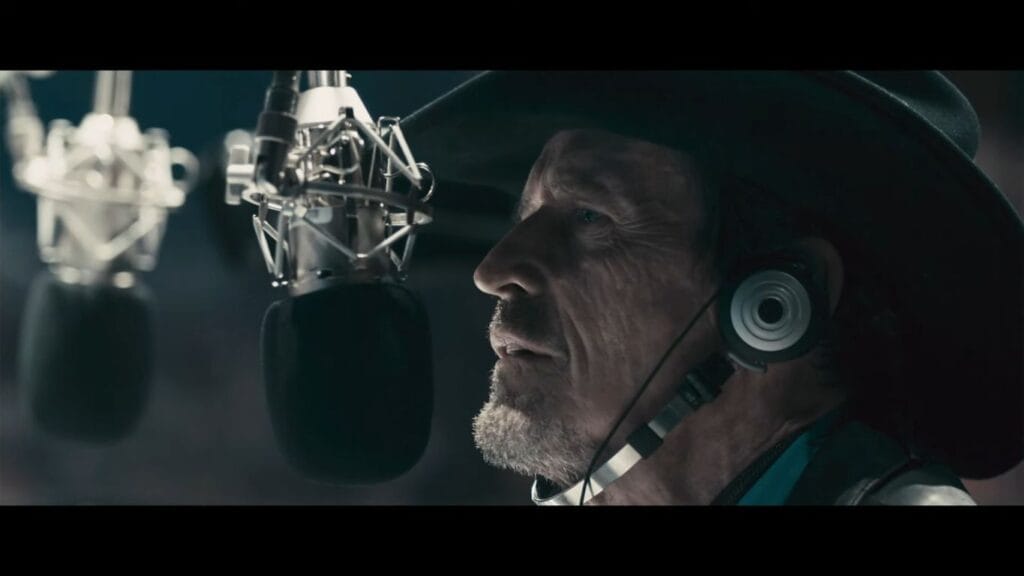
This is how Mendez manages to overcome his infection… He switched to speaking Armenian rather than English which basically inoculated him. The virus is exclusive to English in this specific outbreak. This is also the reason why Sydney and Grant attempt to speak to each other in French.
How Does The Virus Spread?
The virus spreads by infecting certain words and proliferating through the act of speech itself. Think of it like an ear worm that turns you into a raging zombie.
A person simply needs to hear an infected word and understand the meaning of said word to become infected. This is the reason director Bruce McDonald refers to the sufferers as ‘conversationalists’, rather than ‘zombies’.
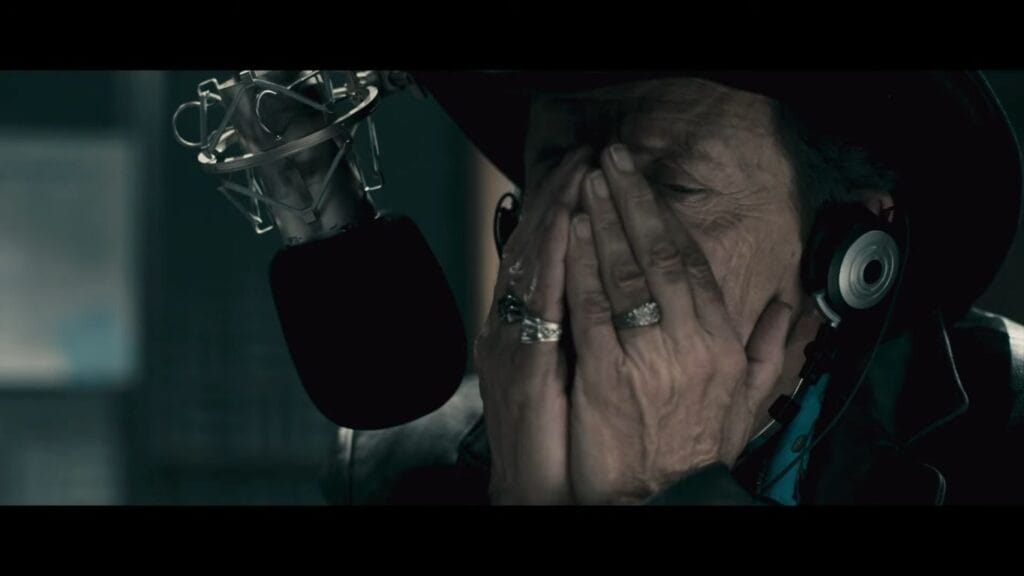
When a person hears an infected word and understands it, the virus latches on:
- The first symptom is repetition (Laurel-Ann repeating the word “missing”).
- The second symptom is a glitch in the brain where the language itself detaches from reality (the loss stage where the words disappear). This means you can no longer express yourself properly which is why the sufferers demonstrate frustration and confusion.
- The final symptom is the sufferer losing all cognitive reasoning and becoming, essentially, a zombie. This stage is the “devouring” – the infected become so distraught at their predicament that they try to chew the mouths off other people.
Mendez theorises that the infected are desperate to ingest new words to replace the ones they have lost. The sufferer can actually be cured as long as the virus is in the first stage. If it moves beyond that, the victim is lost. The virus is intended to be fairly random and unpredictable and McDonald and Burgess wanted to reflect the real life nature of viruses. Some people get infected, others don’t.
Unpicking The Logic: Biology vs. Semantics
The film treats words exactly like biological pathogens. Just as a real virus (like the flu) needs a specific protein “key” to enter a cell, the Pontypool virus needs a specific linguistic receptor to enter the mind: the understanding of English.
This explains Dr. Mendez’s immunity. By switching to Armenian, he didn’t just change the sound; he changed his “cellular” makeup. The virus was still in the air, but because his brain wasn’t “configured” to process English meaning, the virus had no place to dock. He made himself biologically incompatible with the infection which is key to the cure.
How Does The Cure Work? Kill is Kiss
The cure for the virus works by changing the meaning of infected words.
The climax of the film revolves around Sydney getting infected. She begins fixating on the word “Kill”, meaning she is in the first stage of the virus. In a fantastic subversion of horror tropes, Grant doesn’t shoot her; he hacks her brain.
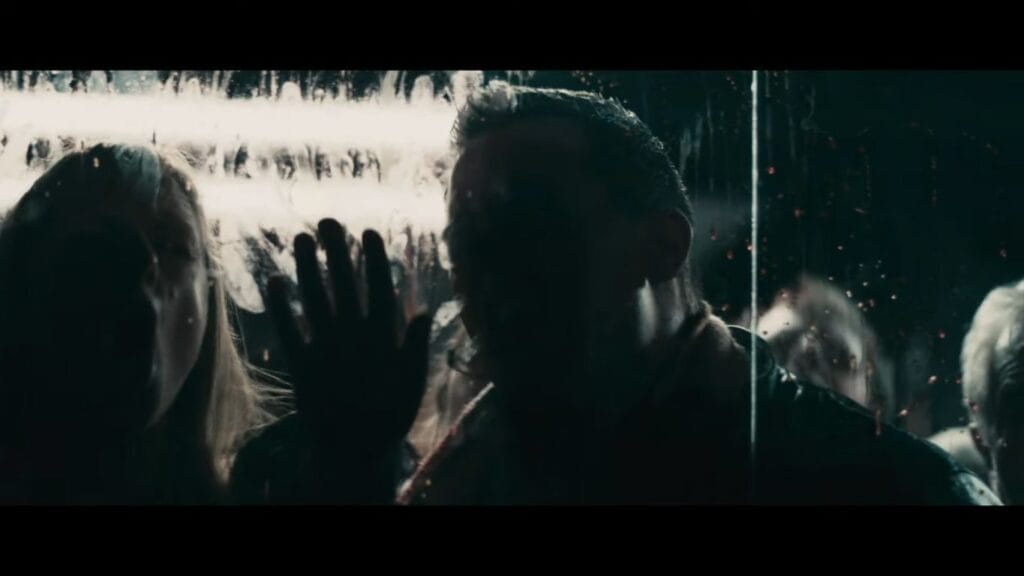
Grant realises that if the virus requires “understanding” of the word to work, he can kill the virus by changing the understanding of the word itself. He forces Sydney to repeat “Kill is Kiss” until she actually believes that kill doesn’t mean to end something’s life, it means to kiss something. In Sydney’s mind, she now believes that killing something is to give it a quick peck on the lips or cheek. Hope they cleared that one up again before fighting off the zombie horde.
In other words, he disassociates the sound of the word “Kill” from the meaning of murder, and re-associates it with affection. Once Sydney believes “Kill” means “Kiss”, the virus loses its grip because the “infected” definition no longer exists in her mind. The virus is absolutely dependent on understanding of a word to remain active.
Unpicking The Logic: Could You Really Reprogram a Native Speaker?
In the film, Grant saves Sydney by convincing her that the word “Kill” actually means “Kiss”. It’s an entertaining dramatic moment, but scientifically speaking, how hard is it to overwrite a word in a native speaker’s brain?
The Stroop Effect & Cognitive DissonanceTo understand the difficulty, let’s look at something called the Stroop Effect. If you see the word “RED” written in blue ink, your brain lags a bit. It struggles to reconcile the semantic meaning (Red) with the visual reality (Blue). For a native speaker, words are hardwired neural pathways triggered instantly, not just labels. You don’t really “decide” to understand the word “Kill”; your brain fires the “danger/death” concept before you consciously process it.
Semantic Satiation: The LoopholeThe movie relies on a phenomenon called Semantic Satiation. If you repeat a word, let’s say “Fork” for example, over and over for a minute, it eventually stops sounding like a word and becomes just a weird noise. The neural pathway fatigues and temporarily disconnects the sound from the meaning. This is the loophole that the movie works with and understanding it makes the ending seem a little more reasonable.
The Verdict?In reality, you couldn’t permanently “reprogram” a terrified woman in 30 seconds. The brain’s survival instinct is too strong. However, Grant wasn’t really trying to teach Sydney a new language; he was trying to induce massive dissociation. By combining the trauma of the situation with semantic satiation, he managed to sever the wire connecting “Kill” to “Murder” just long enough to break the virus’s hold. It’s shaky science, but brilliant horror logic. Let’s be honest, too. How many horror movies even bother attempting to include real world logic? It’s quite impressive really.
Do Grant and Sydney Die at the End?
It is implied that Sydney and Grant die at the end as the entire town of Pontypool is destroyed by the military. The post credits scene contradicts this, though, suggesting they survive by communicating in a system of improvised words.
Sydney and Grant head to the radio booth to broadcast, what they believe is, the cure to the virus. Grant begins shouting nonsense phrases, contradictions, and non-sequiturs over the air. The aim here is to short-circuit the listeners’ brains and create a sort of cognitive dissonance in them.
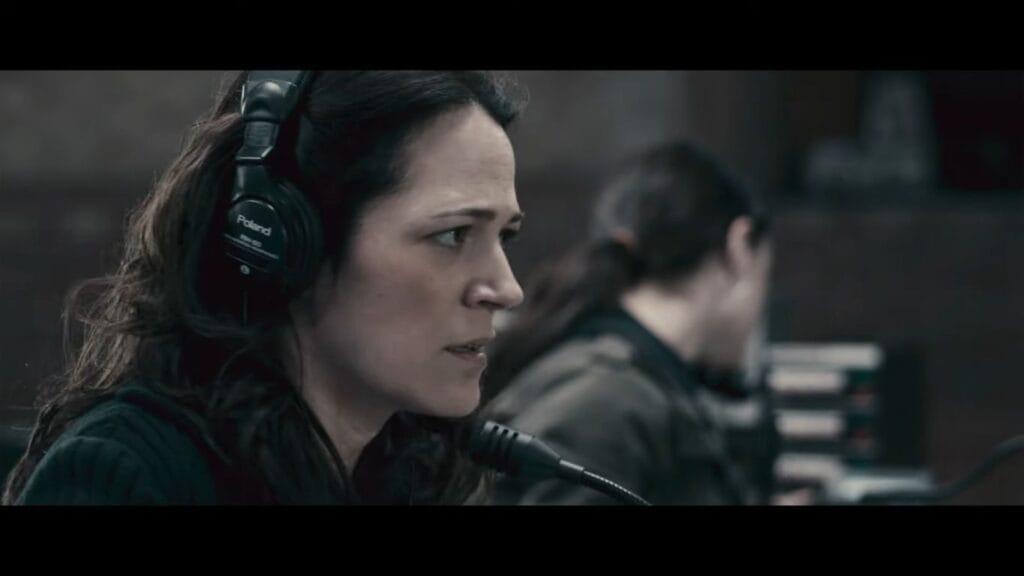
By confusing the people listening, they are no longer understanding the words he is saying, meaning they can’t be infected. He isn’t trying to change the meaning of the words like he did with Sydney and Kill/Kiss. He is trying to remove the meaning from all words and the English language as a whole. English will no longer be an actual language, it’s just noise and gibberish.
That way, the virus won’t have anything to latch onto because nobody understands anything and nothing makes any sense. The language just becomes harmless noise. While they are doing this, the military warn them to leave before counting down from ten. The pair kiss and the whole town is bombed.
Did You Know: The Bleak Radio Play Ending
While the film offers a stylised, somewhat ambiguous survival for the duo, the radio play version of Pontypool delivers a much darker fate.
In this audio-only version, the “Kill is Kiss” linguistic hack backfires. After Grant convinces Sydney that the definitions have swapped, she asks Grant to “kiss” her. Grant complies, but in a subsequent obituary broadcast, he confirms Sydney is dead – implying that by “kissing” her at her request, he actually killed her.
Left completely alone in the booth, Grant realizes he has been infected by the word “paper”. Resigned to his fate, he succumbs to the loop, repeating the word over and over until he utters his final, chilling realisation: “Trap”.
The Post-Credits Scene: Johnny Deadeyes and Lisa the Killer
If, like me the first time I watched, you turned the movie off when the screen went black, you missed a little extra. After the credits, the visual style shifts drastically. We see Grant and Sydney in a super stylised, black-and-white, noir-ish setting. They introduce themselves as “Johnny Deadeyes” and “Lisa the Killer”.
This scene is widely debated, but the prevailing theory is that it represents their survival through a fundamental shift in reality. By breaking the English language to survive the virus, they have detached themselves from the “real world” (Pontypool) and entered a new narrative space where they can redefine who they are. They essentially “killed” their old selves to survive.
Alternatively, a darker interpretation is that they are in the afterlife, or a purgatory of their own making, where the only thing left is to keep talking. The “kick” at the end refers to a signal to the next scene – they are now characters in a new story.
My Theory on the Post Credits Scene
My theory? This post-credits scene is the visual representation of the cure to the virus. The same way the characters made English gibberish and unrecognisable, they made their entire world unrecognisable in order to survive.
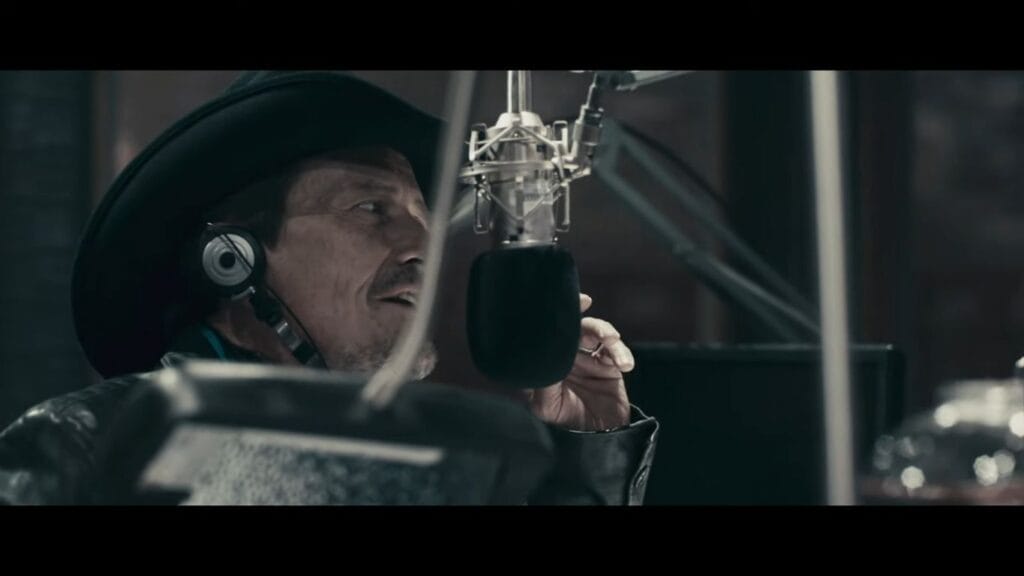
The world became black and white, the theme became tonally disjointed and ‘weird’, the style changed to an almost comic-book like noir approach. To survive, they had to abandon the reality they understood and move into something altogether stranger and less logical. They evolved; Grant and Sydney transcended the virus by becoming as fluid and nonsensical as the cure itself
It’s a “meta” survival strategy: If the script says you die, change the genre of the movie. Nobody said Pontypool existed in the same world as ours and the post credits scene confirms that. Or it’s just a fun little kicker to make the audience laugh.
Did You Know: The Orson Welles Connection
The entire film is a structural homage to Orson Welles’ 1938 radio broadcast of The War of the Worlds. I picked up on the similarities when first watching but never knew for sure until reading into it more. Much like that broadcast, which convinced terrified listeners that Martians were invading, Pontypool relies almost entirely on reports coming in from the “outside”.
We rarely see the gore directly; we hear Ken Loney describing it from his helicopter (which turns out to be a truck). This technique forces the audience to visualise the horror, which is often far scarier than seeing bad CGI. It also ties into the theme: words have the power to create (or destroy) reality.
Frequently Asked Questions
Did Laurel-Ann die?
Yes. Laurel-Ann succumbed to the virus quite rapidly. After smashing her head repeatedly against the sound booth window and chewing off her lower lip, she vomited a massive amount of coagulated blood and died. Mendez suggests she died because the virus “consumed” her when she failed to pass it on to a victim.
Did Dr. Mendez die?
Yes, although likely not from the virus itself. While Mendez successfully immunised himself against infection by speaking exclusively in Armenian, he could not protect himself from the physical violence of the mob. He sacrifices himself by luring the horde away from the booth to allow Grant and Sydney to escape. Even if he survived the initial attack, the military “burn” protocol that destroys the station at the end of the film would have sealed his fate.
What do the news reports at the end mean?
The news reports near the end of the movie suggest that the virus has started spreading to all English speaking countries and is having the same effect there. Perhaps a stark commentary on the nature of media and the proliferation of bad information.
Why didn’t Dr. Mendez get infected?
The virus in Pontypool is specific to the English language. Dr. Mendez realized this early on and switched to speaking exclusively in Armenian. Since he wasn’t processing English meaning, the virus couldn’t latch onto his mind.
What was the countdown at the end?
The countdown heard over the speakers was likely the military or a containment unit initiating a “cleanse” of the area. It implies that the town of Pontypool was bombed or incinerated to stop the infection from spreading further.
Who was Ken Loney really?
Ken Loney was the station’s “helicopter” traffic reporter. However, it is revealed mid-movie (via sound effects of a turn signal) that Ken doesn’t have a helicopter; he drives his car to a hill and plays sound effects to fake it. He was eventually killed while hiding in a grain silo.
What does “Pontypool” mean?
Aside from being a real town in Ontario and in my home country of Wales (UK), the word itself becomes a symbol. Dr. Mendez mentions “Pontypool… Pontypool… Pontypool…” implying that names and places can lose their meaning just like any other word.
Final Thoughts: Shut Up Or Die
Pontypool is an absolutely fantastic example of creative low-budget horror. It proves you don’t need millions of dollars and hordes of zombies to be terrifying; you just need Stephen McHattie’s voice and a really good script. The ending is confusing, sure, but it perfectly fits the theme: in a world where words can kill you, the only way to survive is to stop making sense. “Sydney Briar is alive!” Thanks for reading!
Why not stick around? Check out some more Ending Explained articles. I also review horror movies and I also write horror lists.
A Note on Ending Explanations
While we aim to provide comprehensive explanations based on the events on screen, film analysis is inherently subjective. The theories and conclusions presented in this "Ending Explained" feature are personal interpretations of the material and may differ from the director's original intent or your own understanding. That's the beauty of horror, right? Sometimes the scariest version is the one you build in your own head.
You might also like:
Support the Site Knockout Horror is a participant in the Amazon Services LLC Associates Program. Basically, if you click a link to rent or buy a movie, we may earn a tiny commission at no extra cost to you. As an Amazon Associate, I earn from qualifying purchases. This helps keep the lights on and the nightmares coming. Don't worry, we will never recommend a movie purely to generate clicks. If it's bad, we will tell you.
Disclaimer: Images, posters, and video stills used in this horror ending explained article are the property of their respective copyright holders. They are included here for the purposes of commentary, criticism, and review under fair use. Knockout Horror makes no claim of ownership and encourages readers to support the official release of all films discussed.