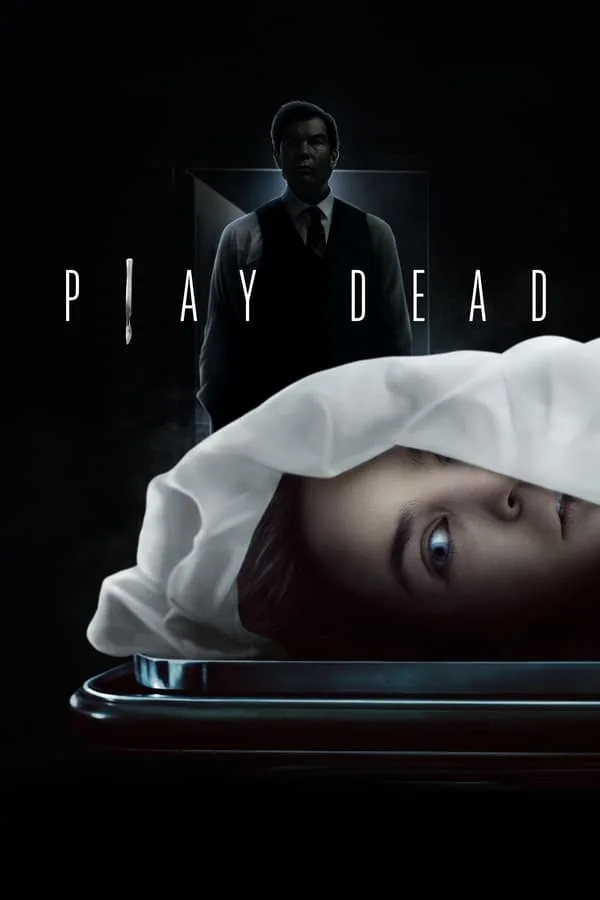
Play Dead (2022) Ending Explained – Organs, Propofol & The Red Market
Movie Details: Director: Patrick Lussier | Runtime: 1h 46m | Release Date: 2022 | Star Rating: 2.5/5 Stars
Welcome to Knockout Horror and to another Ending Explained. We are back to unpick the horror thriller Play Dead. We covered this as part of our Horror on Tubi feature, focusing on frugal frights that won’t hammer your bank balance. Take a look at our full review right here.
If you’ve arrived here, you’re likely baffled by some of the ridiculous choices made in this film. While the ending isn’t complex, the internal “logic” of Play Dead definitely needs some explaining. We’re going to deep-dive into character motivations and why some of these plot points are, frankly, farcical. Let’s unpick the organ harvesting and the “big brain” plan that started it all.
⚠️ Warning: Major spoilers follow below.
The Ending in Brief
The TL;DR: Chloe retrieves the incriminating phone and kills both the Coroner and Sheriff Duggan. Along the way, she realizes her ex-boyfriend Ross was being kept alive for his “fresh” organs. In the final showdown, she harvests the Coroner’s own liver to pay off the organ middle-man, Mannix, ensuring her and T.J.’s freedom. The movie ends with the siblings escaping in a getaway car with $25,000 and the guard dog that just ate Chloe’s boyfriend’s liver.
What was the Coroner’s scam? He was running an organ-harvesting ring with Sheriff Duggan. The Sheriff delivered victims (some still alive) to the morgue, and the Coroner harvested their parts to sell to wealthy “clients” through a middle-man named Mannix.
Is the “Play Dead” plan realistic? Absolutely not. Injecting Propofol into a muscle wouldn’t work (it’s an IV drug), and paramedics would have easily detected a pulse or attempted resuscitation before sending her to a morgue.
The Resolution: Chloe proves to be just as ruthless as the villains, wisecracking as she stabs the Coroner in the brain and expertly removing his liver. She “wins,” but at the cost of her soul and a significant amount of medical ethics.
Good to Know: The film attempts to highlight the very real and terrifying “Red Market” (illegal organ trade), though it does so with all the subtlety of a sledgehammer.
Table of Contents
Play Dead (2022) Ending Explained
Let’s get right into it, no plot recap needed here. To understand the ending of Play Dead, we first have to address the financial desperation of our leads, Chloe (Bailee Madison) and T.J. (Anthony Turpel). Their father committed suicide following a battle with PTSD after the insurance company cut off his meds.
Because of a “suicide clause” in his policy, a common trope that is actually quite rare in long-standing real-world policies, the bank is now foreclosing on their home. Instead of getting part-time jobs, the siblings decide that robbery and perverting the course of justice is the only logical path forward.
The Farcical “Propofol” Plan
Chloe plans to use propofol to fake her death so she will be taken to the morgue where she can retrieve the phone.
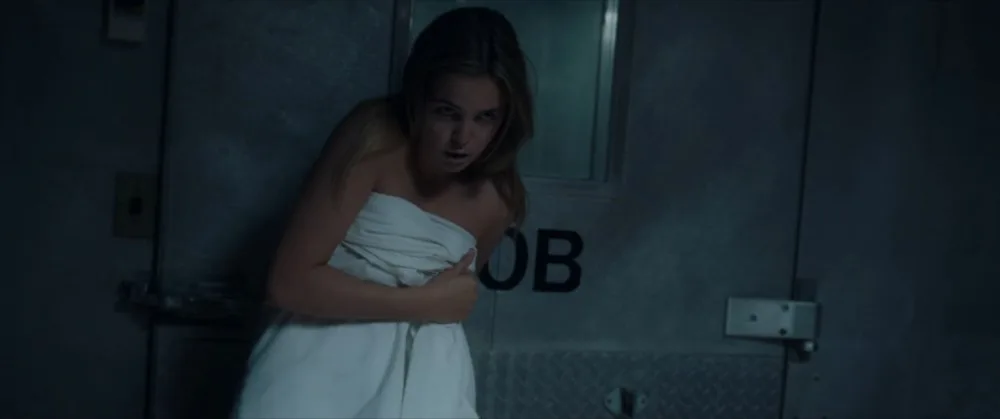
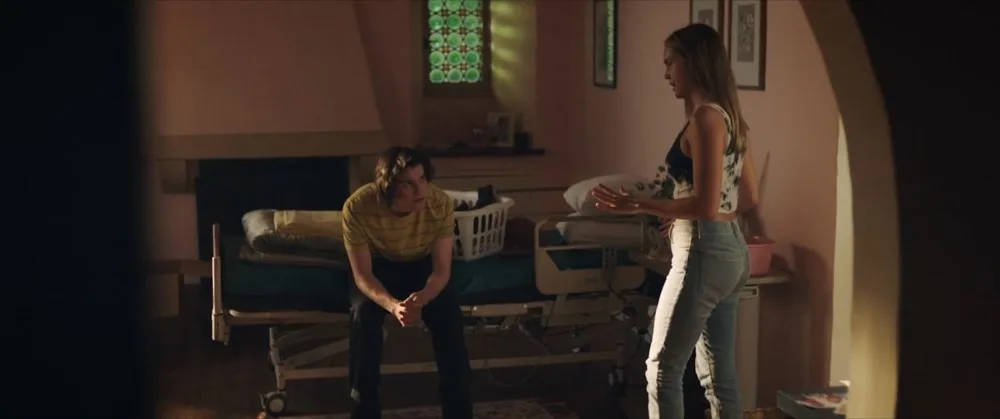
After a botched robbery results in the “death” of Chloe’s ex-boyfriend Ross, T.J. panics because his iPhone (containing incriminating messages) is still on Ross’s body in the morgue. Chloe decides to inject herself with Propofol to fake her death and get inside the facility.
Her plan is that she will be found “dead” under the bridge and taken straight to morgue with absolutely no attempt at resuscitation or a visit to the hospital for live saving intervention first. There, she can get the phone back and everyone will live criminally ever after. Obviously, this plan is ludicrous even by Tubi horror plot standards.
Medical Myth: Faking Death with Propofol
The film treats Propofol like a magical “pause” button for the human body, but the science is laughably wrong.


1. Administration: Propofol is an intravenous (IV) hypnotic. Chloe injects it into her arm muscle like a flu shot. In reality, this would just cause localised pain and a very slow, ineffective absorption.
2. Duration: Propofol acts incredibly fast and wears off just as quickly (usually within 10-15 minutes). Chloe would have woken up in a bush having pissed her pants way before the paramedics even finished their coffee. That’s if the Propofol didn’t kill her outright.
3. The Vitals: Even under sedation, a person has a pulse and breathes. Paramedics are trained to check for these things. The idea that she would be “bagged and tagged” without a cursory check for a heartbeat is pure horror fiction.
The Coroner and the Organ Trade
Once inside, Chloe discovers the Coroner (Jerry O’Connell) isn’t just a creepy guy who likes corpses; he’s an entrepreneur in the illegal organ trade. He harvests parts from victims provided by Sheriff Duggan (Chris Butler) and sells them to a middle-man named Mannix (Jorge-Luis Pallo).

These organs are being sold to the highest bidder. In most cases, this means rich business men. The victims don’t have to be dead to be harvested, either. Just like Ryan isn’t as he didn’t actually die from the gunshots, he is still clinging on to life, but not for long.
The Reality of the Red Market
The “Red Market” refers to the illicit trade of human body parts. It is estimated that the illegal organ trade generates between $600 million and $1.2 billion in annual profits globally.
Livers are particularly valuable because, while they can regenerate in a living donor, a whole-organ transplant from a young, healthy individual like Ross is a high-ticket item on the black market.
According to the World Health Organization, roughly 10% of all organ transplants globally are estimated to involve illegally trafficked organs. The victims are almost always from vulnerable or marginalised populations, much like the “drug addicts” the Coroner claims to harvest in the basement.
Ross’s Fate and the Guard Dog
Chloe finds Ross alive – briefly. Sheriff Duggan “delivers” victims who are still breathing because their organs are more viable. Unfortunately, after a failed escape attempt, the Coroner harvests Ross’s liver while Chloe is restrained, effectively killing him.
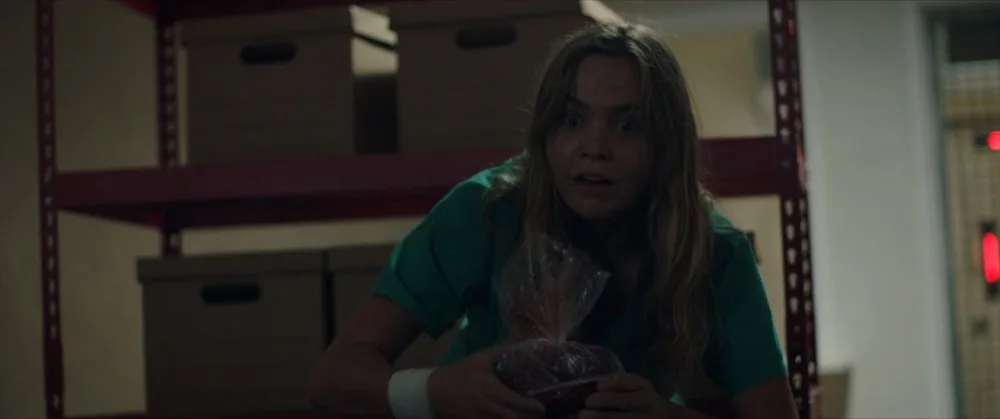
In a particularly savage move, Chloe later uses Ross’s harvested liver to distract the morgue’s guard dog, proving she’s shifted from “terrified student” to “primal survivor” pretty quickly. It’s both hilarious and gross!
The Mannix Alliance: Why the “Bad Guy” Helped Chloe
In a movie where everyone’s morality is a shade of charcoal, the relationship between Chloe and Mannix is purely transactional. Mannix doesn’t help the siblings out of the goodness of his heart; he does it because Chloe saved his life and saved his job.
The Life-Saving Act: After Sheriff Duggan shoots Mannix to hide the police connection to the ring, Chloe chooses to help him rather than leave him to bleed out. By dragging him to the basement and providing basic medical aid, she earns enough of his respect to strike a bargain.
The Job-Saving Act: Mannix’s boss needed a liver, and the Coroner was the only one who could provide it. When Chloe kills the Coroner, she effectively destroys Mannix’s supply chain. By using her medical knowledge to harvest the Coroner’s own liver, she fulfills the order, ensuring Mannix doesn’t show up empty-handed to a very dangerous boss.
The Payoff: Mannix is a man of his word (or at least, a man who knows a $25,000 transfer is a small price to pay for a fresh liver and a clean getaway). He drives the siblings home and provides the cash that saves their house, completing the circle of “frugal frights” where the protagonist has to become a bit of a monster to beat one.
The Final Showdown: Liver for a Life
The finale is a chaotic mess of tear gas, liquid nitrogen, and medical tools. Chloe kills Sheriff Duggan using a high-pressure oxygen canister as a projectile. She then faces the Coroner, who has T.J. on the slab. After a struggle involving a BB gun (a “prop” from Ross’s robbery) and liquid nitrogen, Chloe and a wounded Mannix gain the upper hand.
Chloe stabs the Coroner through the skull, but the real “horror” is what happens next. Mannix needs a liver to satisfy his boss and get his $50 bet back. Chloe, a second-year medical student who apparently skipped the “Do No Harm” ethics lecture, expertly removes the Coroner’s liver to fulfill the order. This secures their freedom and a $25,000 payout to save their house.
While the credits roll on a somewhat triumphant note, the reality for Chloe and T.J. is anything but a “happily ever after.” By the time the screen fades to black, the siblings haven’t just saved their house; they’ve fundamentally rewritten their moral identities in a way that would leave most people in a permanent state of psychological collapse.
Traumatically Ever After: The Mental & Legal Fallout
Play Dead attempts to frame its ending as a win, but if we look at the long-term implications for Chloe and T.J., the “success” is overshadowed by a massive amount of trauma and potential prison time.
The Psychological Damage: Chloe’s transition from a medical student to a person who maniacally laughs while stabbing a man in the brain is a sign of severe moral injury. Watching her ex-boyfriend be disemboweled and then feeding his liver to a dog is the kind of trauma that doesn’t just go away with a $25,000 check. She and T.J. are now living with Complex PTSD, and their desensitisation to extreme violence suggests a permanent shift in their personality structures.
The Legal Nightmare: Even if we assume Chloe deleted the security footage, they are still in deep trouble. Chloe committed Obstruction of Justice, Theft of Evidence, and Abuse of a Corpse. Then there is the matter of the $25,000 from Mannix, an illegal transaction from a known organ runner. If the FBI or state investigators look into the deaths of a Sheriff and a Coroner, the “siblings who were almost foreclosed on” are going to be the first people they interview.
The Verdict: They saved the house, but they turned themselves into criminals to do it. Every time Chloe looks at her medical textbooks, she’ll remember harvesting a liver in a basement. They didn’t just escape the morgue; they brought a piece of it home with them.
Frequently Asked Questions
Is Play Dead based on a true story?
No. While the illegal organ trade is a real global issue, the characters and specific events in Play Dead are entirely fictional and heavily dramatised for the thriller genre.
What was Chloe’s medical background?
Chloe is a second-year medical student. This is used to explain her knowledge of Propofol (however misused) and her ability to perform a surgical organ removal at the end of the movie.
How did Chloe and T.J. get their hands on Propofol?
The siblings visit a local veterinary nurse whom T.J. already had a “business relationship” with: he previously purchased the stimulant Adderall from her.
Why was the Sheriff involved with the Coroner?<
Sheriff Duggan was a crooked cop who profited from the organ trade. He funneled “unclaimed” or marginalized victims to the Coroner to ensure a steady supply of fresh organs for wealthy black-market clients.
Does Ross survive in Play Dead?
No. Ross is murdered by the Coroner when his liver is harvested. His remains are then further desecrated when Chloe feeds his liver to the guard dog to facilitate her escape.
Could Chloe’s use of Propofol actually make her look dead?
No. While Propofol induces deep sedation, it does not stop your vital signs. A sedated person still has a detectable pulse, blood pressure, and, unless they have completely overdosed, independent respiration. Paramedics and medical professionals are trained to check for these “signs of life” immediately. In a real-world scenario, the paramedics would have simply seen a woman who was heavily sedated and rushed her to the ER for a stomach pump, not the morgue.
Final Thoughts – Crime Pays (In Tubi Movies)
The ending of Play Dead is remarkably cynical. Chloe and T.J. get exactly what they wanted: the house is saved, the incriminating evidence is gone, and they have $25,000 in the bank. They even get a free dog! The moral of the story seems to be that if you’re smart enough to harvest a villain’s organs, crime actually does pay. It’s a silly, average thriller that works best if you don’t think too hard about the science or the ethics. Thanks for reading!
Looking for more? If you enjoyed this breakdown, check out our review of Play Dead or browse our Horror Movie Lists.
A Note on Ending Explanations
While we aim to provide comprehensive explanations based on the events on screen, film analysis is inherently subjective. The theories and conclusions presented in this "Ending Explained" feature are personal interpretations of the material and may differ from the director's original intent or your own understanding. That's the beauty of horror, right? Sometimes the scariest version is the one you build in your own head.
You might also like:
- Grafted (2024) Ending Explained – Face Stealing & Fusion
- Until Dawn (2025) review – A splatter fest that ignores the game
- 20 Outdoors & Wilderness Horror Movies Ranked – Terror in the Trees
- Exhibit A (2007) Ending Explained – Breaking Down The Grim Finale
- Final Destination: Bloodlines (2025) review – Death is back and better than ever
Disclaimer: Images, posters, and video stills used in this horror ending explained article are the property of their respective copyright holders. They are included here for the purposes of commentary, criticism, and review under fair use. Knockout Horror makes no claim of ownership and encourages readers to support the official release of all films discussed.