Hallow Road (2025) Ending Explained: Did Alice Die & Who Was The Couple?
Movie Details: Director: Babak Anvari | Runtime: 1h 30m | Release Date: 2025 | Star Rating: 3/5 Stars
Welcome to Knockout Horror. Today, we are explaining the ending to the confusing psychological thriller Hallow Road (2025). This film offers two distinct interpretations: a heartbreaking literal one confirmed by the filmmakers, and a far more interesting supernatural one rooted in Celtic folklore. We are going to break down both so you can decide which one you prefer. If you haven’t seen it yet, read our spoiler-free review first.
⚠️ Warning: Major spoilers follow below.
The Ending in Brief
The TL;DR: There are two competing explanations for the ending. The Literal Explanation is that Alice died in a standard hit-and-run at the very start of the film; the entire journey that follows is a shared hallucination fuelled by her parents’ intense guilt. The Supernatural Explanation suggests a darker fate rooted in Celtic folklore: Alice was lured into the woods by Will-o’-the-wisps and replaced by a wooden “Changeling,” leaving her parents to find a fake body on the road while the real Alice was taken by the Fae.
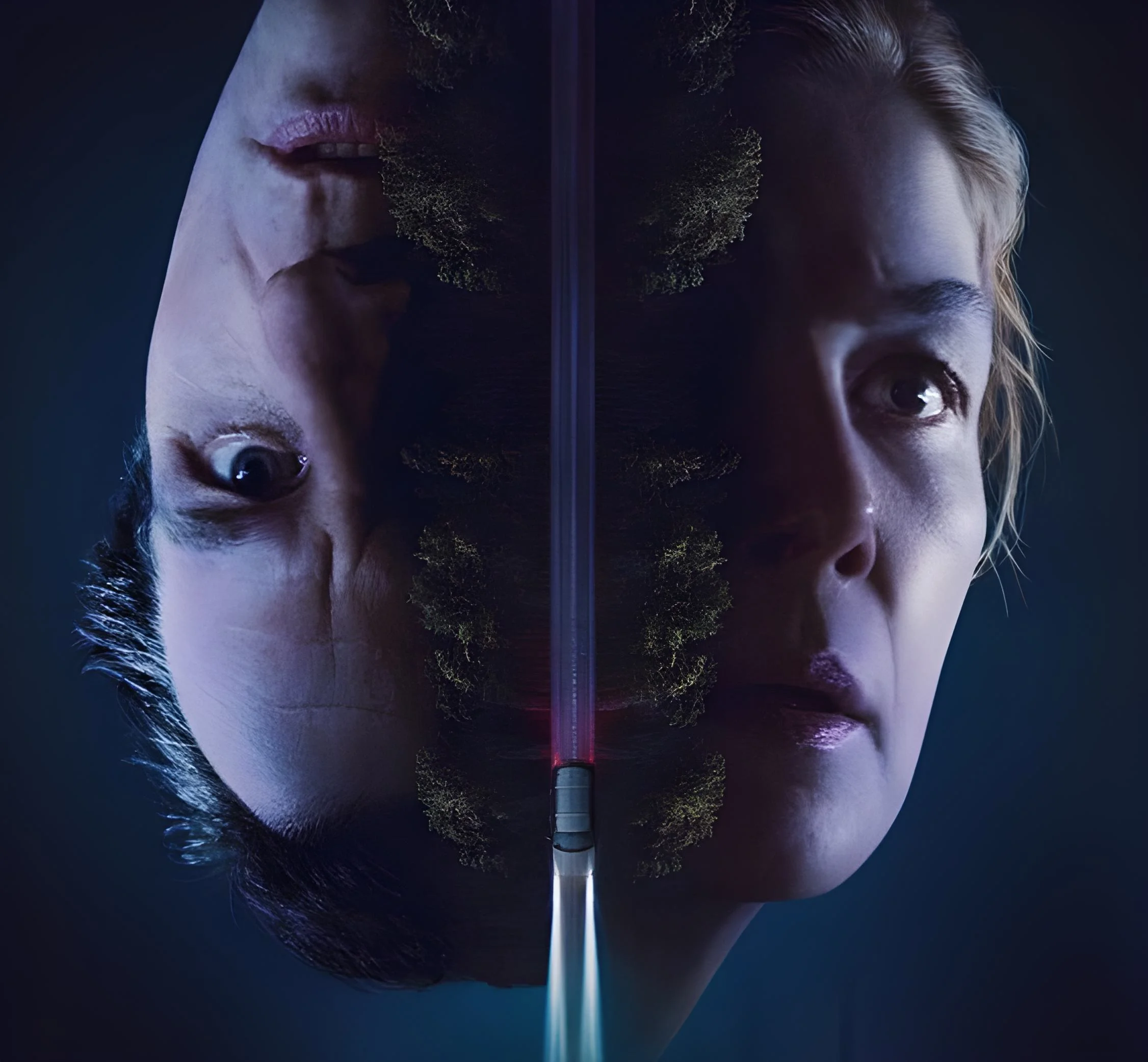
Who were the couple on the phone? They were never real. The “Mysterious Couple” are voiced by Rosamund Pike and Matthew Rhys (the actors playing the parents). This confirms they are manifestations of Frank and Madison’s fractured psyches, representing the “ideal parents” they failed to be.
Did the parents kill her? No. A popular theory suggests Frank and Madison accidentally hit Alice themselves and blocked it out. However, their car shows zero damage, which debunks this idea. Alice was likely hit by a stranger while wandering disorientated on the dark road.
Why did the chest cave in? If you believe the supernatural theory, Alice’s claim that the girl’s chest “caved in like wood” suggests she hit a Changeling – a wooden construct left by Fairies – rather than a human.
Good to Know: The film takes place on October 31st (All Hallows’ Eve). In Celtic folklore, this is the night the veil between worlds is thinnest, lending significant weight to the theory that Alice was taken by “The Good People” (Fairies) rather than just dying in a random accident.
Table of Contents
Hallow Road (2025) Ending Explained
Let’s get straight into this. We aren’t going to recap the plot, we are just jumping straight into the explanation.
This is a movie that is deliberately vague, deliberately foggy, and deliberately made to bait explanations and social media engagement. That means the narrative is extremely murky and open to interpretation. To understand the ending of Hallow Road, you have to choose your path. Do you believe in the “Elevated Horror” metaphor for grief, or do you believe in the “Folk Horror” warning about the Fae? Let’s look at the evidence for both.
Theory 1: The Literal Explanation (It Was All Grief) – The Actual Explanation
This is the ending that was confirmed by the director of the movie. Alice died at the very beginning of the movie. After crashing her car and calling her parents, she wandered onto the road in a daze and was struck by a passing vehicle in a hit-and-run.
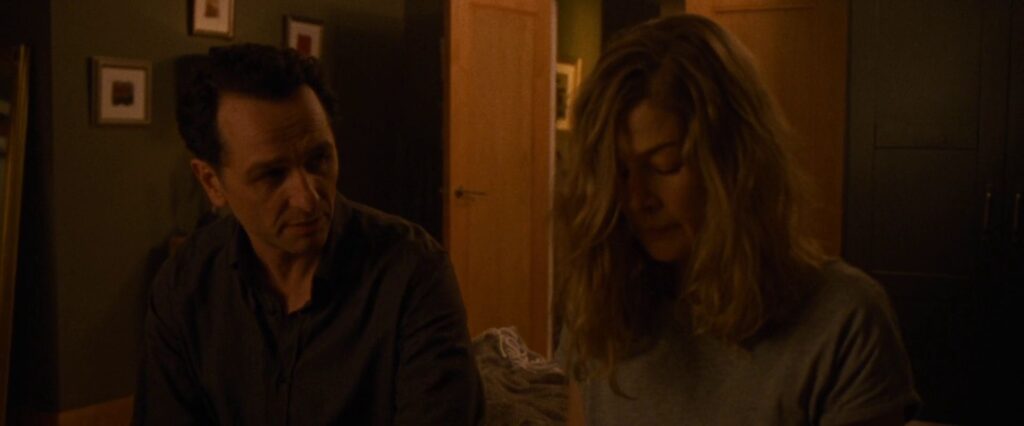
Everything that follows aside from them racing to the scene – the mysterious couple on the phone, the race through the woods, subsequent conversations with Alice as she is assaulted- never actually happened. It was a shared trauma response by Frank and Madison. Consumed by guilt over their argument and failing to save their daughter, their minds invented a scenario where they still had a chance to help.
What We are Seeing Doesn’t Literally Happen
What we’re seeing is not a literal shared hallucination in real time, but a reconstruction that plays out cinematically for the audience, representing how Frank and Madison mentally replay the night while driving toward the inevitable. It’s like the panic you feel on the approach to something bad happening, where your mind plays out every possible version at once and fuses imagination with memory. Just a cinematic version that we can watch.
This explanation frustrates some viewers (including me) because it retroactively drains tension from the film’s central journey, but that discomfort is intentional. I’ve even had a couple of people email me angrily about this, as if I personally made the decision. I know, it’s not satisfying but this is intended. Death is ordinary and very unsatisfying.
Evidence for the “Grief” Theory
- The Voices: The mysterious couple on the phone are voiced by Rosamund Pike and Matthew Rhys themselves. This is the smoking gun that proves the voices were “in their heads” and the writer and director went to great lengths to make sure that viewers of screenings of the movie noticed this. In their minds, it was the most pivotal reveal of the entire story.
- The Police Report: At the end, the police confirm it was a standard hit-and-run. There was no other couple, no body in the woods, just Alice.
- The Timeline: Alice stops answering her phone early in the film. This is the moment she died. Every interaction after that is a hallucination.
The Anchor to Reality: The Police Report
The most chilling moment in the film isn’t a jump scare; it is the police officer’s mundane report at the end.


He strips away all the surreal imagery, the Will-o’-the-wisps, the mysterious couple, the wooden chest, and delivers the frighteningly ordinary truth: “It was a hit and run.”
This dialogue confirms that Alice didn’t disappear into a fairy realm. She died on a cold stretch of tarmac, alone in the dark. It is a bleak, grounding moment that forces both the characters and the audience to confront the banal tragedy of the situation.
How Did The Parents Know Where to Find Alice?
Frank and Madison talk to Alice on the phone right after her accident. She gives them her location before wandering out into the road to check on the thing she hit. She thought it was a person but there was no evidence of this.
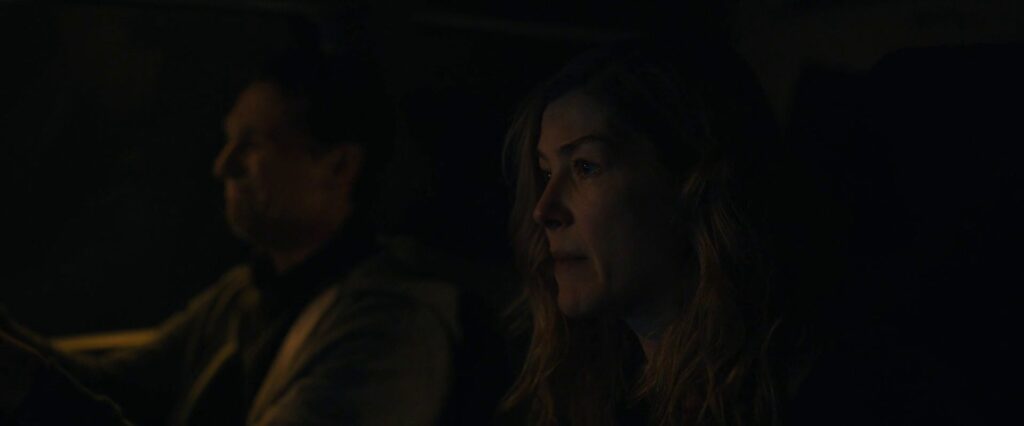
Alice dies right after stepping out into the road while on the phone with her mother. When the phone cuts dead, she has been hit and dies instantly.
Who Were The Mysterious Couple?
The mysterious couple were a manifestation of Frank and Madison’s grief and trauma. They realised that if they had acted differently and, perhaps, raised Alice differently, they could have saved her and prevented this from happening. As a result, they experience a shared trauma where they imagine what would have happened if they did the right thing.
I want to point out a very important quote from the director in this interview over at filmupdates.net:
“As a final word of advice, don’t rush out of your seat when the credits roll. Stay. There’s something waiting in those final frames that might just reframe everything you have just seen.”
Babak Anvari
The thing waiting in those final frames were the names Rosamund Pike and Matthew Rhys listed in the credits as voicing the mysterious kind couple. The same actors who played Frank and Madison.
This conclusively proves that the couple were never real, they were a manifestation of what Frank and Madison would have done differently to prevent this from happening – holding Alice to account and making her take responsibility.
Their lax parenting, in essence, contributed to this sad outcome. Alice didn’t take life seriously because they never forced her to. This eventually, caused her to make reckless decisions such as driving while upset and high and wandering in a dark road at night.
Did You Know? Madison’s Pre-Existing Trauma
Madison’s mental collapse didn’t start with the crash; she was already on the edge. The film subtly reveals that she is a paramedic who recently lost a young patient on the job.
This explains why she is secretly taking antidepressants (Citalopram) and why she becomes so fixated on the CPR instructions during the phone call. She isn’t just trying to save the “girl” Alice hit; she is subconsciously trying to rewrite her own professional failure to save a young life. Something which inadvertently results in Alice being hit by a car.
The Fantastical Elements Are Thematic, Not Literal
The fairy-tale and fantastical elements in the film are not meant to be taken literally. According to the director, they exist to heighten the nightmare logic of the story and frame it as a modern fairytale about inevitability and grief.
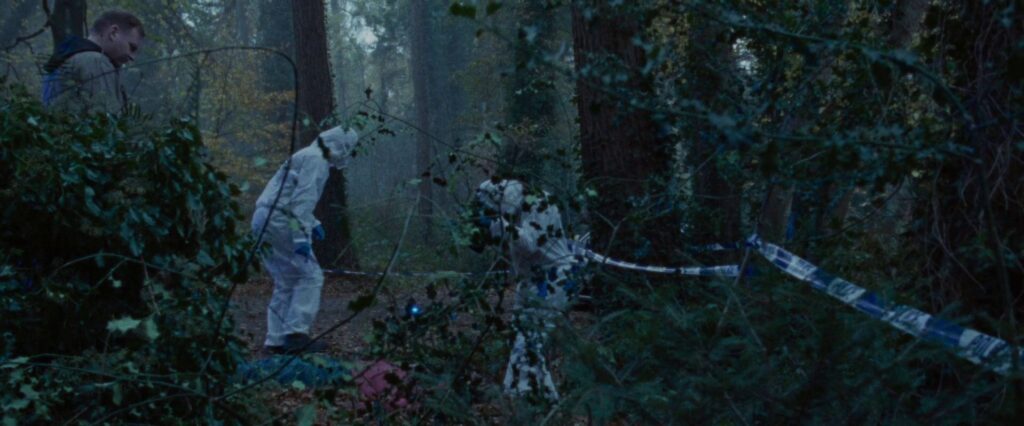
The director has described the film as intentionally drawing from classic fairytales, where parents desperately try to change the fate of their child, often only to realise that fate cannot be avoided:
“That’s why there are some fantastical elements. In classic fairytales like Sleeping Beauty, you have parents desperately trying to change the fate of their child. Sometimes the child brings that fate upon themselves.”
Babak Anvari
In other words, the fantastical imagery is there to express emotional truth, not to suggest an alternate supernatural reality. These elements add texture, symbolism, and dread, but they do not undermine the film’s grounded explanation of events. Let’s be honest, it gave people something to talk about, too.
Theory 2: The Supernatural Explanation (It Was The Fae)
While the director has confirmed that the story is actually rooted in grief and literal tragedy. We can take an interesting supernatural explanation from the folklore present in the film. This theory is far more interesting and fits very neatly.

Evidence for the Supernatural Theory
The Date and the Location
The story takes place on October 31st, All Hallows’ Eve or Halloween to you and me. A night traditionally associated with “thin places” where the barrier between the human world and the spirit world weakens. The road itself is named Hallow Road, an explicit nod to this idea. In folklore, this is precisely the kind of night where people vanish, are led astray, or encounter spirits masquerading as something else.
The Doppelgänger: Why Did the Body Look Like Alice?
One of the creepiest details in the film is Alice insisting the victim “looked just like her.” Here is how the two theories explain it:
- Literal Theory (Drugs): Alice was impaired by MDMA and extreme panic. In her disoriented state, she experienced a dissociative hallucination, projecting her own image onto the debris or the road, effectively seeing her own death before it happened.
- Supernatural Theory (Changeling): In Celtic folklore, when the Fae steal a human, they leave a Changeling in their place. This construct is enchanted to look exactly like the victim. Alice wasn’t seeing a stranger; she was seeing the fake body that was about to replace her.
The Headlights That Aren’t There
Alice leaves the safety of her car after seeing what she believes are her parents’ headlights approaching. Frank and Madison later confirm they were nowhere near her at that point. Under a supernatural reading, these lights resemble Will-o’-the-wisps, a common element in Welsh (yay!) and Irish folklore used to lure travellers off the road and into danger.
The Girl Who Looked Like Alice
Alice repeatedly states that the girl she hit looked just like her. This detail is brushed off in the literal explanation as drug-induced panic, but it aligns eerily well with changeling mythology, where enchanted constructs are designed to resemble a specific human target.
The Caving Chest During CPR
When Alice performs CPR, she feels the girl’s chest cave in unnaturally. In folklore, changelings are often described as being made from wood or organic material enchanted to look human. The “crunch” Alice describes is far closer to breaking timber than breaking ribs.
Pregnancy as a Motive
In Celtic folklore, pregnant women and newborns are prime targets for fairy abduction. Alice’s pregnancy, revealed shortly before her death, gives the supernatural theory a clear motive: she was taken, not killed, and replaced with a constructed body to maintain the illusion of a normal death.
The Body on the Road
When Frank and Madison finally arrive, the body in the road is Alice herself. Under the supernatural interpretation, this is not Alice at all, but the changeling left behind. The police classify the death as a hit-and-run, allowing the supernatural event to pass unnoticed, exactly as folklore often describes.
In this version, Alice didn’t just crash; she was targeted by Fae folk. The “headlights” she saw in the road weren’t a car – they were Will-o’-the-wisps (fairy fire) luring her off the path. The girl she hit wasn’t human; it was a Changeling. The mysterious couple on the phone were fairies mimicking Frank and Madison’s voice to talk to them. They kidnap Alice to return her to their world where she will be used as a wet-nurse to raise their children. In her place, they leave a changeling.
Folklore Focus: Why The “Chest Cave-In” Matters
One key detail supports the supernatural theory: Alice claims the girl’s chest “caved in” when she performed CPR. In Celtic folklore, Changelings are often constructs made of enchanted wood or old logs, glamoured to look human.
When Alice pressed down on the chest, she wasn’t breaking ribs; she was crushing hollow wood. This explains the unnatural sound and feel.
Why kidnap her? Fairies are notorious for stealing pregnant women (which Alice was) to act as wet nurses for their own children. In this reading, the real Alice was taken to the Fae realm, and the body found on the road was the wooden Changeling left in her place.
Did The Parents Kill Alice?
A popular fan theory suggests that Frank and Madison accidentally hit Alice themselves while racing to find her, then blocked it out due to trauma. However, this doesn’t really hold up to scrutiny and for one key reason.
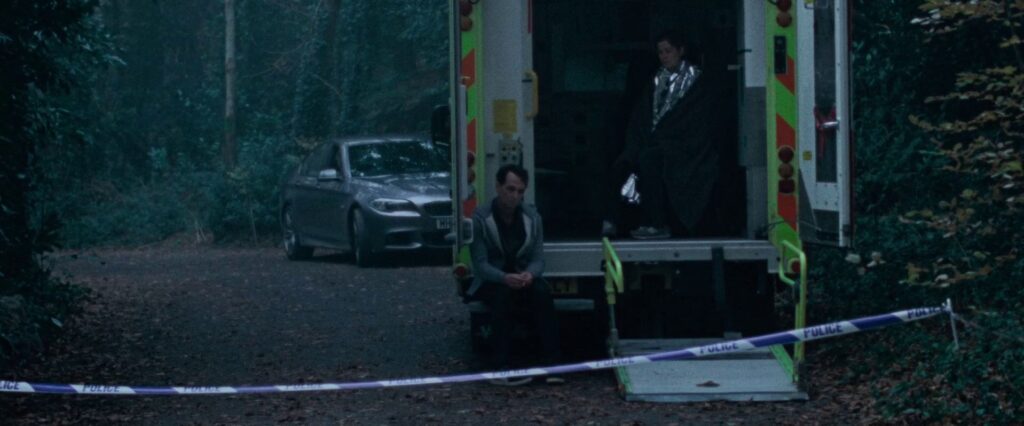
Why it’s false: Hitting a human body at speed destroys a car’s front end. Frank’s car shows no damage consistent with a fatal impact. The police would have arrested them immediately if their car had Alice’s DNA and dents all over it. It didn’t so that rules this theory out.
Frequently Asked Questions
Is Alice actually dead?
Yes. Alice is dead by the time the police arrive. She was killed in a hit-and-run while she wandered in the road confused and inebriated.
Who were the mysterious couple?
They were a hallucination. The actors Rosamund Pike and Matthew Rhys voiced them, confirming they represent the parents’ own internal guilt and self-judgment.
Why was Alice driving so erratically?
Alice was high on MDMA and distraught after her parents suggested she get an abortion. Her impaired state made her vulnerable to the accident (or the Fae lure).
Final Thoughts: Metaphor vs. Myth
Hallow Road tries to be a profound meditation on parental guilt, but frankly, the “it was all a dream/trauma response” ending is a bit of a cop-out. It feels like a standard drama dressed up in horror clothing.
The supernatural explanation – that Alice was stolen by the Fae on Halloween night – is infinitely more compelling and terrifying. It turns a sad story about a hit-and-run into a cautionary tale about the dangers of the old woods. I know which version I prefer to believe.
Remember, the director confirmed the literal explanation. Please don’t email me telling me that I’m a dunce or something; I’m no happier about it than you are. Thanks for reading.
Looking for a critique? For our verdict on the acting, the pacing, and a full rating, read our Hallow Road (2025) Movie Review.
A Note on Ending Explanations
While we aim to provide comprehensive explanations based on the events on screen, film analysis is inherently subjective. The theories and conclusions presented in this "Ending Explained" feature are personal interpretations of the material and may differ from the director's original intent or your own understanding. That's the beauty of horror, right? Sometimes the scariest version is the one you build in your own head.
You might also like:
- Excision (2012) Review – A Wickedly Funny and Visceral Psychological Horror
- The Thing (1982) review – John Carpenter’s Masterclass In Paranoia And Practical Gore
- Free Frights – 31 Days of Halloween Horror Movies (Tubi, Plex, Freevee etc) (Updated 2026)
- Beetlejuice, Beetlejuice (2024) review – A chaotic but fun return to the afterlife
- There’s Something in the Barn (2023) review – culture shock meets killer elves
Disclaimer: Images, posters, and video stills used in this horror ending explained article are the property of their respective copyright holders. They are included here for the purposes of commentary, criticism, and review under fair use. Knockout Horror makes no claim of ownership and encourages readers to support the official release of all films discussed.