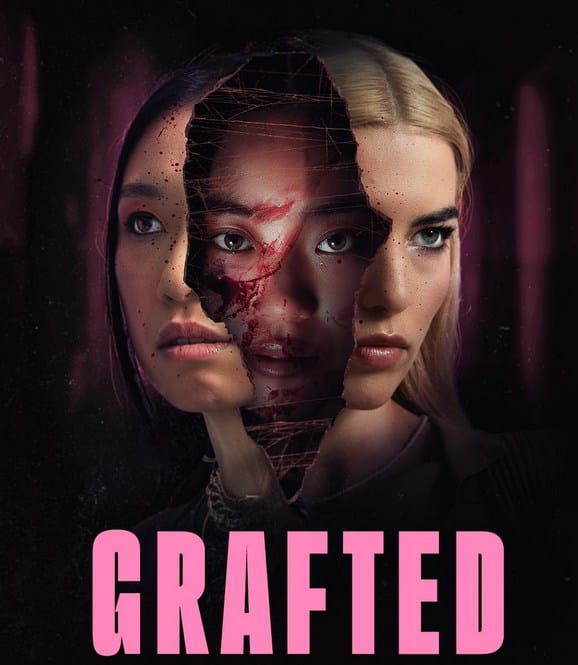
Godless: The Eastfield Exorcism Ending Explained & True Story
Movie Details: Director: Nick Kozakis | Runtime: 1h 31m | Release Date: 2023 | Star Rating: 3.5/5 Stars
Welcome to Knockout Horror. Today we are explaining the ending to the Tubi Original Godless: The Eastfield Exorcism. This isn’t just a fantastic horror movie; it’s a disturbing exploration of faith, mental illness, and the tragic intersection of the two.
The cost of living is kicking everyone’s ass, and as people say “Night Night” to Netflix and “Hasta La Vista” to Hulu, free services like Tubi are becoming the go-to. While Tubi has plenty of stinkers, Godless: The Eastfield Exorcism is a legitimate must-watch that points a finger at the horrifying practice of forced exorcisms. Today, we aren’t just explaining the finale; we are breaking down the real-life crime case that inspired this nightmare.
⚠️ Warning: Major spoilers follow below.
The Ending in Brief
The TL;DR: Lara is not possessed; she is suffering from Schizoaffective Disorder. Her husband, Ron, and the radical exorcist Daniel subject her to days of starvation and physical torture. During a final “push” to force the demon out, Daniel snaps Lara’s jaw and neck, killing her instantly. The group believes she will be resurrected, but she remains dead. They receive suspended sentences, serving no real jail time for her murder.
What was the real story? The film is based on the 1993 exorcism of Joan Vollmer in Antwerp, Victoria. Much like in the movie, her husband and a group of “exorcists” tortured her for days, eventually crushing her throat and chest to “squeeze out” the demons.
Why did Lara hallucinate? Lara suffered from Schizoaffective Bipolar Type. Her hallucinations of demons and her dead child were symptoms of untreated psychosis, exacerbated by her husband forcing her to stop her medication.
The Resolution: Daniel is arrested at the end of the film, but the post-script reveals that the perpetrators essentially walked free. Ron remains in total denial, believing Lara is “happier with God” rather than admitting he facilitated her murder.
Good to Know: The “clinging film” (cellophane) wrapped around the house in the movie is a direct detail from the real Joan Vollmer case, where the exorcist believed it would keep wandering spirits at bay.
Table of Contents
Godless: The Eastfield Exorcism (2023) Ending Explained
To understand the ending of Godless: The Eastfield Exorcism, we have to separate the religious delusion from the medical reality. The film stars Georgia Eyers as Lara, a woman struggling with what her family believes are demonic visions.
Her husband, Ron (Dan Ewing), is a devoutly religious man who views her psychiatric condition with contempt. The tragedy of the film is that Lara is actually getting better at the start; she is on medication and working with a psychiatrist, but Ron’s obsession with “spiritual healing” becomes a death sentence.
The Real Story: The Exorcism of Joan Vollmer
While the film uses the fictionalised names “Lara” and “Ron,” the story is based on the horrifying 1993 death of Joan Vollmer in Antwerp, Victoria. Joan, a 49-year-old woman, began exhibiting personality changes – dancing wildly in her garden and acting very strange. Her husband, Ralph Vollmer, a pig farmer, was convinced she was infested with at least ten demons.

In the real case, Ralph enlisted a group of locals and a self-proclaimed “exorcist” named Matthew Nuske (the inspiration for Daniel in the film). Joan was tied to a chair with her own stockings, deprived of food and water for four days, and beaten.
When she died of cardiac arrest after her throat was crushed, Ralph and the group spent two days praying over her rotting corpse, truly believing she would rise again. The “resurrection” never came, and the perpetrators received insultingly light sentences – most serving only a few months or receiving suspended sentences.
Medical Fact: Schizoaffective Disorder
Lara isn’t possessed; she suffers from Schizoaffective Disorder, specifically the Bipolar Type. This is a severe mental health condition that combines symptoms of schizophrenia (hallucinations, delusions) with mood disorder symptoms (mania, depression).
Lara’s hypomania and her hallucinations of the “demon” are textbook symptoms. In religious communities, these “racing thoughts” and “visions” are often misinterpreted as demonic possession, leading families to shun medication in favor of ritual.
As Lara tells her doctor, the medication was helping. By forcing her off her antipsychotics (like Quetiapine or Olanzapine), Ron triggered a massive psychotic break, which Daniel then used as “proof” of the demon’s presence.
The Role of Daniel: The Radical Exorcist
Daniel (Tim Pocock) is the catalyst for the film’s violence. He is a con artist hiding behind a Bible. To break Ron’s resistance, Daniel uses psychological desensitisation. He refers to Lara as “It,” stripping her of her humanity so Ron won’t feel guilt when the physical abuse begins. He wraps the house in cellophane, a real-life tactic used to “trap” the spirit, and demands that Lara be denied food and water to “weaken the demon.”

In reality, this starvation only serves to make the victim more delirious, ensuring they act “crazy” enough to justify further abuse. Daniel’s violence is immediate and brutal; he smashes a Bible into Lara’s face, causing her to bleed, which he then interprets as the demon “lashing out.” It is a self-fulfilling prophecy of the most dangerous kind.
The car crash is the emotional anchor of the film, serving as both the tragic origin of Lara’s guilt and the primary focus for her subsequent psychotic episodes. It’s the moment her “inner demons” shifted from manageable symptoms to a life-shattering reality.Here is the sidebar detailing the crash and its impact on her mental health:The Catalyst: The Crash and Survivor’s Guilt
While Lara’s Schizoaffective disorder was likely pre-existing, the car crash that killed her baby, Elliot, acted as a massive psychological trauma that accelerated her decline into psychosis.
The Incident: While driving, Lara experienced an auditory hallucination, the voice of a demon coming through the radio. Distracted and panicked, she began fiddling with the dial and turned to check on Elliot in the backseat. This split-second distraction caused a head-on collision with a plumber’s van. Lara was pulled from the wreckage, but Elliot was trapped and burned to death.
The Hallucination Connection: The “plumber” seen throughout the film is actually a projection of the man Lara hit. Her brain, unable to process the guilt of the accident, created a recurring hallucination of the victim to manifest her self-loathing.
The Exploitation: Daniel recognises this trauma and uses it as a weapon. By identifying her guilt over Elliot as a “demonic link,” he justifies the destruction of the baby’s footprint cast – a move that fundamentally breaks Lara’s spirit and makes her more pliable during the final, fatal ritual.
Lara’s Escape and the Hallucinations
One of the most heart-wrenching parts of the film is Lara’s brief escape. When she flees into the woods, her lack of medication and the extreme stress cause her to experience a total psychotic episode. It’s actually quite a sad moment, really. She sees a demon by a burning cross and dances with her dead child, Elliot.

When Ron finds her, he doesn’t see a woman in the throes of a medical emergency; he sees a “witch” performing a ritual.
Lara’s dead child is her “anchor” to the trauma. She feels responsible for the car crash that killed him (a crash caused by her first auditory hallucination). By destroying the cast of Elliot’s footprint, Daniel believes he is breaking the demon’s link to the world, but he is actually just destroying the last piece of Lara’s sanity.
This religious trauma is explored in depth in films like Saint Maud, highlighting how the brain uses religious imagery to process guilt.
The “Push” Technique
The method used to kill Lara in the barn is known as “squeezing” or “pushing” The exorcist instructs the group to apply immense pressure to the victim’s stomach and chest, moving upward toward the throat.
The logic is that they are “pushing” the demon out of the mouth. In reality, they are causing internal hemorrhaging and fracturing the thyroid cartilage.
In the Joan Vollmer case, five people sat on her chest and neck. In Godless, Daniel forces his hands into Lara’s mouth to “pry it open,” snapping her jaw and neck in the process. This is not ritual; it is blunt-force homicide.
The Finale: Does Lisa Die?
Lara dies instantly in the barn as a result of “pushing” – a technique used in exorcisms to push the demon out of the host’s body. Daniel shoves his fingers into her mouth and pulls her jaw, snapping her neck. Daniel, like Matthew Nuske before him, immediately pivots to “resurrection” talk as if this was all somehow destined to happen.
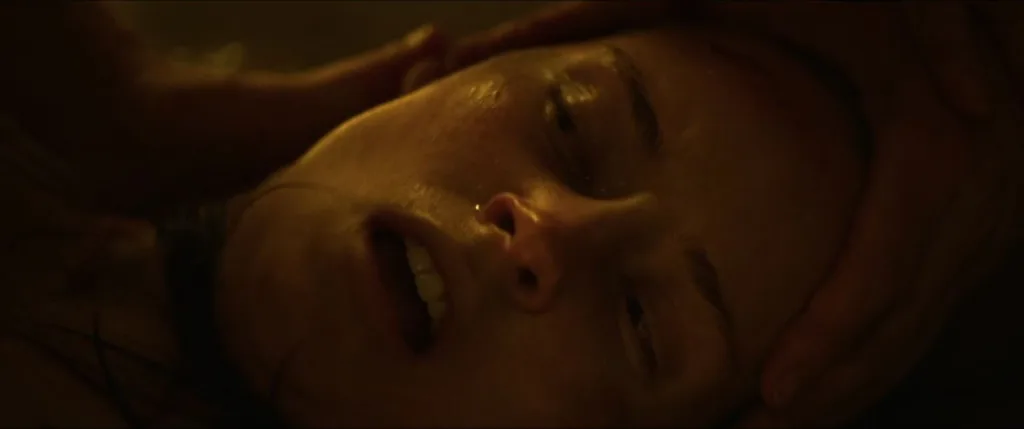
He attacks anyone who cries, claiming that doubting the impeding resurrection is doubting God. The final scenes show Lara’s body decaying in a coffin while the congregation has a “carnival” outside, waiting for her to sit up. It is a stark, and frankly pretty gruesome image of how far human delusion can go. It’s made all the worse knowing it was based on real life.
The Failure of Justice: Real-Life Sentences
In the aftermath of Joan Vollmer’s death, the legal system in Victoria, Australia, faced a public outcry over the “paltry” sentences handed down to her tormentors. Despite the evidence of four days of brutal torture, the court was surprisingly lenient.
Ralph Vollmer (The Husband): The man who initiated the imprisonment and oversaw the abuse was found guilty of manslaughter and false imprisonment. He received a suspended sentence and served exactly zero days in prison. He later expressed no remorse, claiming he had “cured” his wife of demons.
Matthew Nuske (The Exorcist): The lead “spiritual healer” who directed the physical violence also received a suspended sentence. He walked out of the courtroom a free man, despite being the primary architect of the physical ritual that crushed Joan’s throat.
The Helpers: Leanne Reichenbach and David Klinger were the only ones to see the inside of a cell. Leanne served four months, and David served three months. These were for charges of manslaughter and false imprisonment.
The Verdict: The judge noted that the group acted out of a “misguided sense of help” rather than malice. To this day, the case is cited by advocates as a prime example of how religious delusion can be used to bypass the standard legal consequences of domestic violence and homicide.
Is Daniel Arrested for his Crimes?
When the resurrection fails to happen, Daniel is arrested, but Ron’s reaction is the most chilling. He tells the psychiatrist that Lara “is happier with God”. Ron cannot admit that he allowed a group of strangers to torture his wife to death.

He maintains his religious shield to avoid the crushing weight of his own guilt. As the text at the end reminds us, this is not just a story from 1993; similar cases occurred in San Jose as recently as 2021 and California in 2022.
Frequently Asked Questions
Is Godless: The Eastfield Exorcism a true story?
Yes, it is based on the 1993 exorcism of Joan Vollmer in Australia. While names and certain scenes are dramatised, the core events, the four-day torture, the cellophane on the house, and the manner of death, are all grounded in the real case files.
What mental illness did Lara have?
Lara suffered from Schizoaffective Disorder (Bipolar Type). This caused her to experience both manic episodes and psychotic hallucinations, which her husband and the congregation misinterpreted as demonic possession.
How did Lara die in Godless: The Eastfield Exorcism?
Lara died from blunt force trauma. During the final exorcism ritual, Daniel applied massive pressure to her neck and forced his hands into her mouth, snapping her jaw and fracturing her neck.
Did the real exorcists go to jail?
In the real Joan Vollmer case, the sentences were notoriously light. Two members received four and three months respectively, while the lead exorcist received a suspended sentence and served no time. Ralph Vollmer, the husband, also served no jail time.
Final Thoughts – A Tragic Reality
Godless: The Eastfield Exorcism is a rare Tubi Original that deserves its featured status. It is a brutal, necessary look at how religious extremism can be used to justify the abuse of the mentally ill. Georgia Eyers gives a stellar performance, grounding the horror in a tragic, human reality. It reminds us that the real “demons” aren’t lurking in the shadows; they are the people who refuse to see the humanity in those who are suffering. Thanks for reading, you handsome/gorgeous bastard/bitch!
Looking for more? If you enjoyed this breakdown, check out our review of Godless: The Eastfield Exorcism or browse our list of Free Horror Movies on Tubi.
A Note on Ending Explanations
While we aim to provide comprehensive explanations based on the events on screen, film analysis is inherently subjective. The theories and conclusions presented in this "Ending Explained" feature are personal interpretations of the material and may differ from the director's original intent or your own understanding. That's the beauty of horror, right? Sometimes the scariest version is the one you build in your own head.
You might also like:
- Else (2025) review – A bizarre french body horror experiment
- Inside (2007) Review – A Visceral and Brutal Festive Nightmare
- The Isle (2018) Ending Explained – Sirens & Spirits
- Daddy’s Head (2024) review – Creepy and Atmospheric British Creature Feature
- Leaving D.C. (2012) Ending Explained – What Happened to Mark?
Support the Site Knockout Horror is a participant in the Amazon Services LLC Associates Program. Basically, if you click a link to rent or buy a movie, we may earn a tiny commission at no extra cost to you. As an Amazon Associate, I earn from qualifying purchases. This helps keep the lights on and the nightmares coming. Don't worry, we will never recommend a movie purely to generate clicks. If it's bad, we will tell you.
Disclaimer: Images, posters, and video stills used in this horror ending explained article are the property of their respective copyright holders. They are included here for the purposes of commentary, criticism, and review under fair use. Knockout Horror makes no claim of ownership and encourages readers to support the official release of all films discussed.