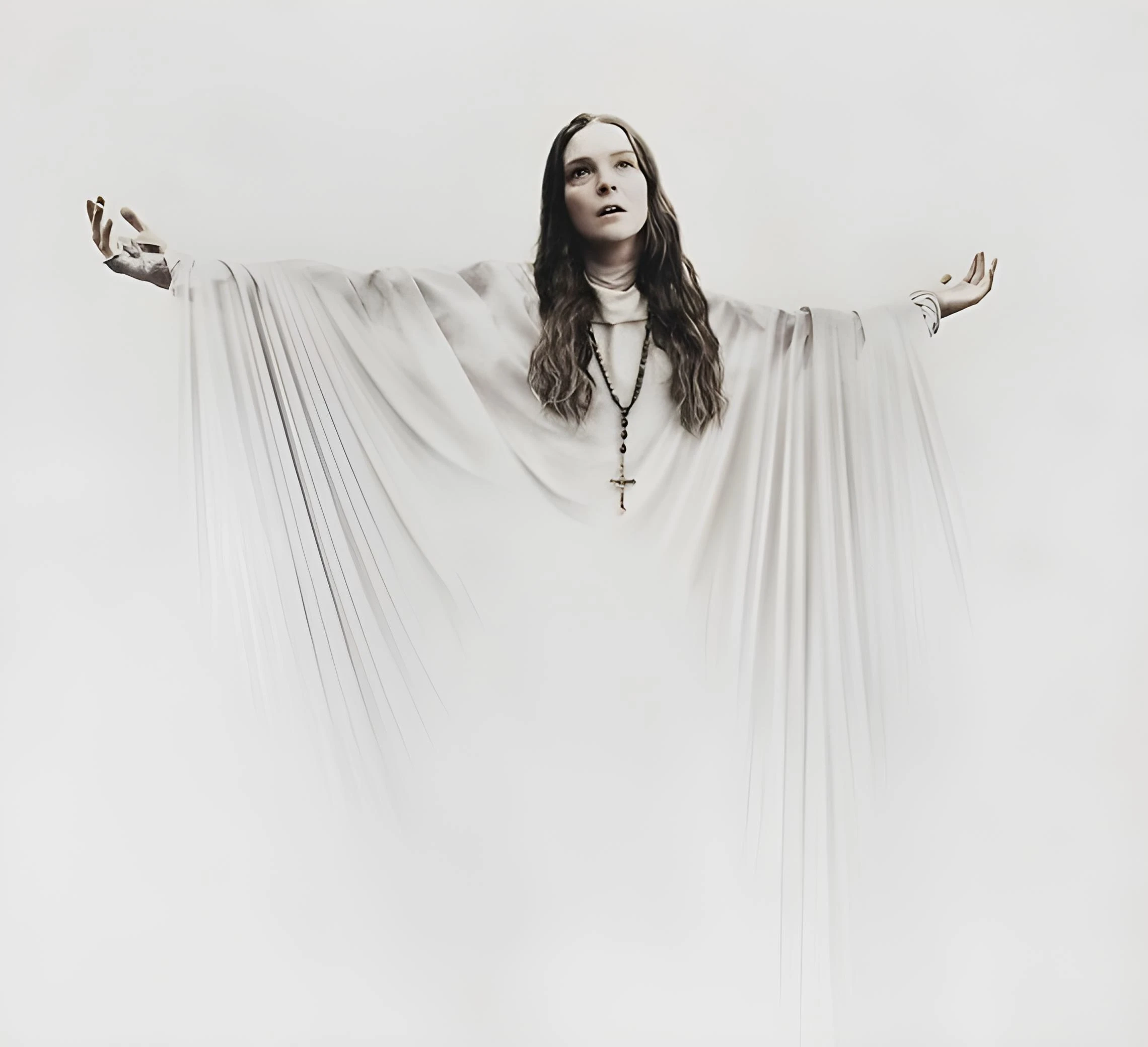
Saint Maud (2019) Review – A Chilling Descent into Religious Mania
Saint Maud: Quick Verdict
The Verdict: A masterfully restrained and profoundly unsettling entry into the psychological sub-genre that successfully weaponises the isolation of the British seaside. Saint Maud (2019) succeeds by blurring the lines between religious ecstasy and clinical psychosis, offering a portrayal of mental decline that is as empathetic as it is terrifying. Rose Glass’s directorial debut is stunningly confident, utilising the grey, faded glory of Scarborough to cultivate an atmosphere of absolute loneliness. Morfydd Clark delivers a powerhouse performance, capturing the fragile, jagged edges of Maud’s fanatical devotion with chilling precision. While its slow-burn pacing and lack of traditional jump-scares may alienate those seeking popcorn thrills, the visceral impact of its technical execution and that unforgettable final shot are undeniable. This 4 star effort is a mandatory watch for fans of sophisticated, high-concept horror.
Details: Director: Rose Glass | Cast: Morfydd Clark, Jennifer Ehle, Lily Knight | Runtime: 1h 24m | Release Date: 2019
Best for: Fans of “elevated” psychological horror, character-driven thrillers, and those who appreciate atmospheric, slow-burn cinema.
Worth noting: To prepare for the role, Morfydd Clark spent time researching the lives of saints and the specific physiological sensations reported by people during religious epiphanies.
Where to Watch: VOD, Amazon🛒
Rating: 4/5 Stars
(A masterfully directed and visually striking debut that brilliantly explores the harrowing intersection of religious fanaticism and mental illness, culminating in one of horror’s most iconic endings.)
Welcome to Knockout Horror. Today we are reviewing psychological horror Saint Maud (2019).
Table of Contents
A dark exploration of mental illness
Before we begin, we have covered Saint Maud in a Horror Movie Ending Explained article so feel free to go and check that out if you have just watched the movie and are looking for answers. Keep in mind, however, that while this review is spoiler free, the ending explained is not.
“Maud has become extremely devout in her beliefs, some might say fanatical. She believes God speaks directly to her and is instructing her personally, seeing signs in everyday mundane things.”
Saint Maud follows the life of Maud (Morfydd Clark), a nurse providing palliative care for a woman called Amanda (Jennifer Ehle) in the extremely depressingly presented seaside resort of Scarborough. Amanda, who was once a world renowned dancer, is suffering from terminal cancer and Maud has been assigned to care for her in her dying days.

Although we know little about her past, it appears as though Maud once worked at a nursing home but was involved in a harrowing incident. Formerly something of a party girl with an affinity for hook ups; she has since converted to Christianity (Catholicism I believe). Maud has become extremely devout in her beliefs, some might say fanatical. She believes God speaks directly to her and is instructing her personally. She sees signs of God in everyday mundane things and all of her actions are based around her religious beliefs.
In stark contrast to Maud, Amanda is a free spirit used to living life in the limelight. After touring the world as a dancer, living the high life, she has been diagnosed with terminal cancer. She is confined to a wheelchair and feels jaded by her current existence. Amanda struggles to cope with the boredom of her everyday life. She smokes and drinks profusely and spends much of her time with a lady, Carol (Lily Frazer). Amanda pays Carol for sex and company but also spends time with another man. Amanda is wry, quick witted, and sceptical of life as a whole.
An interesting dichotomy
Maud is employed to provide care for Amanda. This opens up an interesting relationship between two entirely different types of people. The religious Maud, devout and living without sin but with a deeply disturbed past, contrasts heavily with Amanda, the hedonistic former world famous dancer devoid of belief in anything. The two develop an almost codependent relationship. Maud needs Amanda to satisfy her need to care for someone and feel validated. Amanda needs Maud to ease the crippling boredom that her life is overwhelmed by.

Maud notices that Amanda is being visited by Carol frequently. It is apparent to Maud that Amanda is paying Carol for sex. Maud doesn’t approve of this debauchery as it evidently goes against her religious beliefs and she is desperate to save Amanda’s soul. Under the guise of protecting Amanda, Maud warns Carol to leave and never contact her again. It’s at this point that things begin to unravel.


“To Amanda, both Carol and Maud are entertainment. An escape from the mundane routine of life as a very sick individual. Now that the bright lights of fame have faded, she needs the company and depends on both women to fulfill certain needs.”
To Amanda, both Carol and Maud are entertainment. An escape from the mundane routine of life as a very sick individual. Now that the bright lights of fame have faded, she needs the company and depends on both women to fulfill certain needs. Now that Carol has been pushed away, Amanda takes her pain out on Maud, embarrassing her and, inadvertently, unleashing a paranoia and rage that will, ultimately explode into something much more sinister.
Slow burn but deeply disturbing
We spend the entirety of this movie as a fly-on-the-wall to Maud’s life. Everything she goes through, we are privy to first hand and, in most cases, witness in the exact same way that she perceives. Whether that is an accurate depiction of what is going on or not depends. Remember, she is a very unreliable narrator.
Maud experiences a range of visions throughout this film. At times she speaks to God, at times she self-flagellates, she sometimes sees others as demons. All of which provides the driving force for both the narrative and the horror. She is declining at a rapid rate and falling deeper and deeper into delusion. A delusion which threatens to completely consume her and anyone around her.
“This is a slow movie that whispers rather than shouts. You are watching a character sink into a psychotic state that blurs the lines between reality and fantasy.”
Consequently, this is a slow movie that whispers rather than shouts. There aren’t any outlandish scares, there isn’t an overt sense of horror, there isn’t even an antagonist, so to speak. You are watching a character sink into a psychotic state that blurs the lines between reality and fantasy. This will, no doubt, leave some viewers wanting.
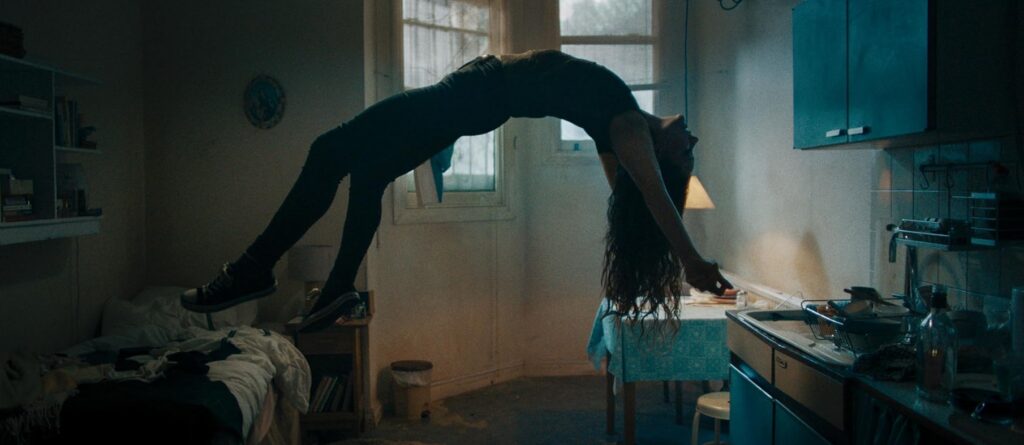
With that being said, the way the events in this movie are presented is truly disturbing. It’s tough to see a character that seems rather decent slowly decline. Maud takes misstep after misstep and doesn’t seem to have a single person in her life who she can trust to help her. It’s really quite sad.
She spends hours alone in her dilapidated flat and even when she ventures out to find solace in company, she is taken advantage of. This is a tough story to watch because it reflects on the actual reality of life for many who live with mental illness. This plays into another important observation about Saint Maud’s story.
Is it all in her head?
There is a prevailing question throughout Saint Maud of whether what she sees is actually real or simply a result of a devastating mental illness. This melding together of mental health and religion is something that director Rose Glass has managed to do incredibly well. Better than many other movies I have watched in fact and right up there with They Look Like People.
It’s easy to understand how viewers never quite know reality from psychosis when it comes to Maud’s visions. The presentation of the two elements being one and the same is so seamless it is hard to tell. You never quite know which of the two Maud is experiencing and it is deliberate. This is the reality of psychosis and the reality of Maud herself. As a sufferer of Bipolar Disorder 1, I found this movie to be remarkably accurate with its depiction of psychosis.
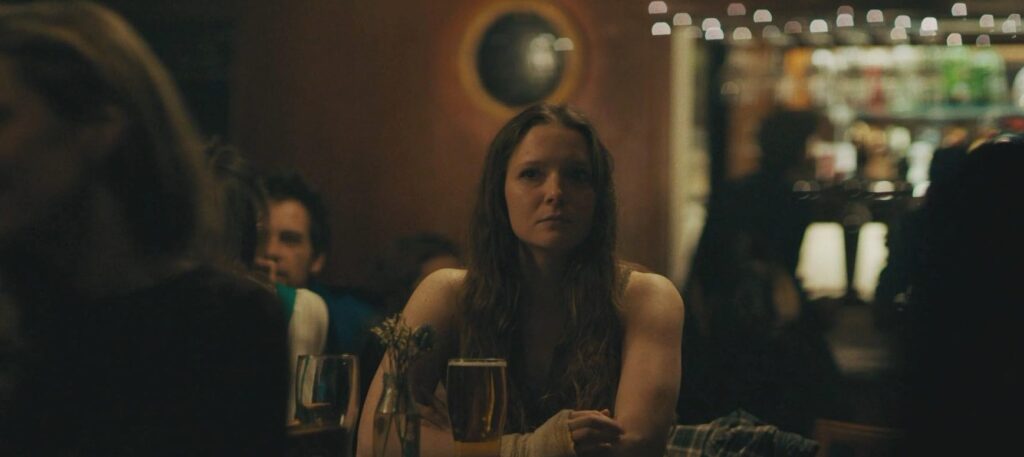
Glass touches on that very distinct tendency for conditions like schizophrenia to bleed over into religious ideation. Tugging and pulling at the narrative to keep the viewer guessing but always pushing it back towards the centre to keep the ambiguity alive. It’s fascinating stuff and I applaud Glass for her ability to make it work so damn well.
Fantastic directing, and cinematography
I think people would have a hard time believing that this is Rose Glass’s feature length directorial debut. What a fantastic effort and a new name to watch out for in the horror world. (Worth noting as I update this review that she knocked it out of the park with follow up title Love Lies Bleeding). Everything is beautifully done from the pacing and style right through to the cinematography, storytelling, and everything in between.
“You should definitely watch Saint Maud. It’s an utterly bleak, hopeless, and frankly disturbing film that represents one of the most accurate horror depictions of mental illness.”
The decision to use Scarborough as the backdrop for this movie was pretty inspired. This once incredible town is somewhat down on its luck, gloomy, and depressingly grey. It almost acts as an analogue for the characters in the film, both of which are long past their glory days.

Saint Maud features some fantastic acting performances from the two leads. Morfydd Clark, as Maud, is incredible. She has a hell of a task basically carrying the entire movie shot by shot. She is very fitting as a meek, pious woman of faith. You can also entirely believe the darker elements of her character. Subtle facial expressions reflect deep emotions.
Jennifer Ehle is also fantastic as Amanda. She adds an incredibly fitting sarcastic tone to the character. Jennifer perfectly represents the globe-trotting, high profile, dancer she portrays. She also does a great job of evoking sympathy from the viewer given her condition.
The Good, The Bad & The Ugly
The Good
- Morfydd Clark: Delivers an exceptional, career-defining performance that carries the film’s heavy emotional and psychological weight.
- Atmospheric Directing: Rose Glass creates a world that feels damp, grey, and claustrophobic, perfectly mirroring Maud’s internal state.
- Ambiguous Narrative: The film expertly maintains the tension between supernatural possibility and psychological reality until the very end.
The Bad
- Deliberate Pacing: The slow-burn approach requires a level of patience that might test viewers used to more kinetic, jump-scare-heavy horror.
- Deeply Depressing: The unrelenting bleakness and hopelessness of the story make it a challenging and potentially draining experience.
- Niche Appeal: Its focus on character study over plot-driven action means it won’t satisfy those looking for a traditional slasher or monster movie.
The Ugly: The Final Frame. A split-second visual shift that provides one of the most devastating and effective “reality checks” in the history of the genre.
Should You Watch Saint Maud?
Yes, absolutely. It is a 4 star film that represents the pinnacle of modern British psychological horror. If you value atmosphere, top-tier acting, and a story that isn’t afraid to explore the darkest corners of the human mind, this is essential viewing. It is a rare film that manages to be both artful and visceral, leaving a lasting impact long after the credits roll. Prepare to be disturbed, impressed, and profoundly sad. It is a stunning achievement.
You might also like:
- Heart Eyes (2025) review – Romantic-horror comedy done right
- 10 Supernatural Horror Movies That Expose The Dark Side of Technology
- It’s a Wonderful Knife (2023) review – A sweet and hammy festive slasher
- This Never Happened (2024) Review – A Predictable And Painfully Generic Paranormal Slog
- Silent Night, Deadly Night (1984) review: the controversy behind the classic
Our Scoring Philosophy: A Fair Fight
Horror is a genre that thrives thanks to indie film makers and low budget creators. At Knockout Horror, we firmly believe that every movie that we review deserves a fair fight. That's why we grade on a curve. Our star ratings are all about context, judging a film on what it achieves with the resources it has.
A 4-star rating for a scrappy indie horror made for $10,000 is a testament to its ingenuity and raw power. A 4-star rating for a $100 million blockbuster means it delivered on its epic promises. We don't compare them side-by-side; we celebrate success in every weight class, from the back-alley brawler to the heavyweight champion. Please keep this in mind when considering star ratings.