The Wicker Man (1973) Review – The Definitive Folk-Horror Masterpiece
The Wicker Man: Quick Verdict
The Verdict: A towering achievement in genre cinema that remains the definitive blueprint for the folk-horror sub-genre. The Wicker Man (1973) succeeds by masterfully subverting expectations, blending a traditional missing-person mystery with pagan ritual, unnerving musical numbers, and a suffocating sense of isolation. The film’s brilliance lies in its use of “daylight horror,” proving that a bright, idyllic setting can be far more terrifying than any darkened basement. While the visual quality reflects its low-budget 70s origins, this graininess only adds to the film’s authentic, documentary-like sense of dread. It is a movie that eschews visceral shocks in favour of a deep-seated psychological discomfort that builds to one of the most unforgettable and devastating finales in horror history. This 4.5 star effort is a visionary masterpiece that continues to influence modern classics like Midsommar. It is essential, mandatory viewing for anyone with even a passing interest in the art of the scare. It is quite simply one of the greatest horror films ever made.
Details: Director: Robin Hardy | Cast: Edward Woodward, Christopher Lee, Britt Ekland | Runtime: 1h 28m | Release Date: 1973
Best for: Fans of folk-horror, mystery-thrillers, and those who appreciate atmosphere and psychological dread over jump-scares.
Worth noting: Christopher Lee famously considered Lord Summerisle one of his favourite roles and worked for free to ensure the film got made.
Where to Watch: VOD, Amazon🛒
Rating: 4.5/5 Stars
(A landmark of British cinema and the definitive folk-horror pioneer, delivering a masterclass in atmospheric dread, societal isolation, and daylight horror.)
Welcome to Knockout Horror. Today we are taking a look at Robin Hardy’s absolute horror classic The Wicker Man from 1973.
Table of Contents
A Folk-horror classic
The Wicker Man‘s story is fairly simple. Sergeant Neil Howie, played by the late Edward Woodward, is tasked with finding the location of a girl who has gone missing from the Hebridean island of Summerisle. When he arrives, he is greeted by a number of strange individuals. Realising that this is no ordinary island, it soon becomes clear to Howie that he has the gargantuan task of uncovering the secrets hidden by the residents of the island. Residents who follow ancient pagan rituals and aren’t at all interested in accommodating a nosey Sergeant from the mainland.
“The Wicker Man is responsible for influencing generations of directors. It set the benchmarks for the folk-horror genre by using customs foreign to many viewers to elicit fear.”
The Wicker Man is obviously a classic horror movie. It’s responsible for influencing generations of subsequent directors and filmmakers. It also set a lot of the benchmarks for the folk-horror genre. One of the ways it did this was by using belief systems and customs foreign to many viewers to elicit fear. The devoutly religious Neil Howie plays avatar for the viewer. Finding himself completely lost and out of place on an island full of people taking part in Pagan rituals and eschewing Christian beliefs, he is horrified at what he sees. Howie is immediately suspicious which leads to digging himself deeper and deeper into the secrets of the island.
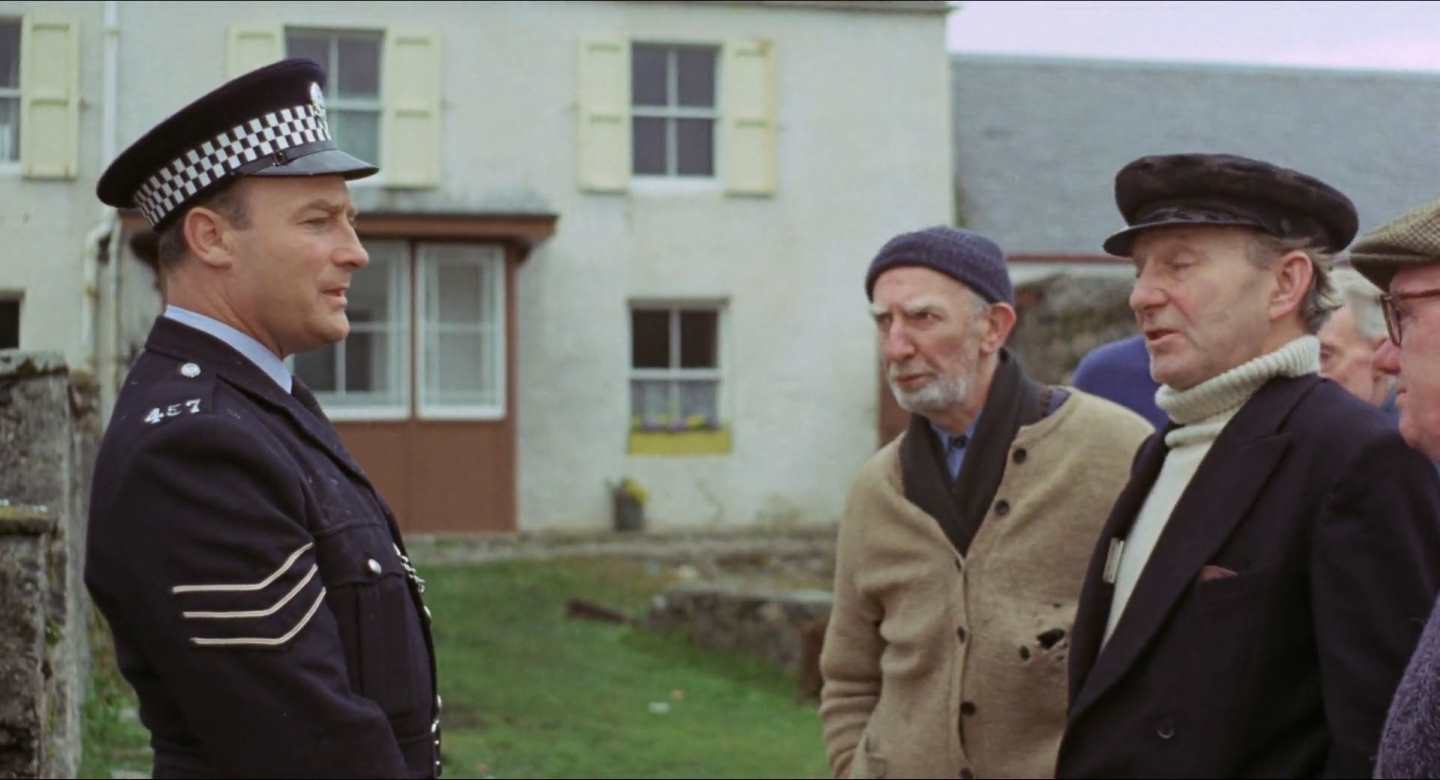
What made this movie stand out at the time was that The Wicker Man ventures to places horror movies had never gone before. Straddling multiple genres; the movie acts as a combination of a horror, a thriller, a mystery, and even a musical. It’s a head-spinning combination that works to keep the viewer feeling off base and unsure of what will happen next. On Summerisle, we are Sergeant Howie. Completely out of place, completely foreign, and completely unwelcome. It is legitimately fantastic stuff.
The unsettling unfamiliar
The focus on the customs of the people of Summerisle serves to unsettle the viewer and keep them on edge. Sexual references and nudity are used to create a feeling of unease. People casually copulate out in the open, residents are dismissive of Howie’s authority, and the islanders have bizarre ways of dealing with illness. All of this ensures that the viewer is in no doubt as to how different these people are. People innately fear the unknown and unfamiliar so it works incredibly well. Director Robin Hardy leans into that in just about every possible way; some of which are actually quite surprising in their effectiveness.
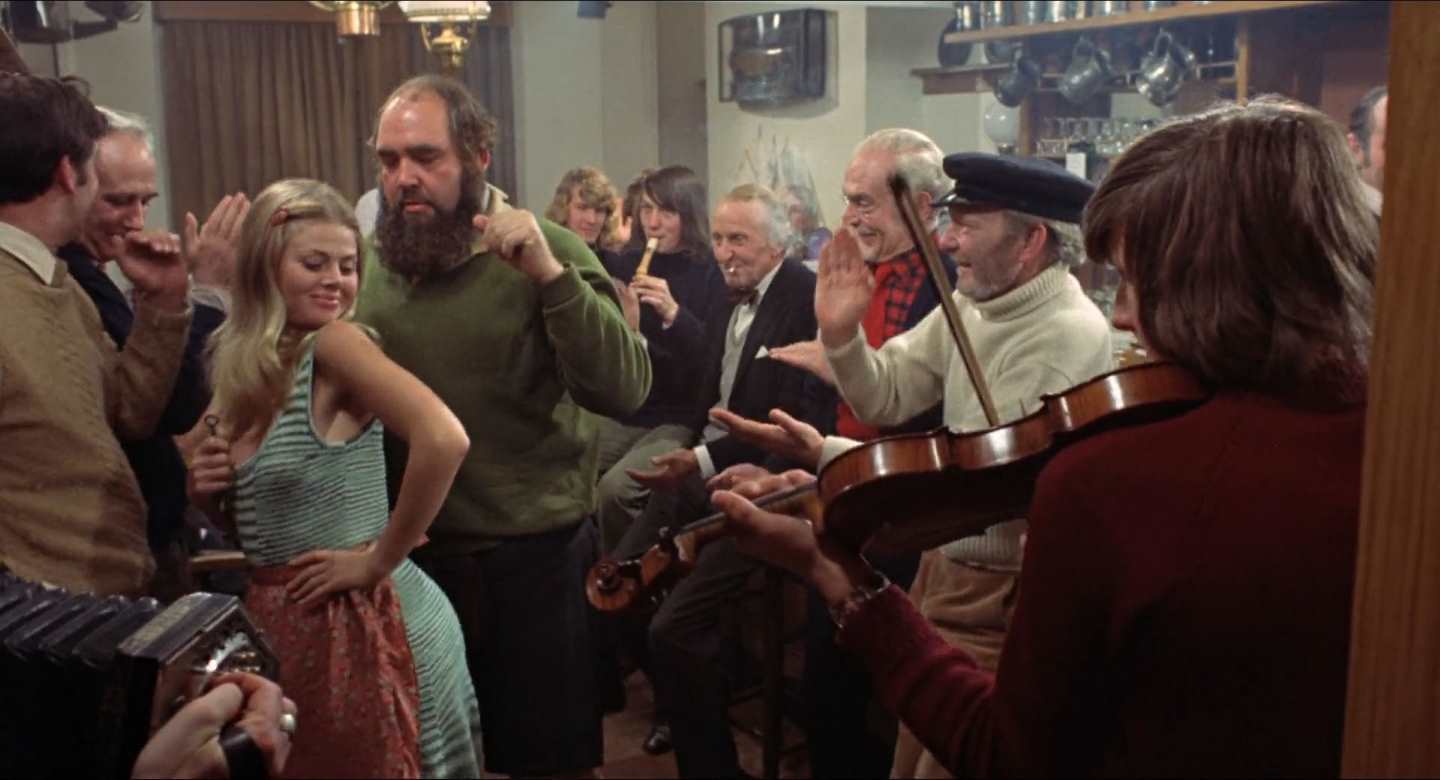
An underrated aspect of what makes this movie so discomforting is the music, as crazy as that sounds. There is something incredibly unnerving about a group of people breaking out into song; seemingly ignorant to the plight of the missing girl and Howie’s investigation. Songs about Willow’s sexual proclivity, the cycle of life, and so on feel almost out of place with their light whimsy. They remain some of the more striking parts of the movie.
“Everything scary here is in plain site and brightly lit. The Wicker Man would go on to define daylight horror as a pivotal tool in the folk-horror chest.”
Let’s not forget the daytime setting, as well. This island is almost idyllic and shouldn’t play host to this kind of bizarre behaviour. Everything scary here is in plain site and brightly lit. There’s no blood and guts, there’s just a constant sense that something is amiss and that our protagonist probably shouldn’t stay very long on this island. He is an outsider and that’s terrifying in and of itself. The Wicker Man would go on to define daylight horror as a pivotal tool in the folk-horror chest. Films like Midsommar would still copy it decades later.
Incredible acting
Acting in The Wicker Man is stellar throughout. Keeping up something of a trend in British cinema at the time, everyone, with the exception of one or two performances, is exceptional. Edward Woodward as Sgt. Howie is pitch perfect. He portrays the prudish, puritan Howie in an entirely believable manner. His constant disgust and shock at the events taking place is never anything other than totally convincing.

Christopher Lee’s short turn as Lord Summerisle is fantastic to see. A classic horror actor, the last scenes featuring him are particularly powerful. Another classic British horror staple, Ingrid Pitt, makes an appearance and is typically great. The entire cast of islanders are completely convincing. Everyone does a great job of giving the impression of an isolated community full of secrets.
“Any fan of horror should watch The Wicker Man. It is, unquestionably, one of the most important movies of all time, still creepy and full of iconic imagery.”
Britt Ekland, as Willow, is a difficult actor to rate when it comes to The Wicker Man. She absolutely stands out against the rest of the cast for her beauty and unique look. She apparently had her entire voice re-dubbed for the release which undermines her performance a little. Her naked dance has become an iconic horror image, however.
How does it hold up?
First and foremost, this is a British low budget horror movie from nearly 50 years ago. It, visually, looks every bit of its age. It is grainy, dull and the softness of the picture is not done any favours by the recent 1080p HD release. Night time scenes and dimly lit indoor scenes take a particularly big hit when it comes to visual fidelity. The vast majority of the camera shots are tightly framed. Outside of some stunning opening shots, there is a limited desire to take in the scenery. This is very much a case of working with what was available at the time.

The poor visual quality, when considered from today’s perspective, actually adds to the feeling of unease. The aged appearance of the movie works perfectly with the subject matter at hand. It almost makes the viewer feel even more alienated. It’s worth keeping in mind that this is not a movie aiming to scare the person watching with blood, guts, and jump scares. It wants to get into your head and, for that, the visual style works fantastically.
As far as scares go, The Wicker Man never tried to scare people in the same manner a normal horror movie would. Compared to modern methods used, it isn’t something you would describe as scary. It is, however, deeply unsettling. That hasn’t changed much over time. This is not traditional horror and it wants to make you feel uncomfortable more than anything. The fact that horror movies are still appearing today using the same techniques that The Wicker Man created are a testament to how effective it was.
The Good, The Bad & The Ugly
The Good
- Edward Woodward: Provides a perfect, grounded performance that allows the audience to experience the island’s bizarreness through his eyes.
- Visionary Atmosphere: The blend of music, mystery, and pagan ritual creates a unique and deeply unsettling environment.
- Daylight Horror: Successfully proves that horror doesn’t need shadows, using bright, sunny locations to create effective dread.
The Bad
- Visual Fidelity: The film’s aged, grainy appearance may be off-putting to modern viewers accustomed to high-definition clarity.
- Dubbed Voices: The re-dubbing of Britt Ekland’s voice is somewhat noticeable and can be slightly distracting.
- Deliberate Pacing: Some contemporary viewers may find the focus on musical numbers and ritualism too slow for a horror film.
The Ugly: The Ending. The climactic reveal and the sheer matter-of-fact nature of the islanders’ devotion remains one of horror’s most haunting images.
Should You Watch The Wicker Man?
Yes. It is a 4.5 star film that represents the pinnacle of folk-horror. If you want to understand where modern masterpieces like Midsommar get their inspiration, you have to start here. It is an intelligent, technical, and profoundly disturbing work that challenges the viewer’s own beliefs and comfort zones. It is a landmark of British cinema and a mandatory experience for anyone who claims to love the horror genre.
You might also like:
- Evidence of the Boogeyman (2025) Review – Another Padded Found Footage Horror
- I Still Know What You Did Last Summer (1997) review – So bad it’s good?
- Barbarian (2022) Review – A High-Tension Nightmare Of Two Halves
- The Invitation (2015) Review – A Tense and Methodical Descent into Paranoia
- The Taking of Deborah Logan Review – A Tragic and Visceral Possession Tale
Our Scoring Philosophy: A Fair Fight
Horror is a genre that thrives thanks to indie film makers and low budget creators. At Knockout Horror, we firmly believe that every movie that we review deserves a fair fight. That's why we grade on a curve. Our star ratings are all about context, judging a film on what it achieves with the resources it has.
A 4-star rating for a scrappy indie horror made for $10,000 is a testament to its ingenuity and raw power. A 4-star rating for a $100 million blockbuster means it delivered on its epic promises. We don't compare them side-by-side; we celebrate success in every weight class, from the back-alley brawler to the heavyweight champion. Please keep this in mind when considering star ratings.
Support the Site Knockout Horror is a participant in the Amazon Services LLC Associates Program. Basically, if you click a link to rent or buy a movie, we may earn a tiny commission at no extra cost to you. As an Amazon Associate, I earn from qualifying purchases. This helps keep the lights on and the nightmares coming. Don't worry, we will never recommend a movie purely to generate clicks. If it's bad, we will tell you.
Disclaimer: Images, posters, and video stills used in this review are the property of their respective copyright holders. They are included here for the purposes of commentary, criticism, and review under fair use. Knockout Horror makes no claim of ownership and encourages readers to support the official release of all films discussed.