The Beach House (2019) Review – A Coastal Contamination with Mixed Results
The Beach House: Quick Verdict
The Verdict: A tonally inconsistent and claustrophobic eco-horror that struggles to bridge the gap between its slow-burn drama beginnings and its visceral body-horror conclusion. The Beach House offers a timely message regarding environmental collapse, but the narrative often feels as aimless as its drug-tripping protagonists. While the practical effects and depictions of infection are genuinely stomach-turning and impressive, the restrictive cinematography and lack of scope prevent the threat from feeling truly global or urgent. The performances are competent, particularly in the more demanding physical sequences of the final act, yet the characters themselves remain difficult to root for due to their self-righteous attitudes. This 2.5 star effort is a mixed bag of unfinished ideas and unrealised potential that may satisfy fans of microbial horror, but ultimately fails to deliver a cohesive or frightening experience. It is a movie with something to say, though the execution is too messy to leave a lasting impact.
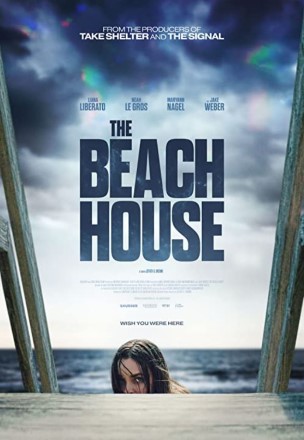
Details: Director: Jeffrey A. Brown | Cast: Liana Liberato, Noah Le Gros, Jake Weber, Maryann Nagel | Runtime: 1h 28m | Release Date: 2019
Best for: Fans of cosmic horror, body horror enthusiasts, and those who enjoy “slow-burn to chaos” narratives in the vein of The Mist or Cabin Fever.
Worth noting: The film’s depiction of the prehistoric microbes is loosely based on actual scientific theories regarding deep-sea organisms and their potential release due to rising ocean temperatures.
Where to Watch: Shudder, Amazon🛒
Rating: 2.5/5 Stars
(A well-acted but uneven microbial horror that features fantastic practical effects but suffers from a restricted scope and a slow middle act.)
Welcome to Knockout Horror. Today we are taking a look at Shudder Original horror movie The Beach House.
Table of Contents
Part survival part cosmic horror
The story follows struggling couple Emily and Randall. Trying to rekindle things by spending some time together in a gorgeous beach house, the pair are shocked to realise that a couple are already staying there. Deciding to share the location, the two couples enjoy a night of drugs and alcohol. The next day, Emily wakes up to find that everything is no longer as it seemed and something seems strangely off about the world.
“Movies featuring invasive pathogens infecting a population are rather common. The Beach House tries to do a bit of survival and cosmic horror, unfortunately falling a bit flat in both departments.”
So as you may have guessed, this is fairly basic stuff. Movies featuring invasive pathogens infecting a population are rather common. They never tend to deviate from a set norm and the genre, as a whole, is rather stale. There is, really, only so much you can do with a concept like this. You are either watching a story of survival or you are watching characters journey to escape the infection. The Beach House tries to do a bit of both, unfortunately, falling a bit flat in both departments.

Where movies like this can separate themselves is in the level of tension and the presentation of symptoms. The infection itself almost always spreads in one of a few ways. In the case of The Beach House, it is via a thick fog rolling through the area. The fog seems to consist of microbes that were once contained within rocks deep in the sea. Global warming has caused the release and spread of the microbes. The result is something that travels freely and infects on entering the body. Victims display a range of symptoms and seem to begin hosting parasitic worms.
A horror of two halves
The Beach House is a movie of two halves. The first half is something of a drama with the couples hanging out and consuming intoxicants. It’s all rather mundane, a bit cheesy, and fairly boring. In the second half, the movie quickens up and turns into more of a run of the mill survival horror.
The characters attempt to escape the fog, all the while encountering mutated victims and hazards by the bucket load. The two disparate halves may divide viewers somewhat as they are just so different. This feels, very much, like a movie at odds with itself.
Despite the similarities with other similar genre horror, this is a film that tries to set itself apart. It attempts to do this through its message. The narrative leans heavily into exposition through eco-conscious, scientist-in-waiting, Emily.

The Beach House rings the climate warning bell which is admirable on the surface but fairly hollow underneath – especially considering the environmental impact of movie production and delivery. This is a story with something to say about the damage humans are doing to the world which is somewhat different from most horror movies of this ilk.
It struggles in a few key areas
The Beach House really struggles in a number of areas, however. One of which being our protagonists. Randall and Emily are not a particularly likeable couple. Privileged and, in their own specific ways, very self-righteous, the pair are not easy to care about. Older couple Mitch and Jane offer hints at a deeper, more tragic, story but these hints, like much in The Beach House, are never expanded on.
“The Beach House really struggles in a number of areas, however. One of which being our protagonists. Randall and Emily are not a particularly likeable couple.”
This is a movie of unfinished ideas and unrealised potential. Much of that can likely be blamed on a restrictive style of filmmaking. The Beach House feels claustrophobic for its lack of scope. The 1.85:1 aspect ratio tightly frames a world that feels constricted and small.

The location is stunning but the restrictive shots of the beach fail to capture the scale of the issue at hand. When the film moves away from the house, it feels as though the director had rigidly defined boundaries to work within. Limited locations and a bland set offer a feeling of insignificance, as though the problem is confined to one small area and is barely a problem at all. This seriously sacrifices elements of tension. It also makes it clear that the budget here was likely limiting the director’s vision.
Positives but not real scares
There are positives, though. Practical effects are, generally, fantastic. Some of the mutations look suitably disgusting and the elements of body horror are particularly welcome. On top of that, character’s presentation of symptoms can be stomach turning. It’s very nicely done.
The final half an hour is particularly noteworthy for this as certain victims go through the later stages of the illness. You genuinely buy into how uncomfortable and horrific it must be. Actors really commit to making the events they are experiencing believable. It’s effective stuff.

There are no scares, as is common with movies like this but later scenes can be fairly tense. The plot is fairly compelling. There are hints at something fascinating causing the issues. Nothing is ever really expanded on, though. Much of the movie’s runtime is wasted on the group tripping balls and drinking. By the time the less than satisfying ending comes along, you are left with a distinct feeling that they ran out of time.
Solid acting, so-so direction
Acting is generally fine. I didn’t value Liana Liberato’s performance as Emily as much as other people did. I know she is a fantastic actor. She comes on towards the later part of the film but, for the most part, I felt her performance was flat – especially for a character tasked with carrying much of the movie’s weight.
“The potential for wide angle shots of gorgeous, scenic, beach vistas is wasted. Instead we have tight closeups and restricted scenic views which offer the movie a feeling of cheapness.”
Noah Le Gros, as Randall, will probably annoy people initially. His character’s slacker personality offers Noah little room to work but he really comes on well towards the end of the movie. He engages in some fantastic, and thoroughly believable, physical acting. Jake Weber, as Mitch, does a great job, as always, and Maryann Nagel is absolutely fine. She also has some very effective moments of physical performance that are impactful.
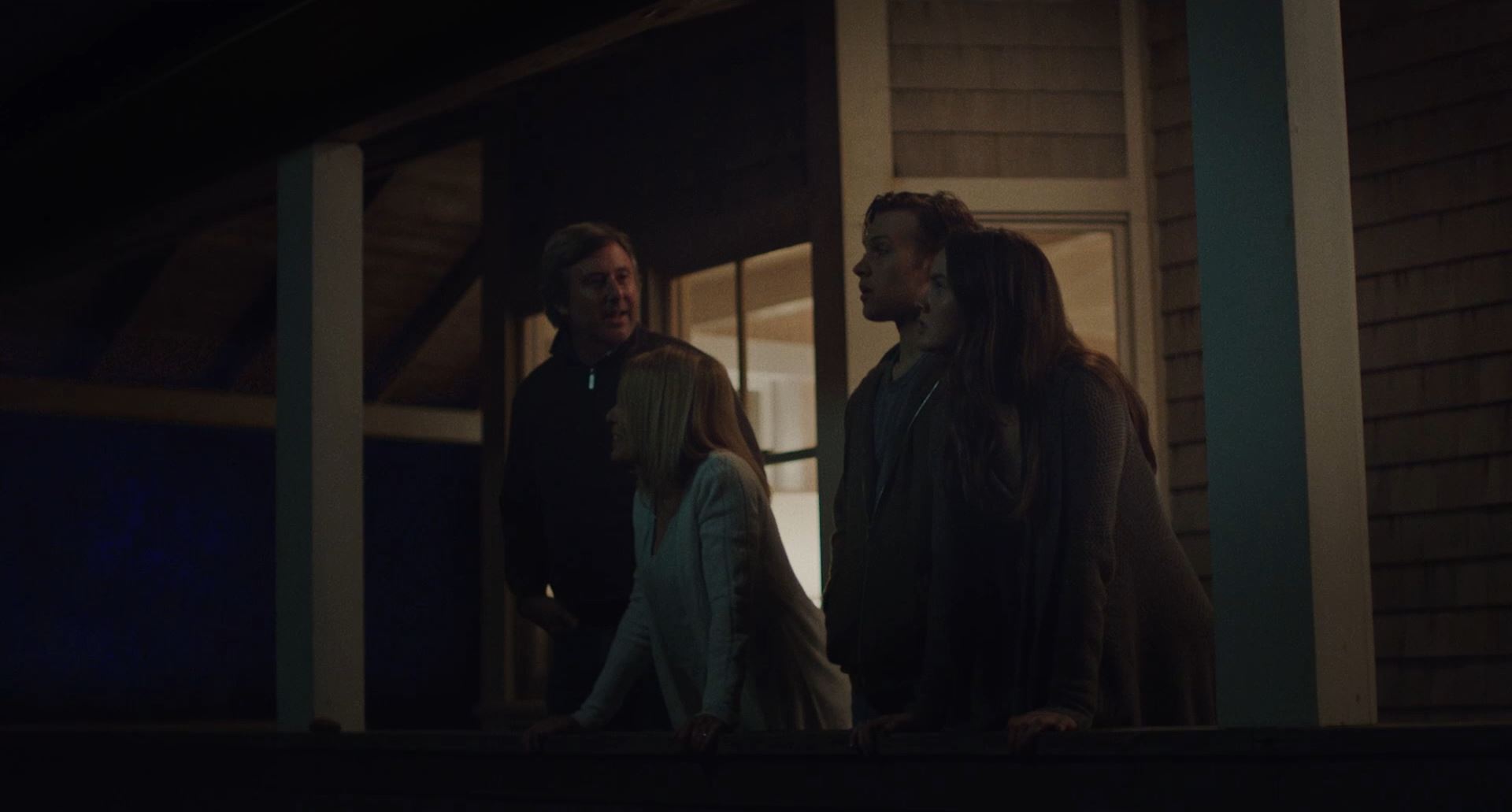
Cinematography was a bit of a mixed bag. I hate the 1.85:1 aspect ratio for this type of film! The potential for wide angle shots of gorgeous, scenic, beach vistas is wasted. Instead we have tight closeups and restricted scenic views. I think it really offers the movie a feeling of cheapness – like a Hallmark production or made-for-TV horror movie. Directing was okay. Pacing was a bit messy. A lumbering opening 45 minutes suddenly hits full speed and doesn’t let up. It’s a bit uneven. I noticed a lot of continuity issues throughout, as well. All in all, its a bit of a mixed bag.
The Good, The Bad & The Ugly
The Good
- Practical Effects: The body horror and mutation sequences are fantastic, providing some genuinely “ick” moments that are the highlight of the film.
- Physical Acting: Noah Le Gros and Maryann Nagel deliver impressive physical performances that make the final stages of the illness feel painfully real.
- Timely Theme: The focus on prehistoric microbes released by climate change is a fresh and terrifyingly plausible hook for modern horror.
The Bad
- Restricted Scope: The tight aspect ratio and limited locations make the global threat feel insignificantly small and confined.
- Uneven Pacing: The movie feels like two separate films stitched together, with a lumbering first half that fails to build sufficient tension.
- Unrootable Leads: Emily and Randall are a difficult couple to care about, lacking the warmth or depth needed for a survival story.
The Ugly: The Foot Scene. One particular moment involving a parasitic extraction is so visceral it will have even hardened horror fans looking away from the screen.
Should You Watch The Beach House?
Yes, if you enjoy microbial or body horror. It is a 2.5 star film that offers some great practical work despite its structural flaws. While the slow pace and restricted visuals are a hurdle, the final thirty minutes deliver enough tension to make it a watchable, if ultimately messy, coastal nightmare. Just don’t expect a satisfying explanation for the chaos.
You might also like:
- Longlegs (2024) Review – A Highly Atmospheric But Overhyped Silence Of The Lambs Clone
- Headgame (2018) Review – A Pointless and Painfully Inept Battle Royale
- Hosts (2020) Review – A Spiteful and Narratively Messy Holiday Horror
- Do Not Enter (2026) Review – A Derivative Urbex Trap? (Quick Verdict + Analysis)
- Butterfly Kisses (2018) Review – A Brilliant and Meta Folk Legend Nightmare
Our Scoring Philosophy: A Fair Fight
Horror is a genre that thrives thanks to indie film makers and low budget creators. At Knockout Horror, we firmly believe that every movie that we review deserves a fair fight. That's why we grade on a curve. Our star ratings are all about context, judging a film on what it achieves with the resources it has.
A 4-star rating for a scrappy indie horror made for $10,000 is a testament to its ingenuity and raw power. A 4-star rating for a $100 million blockbuster means it delivered on its epic promises. We don't compare them side-by-side; we celebrate success in every weight class, from the back-alley brawler to the heavyweight champion. Please keep this in mind when considering star ratings.