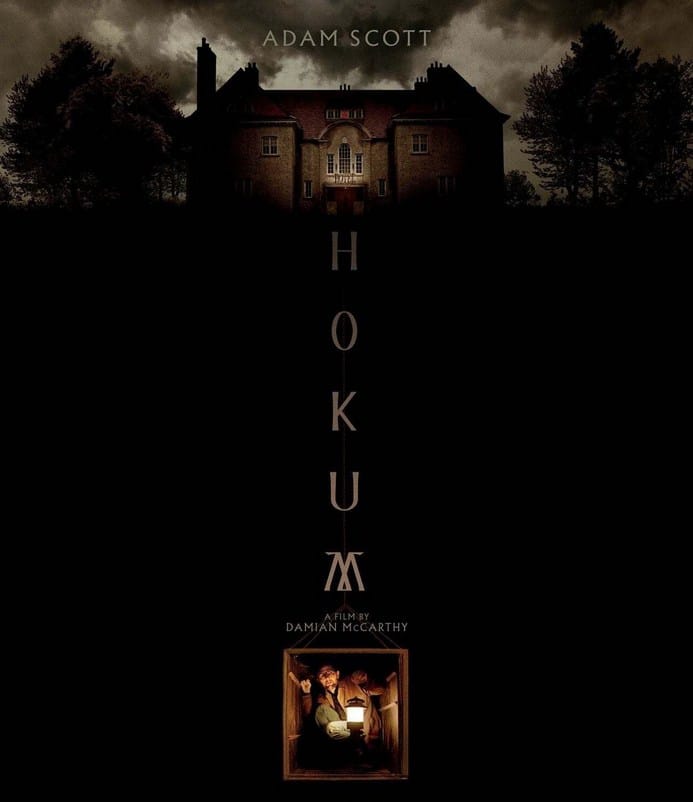
Hokum (2026) Ending Explained – Was It Real or Just a Bad Trip?
Welcome to Knockout Horror and to this Hokum (2026) ending explained article. I loved this latest film by the brilliant emerging horror mind Damian McCarthy; you can read all about my opinion in this Hokum spoiler free review. We are going to break down some of the movie’s more glaring questions and answer whether it was all real or just in Ohm’s head right here but, be warned, there will be spoilers. Let’s go. We will kick off with our Neurodivergent, mobile visitor, and busy mind friendly quick summary before elaborating more.
⚠️ Warning: Major spoilers follow below.
The Ending in Brief
The TL;DR: After his drink is spiked with psilocybin mushrooms, novelist Ohm Bauman gains the ability to see the spirits haunting a remote Irish hotel. He discovers that the desk clerk, Mal, murdered the barmaid Fiona to hide an affair and an unwanted pregnancy. In the climax, Ohm lures Mal into the hotel’s hidden basement, where the physical manifestation of an Irish witch (The Cailleach) drags Mal into the underworld. Protected by the spirit of his mother, Ohm draws a circle of chalk around himself so the witch can’t harm him and then manages to cut through the chains. He escapes the burning hotel with the help of Fergal. The rust on Ohm’s wrists at the end proves the supernatural events were real, not just a drug-induced hallucination.
Who Survived? Ohm and Fergal survive the burning hotel ordeal. Tragically, Fiona and Jerry are both killed by Mal before the hotel is destroyed by fire. Mal’s body was never found indicating that he was stolen away to the underworld by the witch.
Why was Ohm visiting the hotel? Ohm travelled to Ireland to scatter the ashes of his parents at their honeymoon location. While he scattered his mother’s ashes with care, he dumped his father’s ashes with contempt, reflecting the years of resentment he felt after his father blamed him for his mother’s accidental death.
How did Ohm escape the Witch? While Mal is claimed by the witch’s chains, Ohm is temporarily shielded by the ghost of his mother. This intervention allows him to cut through his own chains (both physical and metaphorical) and flee the basement before the fire consumes the building. This act of maternal protection signifies Ohm’s path toward self-forgiveness.
Good to Know: The film uses psilocybin as a “sensory expansion tool” rather than a plot device for hallucinations. By providing physical evidence like the rust on Ohm’s skin, the narrative confirms that the spirits and the underworld exist as a physical reality just beneath the surface of the normal world. The mushrooms just opened Ohm’s mind to it so that he could see them.
Table of Contents
Hokum (2026) Ending Explained
As always, no dull plot recap here; you just watched the movie and I am sure you remember what happened. We are here to explain Hokum’s ending. We will take a few minutes to answer a few burning questions though, so let’s start right there.
There are a couple of mysteries central to the plot here that could use a little explaining. Let’s kick off with our protagonist, Ohm’s (Adam Scott) past history with his parents.
What happened to Ohm’s mother?
Ohm accidentally shot his mother with his father’s gun when he was young. This resulted in her death and Ohm’s father resented him for it.
Ohm was playing around with his father’s gun as if it was a toy. The only problem is, it was loaded resulting in him accidentally shooting his own mother dead. Now, obviously this would be insanely traumatising for any kid, right? They lost their mum and they were, essentially, the one responsible. But it ended up being a bit of a double whammy, here.
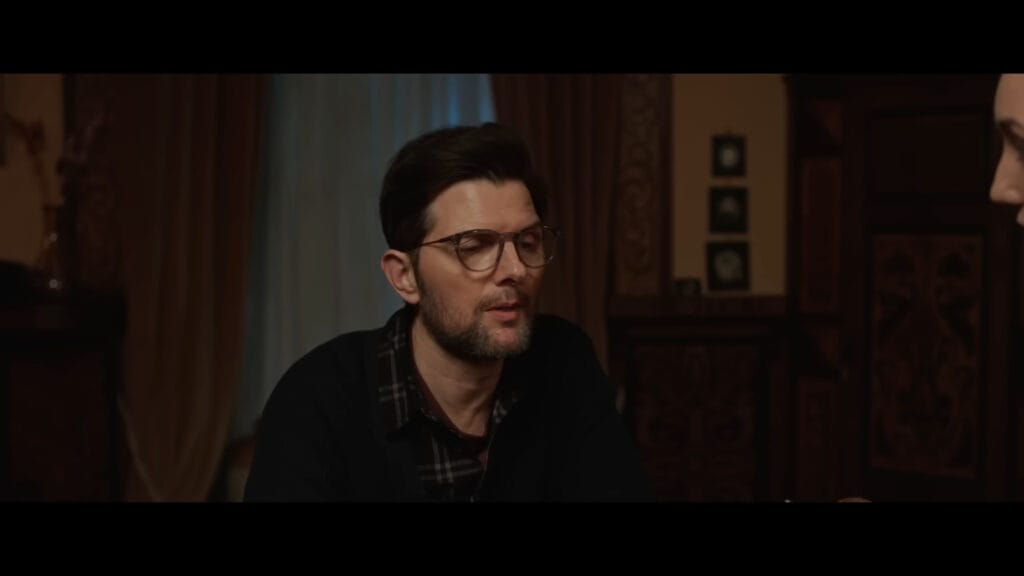
Ohm’s parents seemingly had a great relationship, hence them wanting to be scattered at their honeymoon. This meant that when Ohm shot his mother, his father blamed him. This lead to a ton of resentment building up. Ohm’s father abandoned his basic parental duties and, instead, became a raging alcoholic who refused to look after Ohm.
Ohm still remembers this feeling of rejection to this day and that plays heavily into his attitude to writing. He’s constantly writing bleak endings to his novels because he thoroughly believes that life is just that – a journey with an ultimately bleak ending.
Thematic Spotlight: The Shattered Childhood
In Hokum, Ohm Bauman’s adult cynicism is a direct byproduct of a single, tragic childhood moment: playing with his father’s gun. What he initially describes to others as a cold-blooded murder was, in reality, an accident that left him to carry the “chains” of guilt for decades. He’s never forgiven himself. This trauma reflects a reality that, I am sure, we would all prefer to view as a rare horror trope, but real-world data actually suggests otherwise.
Despite how “bleak” Ohm’s backstory feels, unintentional shootings by children are a legitimate ongoing crisis as we speak. Children are accidentally shooting parents and relatives at a frightening rate. Some result in injury, others lucky misses, while some result in death.


It’s not getting better, either. Tragically, 2023 was the worst year on record for these incidents, with over 400 cases of children unintentionally firing a weapon for the first time since tracking began. Between 2015 and 2024, there were over 3,500 such incidents in the US alone. Like Ohm, these kids often find firearms in their own homes – an environment where 4.6 million American children live with at least one unlocked and loaded gun.
The horror in these statistics is exacerbated by age; children make up one-quarter of the nation’s accidental shooting deaths. In 16% of unintentional firearm deaths involving children under 13, the weapon was mistaken for a toy. This actually even plays into the movie and is echoed in Jerry’s recurring sentiment: that “closed-minded” people often refuse to see the horrors staring them in the face until they are personally impacted.
Why was Ohm visiting Ireland and the hotel?
Ohm was visiting Ireland and the hotel to scatter his parents ashes.
Ohm knew that his parents wanted their ashes scattered together at the location, in Ireland, that they honeymooned at years before. He was aware of the general location but only had a photograph to go off for the exact spot. The bar tender, Fiona, recognised the spot which is one of the reasons he actually ended up liking her.
At the spot, Ohm carefully scatters his mother’s ashes, reflecting the warm feelings he had for her. He then dumps his dad’s ashes like he is emptying sand out of his shoe at the beach. Again, this reflects on the bitter feelings he had about his father’s poor treatment of him and his alcoholism.
Why did Ohm try to kill himself?
Ohm tried to kill himself due to depression caused by his childhood trauma from accidentally killing his own mother.
The accident that claimed the life of Ohm’s mother had left him massively scarred. I mean, obviously right? It’s a horribly harrowing event, it’s hard to imagine what long term damage that would do to a person. He’s so ashamed of the event that he can barely admit it; he concocts fictional stories to explain it all away.
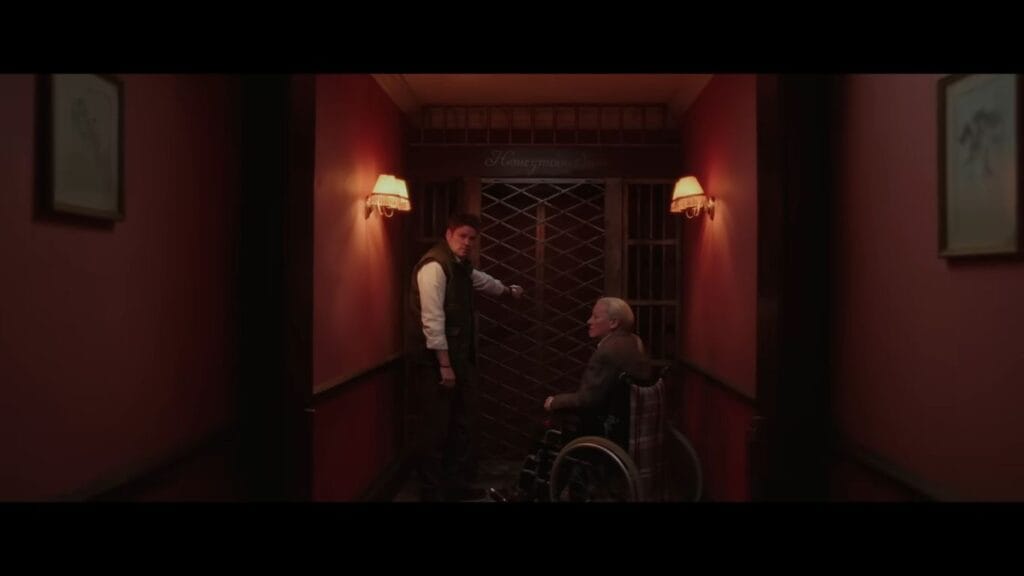
He’s carried the guilt around with him his entire life and refuses to forgive himself for what is, essentially, a complete accident. If the gun was locked up properly, it would never have happened. The way his father treated him only reflected on that guilt and reinforced that he was a bad person for what happened. His father also showed him that grief should be handled by rotting away, eventually dying in a pool of your own piss.
The finishing of his Conquistadors trilogy and the scattering of his parent’s ashes basically removed his last tether to life. He eventually became overwhelmed by the ghosts of his past. In essence, he couldn’t fight on any longer, felt he had nothing to live for, and tried to end his own pain.
There’s a strong suggestion that he did it in the hotel because he knew his body would be found. At home, he had no relationships, friends, or family so he might never have been found.
Why did Alby spike Ohms drink and with what?
Alby spiked Ohm’s whisky flask with Psilocybin mushrooms because Ohm was rude to him, refused to read his manuscript, and burned him with a spoon.
It was a simple way for Alby to get a measure of revenge on the very abrasive Ohm. There were no ill intentions besides giving him a hard time and sending him on a bad trip. Obviously, the consequences were far more severe.
What did the Psilocybin mushrooms do to Ohm?
The Psilocybin mushrooms opened up Ohm’s mind and allowed him to actually see spirits.
In the world of Hokum, the spirit world is always there. It is just closed off to the minds of normal people. Taking Psilocybin mushrooms opens the mind and allows people to actually see ghosts and spirits.
Jerry (David Wilmot), the homeless man, is always drinking a concoction containing Psilocybin mushrooms. Consequently, he has seen his dead wife and he also sees the ghost of Fiona after she has been murdered in the hotel. When Ohm’s drink is spiked, it opens his mind to the spirit world, too.
Thematic Spotlight: The Psilocybin Veil
In Hokum, psilocybin mushrooms serve as the literal and metaphorical bridge between the protagonist’s psychological trauma and the film’s tangible supernatural reality. While the hotel staff dismisses Jerry as a bit of a weirdo, his consumption of “magic milk” laced with mushroom powder is the narrative key that unlocks the film’s “Dual Reality” logic. Jerry explicitly argues that the supernatural is always present, but only those whose minds are “opened” by the mushrooms can perceive it, while “closed-minded” people remain blind to the horrors around them.
Unbeknownst to Ohm, the bellhop Alby spikes his whiskey with Jerry’s mushroom powder to get revenge on him for being a dick. This strips away Ohm’s mental defenses, forcing him to confront the “Witch” and the suppressed memories of his mother’s death while in a vulnerable, drug-induced state. Without this chemical trigger, Ohm likely would have remained his usual cynical self, safely insulated from the hotel’s darker history.
It’s actually a pretty neat little story-telling tool because it provides a level of plausible deniability. The mushrooms validate the film’s horror as objective rather than subjective. Although the visions begin under the influence of the powder, the physical evidence at the film’s conclusion, specifically the rust on Ohm’s wrists from the Witch’s chains, proves that the mushrooms did not create a hallucination. Instead, they functioned as an actual sensory expansion tool, allowing Ohm to interact with a physical Underworld that exists just beneath the surface of the norm.
What happened to Fiona?
Fiona (Florence Ordesh) was murdered by the desk clerk Mal (Peter Coonan). He drugged her at the Halloween party and, while she was unconscious, he locked her in the honeymoon suite where she died. He did this to cover up her pregnancy.
Fiona and Mal had seemingly been having an affair and Fiona had fallen pregnant. Now this would all be well and good but Mal isn’t an ordinary desk clerk. He is actually working at the hotel because the owner, Cob, is his father-in-law. Mal is married to Cob’s daughter and has children with her.
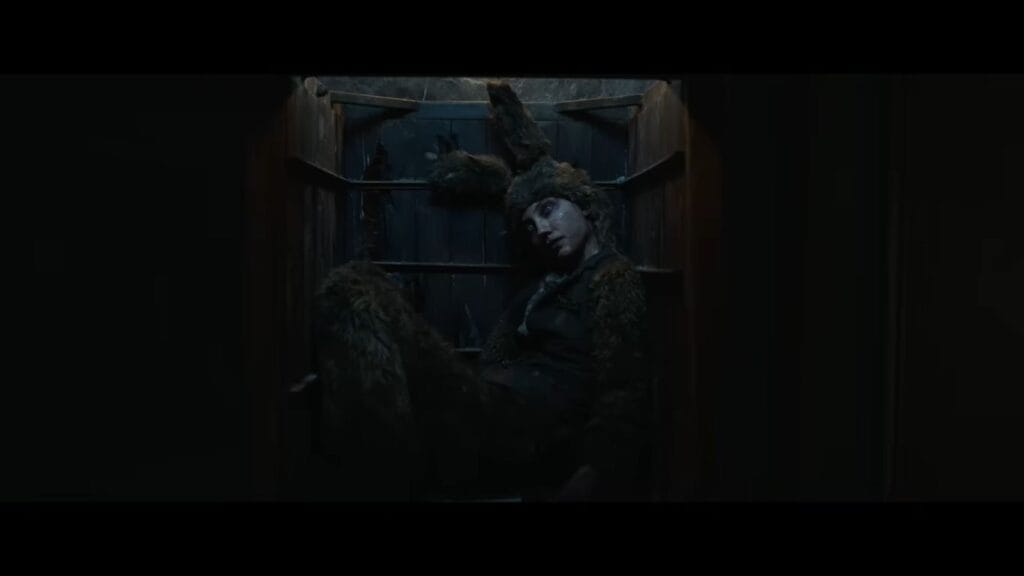
If Cob were to find out about the affair and the baby, Mal would likely lose his job, his marriage, and maybe even his legs because Cob sounds like a dude who drives a hard bargain. Fiona seems to have threatened to tell Cob everything so Mal drugs her tea and locks her in the honeymoon suite knowing that nobody ever goes up there.
Fiona wanders the basement looking for a way out, doesn’t find an exit, and eventually dies in the dumbwaiter elevator.
Did You Know? The Dark Statistics of Infidelity
In Hokum, Mal’s decision to murder Fiona is driven by the panic of an exposed affair and an unwanted pregnancy. While this narrative feels like a classic “crime of passion”, real-world data, once again, makes it all feel starkly real. Infidelity frequently results in violence and even murder.
When violence does occur, it is often triggered by the same factors seen in this film: disputes over illicit relationships or the desperate attempt to stage a cover-up. What’s even more terrifying is in cases like that of Chris Watts where a person who is cheating will commit familicide to cover-up and enable their illicit relationship to continue.
Fiona’s pregnancy in the film also mirrors a grim real-world risk factor. For characters like Mal, the presence of a child represents permanent evidence of betrayal that can push a “closed-minded” individual from a state of fear into a premeditated act of violence to protect their public standing. Affairs leading to violence were also a theme in McCarthy’s last film Oddity.
What is Ohm doing in the Honeymoon suite?
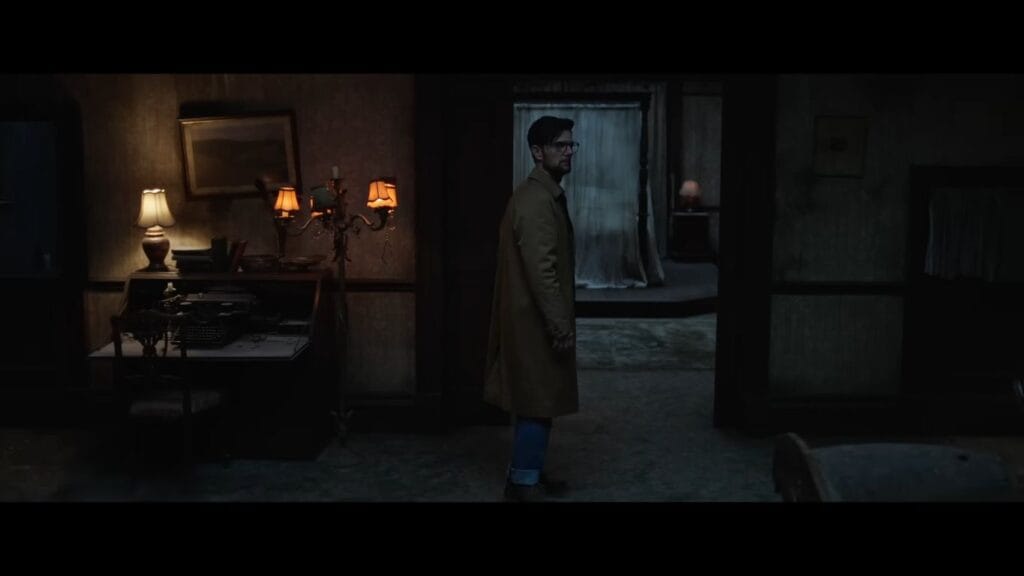
Ohm is in the honeymoon suite looking for Fiona.
Jerry, thanks to his “magic milk” is in touch with the spirit world and sees Fiona’s ghost in the hotel when he is there alone raiding it for pills. The ghost indicates that he should go up to the honeymoon suite. Frightened to go alone, he enlists the help of Ohm who is just as eager to find Fiona because she saved his life.
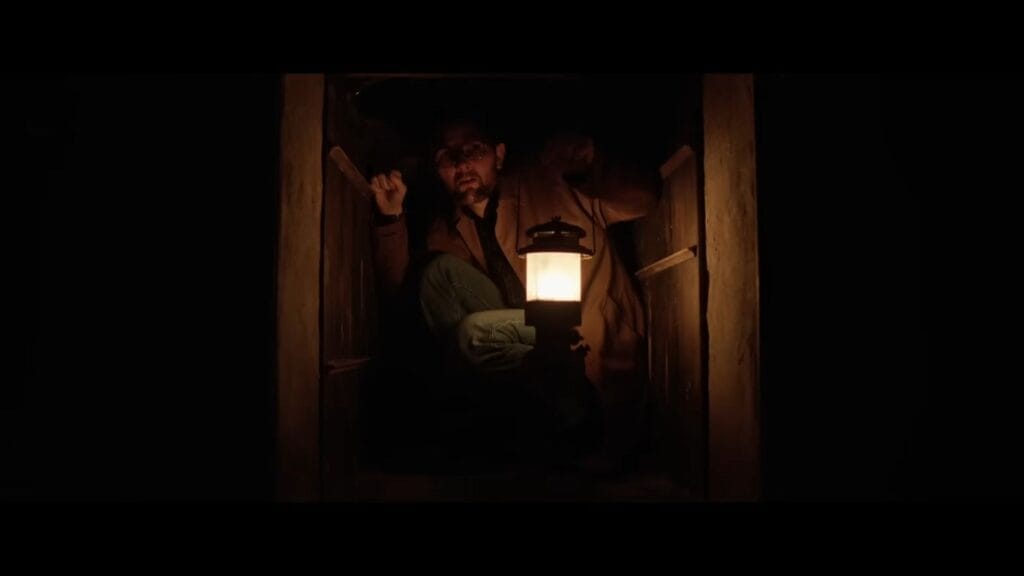
When the pair enter the hotel, Ohm heads up to the room while Jerry is knocked unconscious by Fergal who genuinely believes that Jerry is responsible for Fiona’s disappearance and wants to take him to the Garda Síochána (Irish police).
Ohm, who initially finds nothing in the room, passes out on the bed after drinking from his flask. The very same flask that Alby had spiked with Psilocybin mushrooms. This is what opens Ohm’s mind up to the spirits and basically enables him to navigate the situation that is about to occur. Initially, he sees his mother’s spirit and the events that lead to her death but it’s going to get a whole lot trippy for him very shortly.
Why does Mal lock Ohm in the room?
Mal locks Ohm up in the room to keep him from telling anyone about Fiona’s body.
Realising the honeymoon suite key had gone, Mal heads back to the hotel and finds Ohm passed out on the bed. Obviously wanting to cover up his crime, he attempts to usher Ohm out of the room.
Ohm’s curiosity gets the better of him, however, and he finds Fiona’s body when he presses the call button for the dumbwaiter while exploring the room. Knowing that he will get in immense trouble for murder, Mal hastily exits, locking Ohm in the room to die in the same way Fiona did.
What is in the honeymoon suite in Hokum?
The honeymoon suite plays host to an interconnecting point between the real world and the spirit world. The basement connected to the suite hosts a witch, or The Cailleach of Irish legend.
During hotel renovations, the entrance to the basement was essentially lost which effectively sealed the witch in. The dumbwaiter was the only actual way to reach her physical domain now, the basement.
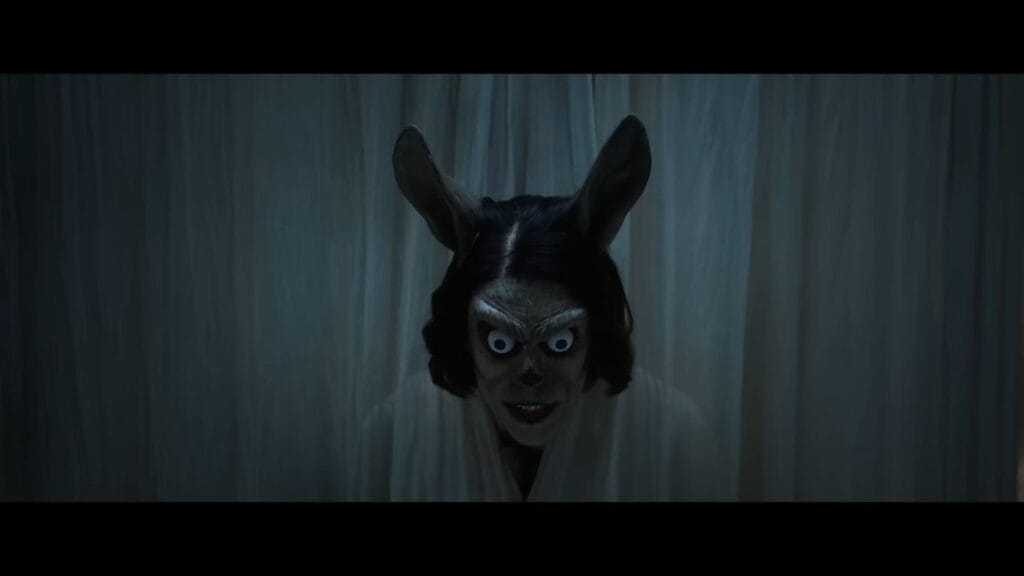
In the basement, the witch is actually capable of taking people to the underworld where she will “tear off a piece of them”. Ohm enters the basement via the dumbwaiter believing there was a fire exit listed on a map.
Interestingly, the dumbwaiter here seems to act as more than just a way to get to the basement. It’s also a symbolic representation of Ohm taking a deep journey into his own subconscious where his own buried demons wait. It’s actually a pretty common horror trope, believe it or not.
While down there, he is chased by the witch but manages to escape back into the honeymoon suite where he draws a circle around the bed in chalk, as instructed to by Fiona, essentially creating a barrier between the physical and spiritual worlds that saves his life.
Folklore Focus: The Legend of the Cailleach
In Hokum, the witch is a cinematic interpretation of the Cailleach, the “Veiled One” or “Divine Hag” of Gaelic mythology. Traditionally, the Cailleach is a creator deity associated with the landscape, the winter months, and the protection of wild animals, specifically goats, which explains the film’s recurring obsession with goat’s milk and the little buggers climbing on cars. In the film’s lore, she is reframed as a “wicked old woman” who leaves travelers in a state of confusion, leading them through a literal Underworld.
The movie leans heavily into the more malevolent “Hag” archetype, portraying her as a tethered spirit that emerges from the darkness to tear pieces (eyes or ears) from those caught at the end of her chain. This reflects the dual nature of the Cailleach: she is a mother to the mountains but also a harbinger of the “bleak finale” that winter brings to the world. Ohm’s defensive use of a chalk circle is a classic trope in folk-horror, rooted in traditional beliefs that physical boundaries of salt, iron, or chalk create a sanctified space that supernatural entities cannot cross.
What happened to Jerry in Hokum?
Jerry is killed by Mal after returning to the hotel to save Ohm.
Initially, Fergal kidnaps Jerry to turn him into the Garda. Jerry escapes the van on the way, suffering grave injuries from the high speed fall. He returns to the hotel to look for Ohm. Mal, in the meantime, has returned to get rid of any evidence left behind from the night’s encounter with Ohm.
Mal initially manages to convince Jerry that he had found Ohm drunk in the suite and he had driven him back to the airport. He tells Jerry to leave in Ohm’s car (which he claimed was left behind because Ohm was too drunk to drive) before he is caught and turned into the Garda.
Jerry agrees but, when he returns for the keys, Ohm manages to ring the service bell for the honeymoon suite. Indicating that he is still in there. Jerry heads up to the suite where he manages to free Ohm before Mal shoots him dead with the crossbow that was used earlier in the film for killing goats.
What happened in the ending of Hokum?
In the ending of Hokum, Ohm lures Mal into the basement where he tricks him into being taken away to the underworld by the witch.
Mal starts a fire in the hotel to cover up the evidence of his crimes. He does this by putting a heavy, flammable blanket over a heater and places the heater on an old fashioned timer plug. This will turn the heater on after a certain amount of time which will ignite the blanket as these types of heaters are not supposed to be covered.
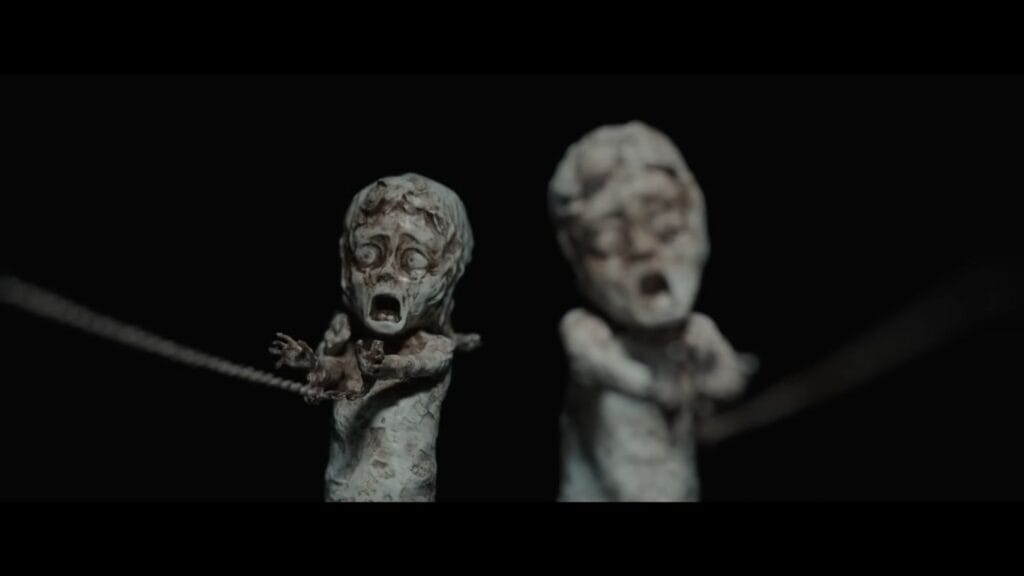
Mal then heads to the honeymoon suite to deal with Ohm. Ohm manages to secure the key from Jerry just before Mal kills him, meaning Mal can’t escape. Ohm then lures him down to the basement.
In the basement, Ohm hangs the key for the honeymoon suite up deep into the corridor, crouches down and draws a circle of chalk around himself for protection. The reason he hangs up the key is to lure Mal deep into the basement where the witch can claim him.
This is exactly what happens. As Mal attempts to undo the key so that he can escape, the witch arrives and places chains around his wrists. The witch also places chains around Ohm’s wrists but Ohm is temporarily protected by the spirit of his mother.
The doors to the underworld fling open and Mal is dragged away, likely to be tortured for the rest of eternity, I guess. Ohm quickly cuts through his chains and escapes out of the basement.
Thematic Spotlight: Redemption in the Deep
In the climax of Hokum, the descent into the hotel basement represents Ohm Bauman’s literal and metaphorical journey into the “Underworld” of his own suppressed trauma. For decades, Ohm has been “chained” to the guilt of accidentally killing his mother with his father’s gun – a burden exacerbated by his father’s refusal to forgive him. While the basement is the physical lair of the Cailleach (the Witch), it also serves as the space where Ohm finally confronts the “bleak finale” he has spent his life writing for himself.
The intervention of his mother’s spirit in the basement is, in a lot of ways, the most important moment of the film’s psychological resolution. Rather than being a vengeful entity, her ghost provides the protection Ohm needs to survive the Witch’s influence, signifying a transition from self-punishment to self-forgiveness. By making peace with her spirit in the terrifying basement of the hotel, Ohm is able to physically and symbolically “remove his own chains”, effectively ending the cycle of suffering that defined his relationship with his parents’ ashes.
This internal resolution is mirrored in Ohm’s professional evolution. After escaping the burning hotel, a site of stagnant grief, he rejects the “bleak” endings of his previous work and chooses to write a more hopeful conclusion to his Conquistador trilogy. His survival is the act of reclaiming his narrative from the shadow of his father’s “monster” and choosing a path of recovery over a “pool of your own piss”. It’s a weirdly hopeful ending but poor Fiona, eh?
Who rescues Ohm at the end?
Ohm was rescued by Fergal, at the end of the film.
Ohm attempts to escape but passes out from smoke inhalation. Luckily, Fergal arrives and manages to carry Ohm out of the flames, saving his life. This essentially reinforces that Fergal was a decent guy. He only kidnapped Jerry because he legitimately thought he was responsible for Fiona’s disappearance and wanted to turn him in to police.
Did it actually happen or was it in Ohm’s head?
The events at the end of the film, the spirits, the witch, all actually happened.
Obviously, it’s suggested that this all might have been in Ohm’s head when Alby admits to spiking his drink with magic mushrooms. The key piece of evidence, however, is the rust on Ohm’s wrists from the chains placed there by the witch.
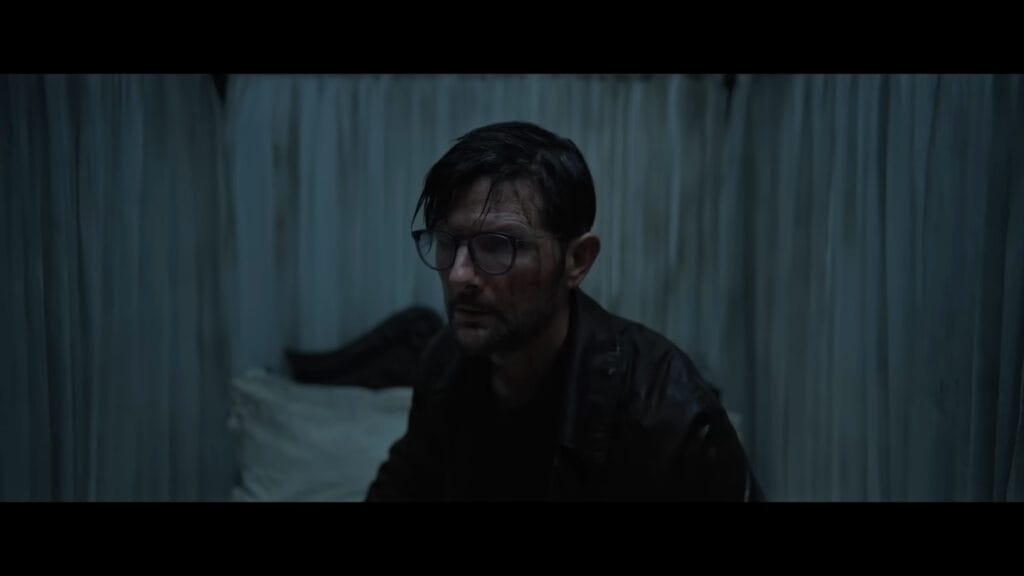
The encounter with the witch did actually happen. The rust from the chains is proof. The mushrooms just opened Ohm’s mind up so that he could see the spirits like that of his mother. It’s a bit of a double bluff but in the world of Hokum, the supernatural is very real; just not everyone can see it.
Frequently Asked Questions
Was everything just a drug-induced hallucination?
No, it wasn’t just a hallucination, everything actually happened. The final shot reveals physical rust on Bauman’s wrists, residue from the witch’s rusted metal chains. The mushrooms didn’t create the ghosts; they simply removed the “closed-minded” filters that prevent humans from seeing the Underworld that exists right beneath our feet.
Why did Mal murder Fiona?
Fiona was pregnant with Mal’s child following an affair. Mal, who lived in absolute terror of his father-in-law, Cob, killed her to prevent the scandal from reaching the old man. He locked her in the honeymoon suite because he knew Cob’s strict rules meant no one would ever set foot in there… Well, at least until a cynical American author showed up to ruin his plan.
Why did Alby spike Bauman’s whiskey?
Pure, petty revenge. Bauman was incredibly rude to the staff, mocked Alby’s dreams of being a writer, and even burned his hand at the bar. Alby broke into Bauman’s room and added Jerry’s mushroom powder to his whiskey bottle, accidentally forcing his mind open to his own trauma while in a vulnerable state and allowing him to see the spirits.
What exactly is the “Cailleach”?
The witch here is the film’s interpretation of the Cailleach – the “Divine Hag” of Irish folklore. While legend often paints her as a creator deity, Hokum leans into her darker aspects as a harbinger of death and a jailer of the Underworld. She represents the inescapable weight of the past, physically “chaining” her victims to their worst memories until they either break free or are dragged into the darkness.
Does the ending mean Ohm is finally cured of his trauma?
“Cured” is a bit of a strong word tbh, but he has certainly broken the cycle of guilt. By making peace with his mother’s spirit and escaping the literal pit of the hotel, Bauman finally “removes his own chains” of guilt. His decision to read Alby’s manuscript and write a hopeful ending to his trilogy suggests he is finally ready to stop punishing himself for an accident that happened when he was a child. It’s about as happy an ending as you can get in a movie featuring a ton of death and an eye-eating hag.
Final Thoughts: Another stellar outing from Damian McCarthy
I really enjoyed Hokum. The themes, very evidently, focus on that of unresolved guilt. Ohm trapped himself in a figurative prison of bleakness. His dad never forgave him for the accident and he never forgave himself. He was always destined to have an unhappy ending until he managed to confront his grief. His mother forgave him which allowed him to forgive himself and finally write a far less bleak end to his story.
I do feel for Fiona and Jerry, though. McCarthy sure isn’t shy about putting a fair bit of bleakness into his stories, is he? Anyways, great film, one of the best of 2026 so far. Don’t forget to give our review a read. Thanks for reading! Why not stick around? Check out some more Ending Explained articles. I also review horror movies and curate horror lists.
A Note on Ending Explanations
While we aim to provide comprehensive explanations based on the events on screen, film analysis is inherently subjective. The theories and conclusions presented in this "Ending Explained" feature are personal interpretations of the material and may differ from the director's original intent or your own understanding. That's the beauty of horror, right? Sometimes the scariest version is the one you build in your own head.
You might also like:
- Funny Games (2007) Review – A Cynical and Brutal Lesson in Nihilism
- Somnium (2024) Ending Explained – What Really Happened in the Cloud 9 Program
- Observer (2022) Review – An Ambitious But Messy Religious Trip
- The Den (2013) Review – A Chilling and Effective Screenlife Slasher
- The Long Walk (2025) 4K Blu-ray Limited Edition Steelbook Review (PAL) – Fantastic Steelbook, Disappointing Extras
Disclaimer: Images, posters, and video stills used in this horror ending explained article are the property of their respective copyright holders. They are included here for the purposes of commentary, criticism, and review under fair use. Knockout Horror makes no claim of ownership and encourages readers to support the official release of all films discussed.