Saw IV (2007) Review – The Point Where The Series Fell Off
Saw IV (2007): Quick Verdict
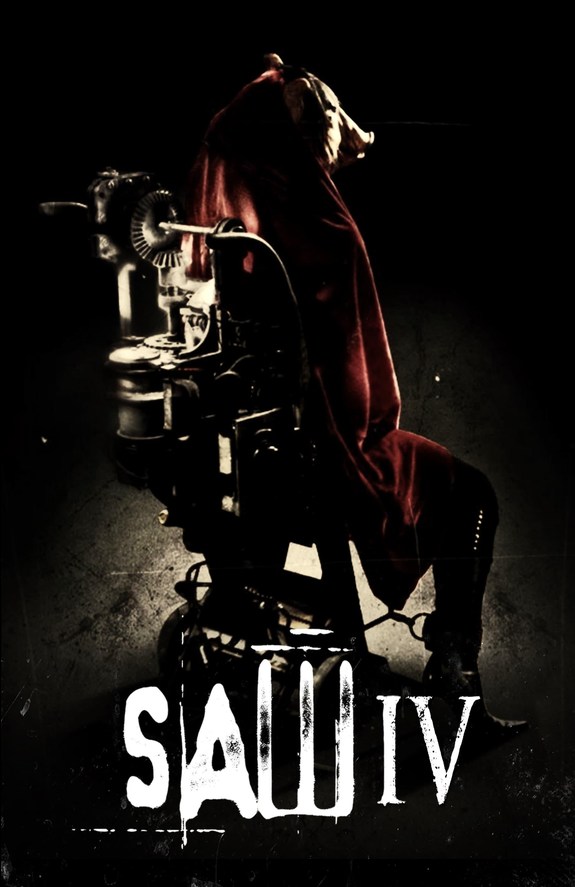
The TL;DR: Saw IV (2007) marks the exact turning point where the iconic torture-porn franchise officially hits a wall of diminishing returns. Directed by returning franchise hand Darren Lynn Bousman, the film follows SWAT commander Rigg as he is forced through a reckless gauntlet of traps to save his colleagues, while parallel flashbacks attempt to untangle the pre-mortem and post-mortem origins of John Kramer. Stripping away the clever spatial mechanics of the first three entries in favour of derivative setups, cheap music-video editing, and an over-reliance on convoluted expositional twists, it kicks off the series’ steep downward spiral and is a huge disappointment.
Details: Director: Darren Lynn Bousman | Writers: Patrick Melton, Marcus Dunstan | Cast: Tobin Bell, Lyriq Bent, Scott Patterson, Costas Mandylor, Betsy Russell | Runtime: Approx. 93 Minutes | Release Date: October 2007 | Where to Watch: Digital VOD / Physical Media
Best For: Hardcore franchise completionists, 2000s splatter-horror fans, and anyone tracing the sprawling lore of the Jigsaw killer.
Worth Noting: Revisiting the franchise’s trajectory? Check out our reviews where it all began with Saw (2004) and Saw II (2005).
Did You Know: Day 17 of our 31 Days of Halloween 2026 feature! Looking for an October marathon of your own? Check out our ultimate 31 Days of Halloween 2026 Guide.
Is It Scary: More tedious and repetitive than truly terrifying. The inventive, devious sadism of earlier entries is largely replaced by forgettable, uninspired gore and chaotic, nausea-inducing editing.
Rating: 2/5 Stars
(A convoluted, repetitive franchise stumble that marks the beginning of the series’ steep quality decline.)
Welcome to Knockout Horror. It’s day 17 of our 31 Days of Halloween 2026 feature and it’s time for yet another sequel. Every October for the past few years we have been covering one of the Saw movies. Today, it’s time for us to take a close look at the exact point where the series started a steep nose dive as we check out Saw IV (2007). Let’s take a look.
Table of Contents
It’s All Downhill From Here
The first Saw movie was an enormous surprise hit back in 2004.
Despite a fairly lukewarm critical reception (it currently holds a 50% rating on Rotten Tomatoes), horror fans absolutely loved it. Its reasonably restrained yet legitimately sickening torture games, eponymous antagonist, and clever end twist still stand as some of the most memorable moments in 2000s horror.
“This is the movie where things really took a turn towards self parody and where the series, as a whole, stopped making any sense.”
A sequel followed less than a year later, arriving to an even more lukewarm critical reception but still plenty of fan love.
I’m sure many would mark the 2006 release of Saw III as the turning point for the series. The first iteration that felt less compelling, less clever, and far less interesting. I still believe it had plenty to offer, though. Jigsaw was still the primary focus and some of the traps were among the best the series had to offer. The freezing water trap, for one, was just utterly harrowing.
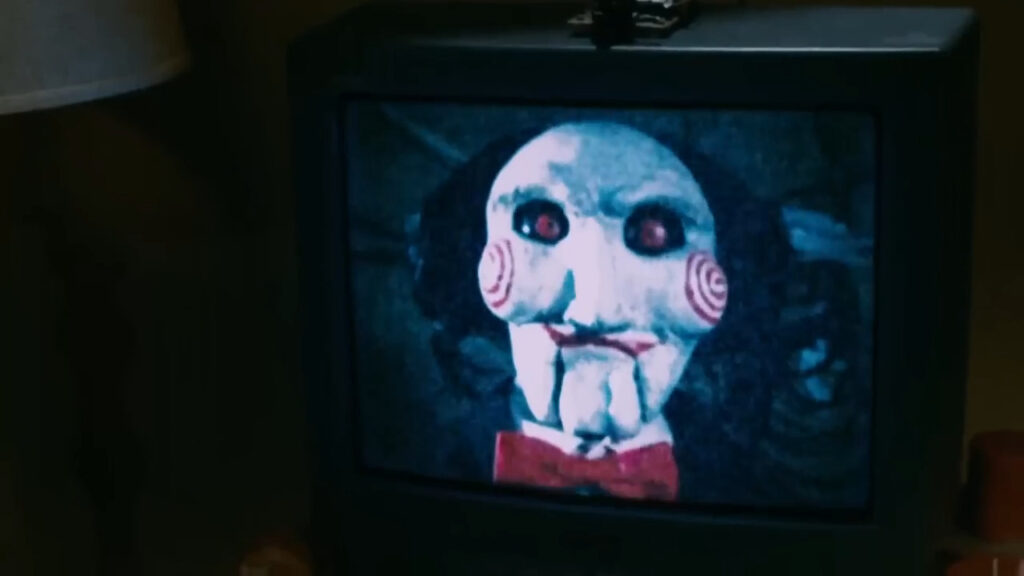
For me, Saw IV is where the series really lost its way. This is the movie where things really took a turn towards self parody and where the series, as a whole, stopped making any sense.


Potentially the worst entry
Saw IV follows directly on from the events of Saw III. When SWAT commander Riggs (Lyriq Bent), an officer working on the Jigsaw case, is kidnapped, he finds himself tasked with his own set of games. He must follow a series of rules in order to save the lives of two of his colleagues, but will his desire for control cause him to fail before he even begins?
So, in a nutshell, this is more of the same. The formula for these films has been well established by this point and returning director Darren Lynn Bousman had a significant part in crafting the rules. With this in mind, it’s very clear that he has no intention of trying to rewrite them.
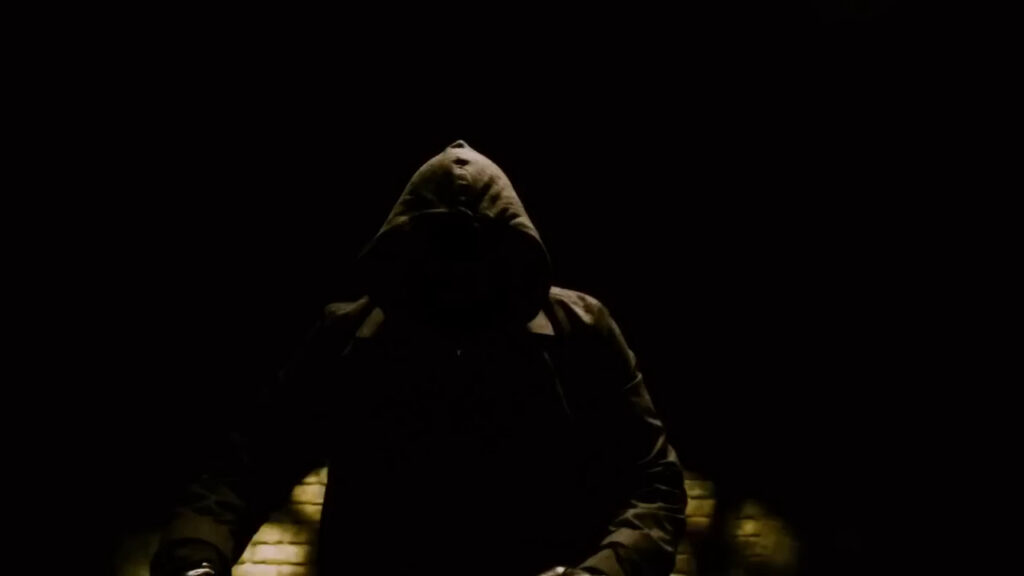
Saw IV follows the exact same formula as every movie before it. Our protagonist is kidnapped, he wakes in a room with a message from Jigsaw. He has to play a series of games to rescue his colleagues who have also been kidnapped. It’s the same old shit. The problem is, Commander Riggs is something of a hot head.
He breaks the rules, he is impulsive, and he genuinely believes he can save everyone. How this plays into the story will be revealed later in the film but, for the most part, it’s business as usual. You have seen this formula before and Saw IV adds absolutely nothing new to it.
A few logistical problems
Now, at risk of spoiling Saw III, new writing duo Patrick Melton and Marcus Dunstan had a bit of a tough task when it came to crafting the story, here. Namely, a couple of the key characters were currently sitting in a morgue.
“The only problem was, the writers now had to work around one of the most important characters in the series being gone.”
Leigh Whannell had always viewed the first three Saw movies as a self-contained trilogy and ending the third film the way he did seemed rather fitting. It basically wrapped everything in a neat bow, bringing together all three stories, and deconstructing the characters and relationships that made those events happen.
The studio, of course, completely disagreed. Producers had already begun laying the groundwork for another sequel throughout the third movie. Things that seemed somewhat innocuous during a first watch actually became quite important when it comes to the existence of Saw IV.
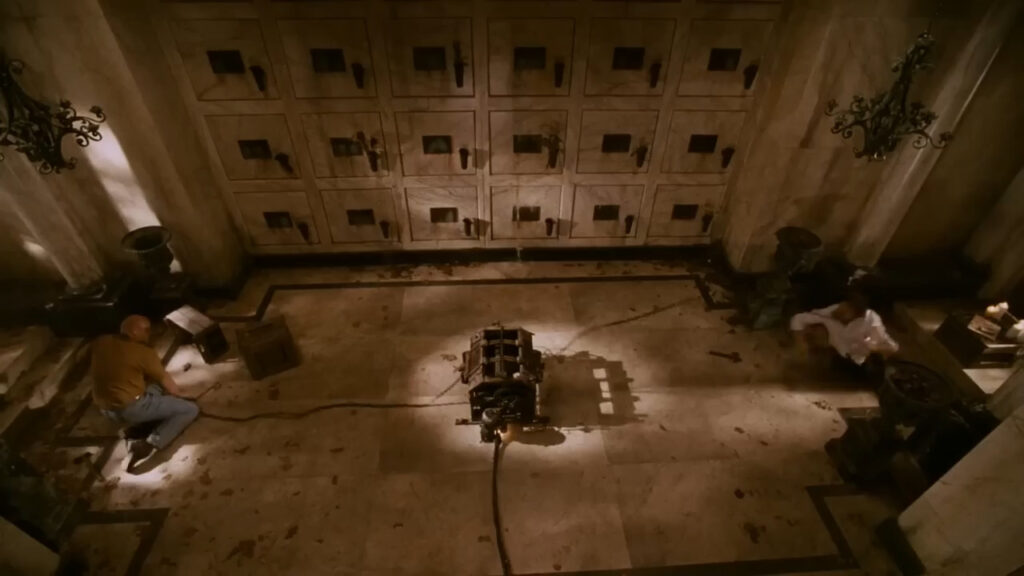
The only problem was, the writers now had to work around one of the most important characters in the series being gone. The way they chose to do this was through the medium of flashbacks… lots of flashbacks.
Much of this story is used to expand on the mythos of Jigsaw and to explain some of his motivations. The rest is used to basically redo the entirety of Saw III in almost exactly the same way. It’s a man walking through a house attempting to control his emotions so he can help or harm other people he has been vaguely connected to throughout his life.
It’s more of the same… but worse
Let’s get the good stuff out of the way first… This shouldn’t take long.
This is a short movie for a Saw title, coming in at only 93 minutes, so it is pretty easy to get through. Tobin Bell is utterly fantastic, as always and I did enjoy seeing some of Jigsaw’s origin story. He’s a compelling character and there’s a lot of meat on that bone. Now onto the bad.
Saw IV has run into a solid brick wall of diminishing returns. By this point, the formula is starting to feel a little bit old. Viewers know what to expect and the end twist that ties everything together is all the narrative really has to offer.
With this basically being a rehash of Saw III’s main trap based thread, it almost feels like you are rewatching the previous film. Riggs is basically Jeff from the third film or Matthews from the second. His motivation is just slightly different as he has a savior complex rather than a desire for revenge.
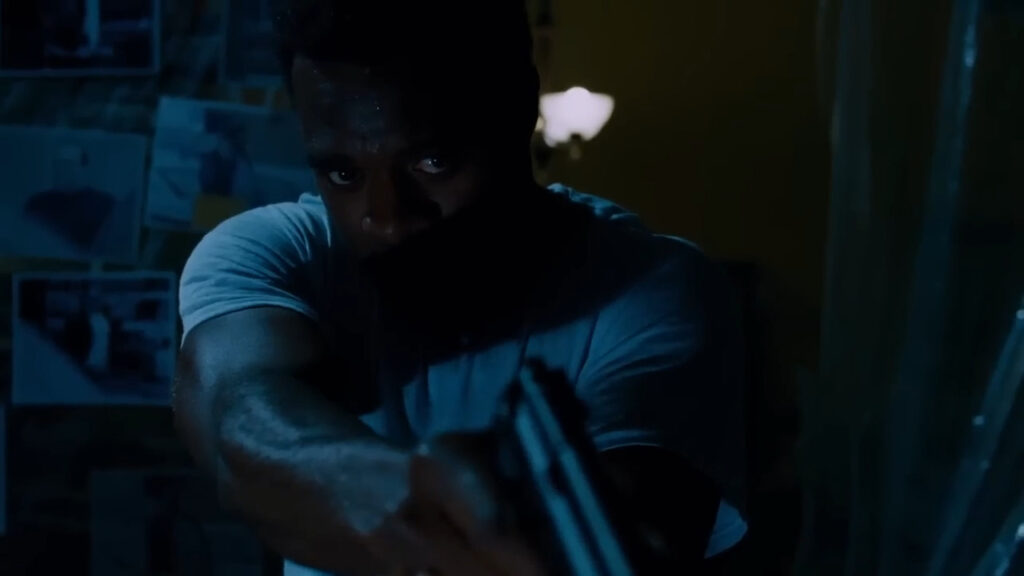
Sure, there’s a couple of surprises along the way and the reappearance of a few characters from earlier films, but it’s basically the same things all over again. It just so happens to be structured and paced a lot worse.
That wouldn’t be so bad if the traps were interesting but they are some of the worst that the series has to offer. Each of the preceding films had at least two or three games that were simply disgusting and would stay with you long after watching. There’s none of that here.
Every game is imminently forgettable and the nastiness that resonated so strongly with the torture porn aspect of the prior entries is massively dulled and far less significant. The traps are less clever, too. There aren’t any that feel fiendishly devious for how smart they are and there are barely any that even raise a wince.
Saw IV feels far more like repetition than innovation and the recycling of the third film’s structure makes it feel pretty worn out from the start. That’s without mentioning some of the decisions they make regarding some series’ favourites that deserve far more than to be an afterthought in this disappointing entry.
The ending is a mess
I complained in my review of Saw III about the horribly protracted ending. It spends about ten minutes attempting to bring together the loose story threads into something cohesive via the medium of copious amounts of clumsy exposition.
“There’s so many loose threads that have to be tied up through these flashbacks that it’s impossible for it to not all feel just a little bit silly.”
Saw IV is doubly guilty of that. Melton and Dunstan really tried but the task here was just too great. The story is an utter mess and the attempt to balance the loss of a central character with the deepening of the Jigsaw lore feels utterly hamfisted.
It has one of those trademark franchise endings that features tons of flashbacks and nods to the prior films, all designed to make you go “ah, it all makes sense now“… Only, I doubt you will really care.
There’s so many loose threads that have to be tied up through these flashbacks that it’s impossible for it to not all feel just a little bit silly. It doesn’t come across as remotely organic and suffers for the fact that it is very apparently nothing more than writers trying to jam a square peg into a round hole.
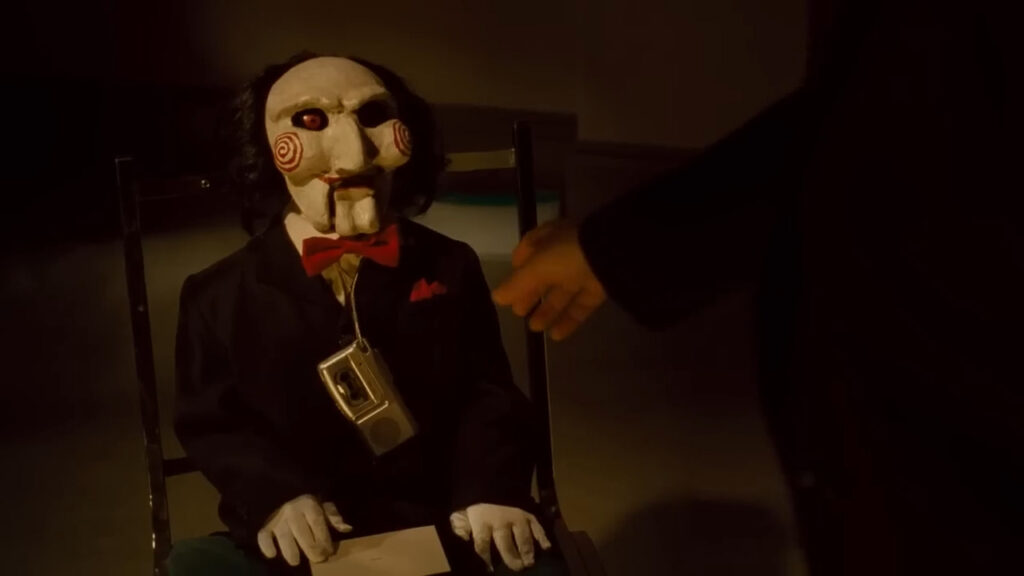
What makes it even worse is that the stylistic flair that helped James Wan overcome a low budget on the first film suddenly feels very old and out of date. The kinetic camerawork feels cheap and there’s the distinct vibe of 2000s music video stank all over it.
Saw IV is a vague attempt to pass the baton from a genuinely compelling set of characters to a bunch that you simply won’t care about. The main “game” feels recycled, the traps are far less intense, clever, and interesting, and the story is pointlessly convoluted and messy.
The series begins its rapid decline right here and you are much better off allowing it to rap up at 3 as the writers intended. It would be 15 years before the release of the next truly great entry with Saw X so don’t expect things to improve.
The Good
- Tobin Bell’s Presence: Even through heavy flashback reliance, Bell anchors the proceedings as the iconic Jigsaw killer.
- Series Continuity Effort: New writers Patrick Melton and Marcus Dunstan gamely attempt to stitch together a post-trilogy roadmap.
- Brisk Pacing: It moves at a fast enough clip that franchise completionists won’t find themselves entirely bored.
The Bad
- Derivative Formula: Rigg’s trial essentially rehashes the exact same narrative beats and house-crawling structure as Saw III.
- Uninspired Traps: The gore game feels uncharacteristically tame, offering forgettable traps that fail to shock or impress.
- Clunky Flashback Overload: Heavily burdened by writing around the deaths of major characters from the previous film using clumsy exposition.
- Dated 2000s Aesthetic: The kinetic, hyper-active camera direction feels more like a cheap music video than tense horror cinema.
The Ugly: The chaotic climax. Jamming a square peg into a round hole via endless expositional flashbacks results in a messy finale that turns the franchise’s mythology into self-parody.
Should You Watch Saw IV?
If you treated Leigh Whannell’s original three-film arc as a self-contained story, Saw IV is where the wheels definitively fall off. Forced to work around the morgue-bound fates of key characters, screenwriters Patrick Melton and Marcus Dunstan lean heavily on cumbersome flashbacks and a recycled plot structure that mimics Saw III. With weaker traps, tired kinetic camera tricks, and a messy exposition-heavy finale, it marks the start of a long, convoluted descent for the franchise until the eventual release of Saw X.
You might also like:
- Creep (2014) Review – An Uncomfortably Intimate Found Footage Nightmare
- The Rental (2020) Review – A Stylish But Average Vacation Slasher
- Do Not Enter (2026) Review – A Derivative Urbex Trap? (Quick Verdict + Analysis)
- MaXXXine (2024) Ending Explained – Who Was The Killer?
- Black Friday (2021) Review – A Bland and Dated Festive Zombie Comedy
Our Scoring Philosophy: A Fair Fight
Horror is a genre that thrives thanks to indie film makers and low budget creators. At Knockout Horror, we firmly believe that every movie that we review deserves a fair fight. That's why we grade on a curve. Our star ratings are all about context, judging a film on what it achieves with the resources it has.
A 4-star rating for a scrappy indie horror made for $10,000 is a testament to its ingenuity and raw power. A 4-star rating for a $100 million blockbuster means it delivered on its epic promises. We don't compare them side-by-side; we celebrate success in every weight class, from the back-alley brawler to the heavyweight champion. Please keep this in mind when considering star ratings.