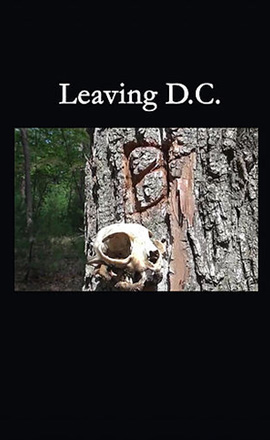
Leaving D.C. (2012) Review – A Masterclass in Low-Budget DIY Horror
Leaving D.C.: Quick Verdict
The Verdict: A masterfully restrained and intelligently crafted found footage horror that stands as a testament to what can be achieved with practically zero budget and a singular creative vision. Leaving D.C. (2012) succeeds by grounding its supernatural premise in a terrifyingly relatable reality, anchored by Josh Criss’s exceptionally natural lead performance. By avoiding tired genre tropes and “jump-scare” gimmicks, the film instead utilizes meticulous sound design and logical character progression to cultivate a thick, oppressive atmosphere of isolation. Mark’s detective-like approach to the strange occurrences in the West Virginian woods makes the viewer an active participant in the mystery, creating a rare sense of engagement for the sub-genre. While the micro-budget production values are evident and the ending feels somewhat abrupt, the film’s commitment to authentic psychological dread is undeniable. This 3.5 star effort is an intelligent, technical triumph that serves as a mandatory watch for fans of DIY horror. It is a quiet, yet explosive, study of a man unravelling in the silence of the trees. It is essential indie cinema.
Details: Director: Josh Criss | Cast: Josh Criss, Karin Crighton | Runtime: 1h 14m | Release Date: 2012
Best for: Fans of found footage horror who appreciate a “slow-burn” approach, and those who enjoy seeing creative, low-budget technical solutions in genre film.
Worth noting: The film was shot entirely at creator Josh Criss’s own home in West Virginia, adding an undeniable layer of authentic isolation to the production.
Where to Watch: VOD, Amazon🛒
Rating: 3.5/5 Stars
(A masterfully directed and viscerally atmospheric found footage thriller that successfully utilizes smart sound design and a believable protagonist to deliver a uniquely chilling and grounded isolation horror.)
Welcome to Knockout Horror. Today we are looking at found footage horror movie Leaving D.C.
Table of Contents
A new approach to isolation horror
We have put together a Leaving D.C. Ending Explained article for this movie so feel free to go and check that out. Some people find the ending a little strange so we do our best to try and explain what is going on.
“Josh Criss directs, writes, produces, edits, and stars in Leaving D.C. It’s truly a one-man show, and there is very little that Mr Criss can be criticised for here.”
Our protagonist Mark Klein has, seemingly, spent much of his life working a high pressured job in Washington D.C. Suffering from Obsessive Compulsive Disorder and severe burnout, Mark seeks to start a new life away from the trials and tribulations of city life.

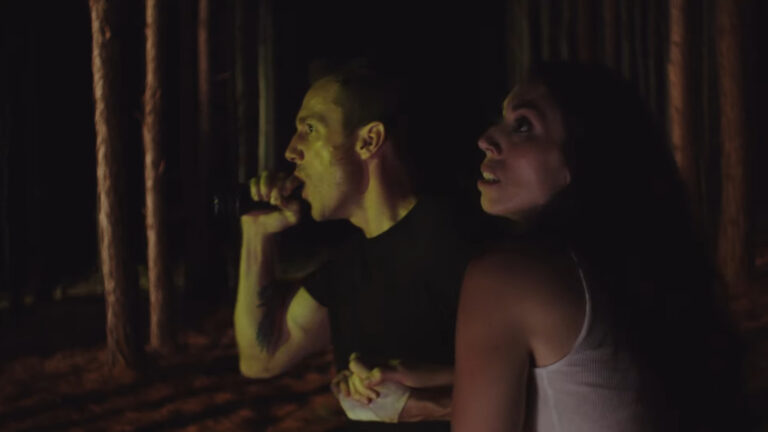
Mark packs up his life and moves to an absolutely stunning house in the wilds of West Virginia. This beautiful house is located at least 6 miles away from anything or anyone. This seems like paradise until Mark starts hearing sounds outside of his windows. He also begins to notice things amiss in the grounds around his home.
Whereas the abundance of creature comforts removes a little of the isolation factor, the events that occur and Mark’s battle to understand them drag you into his world. Mark is lonely, despite being happy with his new home. He is creating update vlogs to ease that loneliness and when the events become more intense, his feelings of isolation become more pronounced.
A one man show
Before I say anything about the movie itself, it is worth me noting that Leaving D.C. is the Josh Criss experience. Josh Criss directs, writes, produces, edits, and stars in Leaving D.C. It’s truly a one man show and there is very little that Mr Criss can be criticised for here. The direction and production is decent, especially for a found footage horror movie. The writing is excellent, the film is well put together, and the acting is, in my opinion, extremely good. Sure, our protagonist can seem a little underwhelmed at the events occurring around him but perhaps he is just a pretty relaxed guy?
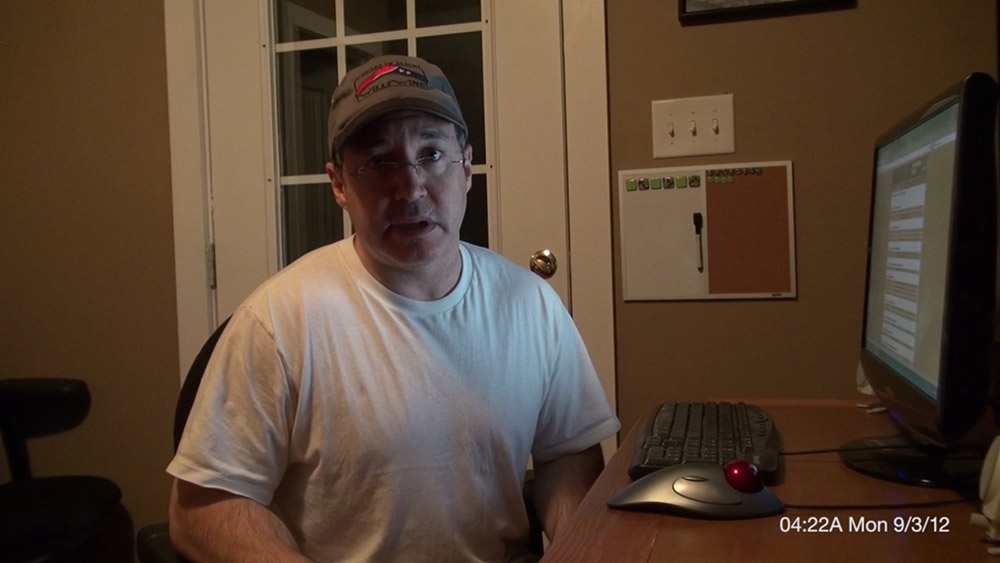
Dare I say it but Josh Criss has a tiny little bit of Phil Hartman about him. He manages to inject a little irreverent humour into the severe goings on. His slightly tongue in cheek dry nature had me chuckling on a number of occasions. Subtle facial expressions at certain points go a long way to heightening the humour and it’s hard not to like the main character.


We are dropped into Leaving D.C. with little more than the title as a hint of what is going on. Mark is recording update vlogs for his OCD group. He has promised to keep them up to date on how things are going at his new place. That’s about the bulk of the exposition here.
A couple of additional characters will be drip fed in through video updates. We only actually spend any length of time with one of these characters — Claire played by Karin Crighton. It’s a standard horror setup but the woods are about to turn into the movie’s biggest antagonist.
Strange noises from the woods
With Mark being in a new, remote, environment, it’s not surprising when he informs his OCD group that he was woken up by the visceral sound of something he assumed was an animal. Anyone who has spent any time in the woods or out in the middle of nowhere knows how strange some animals, such as foxes, sound. To someone from the city this would probably be quite new. What a perfect setup for building tension. This also gives Mark an excuse to place a sound recorder at his window so he can capture the call of the animal that woke him up.
“Mark is a logical guy and he does logical things that make sense. No jumping to conclusions or rushing into the paranormal; just pure, relatable curiosity.”
This is key to how Leaving D.C. does things. The actions Mark takes in response to the things going on make sense and they follow a logical progression. Nothing is done without a decent reason and Mark never jumps to any conclusions. This is a refreshing change for a found footage horror movie. I could imagine reacting in the same way as Mark to a lot of the events occurring; I am sure a lot of us could.
It all makes a lot of sense
It’s so refreshing to see a filmmaker approach a common horror trope with logic. Recording the noise of an animal out in the wild and matching it to downloaded samples from the internet just seems like the obvious thing to do. There’s no fantastical leaps of logic needed, keep it simple.
Mark is a logical guy and he does logical things that make sense to anyone with an inquisitive mind. No jumping to conclusions or rushing into the paranormal, just pure curiosity. That makes a lot of the actual paranormal stuff that we see later feel earned. Especially his reaction as he realises that his previously held assumptions might be wrong.

Josh Criss manages to create a character that is believable in his curiosity. You actually become quite enthusiastic in accompanying him with his detective work. I found myself eager to listen to the next sound recording and you actually want to know what the camera traps caught. You even feel for Mark when his social group begins to move on leaving him as something of an afterthought.
An interesting element
Something I absolutely loved with Leaving D.C. that I rarely, if ever, see in a horror movie was the use of a spectrogram to analyse the recorded audio files. This was also done in Japanese found footage horror Noroi: The Curse. It creates a really nice sense of anticipation as you notice anomalies in the audio and wait for Mark to observe them. That’s another thing that Leaving D.C. does really well.
The application of underused technologies that rarely feature in horror movies. Spectrograms, sound recorders, insect screens, door alarms, and more. Mark also sets up a couple of camera traps that make for some tense moments and a decent amount of suspense. Sure, many of these things have been used before in horror movies but rarely in this manner.
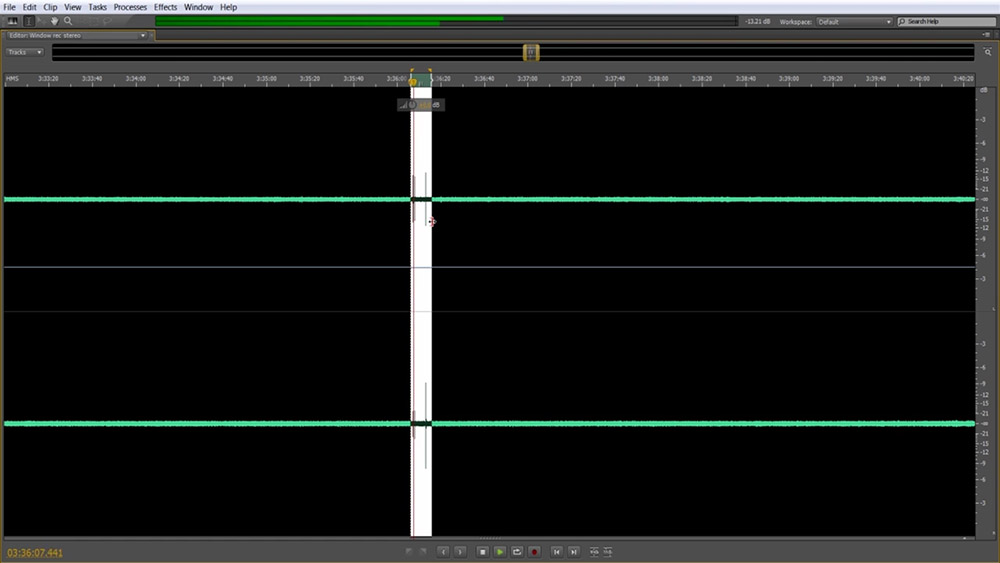
The use of sound is, indeed, one of Leaving D.C.‘s strongest points. Ambient noise is used to build atmosphere and most viewers will likely be surprised by some of the methods employed to heighten the tension. The antagonist of Leaving D.C. is most definitely atypical and there are very few of the standard genre tropes that you normally find in these types of movies.
“Leaving D.C. is a great horror movie and a wicked achievement for such a low-budget production. It has some great moments, and Josh Criss makes for a likable protagonist.”
Is Leaving D.C. the scariest film ever? Absolutely not! In fact, I didn’t find it particularly scary at all. It is, however, atmospheric and extremely creative. The fear factor doesn’t actually amp up until the end of the film when the actions of the presence become a lot more intense. A brief email from a user on a paranormal forum helps to explain what may be happening to Mark. It also gives us all a good excuse to scream at the television as the film comes to its inevitable climax.
The Good, The Bad & The Ugly
The Good
- Believable Protagonist: Mark’s logical and inquisitive response to the strange events makes him one of the most relatable leads in found footage history.
- Creative Audio: The use of spectrograms and sound analysis to build tension is a brilliant and underused technical touch that adds significant depth.
- Atmospheric Dread: The film excels at turning the silence and the isolation of the West Virginian wilderness into a tangible, threatening presence.
The Bad
- Abrupt Ending: The film builds fantastic tension only to conclude in a manner that feels a little too sudden, leaving some narrative threads hanging.
- Minimal Scare Factor: Those looking for visceral “jump-scares” or graphic horror may find the film’s subtle, psychological approach a bit too restrained.
- Pacing Dips: The middle act occasionally lingers a little too long on repetitive vlog updates, which might test the patience of some viewers.
The Ugly: The “Fox” Call. A primal, visceral sound that serves as the ultimate reminder of how thin the line is between nature and nightmare.
Should You Watch Leaving D.C.?
Yes, absolutely. It is a 3.5 star film that represents the very best of DIY horror. If you value atmosphere, intelligent protagonists, and creative sound design over big-budget spectacles, Leaving D.C. is a must-watch. It is a rare found footage movie that respects the audience’s intelligence and manages to do a lot with very little. While the ending is a bit of a let-down, the journey through Mark’s isolation is fascinating and genuinely unsettling. It is an intelligent, technical success that proves less is often more. Give it a look.
You might also like:
- Snowbound Scares – 10 Chilling Winter Horror Movies
- The Monkey (2025) review – A bloody, sarcastic, and farcical riot
- Play Dead (2022) Review – A Farcical and Forgettable Morgue Thriller
- The House of the Devil (2009) Review – A Stylised and Nostalgic 80s Throwback
- 13 Sherwood Avenue (2023) Review – An AI-Infused Found Footage Fumble
Our Scoring Philosophy: A Fair Fight
Horror is a genre that thrives thanks to indie film makers and low budget creators. At Knockout Horror, we firmly believe that every movie that we review deserves a fair fight. That's why we grade on a curve. Our star ratings are all about context, judging a film on what it achieves with the resources it has.
A 4-star rating for a scrappy indie horror made for $10,000 is a testament to its ingenuity and raw power. A 4-star rating for a $100 million blockbuster means it delivered on its epic promises. We don't compare them side-by-side; we celebrate success in every weight class, from the back-alley brawler to the heavyweight champion. Please keep this in mind when considering star ratings.