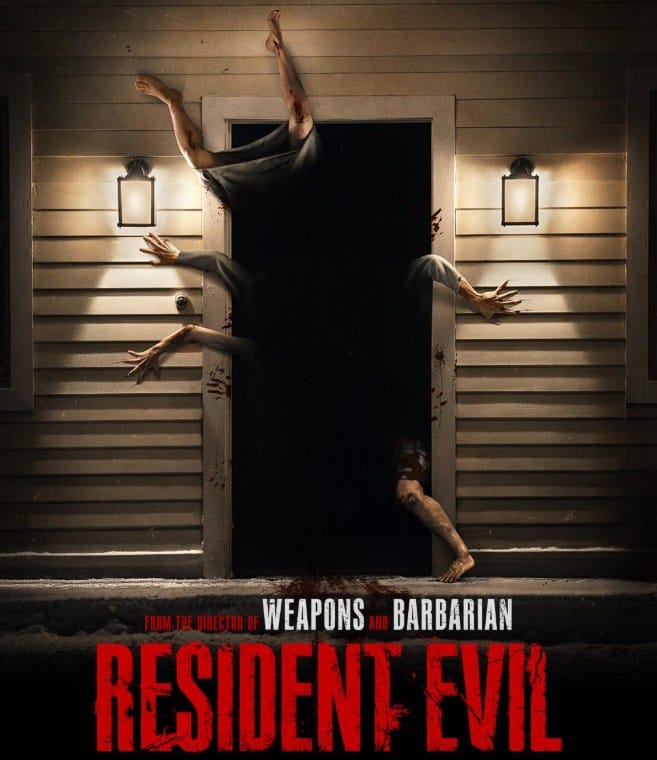
Resident Evil (2026) Ending Explained – What Happens to Bryan in Raccoon City?
Welcome to Knockout Horror. Today, we are explaining the ending to Zach Cregger’s Resident Evil (2026). I absolutely loved this movie so thought it was only right to take a deep dive on it. We are going to break down Bryan’s journey across an infected Raccoon City, unpack the T-Virus amalgam, and dissect that, let’s be honest, brutally tragic hospital climax. As always, we will kick things off with our ND-friendly Ending in Brief for anyone looking for immediate answers. Let’s go.
If you want to check out my full, spoiler-free thoughts on the movie, be sure to head over to our official review of Resident Evil (2026).
⚠️ Warning: Major spoilers follow below.
The Ending in Brief
The TL;DR: After fighting through an infected farmhouse, mutant-infested tunnels (with a creepy infected little girl who manages to bite his hand), sewers, and Raccoon City General Hospital, Bryan finally reaches his destination. He is able to deliver his package, a critical chemical stabiliser needed for the T-Virus cure, to the top-floor Umbrella research lab. The scientists immediately synthesise the cure, but Bryan’s bite proved to be infected and the virus begins to take over. His body violently mutates into a mass of monstrous appendages with a giant mouth in the centre (he looks quite reminiscent of characters like William Birkin in the games). His human side tries to battle the mutation as he desperately begs for the injection. Unfortunately, he is unable to overcome his killer urges and massacres most of the scientists while trying to retrieve it. A surviving scientist tries to administer the cure at the last second but is, once again, killed by Bryan, dropping the vial off the hospital roof. Completely succumbing to the viral mutation, Bryan roars into the night as National Guard gunships surround the rooftop, while his pregnant girlfriend Michelle is left with only his voice note left on a phone that we are unsure will ever be found.
Who Survived? Nobody in Raccoon City makes it out unscathed. Deputy Sheriff Wilson, Umbrella escorts Paul and Maxine, the hospital research staff, and every civilian in town are killed. Bryan survives in physical form only, having fully transformed into a massive, mindless bioweapon as the military moves in.
What was in Bryan’s package? Bryan was transporting a proprietary Umbrella stabilising agent. The lab had the viral antigens to synthesise an antiviral cure for the outbreak, but they lacked the specific chemical binder needed to stabilise the formula before handing it off to the National Guard for mass production.
Did the cure survive? No. In the chaos of Bryan’s sudden mutation, the final synthesised vial of the antiviral cure was knocked from the scientist’s grip and plummeted off the edge of the skybridge roof, leaving Raccoon City without a remedy and guaranteeing a scorched-earth military quarantine.
Table of Contents
Resident Evil (2026) Ending Explained
As always, we never waste your time with boring, linear plot recaps here. You just sat through the movie, who the hell wants to sit through that all over again in text form? Not me! I certainly don’t want to write all that, either. So let’s cut the crap and unpack the literal and metaphorical layers of Zach Cregger’s Resident Evil.
How Did The Outbreak in Raccoon City Start?
The outbreak in Raccoon City started due to a containment breach at an Umbrella laboratory that was manufacturing biological weapons.
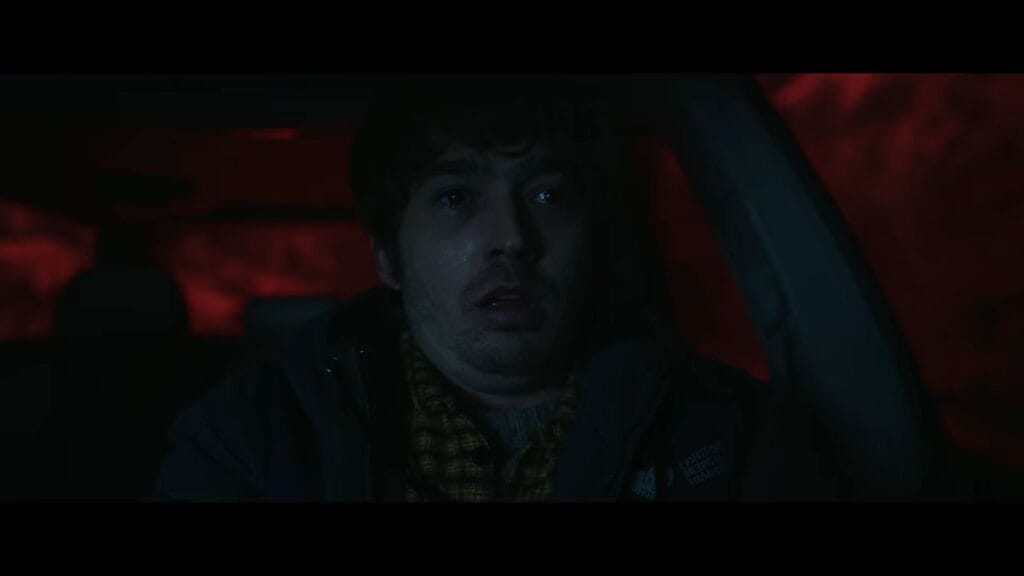
Umbrella were using a lab in Raccoon City to develop a “Hyper-Evolution” bioweapon that would instantaneously transform any organism into a hyper-evolved version of itself. Basically, they were trying to turn humans and animals into weapons.
We never actually learn exactly what happened, just that things got out of control back at the lab and containment failed. This unleashed the pathogen on the entirety of Raccoon City, basically turning everyone there into bioweapons.
Did You Know? The First Zombie Bryan Encounters
Okay, this might be pretty obvious to most viewers but I have seen a few people miss this little bit of information so I thought I would clear it up, just in case.
Bryan encounters his first zombie when he accidentally hits her with his car on the way to Raccoon City. You might be wondering just what a random woman is doing roaming out in the middle of nowhere on a snowy night? Well, the woman is actually the wife of the infected man Bryan kills in the farmhouse.
She has obviously become infected, potentially after a bite from their infected dog, wandered away from the farmhouse perhaps looking for help, the infection has taken over and Bryan has hit her with his car. We later see her photograph, along with her husband, in the farmhouse that Bryan first stumbles upon.
What Was Bryan Transporting?
Bryan (Austin Abrams) was transporting a vital stabilising component needed in the development of a cure for the viral outbreak taking hold of Raccoon City.


Bryan thoroughly believed that he was simply transporting a heart, kidney, or a brain (in his words) for a child or sickly patient. Naturally, he was completely wrong; it was something, somehow, far more important.
Bryan was transporting a stabilising component needed to develop a cure for the outbreak currently taking over Raccoon City.
The researchers will use the stabiliser, synthesise the cure, and then give the cure to the national guard who can mass produce it and distribute it to the city to end the outbreak.
Unpacking the Logic: What Does The Sabiliser Do?
Believe it, or not, the film doesn’t entirely establish this so we have to apply some real world logic. Stablisers are used in the creation of vaccines and medicines to make sure the active medical ingredients in said vaccine or medicine don’t break down, change shape, or lose potency before they can be administered. The active ingredients in many treatments breakdown rapidly at only room temperature, for example.
Think of it like using a preservative in food. Only, the food in question will go mouldy within minutes of being exposed to normal room temperature. The preservative will prevent that and allow you to eat it.
It’s made clear that the structure of the antibodies in the cure were too volatile and would quickly degrade so a stabilising agent would be needed to prevent this. That stabilising agent binds to them to keep them whole and protect them during synthesis, allowing the cure to be extracted.
Why Didn’t Umbrella Already Have a Stabiliser?
Quite simply, they did have a stabiliser. Someone in the lab, implied to be Paul, dropped the stabiliser resulting in it breaking and them needing a new one. Luckily, one was already on the way because they had ordered it before the outbreak had taken hold in an abundance of caution.
According to Paul, whoever dropped the stabiliser probably found it to be quite slippery which resulted in them losing their grip on it.
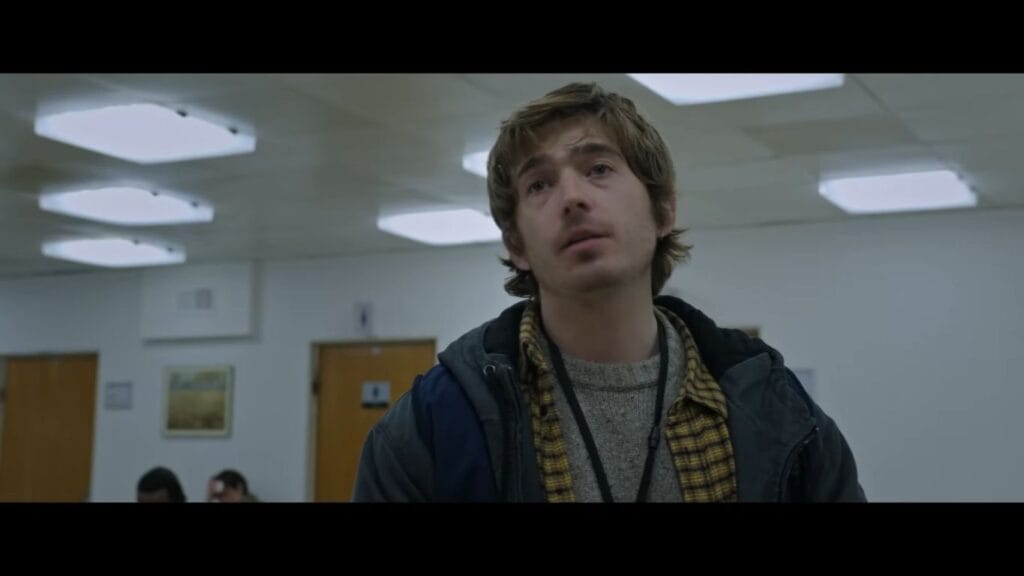
“It doesn’t matter that they dropped it. Accidents happen. It could have happened to anyone. It’s slippery in a lab.”
Paul – Resident Evil
So we can definitely infer that it was Paul with the butterfingers. Now they need the replacement stabiliser that Bryan is currently transporting.
Unpacking the Logic: Why Did They Send a Medical Courier for the World’s Most Important Package?
I like to leave explaining endings to a few days after the movie releases. That way, I can get a general feel for what questions are puzzling viewers of the film the most.
One that keeps coming up on social media and definitely needs some answers is why the hell they send a simple medical courier who couldn’t even prove that he had tyre chains to deliver a package that was so damn important? There’s actually a pretty satisfying explanation that Paul gives when Bryan, himself, asks the very same question.
The reason Bryan was hired to deliver the stabiliser is because it wasn’t actually an emergency when the delivery was booked. Umbrella already had a supply of the stabiliser and they only ordered extra out of an abundance of caution. They were basically ordering extra “just in case”.
Naturally, that abundance of caution became desperation when some idiot (Paul) dropped the stabiliser, leaving them unable to actually synthesise the cure. That’s why Maxine and Paul were sent out to find Bryan, because, all of a sudden, the delivery was urgent.
We should probably also mention the sheer corporate incompetence of Umbrella… They, obviously, wanted to avoid suspicion or creating a paper trail because they are conducting extremely dangerous, and potentially illegal, experiments. Hence, they used a regular courier that would likely fly completely under the radar. They just didn’t anticipate that the outbreak would get out of hand so damn quickly.
What Makes The Infected in Resident Evil Different?
You might have noticed that, while we do have our fair share of shambling zombies, the infected in Zach Cregger’s Resident Evil are quite different from what you may have seen in the games.
Cregger leans heavily into visceral body horror that I think is pretty reminiscent of John Carpenter’s The Thing. When Bryan kills the infected woman and her husband at the farmhouse, tendrils burst from their flesh and fuse their remains together.
They create a sort of small mass of random limbs all rolling around looking pretty damn horrendous. What you might have missed is that the ever increasing mass of limbs and horrifying growths that follows Bryan throughout the movie is actually the one started by that same fusion of husband and wife in the farmhouse.
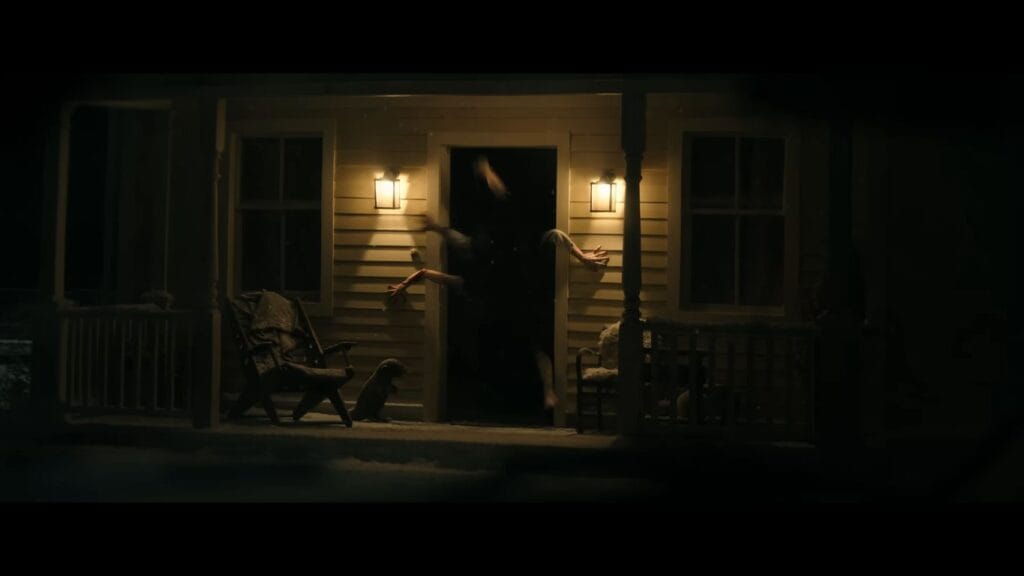
By the time Bryan reaches Raccoon City, the woman he accidentally hit with his car has absorbed dozens of bodies and mutated into a colossal, multi-limbed apex monstrosity. The virus operates somewhat like a hive-minded, cellular slime mould, pooling muscle mass, teeth, and limbs together to build an unstoppable organic juggernaut.
Interestingly enough, as well, is how damn relentless it is. It follows him all the way to Raccoon City, all the way to the hospital, and right to the top of the building. There’s essentially no escape once these bioweapons have you in their sights.
In my opinion, this is very much a nod to series icons like Nemesis and Mr X? This creature basically occupies that pursuer roll from the video games without just slapping one of the monsters from the game in there. It’s impressive how many traits from the games Cregger touched upon… In fact, let’s take a closer look at that.
The Resident Evil Gaming Easter Eggs
Zach Cregger slapped a lot of Easter Eggs in this film for fans of the Resident Evil series. More than you might expect, in fact. He’s clearly a fan of the games.
I spotted quite a few on my first watch but I had to look closely to find a few more while watching for this ending explanation. I may have missed a few but here’s what I have noticed and what other people have confirmed.
Inventory, Healing & Consumables
- First Aid Sprays: When Bryan is hunting for a way out of the Ganados-style (Res Evil 4, more on that in just a minute) barn, two white-and-red First Aid Spray aerosol cans are sitting on a crate beside the hay bales.
- Green Herbs in Planters: Green potted herbs appear twice in the film: sitting on a kitchen shelf right next to the wall telephone in the farmhouse, and in the back seat of a car in the blocked highway tunnel right before Bryan is bitten.
- “Heavy Field” Shotgun Shells: When rummaging through drawers in the upstairs farmhouse bedroom, Bryan finds a green ammo box featuring the classic bear logo and “Heavy Field” branding… The exact texture used for shotgun ammo in the remakes.
- Bryan’s Courier Bag: The green canvas medical courier satchel Bryan carries closely mirrors the original 1996 inventory medkit and Rebecca Chambers’ (that’s Officer Chambers to you!) field medic bag from Resident Evil 0.
- Weapon Progression: Bryan’s arsenal upgrades in classic survival horror order: he starts with the standard handgun (Deputy Wilson’s sidearm), finds a mounted farmhouse shotgun, and later an automatic weapon stashed inside a vehicle case.
Puzzles & Environmental Mechanics
- The Ganados-style Barn: The entire barn scene is a massive love letter to Resident Evil 4. The layout replicates that of the barn in the opening of that game, even the ladder and loft alignment. Bryan’s climbing of the ladder and escape through the window is super reminiscent of Leon’s own escape. I loved this!
- The Farmhouse Safe Room & Typewriter: Centered on a desk in a quiet room in the farmhouse sits an antique typewriter, the series’ universal save point mechanism. He doesn’t use it because I am guessing he is on a no save run.
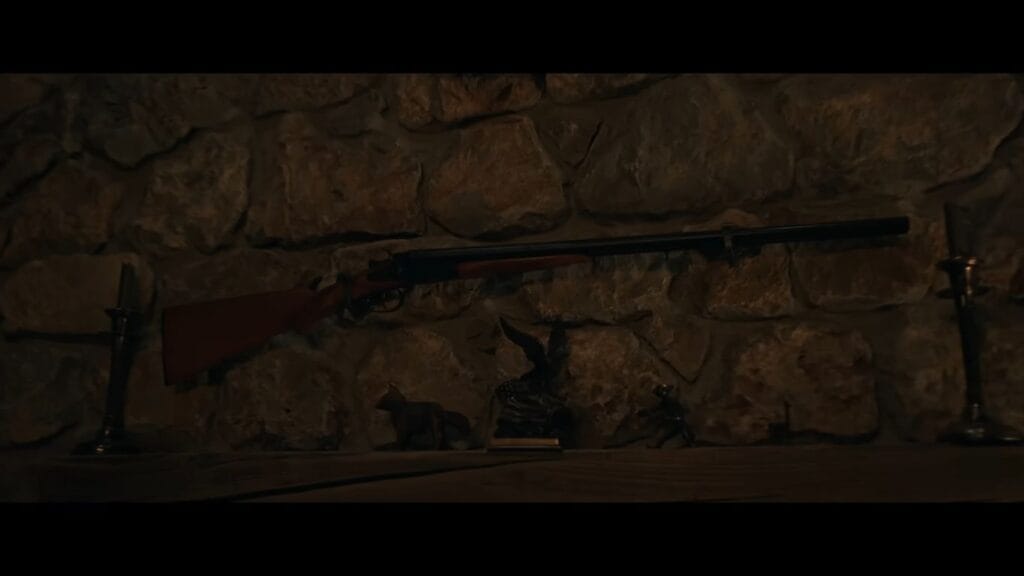
- The Mounted Shotgun: The way the shotgun that Bryan finds in the farmhouse is mounted above a fireplace is a definite loving homage to how you find the shotgun in the first Resident Evil. Luckily the ceiling doesn’t start coming down when he exits the room, turning him into a Bryan sandwich.
- The Diamond Key Gate: The front gate of the farm is sealed with a padlock bearing a prominent Diamond symbol (a direct nod to the RPD suit keys from Resident Evil 2).
- The “Can’t Shoot the Lock” Trope: When Bryan tries to shoot the lock or ram the gate with the farm truck, he wrecks the truck and fails, paying homage to survival horror’s strict key-gated progression. I loved this because we have all wondered why we can’t just shoot the damn lock.
- Classic Door-Opening “Load Screens”: At multiple moments inside the farmhouse and hospital, the camera shifts to tight perspective shots of doorknobs turning and doors slowly creaking open into pitch-black rooms, mimicking the original fixed-camera door-loading animations.
- The Obligatory Sewer Level: I’ve played every Resident Evil and the vast majority have an obligatory sewer level. Cregger couldn’t leave this out so the movie has one too.
- Collectible Voice Memos: Bryan’s tearful goodbye message recorded on his phone in the hospital parking garage mirrors the recurring series trope of finding tragic audio logs and farewell letters left by dying survivors before they turn.
- First Person Shots: It’s an obvious one but the first person perspective shots used throughout the film directly nod to the modern trilogy, particularly Resident Evil 7.
- The Lab: Many of the Resident Evil games wrap up the story with a trip through a high tech laboratory just like this movie does. A very nice touch and not overly drawn out, which is good.
Creature Designs & Mutations
- The Zombie Dog Window Jump: The mutated dog bursting through the wall/window at the barn replicates the iconic hallway Doberman jump scare from the 1996 original game. The dog’s split facial tendrils also mirror the Colmillos from Resident Evil 4.
- Las Plagas Tendrils: The infected sprout writhing, parasitic neck tendrils upon death that knit flesh together, appear to be heavily influenced by the Plagas parasites in RE4.
- The Amalgam: The massive, multi-corpse creature that stalks Bryan is pretty damn reminiscent of the fleshy, body-absorbing Nyx from Resident Evil Outbreak: File #2 and the Revenant abominations from Revelations 2.
- The Stalker: The Amalgam occupies the role of pursuer in this movie, much like Mr X, Nemesis, or Lady Dimitrescu did in the games. It relentlessly follows Bryan throughout the film.
- Sewer Rats & Leeches: The obese sewer mutant whose ruptured torso expels swarms of rats nods to the infected rodents that helped spread the virus in the originally doomed Raccoon City in RE2, as well as perhaps hinting at the Leech Swarms from Resident Evil 0.
- The Fat Acid Belcher: The bile-vomiting mutant Bryan fights in the elevator is clearly inspired by the Fat Molded from Resident Evil 7.
- Molded-style Maternity Ward: The creatures encountered in the hospital’s maternity ward resemble the Molded from Resident Evil 7, particularly in their dark, weirdly fleshy, humanoid appearance. I recently got done with the 100% trophy list on Resident Evil 7 and all the DLC stuff so this brought back painful memories.
- Bryan’s Final “G-Birkin” Mutation: In his final transformation scene, Bryan develops asymmetrical appendages and a massive, bulging eyeball along his shoulder/torso. This is appears to be a visual nod to William Birkin’s G-Virus stages in Resident Evil 2.
Lore & Name Nods
- Deputy J. Wilson: The sheriff’s deputy who stops Bryan at the start has the name badge “J. Wilson”. This is actually a super deep-cut reference to Officer Joseph Wilson from Resident Evil Outbreak.
- Umbrella Corporation Cover-Up: Paul and Maxine explicitly represent Umbrella clean-up logistics. This is a nice incorporation of the classic cover-up protocol that takes place in many of the games before the military sanitises the zone.
- It’s a Family Affair: Beneath all the game-inspired action and chaos, Bryan’s journey is also about his fear of becoming a father. He begins the film reluctant to have the child Michelle is carrying, only to spend the rest of the story surrounded by increasingly grotesque imagery of children, pregnancy and birth. His encounter with the infected girl leads to his own infection, while his journey through the maternity ward turns his anxieties about parenthood into a full-blown body horror. By the time Bryan records his final message to Michelle, he has finally accepted that he wants to become a father. The theme recalls Resident Evil 7 and Resident Evil Village, which placed family and parenthood at the centre of their own stories, although Cregger approaches the idea from the opposite direction: Ethan fights to protect his family, while Bryan spends much of the film confronting his fear of having one. He eventually accepts that he wants to be a dad but it is, unfortunately, too late.
The biggest thing to note, however, is that the entire movie is basically one big Easter egg. Cregger goes out of his way to make the movie feel like a video game. It progresses in the same way, flows in the same way, and follows many of the game’s beats.
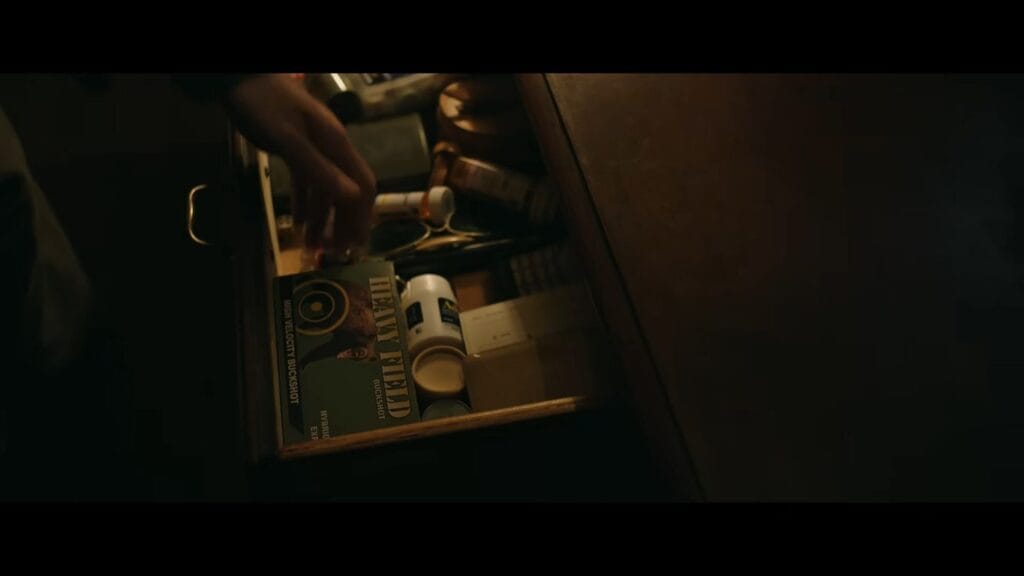
Just things like Bryan searching through every drawer is a nod to running around hammering away on the button to examine anything you possibly can so you don’t miss a a few bullets or a herb. In my opinion, Resident Evil feels more like a video game than any other adaptation put to film.
Gameplay Logic Unpicked: Why The Dead Stopped Regenerating
One of the most interesting visual beats in the third act occurs as Bryan approaches Raccoon City General Hospital. Swarms of infected plunge from rooftops, splattering onto the concrete below in a pool of pus and guts. As you may have noticed (and Bryan certainly does), their mangled remains fail to knit back together or form new amalgams.
This highlights the mechanical limits of the viral strain: the cellular regeneration requires intact biomass to actually regenerate. Splattering from ridiculous height completely liquefies the cellular structure, preventing the tendrils from anchoring together. It’s a nod to the remakes and the more modern games where certain enemies come back to life. Much like burning Crimson Heads in the classic game remake or blowing off their heads, complete physical destruction shuts the regeneration down for good.
How Does Bryan Kill The Amalgam?
Bryan kills the Amalgam by shooting a barricade on a door with his last bullet. This unleashes a horde of infected that immediately falls off the broken skybridge and takes the Amalgam, which is currently climbing the building, down with them.
Bryan’s journey through the hospital functions like the final third of an actual Resident Evil game. Things get a lot more intense and each new scenario is like its own mini gauntlet.
After navigating the infected maternity ward and luring an acid-spewing mutant into melting part of the pursuing amalgam, Bryan finds himself cornered on the exterior skybridge with a single bullet left in his chamber.
Instead of firing uselessly at the massive creature scaling the wall, Bryan uses his final round on the broom he used as a barricade on the door to hold back a horde of mutants behind him. The broom snaps, the doors fling open, and the collapsing horde avalanches directly over the ledge.
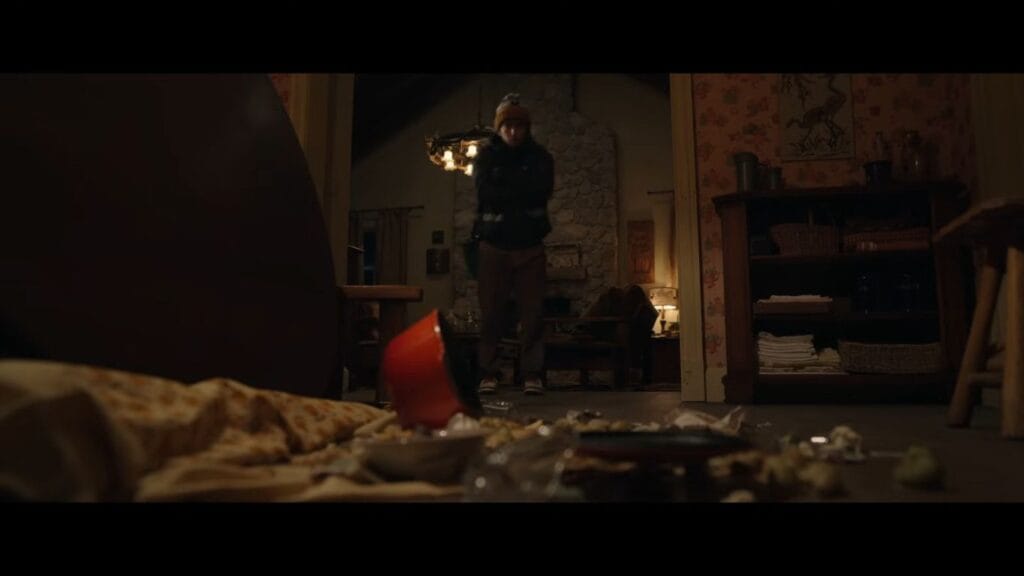
Together, their collective weight peels the amalgam off the side of the hospital and sends the entire grotesque mass plummeting to its destruction in the courtyard below. Naturally, they fell from immense height so they will be completely splattered at the bottom and unable to regenerate.
Did this remind anyone else of a quick time event in Resident Evil 4?
What Happened to Bryan at the End of Resident Evil?
Bryan, who was bitten and infected by a young girl earlier in the film, eventually mutates in the laboratory at the end of the film. He fails to obtain the cure from the scientists and, overtaken by the virus, kills the entire research team, effectively dooming the city.
Bryan makes it to the research lab and places the stabiliser directly into the scientists’ hands. But his own biological clock has, sadly, run out. Ever since getting bitten by the infected child in the blocked highway tunnel, the virus had been circulating through his bloodstream.
As the researchers combine the compounds to complete the vaccine, the viral load in Bryan’s nervous system reaches critical mass. In a pretty nasty body-horror sequence, he transforms into something that is very reminiscent of William Birkin in Resident Evil 2.
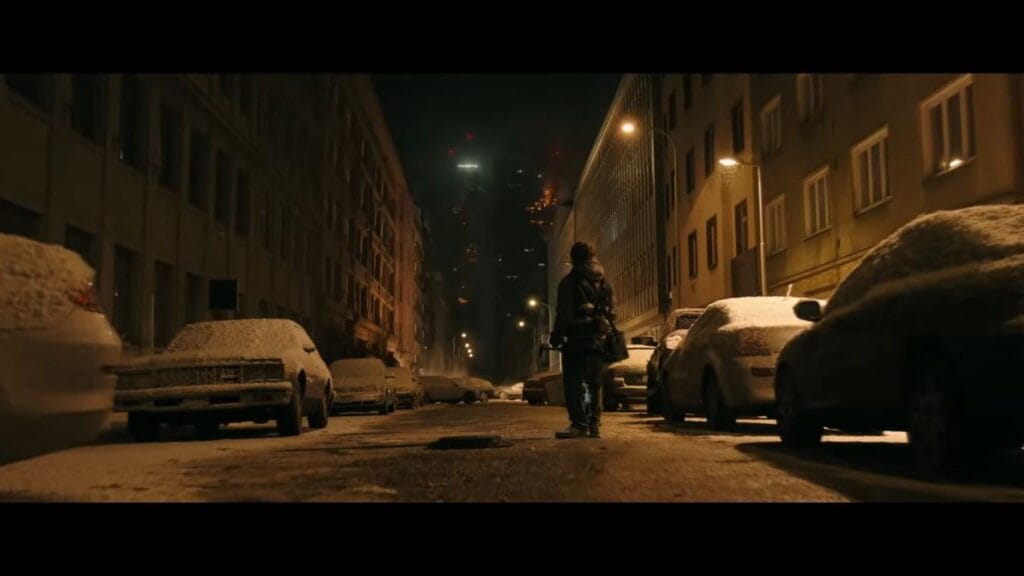
Bryan remains fully conscious of his humanity while his skeleton distorts and predatory tendrils rupture through his torso. Even as he screams for the injection to cure himself, his mutating limbs slaughter the medical staff. He also has some gnarly teeth in the middle of his body that basically eats them alive.
When the last surviving researcher lunges with the syringe, Bryan’s mutated body fights back, with the impact knocking the syringe out of reach, sending the only cure for Raccoon City tumbling into the snowy abyss below.
Thematic Spotlight: Fatherhood, Guilt, and Helplessness
There’s an underlying emotional weight to Cregger’s narrative and it doesn’t really involve Umbrella. It’s Bryan’s terror of becoming a father. The opening argument with Michelle reveals a young man terrified of commitment, responsibility, and whether he has what it takes to protect a family.
The nightmare he goes through forces him to endure the ultimate test of responsibility. Along the way, he encounters corrupted versions of domestic life: the fused farming couple, the mutated child in the RV, and the grotesque maternity ward. Bryan steps up, survives, and completes the impossible delivery out of a desperate desire to get back home and be a father. The cruel tragedy is that by the time he accepts his role and records his goodbye message to Michelle, his body is already doomed.
This all ties back in to what I talked about earlier. The modern Resident Evil games are heavily focused on family, particularly Seven and Village. This film is almost akin to Bryan finding his inner Ethan and doing whatever he can to be a good father and provider, even if he never gets a chance to see it through.
What Does the Final Shot Mean?
The film ends on a seriously downbeat note. Fully transformed into a towering, multi-jointed bioweapon, that appears to be a heavy nod to Tyrant and William Birkin. The creature that used to be Bryan lets out a guttural roar. Powerful searchlights cut through the falling snow as National Guard attack helicopters circle the hospital roof, weapons primed to open fire, likely in an attempt to kill, what was once, Bryan.
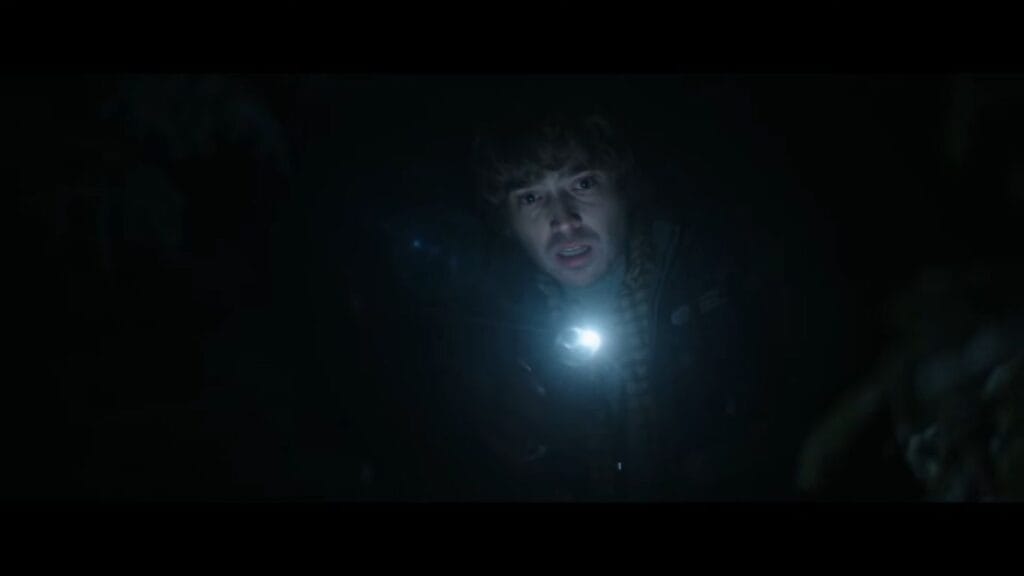
This final sequence sets up two major narrative points:
1. The Loss of the Cure: With the synthesised vial lost and the top researchers eradicated, Raccoon City has zero medical hope left. The arrival of heavy military gunships indicates that containment protocols have shifted from rescue to complete sterilisation. This is what happened in the games; the nukes are likely to follow.
2. Bryan’s Final Boss Status: In a clever meta-nod to survival horror games, the protagonist doesn’t ride off into the sunrise with a rocket launcher and unlimited ammo. Instead, Bryan becomes the terrifying “Stage 2” final boss of the sector, leaving the incoming military with an uncontainable bioweapon problem on their hands. He’s just one of the many sympathetic people who ended up becoming shadows of their former selves in the Resident Evil series.
Final Thoughts: A Relentless Survival Horror Masterpiece
Zach Cregger’s Resident Evil succeeds where previous adaptations stumbled because it legitimately understands that genuine horror comes from vulnerability, resource scarcity, and claustrophobic pacing. Cregger made the perfect decision in forgoing following one of the series’ many superhero-like characters (Leon, Chris) to, instead, focus on a vulnerable and rather inept character in Bryan. It’s impossible not to root for him and it’s impossible not to feel horrible when he transforms as the end. It’s simply an awesome movie.
Thanks for reading! If you love digging through ending explanations without getting bogged down in fluff, stick around and check out some of our other Ending Explained breakdowns, browse our horror reviews, or check out our curated horror movie lists.
Frequently Asked Questions
Does Bryan survive the ending of Resident Evil (2026)?
Unfortunately, No. While his physical body remains alive, Bryan completely loses his humanity to the virus. His infected bite causes an aggressive mutation, transforming him into a multi-limbed bioweapon before the cure can be administered.
What was in Bryan’s delivery package?
Bryan was transporting a vital chemical stabiliser. Umbrella researchers in Raccoon City needed the compound to bind and stabilise their experimental antiviral formula before mass-producing a cure for the military.
Why did the cure fail at the end?
As the researchers synthesised the vial, Bryan’s sudden violent transformation caused him to go on an uncontrollable killing spree. A researcher attempted an emergency injection, but Bryan’s mutating limbs knocked the syringe away, sending the cure falling off the rooftop.
How does Bryan defeat the creature amalgam on the skybridge?
With only one bullet remaining, Bryan shoots the broom handle barricading the door behind him, releasing a trapped horde of mutants. The tumbling horde collides with the climbing amalgam, dragging both off the edge of the skybridge to their deaths below.
Is Resident Evil (2026) connected to the previous movies or games?
Not in story but definitely in themes and Easter Eggs from the games. Director Zach Cregger completely rebooted the cinematic franchise with an original standalone story. It features brand-new characters and an independent outbreak narrative, while incorporating authentic survival horror gameplay mechanics.
A Note on Ending Explanations
While we aim to provide comprehensive explanations based on the events on screen, film analysis is inherently subjective. The theories and conclusions presented in this "Ending Explained" feature are personal interpretations of the material and may differ from the director's original intent or your own understanding. That's the beauty of horror, right? Sometimes the scariest version is the one you build in your own head.
You might also like:
- The Invitation (2015) Review – A Tense and Methodical Descent into Paranoia
- Evil Dead 2 (1987) Review – A Groovy Masterpiece of Horror and Comedy
- I Am a Hero (2015) review: The best zombie movie you’ve never seen
- 20 recent zombie comedy horror movies that prove the apocalypse can be hilarious
- I Saw the TV Glow (2024) Review – A Haunting Trans Allegory Wrapped In 90s Nostalgia
Disclaimer: Images, posters, and video stills used in this horror ending explained article are the property of their respective copyright holders. They are included here for the purposes of commentary, criticism, and review under fair use. Knockout Horror makes no claim of ownership and encourages readers to support the official release of all films discussed.