Ghostwatch (1992) review – The Groundbreaking BBC Hoax That Terrified A Nation
Ghostwatch: Quick Verdict
The Verdict: A groundbreaking and culturally seismic piece of television history that essentially birthed the modern found-footage genre. By utilising the trusted faces of the BBC and the familiar format of a live “broadcast,” Ghostwatch successfully fooled an entire nation into believing a malevolent spirit was manifesting in real-time. While modern eyes might find the pacing deliberate and the “Pipes” appearances subtle, the production remains a masterclass in psychological manipulation and immersive storytelling. It is a chilling “curio” that is both a nostalgic trip back to 90s Britain and a disturbing reminder of the power of the media. Essential viewing for horror historians.
Details: Director: Lesley Manning | Cast: Michael Parkinson, Sarah Greene, Craig Charles | Runtime: 1h 31m | Release Date: 1992
Best for: Fans of found footage, 90s British nostalgia, and viewers who appreciate “slow-burn” horror that relies on atmosphere and meta-commentary.
Worth noting: The film was banned from British television for over a decade following its initial airing due to the intense public backlash and tragic real-world consequences.
Where to Watch: Amazon Prime Video (Buy)🛒, Shudder, 101 Films (Blu-ray)
Rating: 4.3/5 Stars
(Pioneering format, terrifyingly believable, culturally significant)
Welcome to Knockout Horror. Today we are taking a look at something that is just a little different. We are reviewing the BBC’s television drama production Ghostwatch from 1992.
Table of Contents
A groundbreaking horror experience
Ghostwatch follows a pretty simple premise. The show plays out over about an hour and a half and focuses on a paranormal investigation taking place on Halloween night. A family has found themselves the victim of a supposed haunting. The BBC, gathering together a team of television presenters and paranormal experts, sets about investigating the haunting live on air.
The production plays out as talk-show-style studio segments featuring interviews with people, phone-ins, and witness stories about paranormal encounters, while the field segments feature a team conducting experiments at the supposedly haunted location itself. But the big question is: is the haunting real or just an elaborate hoax?

It goes without saying that this idea was completely unique back in 1992. Nobody had ever done this before, and the least likely place for it to happen would have been the stiff-collared BBC. Taking place in their nightly drama spot, Ghostwatch featured a disclaimer that it was fiction, a title card showing the director, and a title card showing the writer. The rest of the production was presented as fact and as if it was taking place there and then. This was Orson Welles reading War of the Worlds on the radio but for a modern age. Surely people wouldn’t be dumb enough to fall for that again, right?
An astounding achievement
Ghostwatch has received a whole bunch of renewed interest in recent years, and that isn’t a great surprise. With the rise of found footage and movies like Paranormal Activity, people have a heightened desire for horror that feels firmly planted in reality. Indeed, it goes without saying that the directors of the horror classic The Blair Witch Project took inspiration from Ghostwatch. But the thing I find so crazy is just what an impact this television production has had on horror to this day.
“Ghostwatch influenced an entire genre. Found footage, as a whole, owes a lot to this production, as do modern hits like Late Night with the Devil.”
I know a lot of horror sites talk about Ghostwatch, and I am likely rehashing overly familiar, heavily walked-on territory. But I have the somewhat unique perspective of having watched this live back in 1992 when I was a nipper. I remember this taking place, I remember the build-up, and I distinctly remember my mum reminding me that it was definitely not real on a number of occasions.

For a young child, this stuff was utterly convincing. In a lot of ways, it was perfectly produced with a recognisably British family at the centre of the haunting. A parent that adults could sympathise with and children that younger people could relate to. But that really only scratches the surface of what made Ghostwatch so believable.
Unprecedented for years after
For one, the BBC just didn’t do things like this. The BBC was extremely serious and very protective of its brand. Comedies were, very clearly, comedies, news was news, talk shows were talk shows, and the only thing close to Ghostwatch was the crime awareness show Crimewatch. Crimewatch took place in a studio setting, featured recreations of crimes, call-ins, interviews with victims, and interviews with police. So, to my little child mind, Ghostwatch was just Crimewatch but for ghosts? That logic made sense to me, and it made sense to a hell of a lot of other people in the UK.
What made it even more authentic was the cast. This wasn’t a bunch of nobodies; this was Sarah Greene and Parky! I watched Sarah Greene on Saturday mornings every week as a presenter on Going Live. Hell, before my time she was the youngest presenter of the popular, long-running kids’ magazine show Blue Peter.
“This wasn’t a bunch of nobodies; this was Sarah Greene and Parky! Surely this group of trusted BBC staples wouldn’t put their name to such an elaborate hoax?”
Michael Parkinson was British television royalty, hosting a talk show where he interviewed some of the biggest stars in the world. Lister from comedy show Red Dwarf was there interviewing people under his real name, Craig Charles. They even roped in Sarah Greene’s real-life husband, Mike Smith, to host the call-in segments. What the hell?

Surely this group of ultra-famous celebrities and trusted BBC television staples wouldn’t put their name to such an elaborate hoax? Not a single one of them hinted at any form of irony in this production. They all play it completely straight, and that’s what makes it so damn effective.
This plays out exactly like a BBC show of this type from that era. There is no tongue-in-cheek, no silliness, and no hint that this is anything but real and, man, did people fall for it. The words “hook, line, and sinker” are thrown around a lot but rarely as appropriately as they are here.
Genuinely led to tragedy
I forgot all about Ghostwatch in the years following. I mentioned it in passing to my fiancée around ten years ago. She was in the process of being a baby with limited perspective on the world at that point, so didn’t remember it. I filled her in on the details as if it was a vague memory – perhaps, even, something that never happened at all. And that is exactly how the BBC wanted people to feel about Ghostwatch, because it proved horribly controversial.
Ghostwatch scared the hell out of people. It provoked complaint after complaint. People genuinely thought it was real. Hundreds of callers jammed the BBC phone-in line shown on the production, calling in to relate their own stories of the paranormal or simply calling in to find out whether this was real. The boards were so held up that only a few dozen got through to hear the pre-recorded message that the whole thing was fictional

Ghostwatch prompted the first-ever diagnosis of post-traumatic stress in a child caused by a television show. Even worse, the show led to a young, mentally ill and developmentally delayed man taking his own life, believing the spirit of “Pipes” to be in his house due to the sounds coming from a faulty central heating system. The television governing body complained, saying that the show was put on television too soon after the 9pm watershed and not enough effort was made to demonstrate that it was fiction. The BBC wanted to wash their hands of it completely, embarrassed by the whole messy saga.
How does it hold up years later?
In 2024, the mess surrounding Ghostwatch all feels a bit silly. Writer Stephen Volk had originally intended for this to be a six-part fictional television series with a live-style show to wrap the story up. When only afforded a 90-minute slot, he decided to present the entire thing as a live investigation.
“It’s incredibly nostalgic for anyone who grew up surrounded by beige furniture, CRT televisions, and 69p two-litre bottles of Coke.”
Looking back, the story was very clearly based entirely on the elaborate hoax of the Enfield Haunting. The lack of time delay when characters talk on video feeds is fairly indicative of this being pre-recorded and not live. The very obvious comedy elements are apparent, and it is pretty clear that everyone is just doing a very good job of acting.</p>

It all feels a bit ridiculous that this managed to convince so many people. But, by the same token, people are frequently fooled by poorly edited YouTube videos. There was no internet widely available back then to talk about this. You simply had to wait for the producers to confirm it as non-fiction when prompted later the next month. When you think about it, it is somewhat glorious that, 54 years later and through an entirely new medium, a creative director managed to fool an entire country once again into thinking something fictional was actually real. It’s kind of magical, in a weird little way.
The Good, The Bad & The Ugly
The Good
- The Cast: Using real-life television presenters was a genius move. Michael Parkinson and Sarah Greene deliver their lines with a “live” spontaneity that is utterly convincing.
- Slow-Burn Horror: The way the haunting gradually escalates from subtle shadows to full-blown chaos in the studio is expertly paced and deeply unsettling.
- Cultural Legacy: It remains one of the most daring experiments in television history, managing to fool a nation before the age of the internet.
The Bad
- Technical Limitations: For modern viewers, the lack of time delay on video feeds makes it obvious that the “live” segments were pre-recorded.
- Silly Moments: A few of the paranormal “expert” interviews lean into cheesy tropes that haven’t aged as well as the grounded field segments.
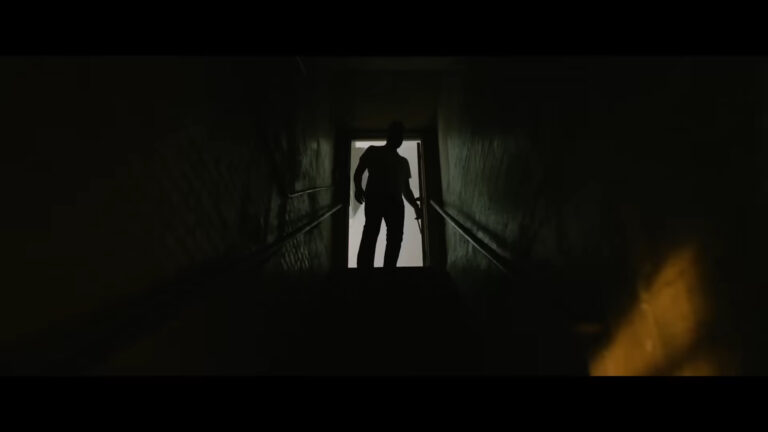
The Ugly: The “Pipes” Sightings. The subtle, blink-and-you’ll-miss-them appearances of the ghost hidden in the background are still more effective than most modern jump scares.
Should You Watch Ghostwatch?
Yes, absolutely. It is a 4.3-star masterpiece of “mockumentary” horror. Even if it doesn’t fool you in 2026, its atmosphere and historical importance make it essential viewing for any horror fan. It’s a dark, brilliant trudge through the uncanny.
You might also like:
- Unseen (2023) Ending Explained – Hotline Twist & Who Survives
- Presence (2024) review – Soderbergh’s voyeuristic ghost story
- 25 Cosy Autumnal Horror Movies To Get You Ready For Fall
- Trap (2024) Review – A Cringe-Inducing Case Of Shyamalan Nepotism
- Pet Sematary (1989) Review – A Classic Melancholic Monkey’s Paw Tale
Our Scoring Philosophy: A Fair Fight
Horror is a genre that thrives thanks to indie film makers and low budget creators. At Knockout Horror, we firmly believe that every movie that we review deserves a fair fight. That's why we grade on a curve. Our star ratings are all about context, judging a film on what it achieves with the resources it has.
A 4-star rating for a scrappy indie horror made for $10,000 is a testament to its ingenuity and raw power. A 4-star rating for a $100 million blockbuster means it delivered on its epic promises. We don't compare them side-by-side; we celebrate success in every weight class, from the back-alley brawler to the heavyweight champion. Please keep this in mind when considering star ratings.
Support the Site Knockout Horror is a participant in the Amazon Services LLC Associates Program. Basically, if you click a link to rent or buy a movie, we may earn a tiny commission at no extra cost to you. As an Amazon Associate, I earn from qualifying purchases. This helps keep the lights on and the nightmares coming. Don't worry, we will never recommend a movie purely to generate clicks. If it's bad, we will tell you.
Disclaimer: Images, posters, and video stills used in this review are the property of their respective copyright holders. They are included here for the purposes of commentary, criticism, and review under fair use. Knockout Horror makes no claim of ownership and encourages readers to support the official release of all films discussed.