
Gnaw – Apartment 212 (2017) Ending Explained – The Jedak & The Box
Movie Details: Director: Haylar Garcia | Runtime: 1h 38m | Release Date: 2017 | Star Rating: 2.5/5 Stars
Welcome to Knockout Horror. Today we are explaining the ending to Gnaw (also titled Apartment 212 in some regions). This is a fairly middle-of-the-road horror that starts as a psychological thriller before taking a sharp turn into creature feature territory. While the creature itself is surprisingly cute (think Gremlins but with fewer rules), the ending packs a decent little twist that recontextualises the protagonist’s struggle. If you haven’t watched the movie yet, check out our review of Gnaw (Apartment 212) first.
⚠️ Warning: Major spoilers follow below.
The Ending in Brief
The TL;DR: Jennifer discovers that her mysterious sores are not caused by bed bugs, but by a small demon called a Jedak that lives in an antique jewelry box. The creature freezes when looked at directly. Jennifer uses mirrors to trap it, physically catches it, and forces it back into its dormant state. She then tricks her abusive ex-husband into taking the box home, passing the curse onto him.
What was the monster? The creature is a Jedak, a parasitic demon bound to a Dybbuk Box. It emerges at night to eat small pieces of its owner’s flesh. It is relentless and unkillable, but it can be controlled if the owner asserts dominance and maintains eye contact.
How did she defeat it? Jennifer found her deceased neighbor’s diary, which explained the creature’s weakness (eye contact). Using her quick reflexes from her softball days, she caught the creature mid-air, cooked it briefly in the microwave to subdue it, and shouted it down until it turned back to stone.
The Resolution: Jennifer feigns defeat and calls her stalker ex-husband, Boyd, asking to move back in with him. When he arrives to pick up her things, she slips the Dybbuk box into his bag. He leaves with the demon, unknowingly sealing his own fate while Jennifer is finally free.
Good to Know: The sores seen on the man in the antique shop in the opening scene, and later on the neighbor Mrs. Iverson, were all caused by the Jedak feeding on them. Mrs. Iverson committed suicide because she couldn’t figure out how to stop it.
Table of Contents
Gnaw Ending Explained
No plot recap here, let’s get straight to business. To understand the ending, we first need to look at the mythology the film sets up regarding the box and its inhabitant.
The Dybbuk Box & The Jedak
The story kicks off with a woman stealing an antique box from a man covered in sores. This box is a Dybbuk Box, a cabinet from Jewish folklore said to contain a malicious spirit. In this film, the spirit takes the form of a small, physical creature called a Jedak.
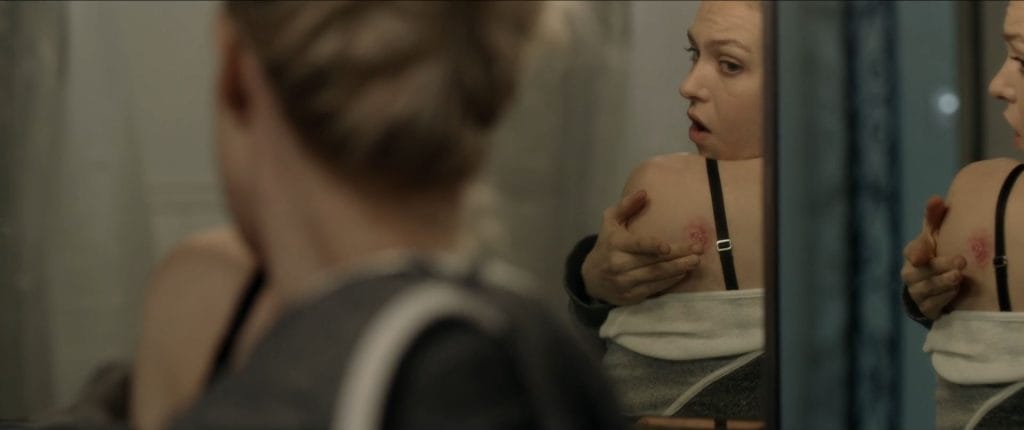
Jennifer, fleeing her abusive cop ex-husband Boyd, moves into an apartment next to the woman who stole the box. When that neighbor commits suicide (unable to handle the torture of the creature), Jennifer takes the box, unknowingly inheriting the curse. Remember, the box has an uncanny ability to entice people so she was immediately drawn to it.
Jennifer begins waking up with painful sores. She assumes it is bed bugs or stress, but the truth is revealed when she finds her deceased neighbor’s diary. The Jedak comes out at night to “gnaw” on its owner. It is relentless, unkillable, and feeds on suffering. All those sores are actually little bite marks from this adorable little bastard. Seriously, they made the creature way too cute.
The Truth About Dybbuk Boxes
While the Dybbuk (a malicious possessing spirit believed to be the dislocated soul of a dead person) is a genuine part of Jewish mythology, the “Dybbuk Box” is a modern invention with a kind of pathetic back story.
The concept was created in 2001 by Kevin Mannis, who listed a wine cabinet on eBay with an elaborate backstory about it causing bad luck, health problems, and nightmares. The story went viral, spawning a new urban legend.
Gnaw takes this concept but pivots from the traditional “possession” angle, instead treating the box as a physical cage for a biological creature rather than a spiritual vessel. So, yes! We have an eBay listing to blame for this being such a trope in horror nowadays.


How to Defeat the Creature
The diary reveals the creature’s one weakness: eye contact. If you stare directly at the Jedak, it freezes in place. A poem in the diary suggests that if you maintain dominance over it, you can stop it. Obviously this plays heavily into the way the movie ends.
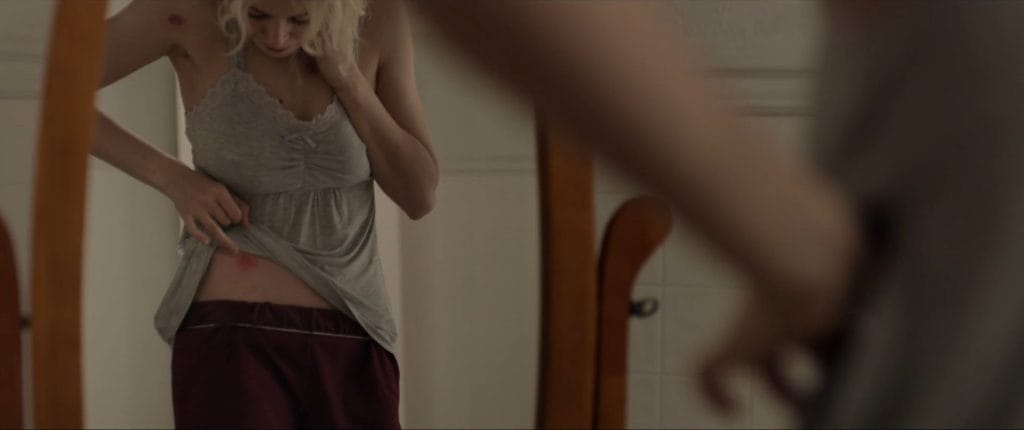
In the climax, Jennifer uses this knowledge to great effect. She uses mirrors and candles to keep the creature in her line of sight, freezing it. After a physical struggle (where she uses her softball skills to catch the little bastard), she asserts dominance, shouting that if they are going to co-exist, they need an agreement.
The creature, seemingly understanding it has been bested and not enjoying being shouted at, turns back into a stone carving on the box. Jenny has a fiendish plan to get back at her abusive piece of shit of an ex.
What is a Jedak?
Unlike traditional Dybbuk lore, which involves spiritual possession, Gnaw invents a physical entity called a Jedak. The film depicts it as a small, gremlin-like parasite rather than a ghost.
The Jedak functions like a supernatural tick or bed bug. It requires a host to survive, emerging from the box at night to eat small amounts of flesh. This slow feeding process causes the victim to appear diseased or drug-addicted, isolating them from society before they eventually die.
The creature’s weakness, freezing when observed, serves as the film’s central metaphor. You cannot run from your demons or hide from them under the covers; you must face them directly to stop them from consuming you.
Why Does Jennifer Go Back to her Boyfriend?
Jennifer doesn’t actually go back to her boyfriend. She is setting him up to be the next victim of the Jedak. The true ending of the film is a pretty formulaic twist on the “pass the curse” trope seen in films like It Follows or The Ring.
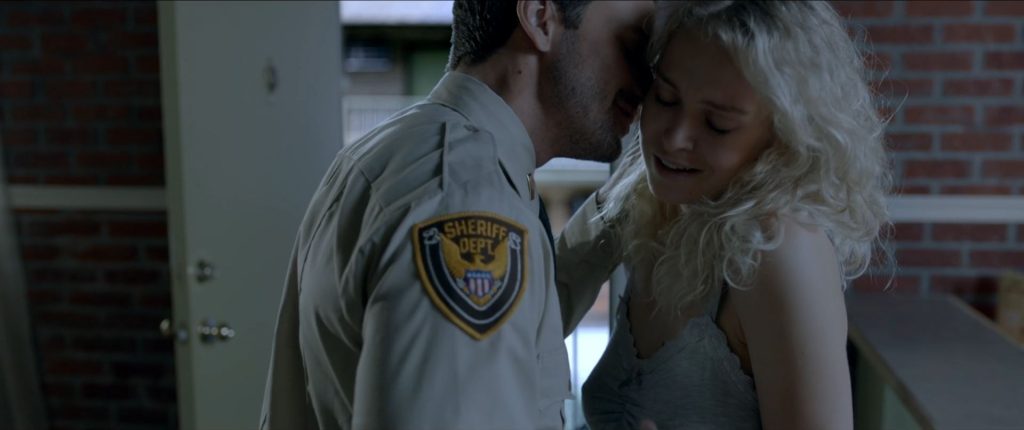
Jennifer calls her ex-husband, Boyd, who has been stalking and harassing her throughout the film. She pretends to be defeated, telling him she can’t make it on her own and wants to come home. This feeds into Boyd’s ego and his belief that Jennifer is weak. She tells him she wants to move back in but she needs help getting her stuff.
When Boyd arrives to pick up some of her things, Jennifer hands him a bag containing the Dybbuk box. Boyd takes it, completely unaware that he is now the owner of the Jedak. The implication is clear: the creature will now wake up in Boyd’s house and begin feeding on him night after night.
The Metaphor of Abuse
The film serves as a clear allegory for the trauma of domestic abuse. The Jedak represents the lingering effects of Jennifer’s trauma – the self-doubt, the “sores” that won’t heal, and the feeling of being eaten away from the inside.
By physically fighting the creature, Jennifer is symbolically fighting her own victimhood. In turn, she realises she is strong enough to survive.
Passing the box to Boyd isn’t just revenge; it is poetic justice. Boyd spent years feeding on Jennifer’s self-esteem and happiness. Now, he will experience a literal parasite feeding on him.
Frequently Asked Questions
What was eating Jennifer in Gnaw?
A small demon called a Jedak. It is a parasitic entity bound to the antique Dybbuk box Jennifer took from her neighbor. It comes out at night to eat small pieces of flesh from its owner.
Did Jennifer move back in with her husband?
No. She pretended to reconcile with him solely to get the Dybbuk box into his possession. Once he took the bag containing the box, the curse transferred to him, leaving Jennifer free.
What happened to the neighbor?
The neighbor committed suicide by jumping out of her window. She had been tormented by the Jedak for weeks (hence the sores) and could no longer handle the pain and lack of sleep.
Is the turtle okay?
Yes! A mid-credits scene confirms that the tortoise/turtle survived the ordeal and is perfectly fine.
Final Thoughts
Gnaw suffers from a bit of an identity crisis, unsure if it wants to be a gritty drama about abuse or a campy creature feature with a microwave-able demon. However, the ending redeems a lot of the slower pacing by giving Jennifer a satisfying moment of triumph. It is a solid “good for her” finale.
Thanks for reading. If you enjoyed this article, why not stick around? I review horror movies, explain horror movie endings and make horror lists.
A Note on Ending Explanations
While we aim to provide comprehensive explanations based on the events on screen, film analysis is inherently subjective. The theories and conclusions presented in this "Ending Explained" feature are personal interpretations of the material and may differ from the director's original intent or your own understanding. That's the beauty of horror, right? Sometimes the scariest version is the one you build in your own head.
You might also like:
- Sting (2024) Review – A Highly Confused, occasionally enjoyable Creature Feature
- Consecration (2023) Review – A Gorgeous but Formulaic Religious Thriller
- Black Christmas (2006) Review – A Mean and Messy Festive Remake
- Deathwoods (2026) Review – Throwback 80s-Style Slasher is Quite Fun
- The Isle (2018) Review – A Dull and Drowning Siren’s Song
Disclaimer: Images, posters, and video stills used in this horror ending explained article are the property of their respective copyright holders. They are included here for the purposes of commentary, criticism, and review under fair use. Knockout Horror makes no claim of ownership and encourages readers to support the official release of all films discussed.