

Skinamarink (2022) Ending Explained – Nightmare, Coma, or Hell?
Movie Details: Director: Kyle Edward Ball | Runtime: 1h 40m | Release Date: 2022 | Star Rating: 3/5 Stars
Welcome to Knockout Horror. Today we are looking at the polarising viral sensation, Skinamarink. This is one of those articles you sort of dread writing. When watching Skinamarink, it became clear that it would require an explanation. The movie is utterly bizarre, operating on dream logic rather than a traditional narrative structure. Director Kyle Edward Ball designed this movie to be open to interpretation, which usually screams “lazy writing,” but here, the vagueness is the entire point.
I designed this website with people with concentration issues in mind. I have bipolar disorder, my partner has ADHD; this films was an utter nightmare to follow so it definitely needs an explanation. If you haven’t watched the movie, check out our review of Skinamarink first. This article will contain heavy spoilers as we attempt to make sense of the senseless.
⚠️ Warning: Major spoilers follow below.
The Ending in Brief
The TL;DR: Two children, Kevin and Kaylee, are trapped in their home by an entity that removes doors, windows, and eventually their parents. Kaylee is punished by the entity (her mouth is removed) for wanting her parents. Kevin is tormented for 572 days, trapped in an endless loop of cartoons and darkness, until a face in the void tells him to go to sleep, implying he finally dies or succumbs to the limbo.
What is the Entity? The “Skinamarink” is never fully explained. It acts as a boogeyman or demon that feeds on childhood vulnerability. It has the power to alter reality, remove facial features, and trap its victims in a limbo state outside of time.
Why is it called Skinamarink? The title is a corruption of the North American nursery rhyme “Skidamarink.” Director Kyle Ball chose it because the hard ‘k’ sounds felt harsh and the song evokes a specific, slightly nonsensical childhood nostalgia.
The Resolution: There is no escape. The “572 Days” title card implies Kevin has been trapped in this state for nearly two years. The film ends with him seemingly accepting his fate, asking the entity its name but receiving no answer.
Good to Know: The film is essentially a feature-length adaptation of Ball’s 2020 short film Heck. In Heck, the timeline is measured in “sleeps” rather than days, and the protagonist’s mother is explicitly stated to be in the hospital, lending weight to the theories regarding grief and coma dreams.
Table of Contents
Skinamarink Ending Explained
Because the film operates on nightmare logic, a linear explanation is difficult. Instead, we have broken this down into the four primary theories that make sense of the events. No plot recap, let’s get straight into it.
The Events: Disappearance & Erasure
Okay, a tiny lie there. Let’s just recap a tiny bit to provide a little context. The film opens with Kevin (4) and Kaylee (6) waking up to find their father missing. Kevin had previously hurt his head sleepwalking, a detail that becomes crucial later. As the night progresses, windows and doors vanish, sealing them inside. They camp out in the living room watching cartoons, hoping their parents will return.
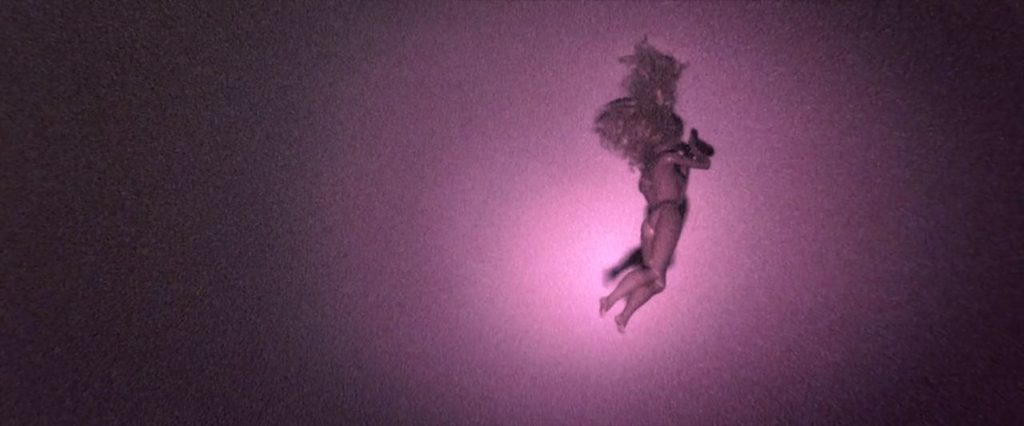
Things turn sinister when Kaylee is beckoned upstairs. She sees a vision of her parents in their bedroom, but they are “wrong”. Her father disappears, and her mother sits on the bed, only to vanish as well. Later, the entity reveals to Kevin that “Kaylee didn’t do what she was told”, so he “took her mouth away”. We see a horrifying shot of Kaylee with no eyes or mouth – she has been erased.
The Climax: 572 Days
Kevin is left alone. He tries to call 911, but the phone turns into a toy Chatter Telephone, kinda mocking his attempt to get help. The entity coerces him to mutilate himself (telling him to put a knife in his eye). Finally, a title card appears: 572 Days Later.
This jump in time is probably the most shocking part of the film, outside of that “look under the bed” scene which is actually terrifying. It implies Kevin has been trapped in this dark, dissolving house for over a year and a half. The film ends with a face emerging from the darkness, presumably the entity, telling Kevin to “go to sleep.” Kevin asks, “What is your name?” but gets no answer.
Theory 1: The Nightmare (Most Likely)
The most straightforward explanation is that the movie is a literal recreation of a childhood nightmare. This is absolutely, 100% on trend for director Kyle Ball.


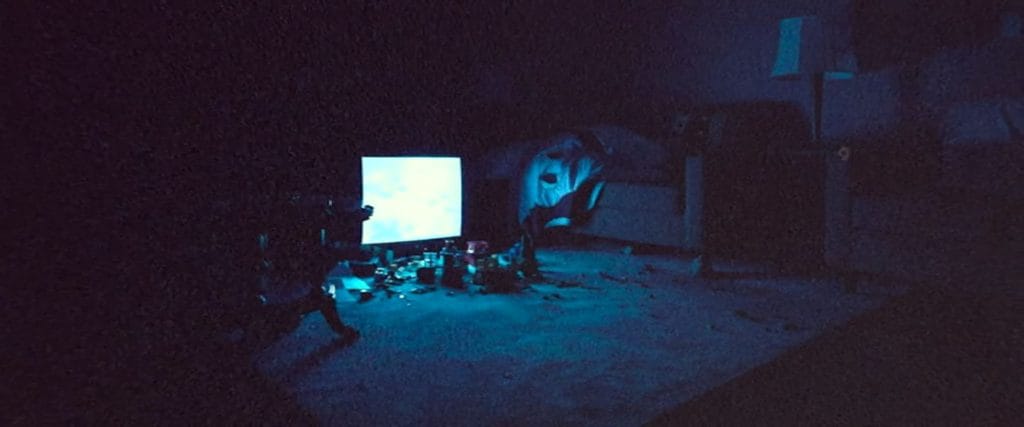
Kyle Ball’s background is in a YouTube channel called “Bitesized Nightmares”, where he recreated users’ bad dreams. Skinamarink is based on his own recurring childhood nightmare. That pretty much puts a bow on it, right?
In dreams, time is fluid (“572 Days” feels like a second), faces are often blurry or missing, and safety (parents) is stripped away. The loss of doors and windows represents the feeling of being trapped. Under this theory, the film isn’t a story to be solved; it is a simulation of the feeling of being a helpless child in the dark.
It ties in with something we can all relate to. It’s horribly uncanny, it’s a bit scary, it’s strangely ordinary, and it’s inexplicable. It feels like a dream because that’s exactly what it is supposed to be. It even ties in with some of the experiences of sufferers of night terrors.
A Simulation of Night Terrors?
For many viewers, Skinamarink feels less like a movie and more like a simulation of pavor nocturnus (night terrors) or sleep paralysis.
The film perfectly replicates the symptoms of these sleep disorders: the inability to speak above a whisper, the feeling of being awake but unable to move or leave a room, and the distortion of a familiar environment into something alien and threatening.
The grainy visual style also mimics hypnagogic hallucinations – the vivid, often frightening visual glitches and patterns the brain creates in the liminal state between wakefulness and deep sleep. I can’t help but feel that there is a whole sub-section of the audience who really connected with this element of the film.
Theory 2: The Coma
This theory hinges on the opening exposition: Kevin hit his head sleepwalking. The film could be taking place entirely inside Kevin’s dying or comatose mind. There’s an interesting crossover here because it basically reads in a similar way to the dream theory.

The “572 Days” card marks how long he has been in a coma. The voices of his parents and the cartoons are sounds from the hospital room bleeding into his subconscious. The entity tormenting him is a manifestation of his brain damage or the pain of his injury. When the face tells him to “go to sleep” at the end, it is Kevin finally dying or succumbing to the coma permanently.
Again, none of the stuff happens, it’s all part of Kevin’s dream world. It’s just a much more sad and much more final explanation. At least with the dream theory, he wakes up eventually.
The Coma Connection
The “Coma Theory” is perhaps the most grounded explanation for the film’s abstract horror. Sufferers of comas often report a state of “awareness without agency” – hearing voices from the hospital room (like the parents) or ambient noise (the cartoons) that bleed into their subconscious. Coma patients have even reported seeing doctors, nurses, and family members as demons tormenting them.
The film’s distorted audio and the relentless looping of public domain cartoons could represent a television left on in Kevin’s hospital room, filtering into his damaged mind.
Crucially, the “572 Days” title card makes the most sense in this context. It suggests Kevin hasn’t been in a haunted house for a night, but stuck in a vegetative state for over 18 months, with the “Entity” serving as a manifestation of his brain’s slow failure.
Theory 3: The Abuse Allegory
The darkest interpretation is that the monster represents an abusive parent. Early in the film, Kaylee refuses to talk about her mother, implying a traumatic separation or event. The “monster” punishes the children for “not doing what they are told” and “takes away their mouth” (silences them).
In this reading, the vanishing doors represent the children’s inability to escape their domestic situation. The 911 call failing represents the feeling that no adults can help them. The entity’s demand for Kevin to hurt himself (“put a knife in your eye”) mirrors the way abuse can force victims into self-harm or internalised guilt.

Again, this is a much darker interpretation. It’s less a dream and more a film full of metaphorical representations of real-world abuse. It could also be tied into the first theory as being the dream of a badly abused child. The frightening things in the dream tying directly into the abuse the child suffers in his everyday life. It’s horrible, when you think about it.
Nightmares & Childhood Trauma
The link between chronic nightmares and childhood trauma is well-documented. Frequent, vivid nightmares are often a primary symptom of PTSD in children who are living in abusive environments.
Skinamarink captures the specific trauma response of hyper-vigilance. The children in the film are constantly quiet, scanning the dark, and listening for sounds… All behaviors typical of children who have learned that their safety depends on monitoring the location and mood of a volatile parent.
In this context, the “nightmare” isn’t just a bad dream; it is a reflection of a reality where the home has ceased to be a sanctuary and has become a place of terror.
Theory 4: The Grief & Abandonment Theory
This theory suggests the “monster” isn’t a demon or a dream, but a manifestation of the children’s inability to process the sudden loss of a parent. Again, this is another horribly dark way to look at Skinamarink.
The film opens with the father on the phone discussing an accident, and Kaylee explicitly refuses to talk about her mother. If the mother has died or abandoned the family, the “dissolving” of the house represents the collapse of the children’s safe world. The doors and windows disappearing symbolise the isolation that grief brings – the feeling that the outside world no longer exists or can’t reach you.
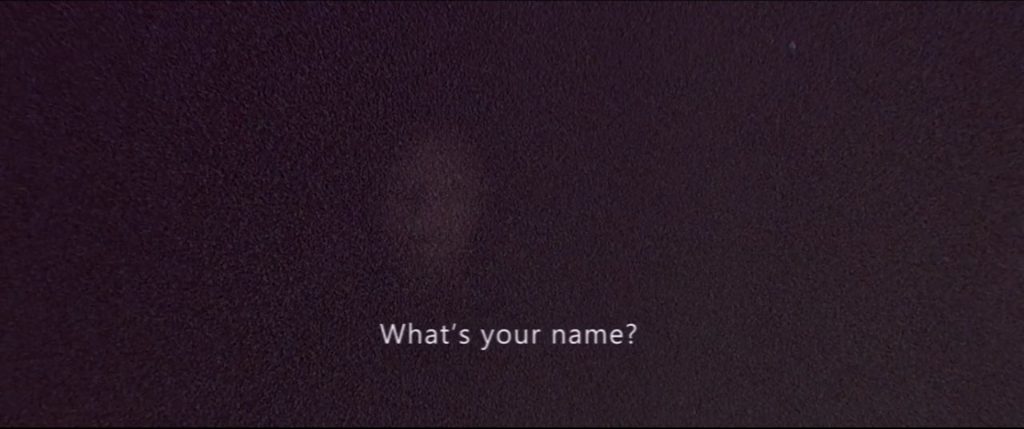
In this reading, the “572 Days” isn’t a literal time jump, but a representation of how grief lingers, trapping the remaining family members in a “stuck” state where the house feels empty and time loses its meaning. This means the events that take place are more of a metaphorical depiction of a tragically ordinary yet massively harrowing reality for many children all over the world… Let’s just say it was all a bad dream so we don’t have to think about that too much.
The Short Film “Heck”
Before Skinamarink, Kyle Ball made a proof-of-concept short film called Heck. It features a nearly identical plot but focuses on a single boy named “Boy”.
In Heck, the time jump is measured in “Sleeps” rather than days. Crucially, the boy in Heck mentions that his mother is gone because she is in the hospital with cancer. This lends credence to the idea that the “monster” is actually the grief and confusion of a child processing a family tragedy.
If you found Skinamarink too long or abstract, Heck offers a tighter, slightly more narrative-focused version of the same nightmare.
Frequently Asked Questions
What happened to Kaylee in Skinamarink?
Kaylee is removed from existence by the entity. After she sees her parents in the distorted bedroom, the entity tells Kevin that he “took her mouth away” because she didn’t listen. She is essentially erased from the house, leaving Kevin alone.
Is the house in Skinamarink real?
Yes, and no. The movie was filmed in the director’s childhood home in Edmonton, Canada. However, within the context of the story, the house acts as a purgatory or dream space that defies the laws of physics, trapping the children inside.
Who is the voice in Skinamarink?
The voice is the Entity (or the Skinamarink). It is never identified but acts as a malevolent force that controls the house. Some theories suggest it is a demon, while others believe it is a manifestation of parental neglect or the children’s own trauma.
Why 572 Days?
The time jump signifies that Kevin is trapped in a loop. Whether this is a coma, purgatory, or just nightmare logic, it emphasises the hopelessness of his situation. He has been alone in the dark, watching cartoons, for nearly two years.
Final Thoughts
Skinamarink is less of a movie and more of a sensory deprivation tank. It taps into the primal, irrational fear of waking up as a child and realising the safety net of your parents is gone. Whether you believe it’s a coma dream or a haunting, the result is the same: a feeling of unrelenting dread. Oh and it is enormously divisive; some people completely despise it.
Thanks for reading. If you enjoyed this article, why not stick around? I review horror movies, explain horror movie endings and make horror lists.
A Note on Ending Explanations
While we aim to provide comprehensive explanations based on the events on screen, film analysis is inherently subjective. The theories and conclusions presented in this "Ending Explained" feature are personal interpretations of the material and may differ from the director's original intent or your own understanding. That's the beauty of horror, right? Sometimes the scariest version is the one you build in your own head.
You might also like:
- The Death of April (2022) Review – A Stale and Uninspired Mockumentary
- Horror in the High Desert 4: Majesty (2025) Review – A Threadbare Sequel
- The Home (2025) review – Pete Davidson’s retirement home bloodbath
- Home Movie (2008) Review – A Bleak and Disturbing Found Footage Chiller
- 15 Horror Movies Like Good Boy (2025) – Animal-Led Chills and Creature Carnage
Disclaimer: Images, posters, and video stills used in this horror ending explained article are the property of their respective copyright holders. They are included here for the purposes of commentary, criticism, and review under fair use. Knockout Horror makes no claim of ownership and encourages readers to support the official release of all films discussed.