
Come Play (2020) Review – A Static and Unoriginal Babadook Wannabe
Come Play: Quick Verdict
The Verdict: A disappointingly generic horror that struggles to find its own identity outside the shadow of superior films like The Babadook. While Come Play attempts to tackle themes of childhood loneliness and digital dependency, it lacks the psychological depth and atmospheric weight to make its message land. The monster, Larry, is over-exposed to the point of tedium, with every appearance accompanied by an intrusive musical fanfare that kills any lingering suspense. Gillian Jacobs feels significantly miscast here, delivering a performance that leans more towards accidental comedy than parental desperation. Although the child actors, particularly Azhy Robertson, provide a much-needed grounded presence, they cannot save a script that relies on repetitive jump scares and illogical character motivations. It is a 2 star effort that feels far too polished and safe for the horror genre, resulting in a toothless experience that will likely leave seasoned fans feeling bored rather than frightened.
Details: Director: Jacob Chase | Cast: Azhy Robertson, Gillian Jacobs, John Gallagher Jr. | Runtime: 1h 36m | Release Date: 2020
Best for: Viewers looking for a very light, “gateway” horror experience and those interested in how autism is portrayed in modern genre cinema.
Worth noting: The film is based on a 2017 short film by the same director titled Larry, which arguably worked much better as a brief, punchy scare than as a full-length feature.
Where to Watch: Hulu, Amazon🛒, Apple TV
Rating: 2/5 Stars
(A mediocre creature feature that suffers from poor pacing, repetitive scares, and a central performance that frequently takes the viewer out of the story.)
Welcome to Knockout Horror. Today we are taking a look at another bad horror – Come Play by Jacob Chase.
Table of Contents
Yet another Babadook lite
Come Play follows the story of a young boy called Oliver. Oliver is lonely and non-verbal. Since he has few friends, he seeks comfort in his digital devices. One day, a mysterious figure only known as Larry uses Oliver’s devices to enter into the human world. This prompts his parents to spring into action in a fight for Oliver’s very life.
“Larry is a concept that is initially quite creepy but loses its impact very quickly. The over-announcing of the creature’s arrival really takes away from the tension.”
Let’s start off by saying that Come Play is very light on scares. This is something of an elevated horror that speaks to loneliness and the younger generation’s obsession with devices. It tries to do things in more of a Hollywood horror manner than many films from this sub-genre but it feels extremely PG in the process.

Larry is a concept that is initially quite creepy but loses its impact very quickly. The presentation of the monster, for much of the movie, is ridiculous. We have visual cues to announce his presence: lightbulbs explode or simply go off, screens light up etc. But that only serves to dull his impact. Certain parts end up looking like a game of Lights Out as Larry pursues the characters. The over-announcing of the creature’s arrival really takes away from the tension.
Larry does not appear visually to the characters but he is sometimes revealed in a couple of different ways. The main method of seeing the character is through Oliver’s tablet’s camera. This leads to a ton of repetition. Each appearance is accompanied by a musical fanfare as if it is the very first time we have seen him. It doesn’t help that the tablet format affords Larry a sort of augmented reality feeling — as if he is a basic app that lets you see crazy looking creatures in your house through your phone camera.
An overly familiar, dull, backstory
That isn’t the only issue with Come Play. The background story is overly familiar and poorly executed. There is a strong focus on family drama here. As mentioned above, viewers of The Babadook will have a serious sense of déjà vu. Oliver’s mum is struggling to connect with him. He has a strong bond with his dad but his bond with Sarah is more complex. She is somewhat resentful of this and takes it out on both Oliver and his dad. The parents’ relationship is frayed which leads to further complications.
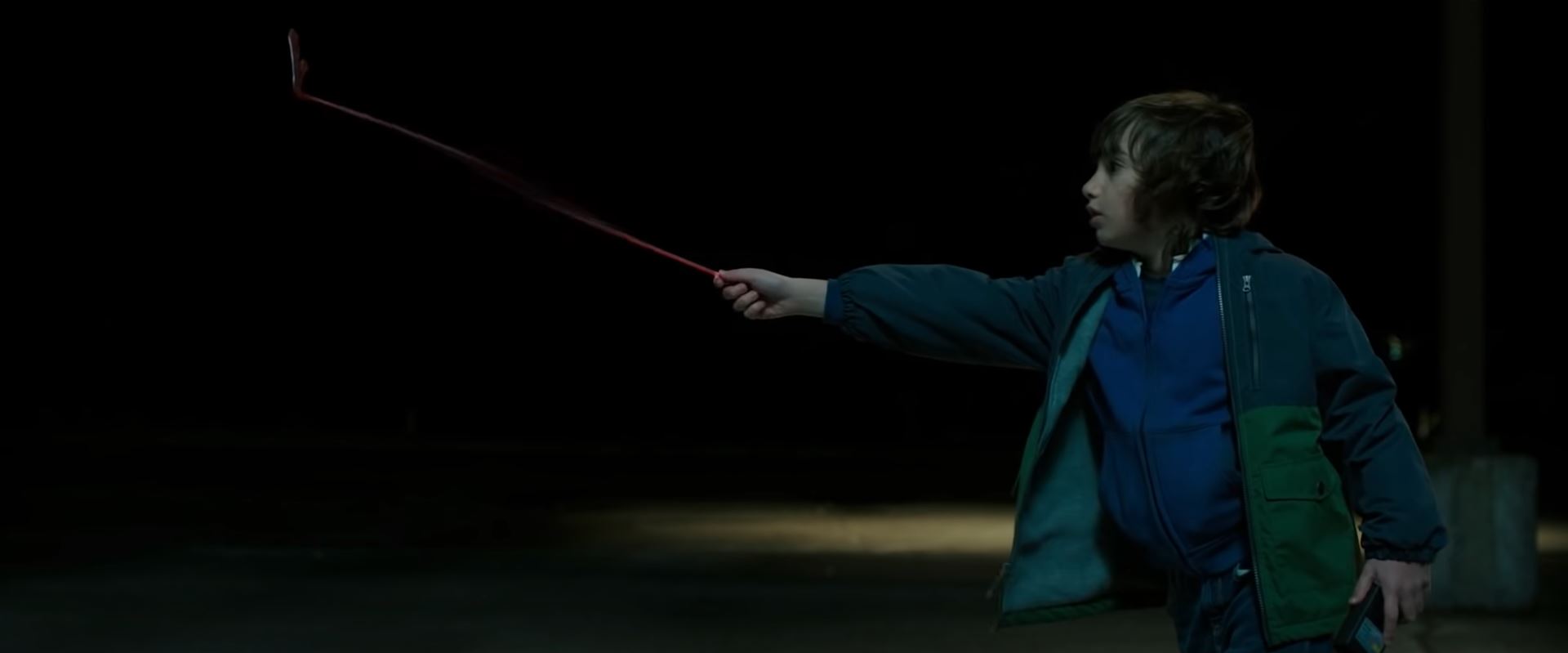
Added to all of this is the fact that Oliver is being bullied by former friends which only adds to the drama. The characters here feel very disconnected from each other. They are not particularly believable as a family. Whereas Oliver and his dad display chemistry, the bulk of the film follows Oliver and his mum – two characters that completely lack a connection.


“The writing is so poor that Sarah’s issues with Oliver seem a little farcical. Sarah seems melodramatic and completely disconnected, making the family’s troubles hard to buy into.”
The writing is so poor that Sarah’s issues with Oliver seem a little farcical. He has autism which makes parenting far more complicated, but he is a good kid that finds ways to adapt to his situation. He is incredibly well behaved given his lot in life. Sarah seems melodramatic and completely disconnected. This makes the family’s troubles hard to buy into. It also brings me onto my next point.
A terrible performance
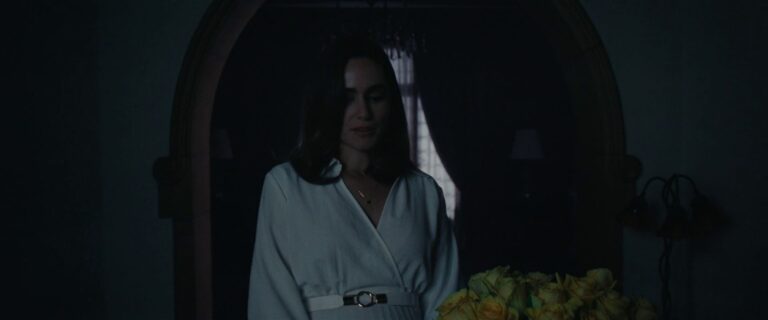
Gillian Jacobs, as Oliver’s mum Sarah, seems completely out of her depth. I hate to say this because it sounds like I am just taking pot shots, but it is what it is. I rarely feel quite so strongly that a character has been miscast as I did here. She took me out of literally every single scene she was in. Whereas Essie Davis’ performance in The Babadook was painful for its authenticity, Jacobs plays almost every scene here as if the movie is supposed to be a comedy.
She has no ability to convincingly emote. Her line delivery is reminiscent of high school stage acting. Her facial expressions are wide and exaggerated and she seems to struggle with character motivation. She really reminded me of Anna Faris’s pitch-perfect, ironic delivery in Scary Movie: over the top and designed to incite laughs.
“Jacobs plays almost every scene here as if the movie is supposed to be a comedy. Her line delivery is reminiscent of high school stage acting, with wide and exaggerated expressions.”
Don’t get me wrong, she did incite a few laughs, but not for the right reasons. Considering she is supposed to represent the relatable, emotional, backbone of the movie, her performance damages things drastically. I think she would be a great comedy actor. For serious roles like this, however, she just doesn’t fit.
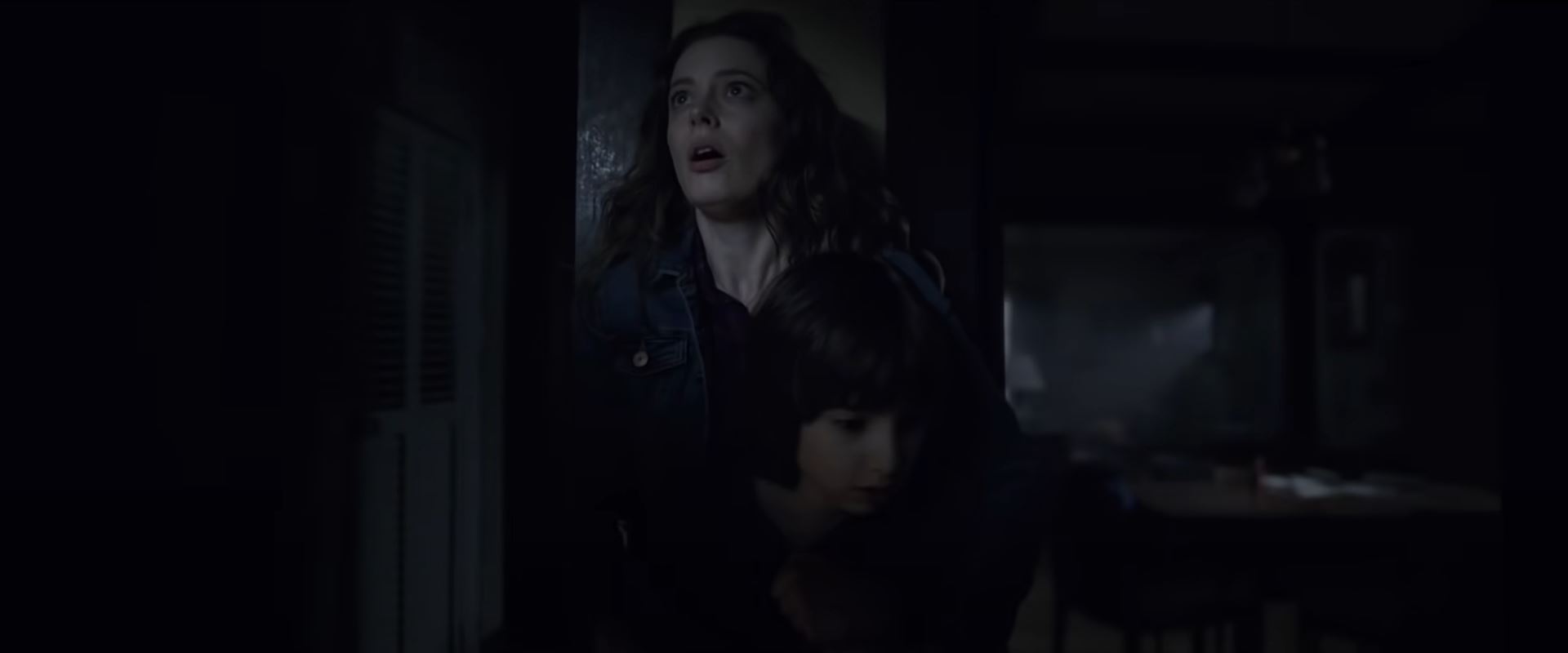
The rest of the cast, however, are fine. The child actors here deserve special mention. Azhy Robertson, as Oliver, does an excellent job. His portrayal of an autistic child is both believable and sympathetic. Winslow Fegley, as Byron, felt like the best actor in the entire film. He is way beyond his years. Jayden Marine, as Mateo, was great and has excellent comedic delivery. And Gavin MacIver-Wright, as Zach, does fine too.
The Good, The Bad & The Ugly
The Good
- The Young Cast: Azhy Robertson and Winslow Fegley deliver surprisingly mature and believable performances that anchor the film’s few effective moments.
- Initial Concept: The idea of a lonely monster using modern devices to bridge the gap between worlds is a relevant and potentially terrifying hook.
- Augmented Reality Usage: The scenes involving the tablet’s camera provide a few early, stylish scares that make good use of the digital medium.
The Bad
- Gillian Jacobs: A jarringly over the top performance that feels more suited to a parody than a serious horror drama about parental bonding.
- Over-exposed Monster: Larry is shown far too often and too early, removing the mystery and threat that usually makes a creature feature work.
- Derivative Pacing: The film plods along a predictable path, borrowing heavily from The Babadook and Lights Out without adding anything new.
The Ugly: The Musical Fanfare. Every single reveal of Larry is accompanied by such a loud and obvious score that it becomes impossible to feel any organic sense of dread.
Should You Watch Come Play?
Probably not. It is a 2 star film that fails to live up to its director’s promise. While it tries to be an “elevated” horror movie with a heart, the poor execution and lack of scares make it a difficult recommendation. If you want a proper look at parental anxiety and children in peril, watch The Babadook instead. Larry can stay in the cloud.
You might also like:
- Sawtooth Mountain (2026) Review – Misleading Slow-Burn Thriller
- Nightmare Radio: The Night Stalker (2023) Review – A Disconnected Anthology
- Final Destination: Bloodlines (2025) review – Death is back and better than ever
- The Welder (2021) Review – A Confused and Glacial Race-Themed Thriller
- Scary Movie (2026) Review – Spoof Rebootical Disappoints
Our Scoring Philosophy: A Fair Fight
Horror is a genre that thrives thanks to indie film makers and low budget creators. At Knockout Horror, we firmly believe that every movie that we review deserves a fair fight. That's why we grade on a curve. Our star ratings are all about context, judging a film on what it achieves with the resources it has.
A 4-star rating for a scrappy indie horror made for $10,000 is a testament to its ingenuity and raw power. A 4-star rating for a $100 million blockbuster means it delivered on its epic promises. We don't compare them side-by-side; we celebrate success in every weight class, from the back-alley brawler to the heavyweight champion. Please keep this in mind when considering star ratings.