Halloween (1978) Review – The Masterclass That Birthed The Modern Slasher
Halloween: Quick Verdict
The Verdict: A lean, clinical, and masterfully crafted horror masterpiece that remains the definitive blueprint for the slasher genre. John Carpenter’s Halloween succeeds through its fiendishly simple premise, iconic score, and an unparalleled understanding of suspense. By eschewing graphic gore in favour of atmospheric dread and clever camera work, Carpenter created a villain in Michael Myers who feels truly omnipresent and terrifying. Jamie Lee Curtis delivers a landmark debut as the quintessential final girl, providing a perfect emotional anchor to the Shape’s cold, motiveless evil. It is a 4.5 star essential that has lost none of its chilling power over the decades. If you only watch one horror movie this October, it should be this one.
Details: Director: John Carpenter | Cast: Jamie Lee Curtis, Donald Pleasence, Nick Castle, Nancy Kyes | Runtime: 1h 31m | Release Date: 25 October 1978
Best for: Anyone who appreciates pure suspense, iconic synth soundtracks, and the birth of modern horror tropes.
Worth noting: The budget was so tight that the iconic Michael Myers mask was actually a $2 Captain Kirk mask, spray-painted white with the eye holes widened.
Where to Watch: Amazon🛒
Rating: 4.5/5 Stars
(Iconic score, superb tension, genre-defining performances)
Welcome to Knockout Horror. Today, we are taking a look at John Carpenter’s seminal slasher movie Halloween from 1978. We, also, recently reviewed the sequel, Halloween 2 (1981). Go have a read if you are interested in why we think the series immediately dropped the ball and was never the same again. For now, on with the review.
Table of Contents
A movie that changed horror for good
Carpenter knew one thing for sure when he crafted Halloween. If this movie was going to succeed, he needed a memorable and, frankly terrifying, villain. One of horror’s most iconic antagonists was about to be brought to life. While developing his character, he recounted visits to psychiatric hospitals during college. The blank stare of one particular patient stood out in his mind as being particularly unsettling.
Carpenter imagined just what was taking place behind the man’s eyes. He then used this to create an almost motiveless killer who is unaffected by the world around him. The Shape was born and would go on to be renamed Michael Myers. One of the most iconic horror characters of all time. Now all they needed was a plot and it succeeded thanks to being fiendishly simple.
A brutal and relentless killer escapes from a sanatorium on the night of Halloween 1978. Hell bent on returning to the place where he viciously murdered his sister fifteen years before. Michael Myers is about to cause havoc on an unsuspecting group of teens who just so happen to be babysitting for the night.
So simple yet so effective
It’s hard to say whether Carpenter and Hill had envisioned their movie becoming an October 31st staple but to say they didn’t capture the vibe perfectly would be a lie. Setting the movie on Halloween itself was a masterstroke of genius; it’s amazing how well this movie captures the festive vibe. Streets are decorated with pumpkins, kids are dressed up in their favourite costumes, the roads are packed with people, and everything feels distinctly autumnal.
“Setting the movie on Halloween itself was a masterstroke of genius; it’s amazing how well this movie captures the festive vibe.”
This is a film that was just begging to be dragged out every October. Along with that distinctly Halloween themed presentation, Carpenter made the inspired decision of making the location entirely relatable. This wasn’t a scary abandoned asylum or a haunted house. This was middle American suburbia. This is the place where regular people lived and felt both safe and comfortable. Michael Myers could be right on your own doorstep.
It was incredibly simple but tremendously effective. Halloween lent viewers a sense that this could actually happen to them. It felt almost plausible, despite the omnipresent killer. It’s these little touches and attention to detail that make this such an incredibly tense and effective horror.
Genuinely tense and scary
The tension starts almost immediately, too. The movie opens up with Halloween‘s iconic score playing over an image of a sinister looking jack-o-lantern. The frantic and frenetic pacing of the music immediately suggests a need for panic. It’s just there to get us warmed up, though. Before the real scares begin, we need to meet Michael Myers.
Carpenter does what so many horror directors fail to do, he makes his killer scary from the get go. Myers isn’t immediately depicted as supernatural but this would change in the coming years. Myers is, however, presented as a tremendous threat from the moment he escapes the sanitarium. His singular focus and complete lack of empathy lends him a sense of being almost beyond evil. He is imposing, relentless, and scary as hell with that terrifying William Shatner mask.

Carpenter perfectly captures the futility of the characters in their attempts to escape Myers. Long shots with soft focus show Michael watching the characters wherever they go. First person angles borrowed from the aforementioned Black Christmas give us a killer’s eye view of the action. Showing that wherever Laurie and her friends are, Michael isn’t far behind.
“He is clinical, as if it was something he was simply born to do. It’s just another day at the office and that is what makes him so scary.”
Myers is almost a voyeur for much of the film; simply watching and waiting for the perfect moment to strike. When he finally does, he does so in a way that is almost emotionless. He doesn’t struggle like Jason Voorhees, he doesn’t seem to indulge in the kill. He is clinical, as if it was something he was simply born to do. It’s just another day at the office and that is what makes him so scary. He’s not someone that can be reasoned with, his motives aren’t clear and he is impossible to stop.
Still quite surprising
What might be surprising to some is the complete lack of gore in this movie. It just isn’t that bloody, something which Carpenter would drastically over-correct in the sequel. Many of the kills are off screen or don’t involve knives or other implements of blood letting. Taken by today’s standards, it’s incredibly tame but, somehow, it serves to actually make Halloween much scarier.
There’s far more time devoted to those gorgeous long shots that see Myers haunting from the shadows. It’s almost like horror foreplay. When is he going to emerge? Why doesn’t he care that his methods of dispatching victims put himself in danger? Does he enjoy the pain?
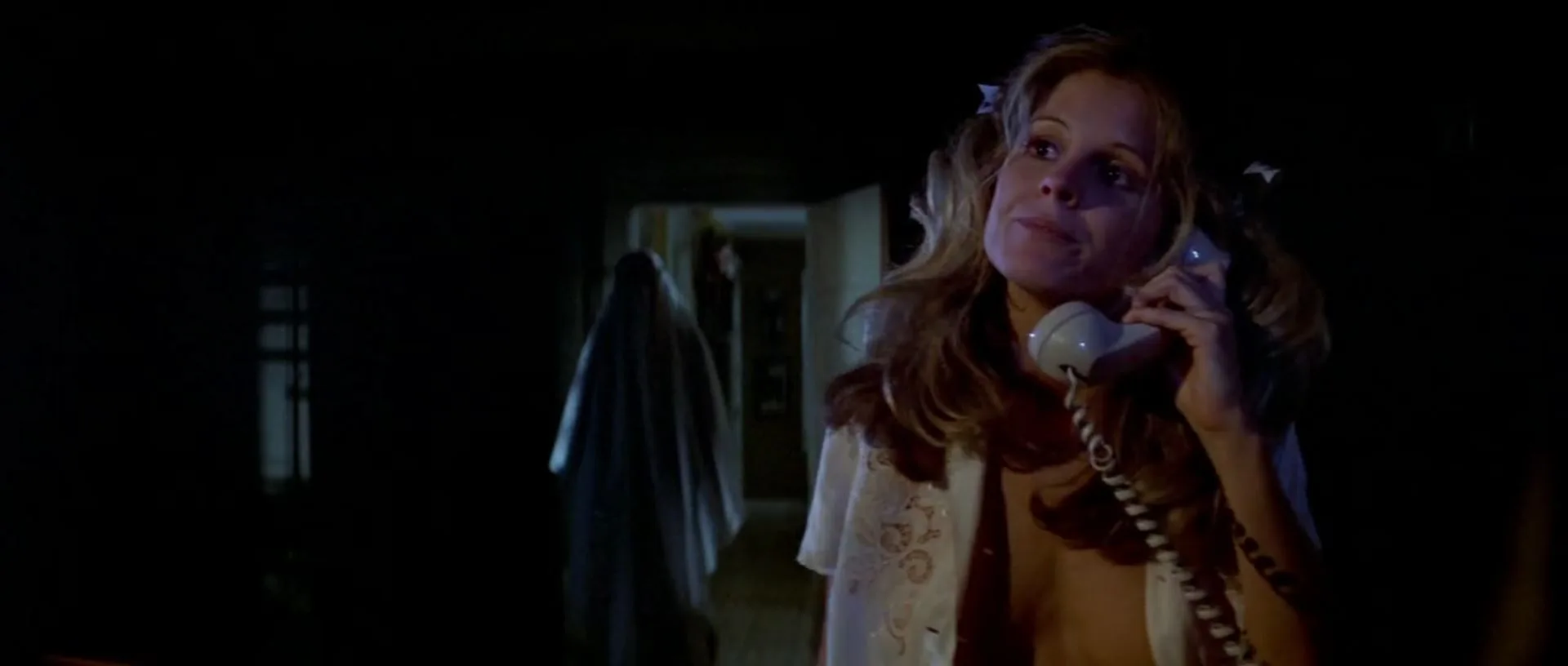
Naturally, Myers wouldn’t be anything without his counterpart Laurie Strode (Jamie Lee Curtis). Laurie has become an iconic character in her own right and had an important hand in creating the “final girl” horror movie trope. Laurie’s virginal and innocent nature has been mentioned by many when referencing the allegorical nature of slasher movies regarding promiscuity.
Carpenter has repeatedly said that much of his writing was misinterpreted. The metaphor for Laurie’s sexual desires, or lack thereof, were entirely misunderstood. Laurie was actually repressed more than virginal. Either way, Laurie would be copied over and over again. Let’s not understate her importance to Halloween itself, though. She is the Yin to Myers’ Yang and set the blueprint for movies like this to come.
Beautifully made
Direction here is fantastic. Carpenter is an expert at building tension and rarely feels the need to resort to drastic measures to create a scare. The iconic soundtrack cues you in to Myers’ arrival and sets the tone perfectly… It’s time to panic!!
“Few horror movies managed to capture that legitimately unnerving feeling of a killer emerging from shrouded corners quite the way Halloween did.”
We catch glimpses of Myers or see things from his point of view and we immediately know how close he is. All that’s left is to wait as he draws nearer. Carpenter places you into the shoes of Myers. He doesn’t appear out of nowhere; you follow him and you see him pursue his victims. Helplessly observing, almost like an accessory to the killings.

It conjures up memories of the first person shots in Psycho. And like in Psycho, it is legitimately tense stuff and works so much better than the myriad clones that followed. Many of the shots here are extremely dark with minimal lighting but it never seems to be a huge problem. It really just guides your eyes to the shadows searching for the threat that you know is hiding there somewhere.
Few horror movies managed to capture that legitimately unnerving feeling of a killer emerging from shrouded corners quite the way Halloween did. The restraint deserves applause but the actual way Carpenter manufactures some of the more action filled moments is equally impressive. Halloween is expertly crafted. It has aged and that may have dulled it over time but it is still so much better than the slasher movies it spawned.
Fantastically acted
We’ve called attention to it repeatedly in this review, Carpenter features a number of nods to Psycho in this movie. Some of the shots, the setups and the lighting being among them. One thing that isn’t a nod, however, is the coincidental casting of Janet Leigh’s daughter Jamie Lee Curtis in the role of Laurie.
Curtis is fantastic here in what was her first major movie role. Obviously she has gone on to become a huge star in her own right but it pays to remember how new she was to acting here. She is the quintessential final girl and balances drama with action incredibly well.
Interestingly, Curtis was worried about this role, feeling she was more suited to the cheerleader type characters than the more reserved Laurie. A fact that seems quite laughable given how well she fits the character. She does a great job either way which is a testament to her acting ability.
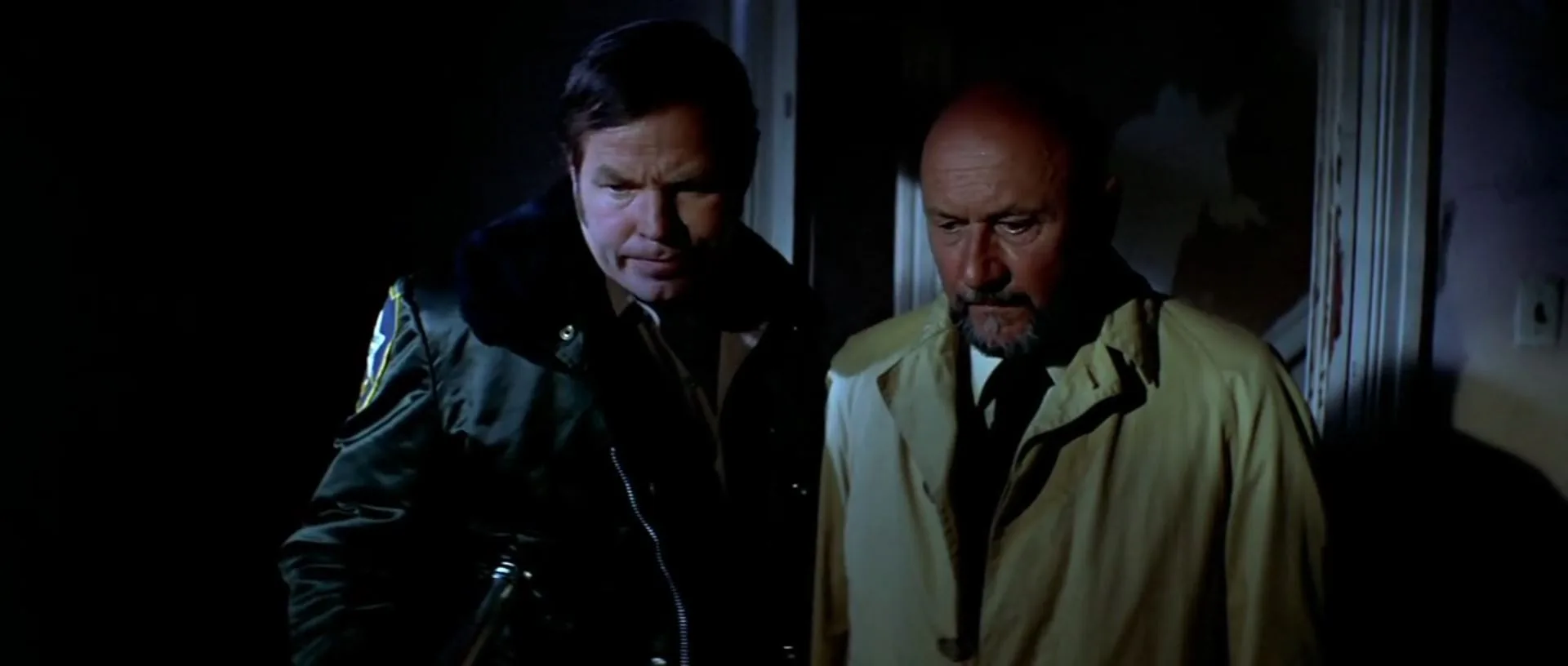
Donald Pleasence is a lot of fun as Loomis (another nod to Psycho perhaps?). He seems to be having a good time and that makes it all the more enjoyable. Don’t expect him to be playing this role low-key. He is hamming it up like a champ and deliberately munches on the scenery. It works as a perfect contrast to Myers’ restrained nature.
The Good, The Bad & The Ugly
The Good
- The Soundtrack: John Carpenter’s self-composed score is arguably the most recognizable and effective piece of music in horror history.
- Atmosphere: The film captures the feeling of an Autumnal Halloween night in suburban America with incredible precision.
- Restraint: By focusing on the shadows and the voyeuristic nature of the killer, the movie creates more terror than a thousand blood-soaked sequels.
The Bad
- Aged Dialogue: Some of the banter between the teenage girls feels very much a product of its time and can occasionally lean into cliché.
- Pacing: Viewers used to modern high speed slashers may find the middle act a little slow, though it serves the build up perfectly.
The Ugly: The Sequels. While the original is a masterclass in ambiguity, the endless franchise bloat that followed spent decades attempting to explain away the very mystery that made Michael Myers scary in the first place.
Should You Watch Halloween?
Yes, absolutely. Whether you are a seasoned horror vet or a newcomer to the genre, this is required viewing. It is a brilliant example of how to make a high impact film on a shoestring budget. It is tense, beautifully shot, and still manages to be genuinely scary nearly 50 years later. A 4.5 star classic.
You might also like:
- Ho-Ho-Homicide: 20 Christmas Slasher Movies Ranked From Naughty to Nice (Updated 2025)
- Friday the 13th: The Final Chapter (1984) Review – The Best Of A Bad Bunch
- Gaia (2021) Review – A Visually Stunning but Derivative Eco-Horror
- Unfriended (2014) Review – A Gimmicky but Relevant Screenlife Slasher
- A Christmas Horror Story (2015) Review – An Entertaining Festive Anthology
Our Scoring Philosophy: A Fair Fight
Horror is a genre that thrives thanks to indie film makers and low budget creators. At Knockout Horror, we firmly believe that every movie that we review deserves a fair fight. That's why we grade on a curve. Our star ratings are all about context, judging a film on what it achieves with the resources it has.
A 4-star rating for a scrappy indie horror made for $10,000 is a testament to its ingenuity and raw power. A 4-star rating for a $100 million blockbuster means it delivered on its epic promises. We don't compare them side-by-side; we celebrate success in every weight class, from the back-alley brawler to the heavyweight champion. Please keep this in mind when considering star ratings.
Support the Site Knockout Horror is a participant in the Amazon Services LLC Associates Program. Basically, if you click a link to rent or buy a movie, we may earn a tiny commission at no extra cost to you. As an Amazon Associate, I earn from qualifying purchases. This helps keep the lights on and the nightmares coming. Don't worry, we will never recommend a movie purely to generate clicks. If it's bad, we will tell you.
Disclaimer: Images, posters, and video stills used in this review are the property of their respective copyright holders. They are included here for the purposes of commentary, criticism, and review under fair use. Knockout Horror makes no claim of ownership and encourages readers to support the official release of all films discussed.