Skinamarink (2022) Review – An Experimental and Divisive Analogue Nightmare
Skinamarink: Quick Verdict
The Verdict: A polarising and deeply experimental piece of analogue horror that functions more as a sensory experience than a traditional narrative film. Skinamarink masterfully captures the primordial, half-remembered terror of being a child alone in the dark, using nightmare logic and abstract imagery to bypass the viewer’s rational mind. However, its uncompromising commitment to a grainy, low-fidelity aesthetic and a glacial pace makes it a significant challenge for even the most patient horror fans. While the film features several of the most bone-chilling and effective scares in recent memory, they are buried beneath vast stretches of repetitive, static shots that often feel like indulgent padding. This 2.5 star effort is a fascinating achievement in mood-setting that would have been a perfect short film but struggles to justify its feature-length runtime. It is a movie that demands a specific mindset to appreciate: one that is willing to stare into the grain and find the monsters waiting there.
Details: Director: Kyle Edward Ball | Cast: Lucas Paul, Dali Rose Tetreault | Runtime: 1h 40m | Release Date: 2022
Best for: Fans of experimental cinema, analogue horror enthusiasts, and those who enjoy atmosphere-heavy “liminal space” aesthetics.
Worth noting: The film was shot on a digital camera but underwent extensive post-production to mimic the look of aged, 16mm film stock, complete with artificial grain and dirt filters.
Where to Watch: Shudder, Amazon🛒
Rating: 2.5/5 Stars
(A conceptually brilliant but physically demanding horror that manages to be both profoundly terrifying and incredibly boring in equal measure.)
Welcome to Knockout Horror and to another horror movie review. Today we are checking out Shudder original analogue horror Skinamarink.
Highlights
A note for ADHD and similar disorder sufferers
As someone with bipolar disorder who has a fiancée with ADHD, I really feel like this point deserves mentioning. Skinamarink is a movie that demands a lot of concentration. It does very little to aid the easily distracted and sufferers of certain conditions are going to have a rough time. Your mind is likely to wander many times during the movie and there is a fair chance this will lead to a bit of exhaustion. I struggled more than my fiancée because ADHD hyperfocus can be a superpower at times.
“Skinamarink is a movie that demands a lot of concentration. Static shots offer little to keep you engaged, and the camera work does nothing to help guide your focus.”
Static shots offer little to keep you engaged, the camera work does nothing to help guide your focus. There are moments of redundancy offering the perfect opportunity to mentally check out. The repeating image dirt filter is distracting and the story is minimal. You may find this movie something of a chore and tough to get through. If this is your experience with Skinamarink, don’t beat yourself up. There are some fantastic horror moments worth sticking with the movie to experience. If you struggle, however, maybe watch in a few sittings.
A simple story in a strange film
The story basically follows a pair of young children who appear to be trapped in a house. All the doors and windows have vanished, their father has gone and the children can’t escape. What starts as a, seemingly, normal night quickly turns into a nightmare. Skinamarink is filmed in an analogue horror movie style.
Abstract camera angles, muted dialogue and a lot of grain are the order of the day. Oh, and confusion, there is a lot of confusion too. Hence why we put together a Skinamarink Ending Explained article for you to read. Keep in mind if you haven’t watched the movie yet, the article does contain spoilers, unlike this review.

Skinamarink‘s story is nothing particularly new or even that interesting. What sets Skinamarink apart from other movies, and why it is being talked about so much, is its presentation. Have you ever wondered what would happen if David Lynch directed a silent horror movie? The result would look a lot like this.
It’s abstract and kind of dirty!
The style is incredibly abstract. It is, also, sure to be as divisive as it is unique. Some will find this a difficult movie to watch. It demands patience and an ability to tolerate inferior cinematic presentation.
“There is a distinct sense that much of the scene building is, in reality, scene padding in disguise. This should have been a short movie.”
Heavy dirt filters are used on top of a grainy, poorly lit, image. The result is a picture that, often, looks as confused as it does imposing. Skinamarink stands out for its risk taking as much as anything else. For every flickering patch of black, hinting at the creatures dancing in the darkness beyond, there is a frustrating, context-less, shot of the top of a door, lingering for an eternity.
A feeling that scenes go nowhere and add nothing is inescapable. There is a distinct sense that much of the scene building is, in reality, scene padding in disguise. This should have been a short movie and, in all honesty, there is nothing here to make the laborious runtime worth sticking with outside of the viewer’s subjective desire to do so. I really can’t shake the feeling that this is something you would find in the artiest of arty places on YouTube.
A commitment to its aesthetic
This speaks to the bigger issue with Skinamarink. This is a movie that succeeds or fails based on its commitment to its stylistic trappings. People will love it for what it is but others will simply despise the presentation. The current (October 2024) viewer scores absolutely support this notion.
Skinamarink does a lot right, however. The way it manages to capture the vagueness of our dreams is commendable. The uncanniness of the non-waking world has never felt so well formed. From the bizarre, almost nonsensical, camera angles to the disconnected manner of the character’s speech, this is a place we all recognise and Ball deserves immense praise for his ability to bring to life something we usually only feel while in a deep sleep.
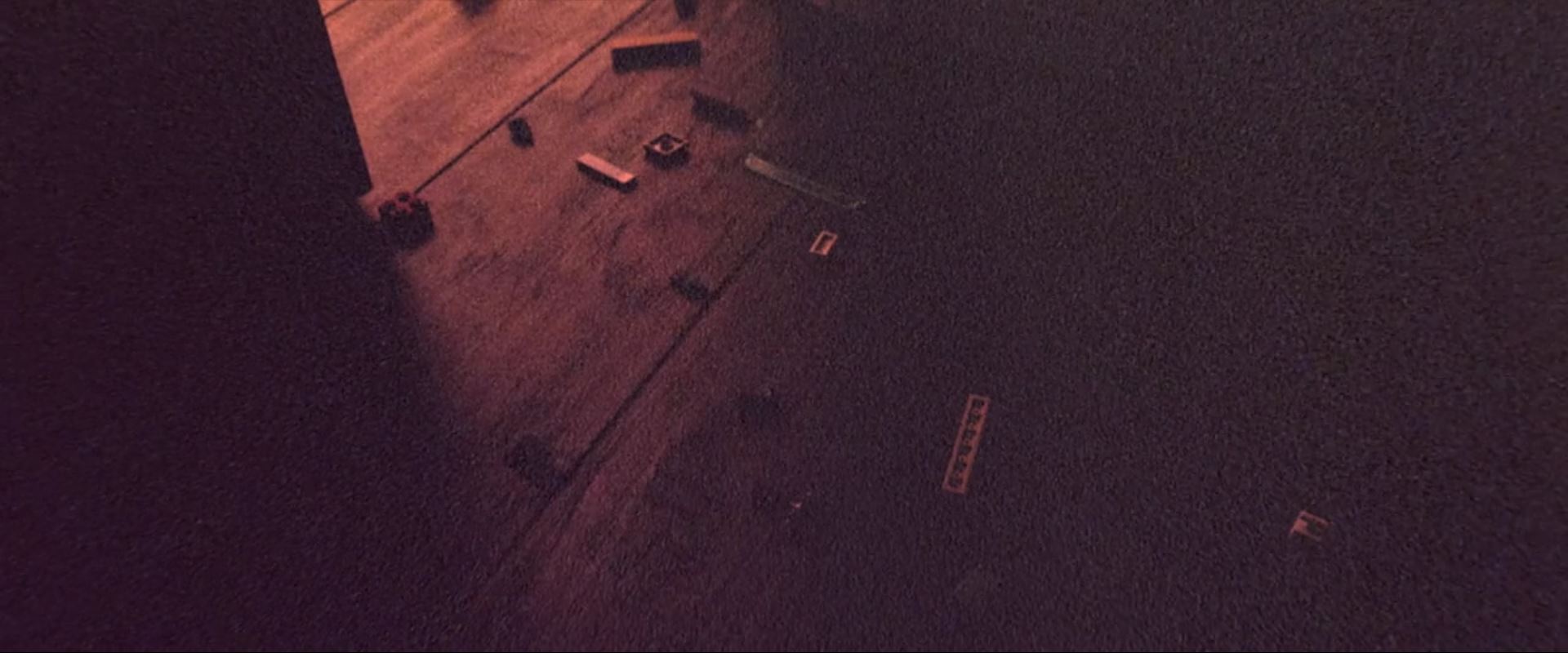
But the uncomfortable truth here is that Skinamarink takes liberties with the viewer’s time and patience. Minute after minute of pointless shots laced in with dull, repetitious, scenes of kids doing kid things, occasionally punctuated with some actually effective horror. It is wildly unnecessary in the grand scheme of things and incredibly self-indulgent. For the things it does right, there is an overwhelming amount that simply doesn’t work.
Skinamarink stretches slow cinema to a length I have not experienced before and wouldn’t be overly interested in experiencing again. It’s funny because if this was a 20 minute short movie it may have been one of my favourites of all time. If this was part of an anthology horror, other directors would be green with envy and everyone would be talking about it. It would have been breathtaking. As it stands, however, it is mere novelty and one that sticks around for an unwelcome amount of time, at that.
Some actually effective horror
Despite the above complaints, I would absolutely say that there are moments where this movie really shines. There are scenes in Skinamarink that will probably scare you quite a lot. Skinamarink does a lot with a little when it comes to horror. Ball completely understands the terror that comes in apprehension. He perfectly condenses the fear that exists in the moments leading up to a moment. The resulting slow release creates a palpable level of tension.

The simple uttering of the words “look under the bed” are infinitely more effective that your typical Hollywood jump scares. Chilling, terrifying and inciting feelings of fight or flight, there are powerfully effective horror moments here that will stay with you.
“The simple uttering of the words ‘look under the bed’ are infinitely more effective than your typical Hollywood jump scares. Chilling, terrifying and inciting feelings of fight or flight.”
Placing the viewer into the shoes of a child is an inspired move. The almost first-person perspective of the movie invites a specific kind of fear – a fear we all know too well. That feeling of being a child lost in a dream-like world. The character’s lack of understanding is easy to appreciate and you will likely share in it and feel it too. Again, if the movie was 25 minutes long, it would be 25 of the most unsettling minutes in horror history.
The Good, The Bad & The Ugly
The Good
- Nightmare Logic: The film perfectly recreates the uncanny, nonsensical feeling of a childhood nightmare better than almost any other movie in history.
- Genuinely Chilling Scares: When the horror does land, it is incredibly effective, using simple dialogue and suggestion to create deep, visceral dread.
- Atmospheric Prowess: Kyle Edward Ball demonstrates a remarkable ability to turn mundane domestic spaces into hostile, otherworldly environments.
The Bad
- Excessive Padding: The 100-minute runtime is far too long for the amount of content provided, leading to stretches of genuine boredom.
- Demanding Presentation: The heavy grain and abstract angles make it physically and mentally taxing to follow, especially for those with attention disorders.
- Self-Indulgent: The film often feels like it is more concerned with its own aesthetic than the viewer’s experience, bordering on being “up its own arse.”
The Ugly: The Grain Fatigue. Staring at an intensely grainy, static image of a ceiling fan for several minutes is a test of endurance that few will find rewarding.
Should You Watch Skinamarink?
Maybe. It is a 2.5 star experiment that you will likely either love or despise. If you value atmosphere and unique storytelling over plot and traditional cinematography, it is an essential watch. If you find slow cinema frustrating or prefer your horror to have a clear narrative, you should probably skip it. It is an experience that lingers, for better or worse.
Our Scoring Philosophy: A Fair Fight
Horror is a genre that thrives thanks to indie film makers and low budget creators. At Knockout Horror, we firmly believe that every movie that we review deserves a fair fight. That's why we grade on a curve. Our star ratings are all about context, judging a film on what it achieves with the resources it has.
A 4-star rating for a scrappy indie horror made for $10,000 is a testament to its ingenuity and raw power. A 4-star rating for a $100 million blockbuster means it delivered on its epic promises. We don't compare them side-by-side; we celebrate success in every weight class, from the back-alley brawler to the heavyweight champion. Please keep this in mind when considering star ratings.
Support the Site Knockout Horror is a participant in the Amazon Services LLC Associates Program. Basically, if you click a link to rent or buy a movie, we may earn a tiny commission at no extra cost to you. As an Amazon Associate, I earn from qualifying purchases. This helps keep the lights on and the nightmares coming. Don't worry, we will never recommend a movie purely to generate clicks. If it's bad, we will tell you.
Disclaimer: Images, posters, and video stills used in this review are the property of their respective copyright holders. They are included here for the purposes of commentary, criticism, and review under fair use. Knockout Horror makes no claim of ownership and encourages readers to support the official release of all films discussed.