Audition (1999) Review – A Disturbing Masterclass in J-Horror Dread
Audition: Quick Verdict
The Verdict: A masterfully deceptive and profoundly unsettling experience that redefined the boundaries of psychological horror. Audition (1999) succeeds by masking its horrific intentions behind a patient, melancholic drama, lulling the audience into a false sense of security before unleashing a final act of uncompromising brutality. Takashi Miike uses the slow-burn narrative to offer a scathing critique of patriarchal entitlement and the objectification of women, making the eventual violence feel like a grim, inevitable consequence. Ryo Ishibashi and Eihi Shiina deliver powerhouse performances; Shiina, in particular, creates an iconic and bone-chilling horror figure in Asami. The film’s technical restraint – choosing cold, matter-of-fact shots over theatrical flourishes – only heightens the visceral impact of its most disturbing sequences. While its extreme content may be too much for some, its influence on the “torture porn” sub-genre and global horror is undeniable. This 4.2 star effort is a technical triumph and a psychological gut-punch that stays with you long after the credits roll. It is a mandatory watch for any serious horror enthusiast, provided they have the stomach for it. It is a cold-blooded, visionary masterpiece.
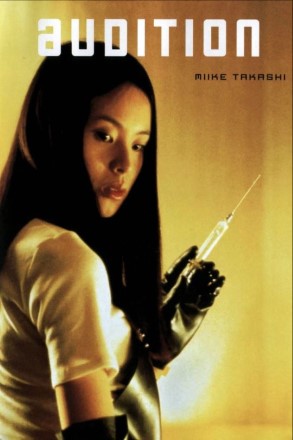
Details: Director: Takashi Miike | Cast: Ryo Ishibashi, Eihi Shiina, Jun Kunimura | Runtime: 1h 55m | Release Date: 1999
Best for: Fans of patient J-horror, psychological thrillers, and viewers who appreciate extreme horror with a deep social subtext.
Worth noting: Director Takashi Miike reportedly delighted in the fact that the film caused walkouts and faints during its international festival run.
Where to Watch: VOD, Amazon🛒
Rating: 4.2/5 Stars
(A deceptive and masterfully paced J-horror classic that transitions from a sombre domestic drama into one of the most disturbing final acts in cinema history.)
Welcome to Knockout Horror. We are taking a look at Takashi Miike’s disturbing J-horror hit Audition from 1999.
Table of Contents
Slow paced, compelling, and utterly disturbing
Audition begins with Aoyama Shigeharu (Ryo Ishibashi) bending over a hospital bed. His wife is, tragically, coming to the end of her life. Shigeharu’s son arrives just as his mother passes away. Fast forwarding a few years, Shigeharu’s son, Shigehiko (Tetsu Sawaki), is now in high school and Shigeharu has less parenting on his plate. This can mean only one thing – it’s time to get back on the market.
“Bringing the dynamic director Takashi Miike on board, the movie was greenlit and shot in just three weeks. The result is one of the most surprising, shocking, and disturbing films to come out of Japan.”
Struggling to find a date, Shigeharu’s friend comes up with a plan. He will arrange a fake casting call to give his friend the opportunity to audition potential suitors. Little does he realise, his perfect girl Asami Yamazaki (Eihi Shiina) will be more than a match for him. Audition was made during a time where the Japanese horror industry was booming from the success of Ringu. Wanting to capitalise on that success, production company Omega Project purchased the rights to Ryu Murakami’s disturbing novel Audition.

Bringing the dynamic director Takashi Miike on board, the movie was greenlit and shot in just three weeks. The result is one of the most surprising, shocking, and disturbing films to come out of Japan. It might actually surprise people because the horror isn’t overt. At least not initially. It’s actually more of a slow paced drama for the majority of its runtime. First of all, it needs to introduce the audience to its two key characters, both of which having experienced rough pasts.
A clash of traumatic pasts
Audition obviously plays on themes of grief and loneliness. It is central to the theme but it has an overriding message buried in there – your grief doesn’t justify you mistreating people. The way our protagonist frames his search for love as a casting call is fairly despicable. It’s a stark finger pointed at Japan’s patriarchal society and just one of many that are yet to come. Shigeharu is more than willing to take advantage of someone to fulfill his own needs but that is going to backfire in a big way.
There’s an age gap between Shigeharu and Asami but that’s the least of the problems. This is a woman that has a disturbed past and has already been taken advantage of one time too many. We slowly learn more about Asami’s childhood as the horrific facts of her life unfold. A tale too commonly told by women all over the world; Asami was abused, molested, and taken advantage of. She seeks to find love and acceptance and wishes to be the main focus of someone’s life. Even more than that, though, she seeks revenge for the way society has treated her.
Shigeharu is a, somewhat, sympathetic person but the fun and comical casting call process hides a deeper commentary on society’s treatment of young women. Shigeharu is a victim of life’s cruelty but the women being forced to pose and strip in the men’s silly game are victims of men. Miike has a lot to say and he does it in a layered and nuanced manner that focuses heavily on life’s grey areas. Audition is a much deeper movie than you might think from its reputation.


More than a horror movie
Audition regularly appears on lists of the best horror movies of all time. Even famous directors cite it as hugely influential; Quentin Tarantino, for example. It was instrumental in the formulation of numerous sub-genres. Movies like Saw and Hostel owe much to Audition‘s final 20 minutes of macabre violence. It’s much more than that, though.

Indeed, for the most part, it will feel as though you are not watching a horror at all. It’s slow, overly concerned in minor details, and deliberately lacking in excitement. It wants to lull you into a false sense of security. While doing that, it also wants you to think about what is taking place. Miike gives you plenty of time to do just that, as well.
He presents the casting call as a fun and silly event, despite the fact that women are being asked to strip to their underwear and basically being looked over like cattle. Miike wants you to feel guilty for enjoying these moments and think about the consequences of how we treat people.
“For the most part, it will feel as though you are not watching a horror at all. It’s slow, deliberately lacking in excitement, and wants to lull you into a false sense of security.”
There is a message throughout Audition to look deeper than the surface and examine the grey. A girl with a history that many women can relate to has lost her ability to love and experiences only pain. Believing the two things to be intrinsically linked, she is a product of the environment around her. The fact that Shigeharu and Yasuhisa abused their positions of power negates any genuine feeling Shigeharu may have for Asami. She is unloved because he carelessly lied to her so they could be together. We are responsible for our own actions and indeed, the consequences.
Miike hammers that point home with a bullet in the final minutes.
Still very disturbing
People remember the movie for its ending so let’s talk about it. I remember catching a showing of Audition on late night TV in the UK not long after its release. I was a big fan of anything Japanese so jumped onboard. When I was done watching, I immediately called a friend to tell him to check it out. we still reminisce about it to this day.
The final half an hour of this movie is legitimately disturbing. Apparently, there were walkouts and people collapsing at showings. A woman sauntered up to Takashi Miike at the Rotterdam Film Festival and told him he was disgusting. Naturally Miike was delighted at this. It was exactly the reaction he was hoping for.

There is a lot of truth to just how unsettling some people find Audition. The final half an hour is a clinic in uncomfortable viewing. The thing that makes it so harrowing is how matter of fact it is. There’s no grandeur or pomp about it. It’s just horrifying and unnecessary violence carried out by someone who is mentally tormented and perhaps only happy when she is causing other people pain.
It comes out of left-field and feels enormously at odds with the earlier parts of the film. It’s absolutely cruel in the way it plays out, too. There’s no music, no fanfare, and no reason. It’s just realistic, uncompromising, and unsettling cold brutality. If you are not a fan of graphic violence, dismemberment, and just generally disgusting stuff, you may want to give Audition a miss.
Fantastic acting
Audition is brilliantly acted, throughout. Ryo Ishibashi, as Shigeharu, is excellent. Seemingly very likeable and sympathetic, he manages to display a range of emotions convincingly. The wince inducing final act is made all the more impactful by just how good Ishibashi’s performance is. You feel everything he tries to convey in a horribly visceral manner.
“Her entire performance in the last half an hour is, to put it frankly, iconic. Say “kiri, kiri, kiri, kiri” to any veteran horror fan and they will immediately know what you are talking about. That is because Eihi Shiina makes it so memorable.”
Jun Kunimura is great as concerned friend Yasuhisa, desperate to help Shigeharu find love. He does an excellent job of emphasising the complexity of the characters of Audition. He never comes across as particularly seedy despite abusing the power he has. This is very important to the story because Miike wants you to notice how ordinary hideous abuse of power can look. It’s so matter of fact that the person committing it might not even notice.
Side characters are all really good. Prolific actor Renji Ishibashi, however, is disappointingly wasted in a small, almost b-movie style villainous role that feels somewhat out of place in the otherwise serious movie.
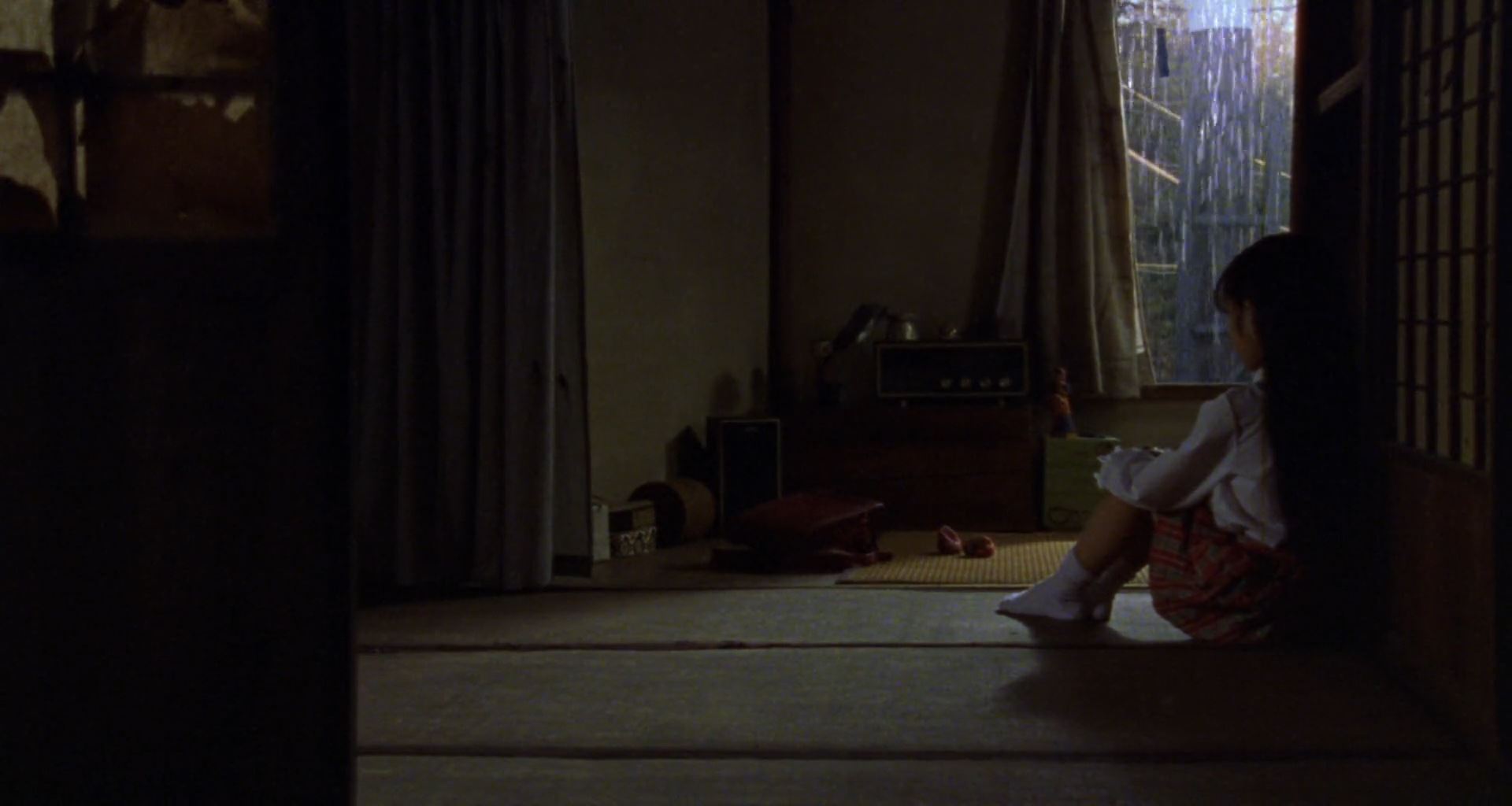
Special mention has to go to Eihi Shiina as Asami. Shiina is a former model that had limited acting experience before Audition. That she manages to put on such a fantastic, multi faceted, performance is very commendable. Sympathetic, initially; she goes to dark places that make her performance all the more memorable. Her entire performance in the last half an hour is, to put it frankly, iconic. Say “kiri, kiri, kiri, kiri” to any veteran horror fan and they will immediately know what you are talking about. That is because Eihi Shiina makes it so memorable.
The Good, The Bad & The Ugly
The Good
- Eihi Shiina: Delivers an iconic performance that transforms from fragile and sympathetic to bone-chillingly menacing.
- Masterful Deception: The film’s transition from a slow-paced drama to a visceral horror nightmare is perfectly executed.
- Social Commentary: Beneath the gore lies a poignant and scathing critique of Japan’s patriarchal society.
The Bad
- Extreme Content: The final act is so uncompromisingly brutal and graphic that it will be far too much for many casual viewers.
- Slow Pace: The first hour is a very deliberate, low-key drama which might test the patience of some horror fans.
- Wasted Side Character: Renji Ishibashi’s character feels a bit one-note and out of place in such a sophisticated narrative.
The Ugly: The Sound of “Kiri Kiri.” The rhythmic, high-pitched chanting during the final sequence is a simple yet devastatingly effective piece of sound design.
Should You Watch Audition?
Yes, if you have a strong stomach. It is a 4.2 star film that serves as a cornerstone of modern horror. While the first two-thirds require patience, the payoff is a legendary piece of cinema that explores the dark depths of vengeance and social entitlement. It is an intelligent, technical, and profoundly disturbing work that rewards viewers who can endure its most harrowing moments.
You might also like:
- The Collingswood Story (2002) Review – The Screenlife Horror Granddaddy
- Terrified (2017) review: The scariest movie you’ll ever see (maybe)
- No One Gets Out Alive (2021) Review – A Generic Haunting with a Social Twist
- Stopmotion (2024) Review – Fantastic Animation Trapped In A Formulaic Horror Story
- Bone Face (2025) review – A slasher whodunit that runs out of steam
Our Scoring Philosophy: A Fair Fight
Horror is a genre that thrives thanks to indie film makers and low budget creators. At Knockout Horror, we firmly believe that every movie that we review deserves a fair fight. That's why we grade on a curve. Our star ratings are all about context, judging a film on what it achieves with the resources it has.
A 4-star rating for a scrappy indie horror made for $10,000 is a testament to its ingenuity and raw power. A 4-star rating for a $100 million blockbuster means it delivered on its epic promises. We don't compare them side-by-side; we celebrate success in every weight class, from the back-alley brawler to the heavyweight champion. Please keep this in mind when considering star ratings.